The Long Island City Waterfront Bar Where You Can See Both Bridges at Once
A View Two Decades in the Making
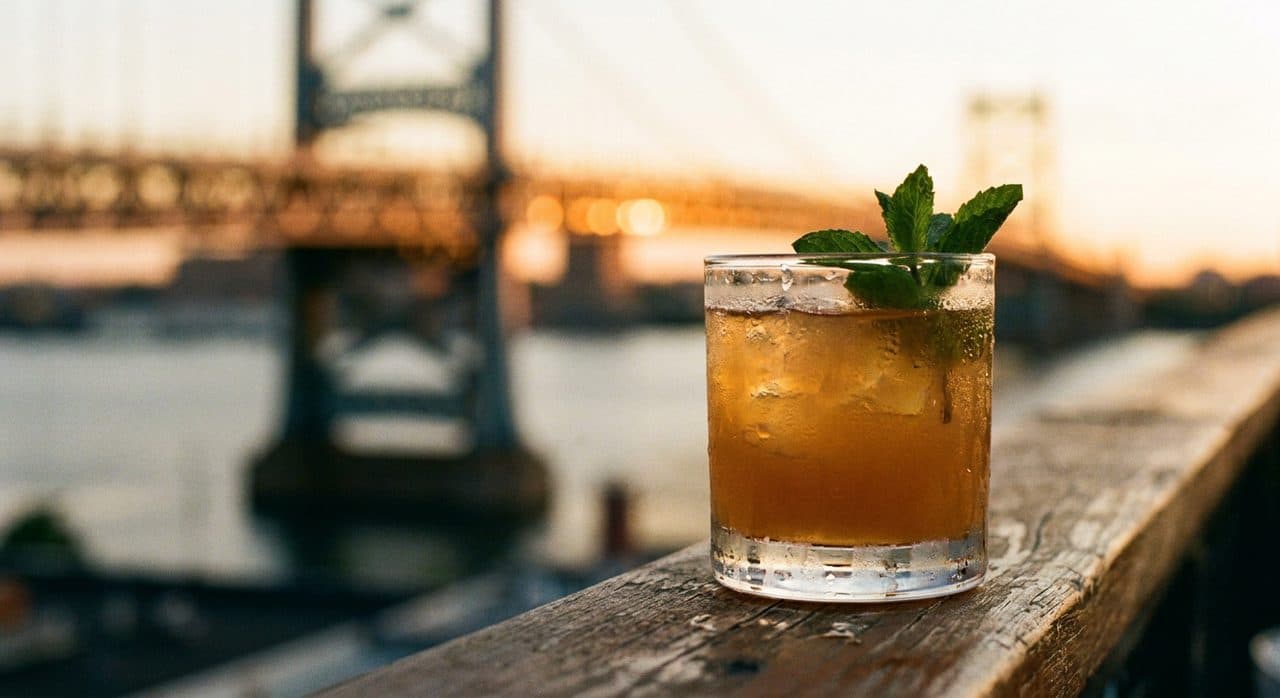
For years, the cognoscenti of Queens knew about the spot. It wasn't on any map, wasn't sanctioned by any authority, and required ducking behind a chain-link fence topped with rusted barbed wire to reach. The unimproved shoreline of Long Island City's western edge offered something that the gleaming new developments couldn't quite replicate: a raw, unobstructed communion with the East River and the steel giants that span it. Photographers came at dawn. Couples came at dusk. Security guards came eventually, and everyone scattered.
The Long Island City waterfront has been transforming for two decades now, each year bringing another glass tower, another curated green space, another coffee shop with exposed brick and oat milk. The industrial grit that once defined this stretch of Queens has been polished into something palatable for the luxury condo brochures. But something was lost in translation—that specific, almost sacred geometry that made the old illegal perch so magnetic. Until now.
A bar has opened in a former machine shop on the waterfront, and its rooftop has done what twenty years of development couldn't: it has recaptured the view.
The Geometry of Two Bridges
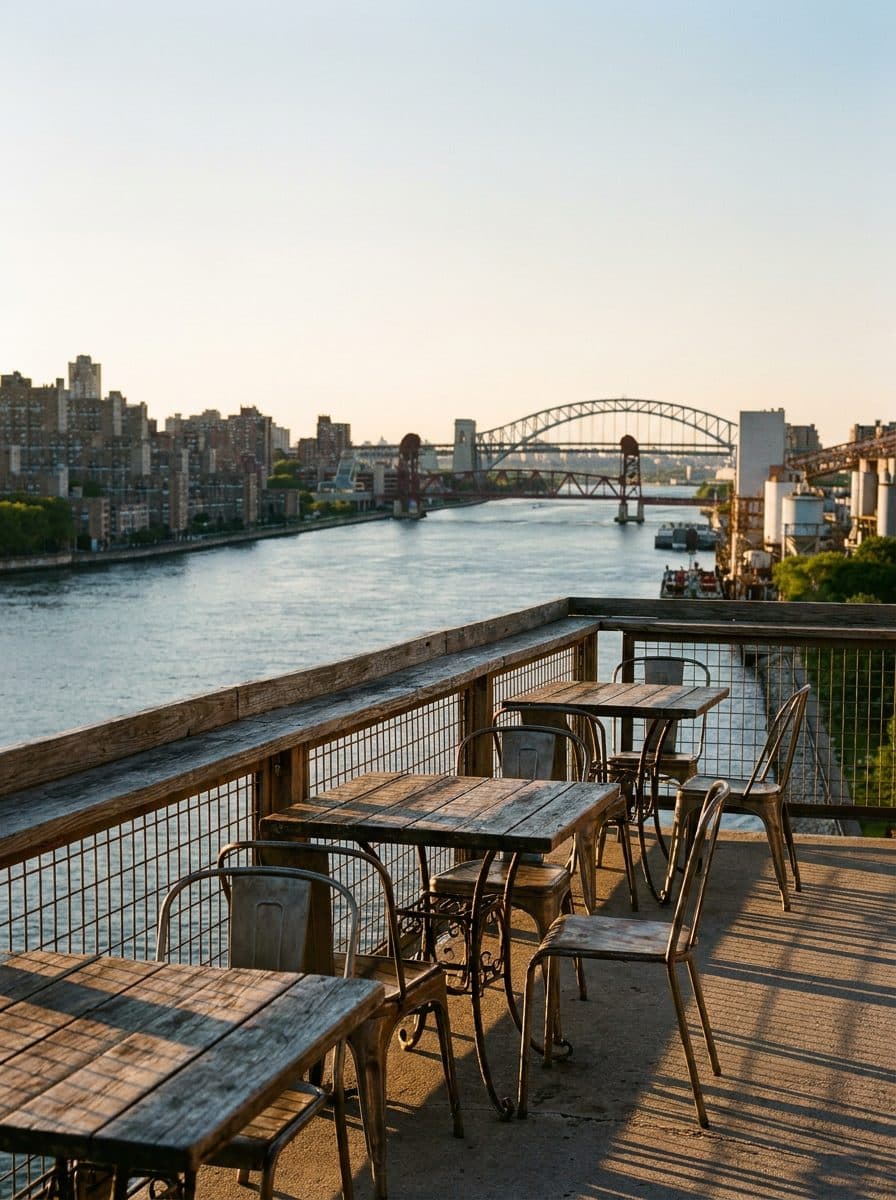
The rooftop spans roughly the length of a basketball court, wrapped in weathered steel planters filled with native grasses that sway in the river breeze. Most visitors spread out across the space, claiming corners and railings, perfectly content with their slice of skyline. But the regulars know to drift toward the western edge, to a specific stretch no longer than thirty metres, where something remarkable happens to the horizon.
From this narrow band of rooftop, both the Queensboro Bridge and the Pulaski Bridge align in the same frame—the ornate cantilever towers of the former rising to the south, the utilitarian bascule span of the latter anchoring the north, and the entire midtown Manhattan skyline filling the space between them. It's a composition that feels almost intentional, as if some urban planner had orchestrated the whole thing.
The bar's owner discovered this alignment while scouting the building three years ago, standing on a roof that was then covered in pigeon droppings and abandoned HVAC equipment. He later learned that the sight line wasn't accidental at all—it corresponds to a navigation calibration point documented in 1940s harbour survey maps, when tugboat captains used the two-bridge alignment to orient their vessels in the busy shipping channel below. The geometry that once guided freighters now guides cocktail hour.
Industrial Bones, River Light
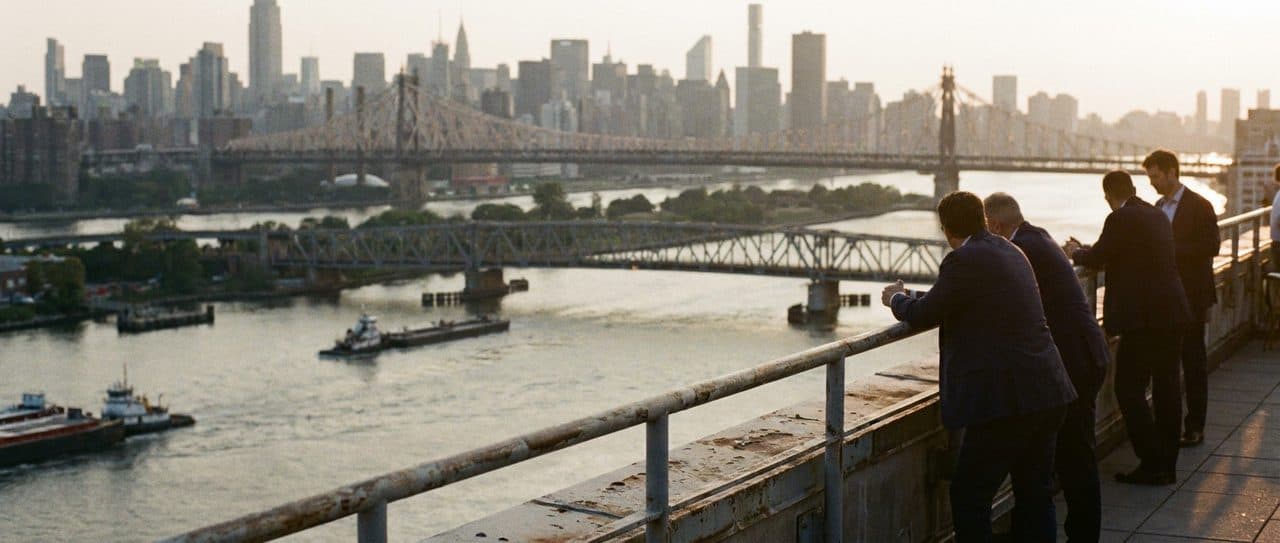
The building itself dates to 1927, when it housed a company that manufactured replacement parts for the printing presses that once dominated this neighbourhood. The original steel-frame windows remain on the upper floors, their rippled glass catching the afternoon sun in ways that modern glazing never could. The rooftop bar has leaned into this heritage without fetishizing it—the furniture is contemporary, the sound system is excellent, and nobody has stenciled any inspirational quotes on the exposed brick.
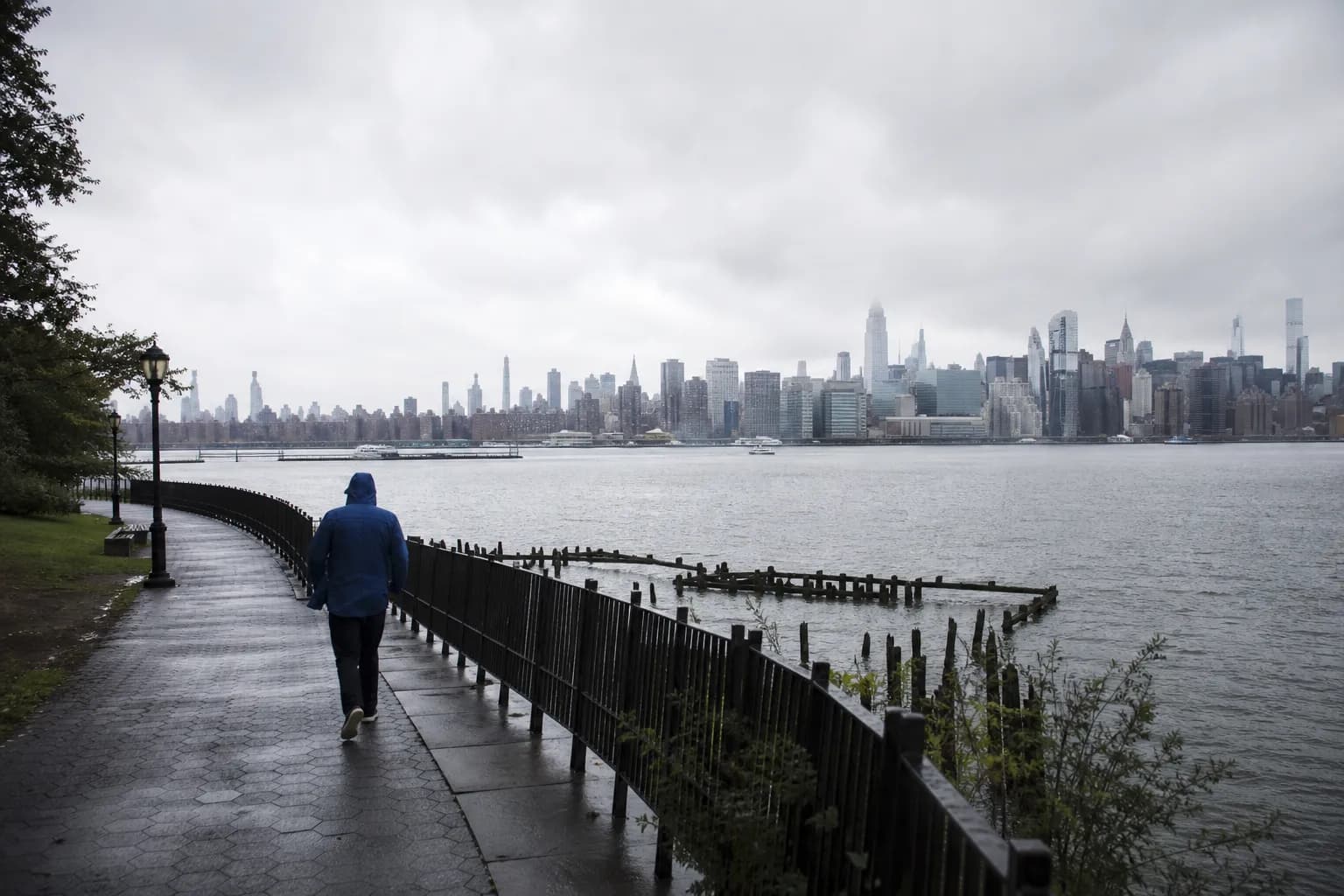
What strikes visitors first is the quality of light. The East River acts as a massive reflector, bouncing illumination upward in ways that soften shadows and make everyone look vaguely cinematic. The bar's designers understood this and kept the rooftop furnishings low—no towering umbrellas, no pergola structures—so that the light has room to work. On overcast days, the effect is moody and contemplative. On clear evenings, it borders on the theatrical.
The industrial remnants scattered throughout the space serve as subtle reminders of what this waterfront used to be. A massive iron cleat, once used to secure barges, now anchors a planter box. Sections of the original rooftop railing—thick steel pipe worn smooth by decades of workers' hands—have been incorporated into the new design. These aren't decorative choices so much as acts of preservation, small gestures toward the neighbourhood's working past.
Thursday Evenings on the Bridge Deck
The bar operates a standard rooftop service most days, with a full cocktail menu and the expected roster of small plates. But Thursday evenings bring something different—a weekly ritual that has developed a devoted following among those who prefer their drinking contemplative rather than celebratory.
From six to nine, the rooftop transforms for what the staff calls the bridge deck session. Half the tables are removed, replaced by thick wool blankets spread across the deck surface. The full menu disappears, leaving only three cocktails—each one designed around whatever is currently in season at the farmers market that operates in the plaza below. One recent Thursday offered a strawberry-rhubarb shrub with gin, a snap pea and cucumber vodka tonic, and a blackberry mezcal sour that tasted like summer arriving early.
The atmosphere during bridge deck hours is notably different from the weekend crowds. Conversations happen at lower volumes. People actually watch the river traffic—the Circle Line boats, the occasional kayaker, the tugboats pushing barges toward the harbour. The blankets encourage lounging, and lounging encourages lingering, and lingering encourages the kind of slow attention that the view deserves.
Twelve Minutes of Copper Light
Sunset chasers have long known that the magic hour in New York City isn't really an hour at all—it's a series of compressed moments, each one transforming the skyline in ways that last only minutes. The rooftop bar has identified its own such moment, and the staff has become remarkably precise about it.
In late June, when the sun sets at its northernmost point along the western horizon, the light catches the suspension cables of the Queensboro Bridge at a specific angle. For approximately twelve minutes, those cables transform from their usual industrial grey to a luminous copper-orange, glowing against the deepening blue of the evening sky. The effect is startling—the bridge seems to catch fire from within, its steel bones suddenly warm and alive.
The bar staff tracks this phenomenon with something approaching scientific rigour. When guests check in during the relevant weeks, they're told the exact time to position themselves on the western side of the roof. The precision feels less like a gimmick and more like genuine enthusiasm—the staff wants you to see what they've seen, to understand why they chose to work at this particular bar on this particular stretch of waterfront. It's the kind of insider knowledge that used to require knowing someone who knew someone. Now it comes with your drink order.
What the River Remembers
Standing on this rooftop, watching the bridges and the boats and the slow drift of clouds over Manhattan, it's easy to forget that this waterfront was once among the busiest industrial zones in the country. The machine shops and foundries and printing plants that lined these blocks employed tens of thousands of workers, many of whom lived in the tenements just a few streets inland. The river was a workplace, not a backdrop.
The bar doesn't dwell on this history, but it doesn't ignore it either. The menu includes brief notes about the building's origins. The bathroom walls display reproductions of old photographs—workers in cloth caps, barges stacked with cargo, the bridges under construction. It's enough context to deepen the experience without turning the evening into a museum visit.
What matters most is that the view itself carries the history forward. Those two bridges, visible together from that thirty-metre stretch of rooftop, have been framing this waterfront for nearly a century. Tugboat captains used them to navigate. Factory workers saw them from their lunch breaks. And now, on Thursday evenings, people wrap themselves in blankets and watch the same alignment while sipping cocktails made from farmers market strawberries.
Practical Notes
The bar is located on the Long Island City waterfront, accessible via the Vernon Boulevard-Jackson Avenue station on the 7 train (roughly a seven-minute walk west toward the water). Rooftop hours run Wednesday through Sunday, opening at 4pm on weekdays and 2pm on weekends. Thursday bridge deck sessions (6-9pm) do not take reservations—arrive by 5:30pm for the best blanket selection. The rooftop closes during rain and high winds; check their social media for same-day updates. Standard rooftop service offers a full cocktail menu averaging $16-19 per drink, plus shareable plates in the $14-22 range. The three-cocktail bridge deck menu is priced at $18 each. No outside food or beverages permitted. The farmers market below operates on Thursdays and Saturdays, making Thursday evenings particularly convenient for those who want to browse before ascending.
Tags: #LongIslandCity #NYCRooftopBars #QueensborosBridge #PulaskiBridge #WaterfrontDrinking #ThursdayNightNYC #SunsetCocktails #BridgeViews #EastRiver #QueensNightlife #SeasonalCocktails #NYCWeekendPlans #IndustrialChic #HiddenNYC #RooftopSeason
Sources consulted: timeout.com · nymag.com · thrillist.com · eater.com
All trademarks are the property of their respective owners.
Ask Karpo first
Want to know if the rooftop is open this weekend, what cocktails are on the bridge deck menu, and the exact sunset bridge-light timing for tonight? Ask Karpo for a live Long Island City update.