 Botanical Boutique Near Me in Tai Seng: Plunt.co Design Studio
Hidden Gems & Odd Finds
The Leather Craftsman in Austin Who Only Makes One Bag Design
East 6th St studio; the single tote pattern hasn't changed in eight years
You walk into a studio on East 6th Street where the walls smell like saddle soap and the workbench holds exactly one pattern, yellowed at the edges and reinforced with tape at the fold lines. Marcus Webb has been making the same tote bag for eight years, and he'll tell you straight that he has no plans to design another.
The Pattern That Refused Evolution
The template hangs on a nail above the cutting table, a single piece of heavy paper that maps out every panel of what Marcus calls "the only bag worth making." He drafted it in 2016 after his partner complained that every tote either had too many pockets or handles that dug into shoulders. The dimensions are specific: fourteen inches wide, sixteen tall, six deep. He's replaced the paper three times but never altered a measurement. When you ask why he doesn't expand the line, he gestures to a shelf holding twelve variations of the same form, each in different leather weights and colors. "This is the expansion," he says.
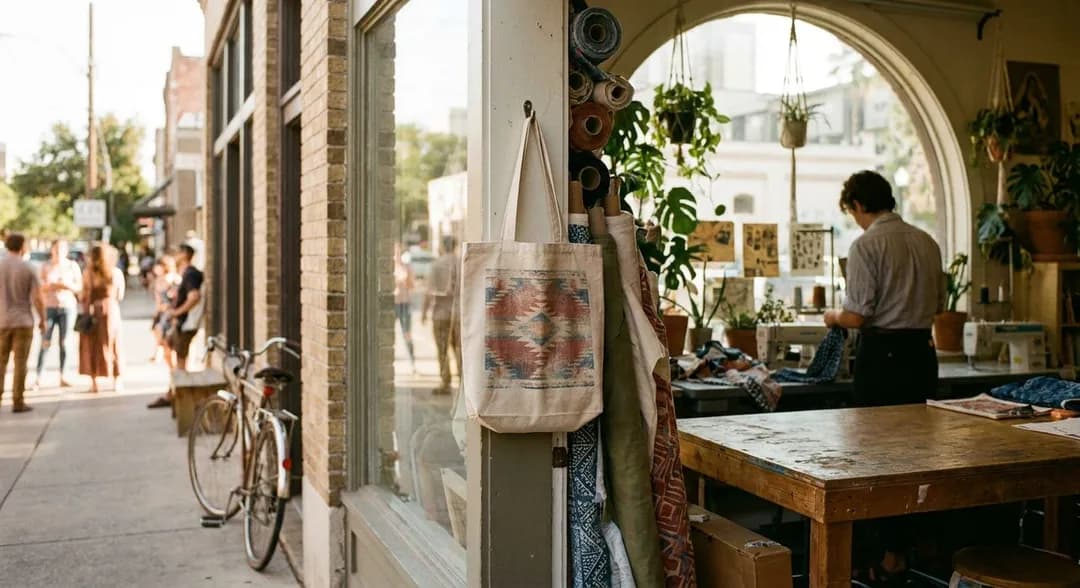
The studio sits between a vintage clothing shop and a coffee roaster, close enough to the chaos of East 6th that you hear live music bleeding through the walls after nine PM. Marcus works Tuesday through Saturday, 11 AM to 6 PM, though he's usually cutting leather by ten. The front window displays three finished bags on wooden dowels, and if they're gone when you arrive, he's sold out for the week. He doesn't take custom orders or rush jobs. You choose your leather from the current stock, he writes your name in a composition notebook, and you come back in three weeks.
The Leather Wall That Tells Time
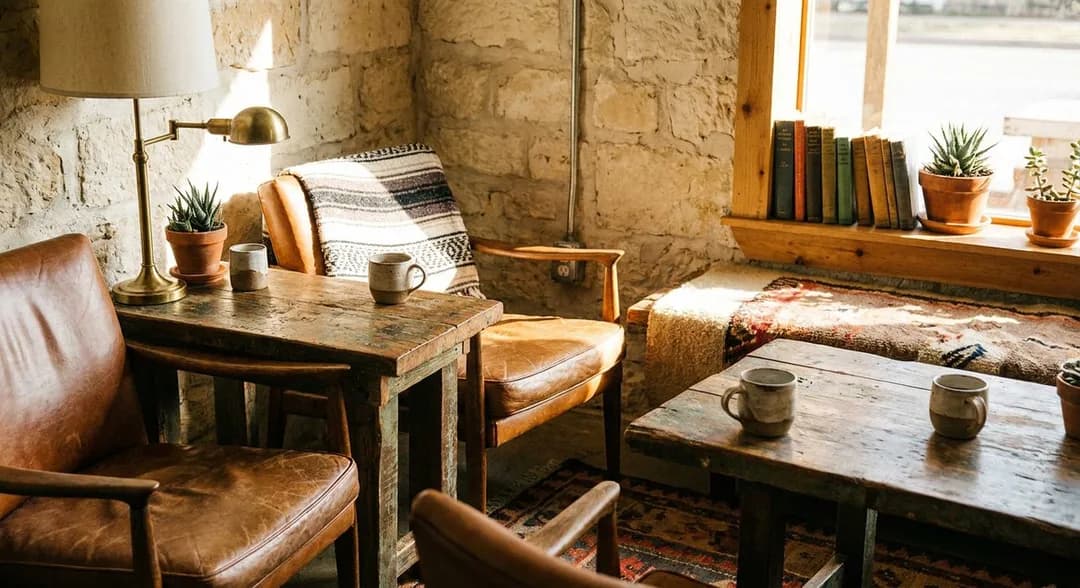
The back wall holds his leather inventory, organized not by color but by the season he acquired each hide. He can point to a chocolate brown section and tell you it came from a Wisconsin tannery the winter of 2019, or trace his finger along cognac panels from a Vermont supplier he lost during the pandemic. Each hide gets numbered with silver marker on the flesh side, and he logs every cut in that same composition notebook. When you watch him select leather for your bag, he's reading the hide like a map, avoiding old scars and brand marks, finding the sections where the grain runs tightest.
He works exclusively with vegetable-tanned leather, the kind that darkens and softens with handling. The bags leave his studio pale and stiff, smelling like fresh timber. Give it six months of daily use and the leather develops a patina that maps your routines—darker where your hand grips the handle, burnished where it rubs against your hip. Marcus keeps photos of returned bags on his phone, customers sending updates after years of wear. One tote is seven years old, carried daily by a librarian in Dallas. The leather has gone amber-brown and soft as chamois.
The Single Stitch He'll Redo Three Times
Watch Marcus sew and you'll notice he runs the same seam multiple times, the machine needle punching through leather that's already joined. He's not fixing mistakes—he's building what he calls "stitch memory." The thread is waxed linen in natural beige, thick enough that each stitch stands visible against the leather. He runs the side seams twice, the bottom panel three times, the handle attachments four. When you pick up a finished bag, those reinforced sections feel slightly raised, like scar tissue. He's had customers carry these totes for five years without a single thread breaking.
The handles attach through the bag body with a technique he adapted from saddle-making, the leather folded back on itself and stitched in a box-X pattern. He cuts the handles longer than most totes—long enough to sling over your shoulder when wearing a winter coat. The leather is doubled and edge-beveled, which means no raw edges to fray or crack. After stitching, he burnishes every edge with beeswax and a wooden slicker, rubbing until the leather compresses and takes on a glassy finish.
The Waiting List That Isn't
Marcus doesn't maintain a formal waiting list, which confuses people who've dealt with other leather workers. You can't email him to reserve a spot or pay a deposit to hold your place. When you visit the studio, he shows you the available leather, you make your selection, and he writes your name in the book. If someone ordered before you, their bag gets made first. The system is linear and non-negotiable. He makes roughly four bags per week, sometimes five if the leather cooperates. Do the math and you'll understand why the three-week estimate holds steady.
He doesn't ship bags, either. You come back to the studio to collect it, and he wants you to inspect every seam before you leave. He's building a relationship with the object, and he expects you to do the same. If you're visiting from out of town, he suggests timing your order around a return trip. Several customers have structured Austin visits around bag pickup, turning collection day into an excuse for weekend plans.
The Price That Hasn't Changed Since 2021
The tote costs $340, regardless of leather color or thickness. Marcus raised the price once in eight years, a $40 increase in 2021 when his tannery costs jumped. He absorbs variations in leather cost rather than implementing variable pricing. When premium hides come in—the occasional shell cordovan or English bridle leather—he charges the same $340. His logic is simple: the labor is identical, the pattern unchanged, and he'd rather keep the transaction straightforward than explain pricing tiers.
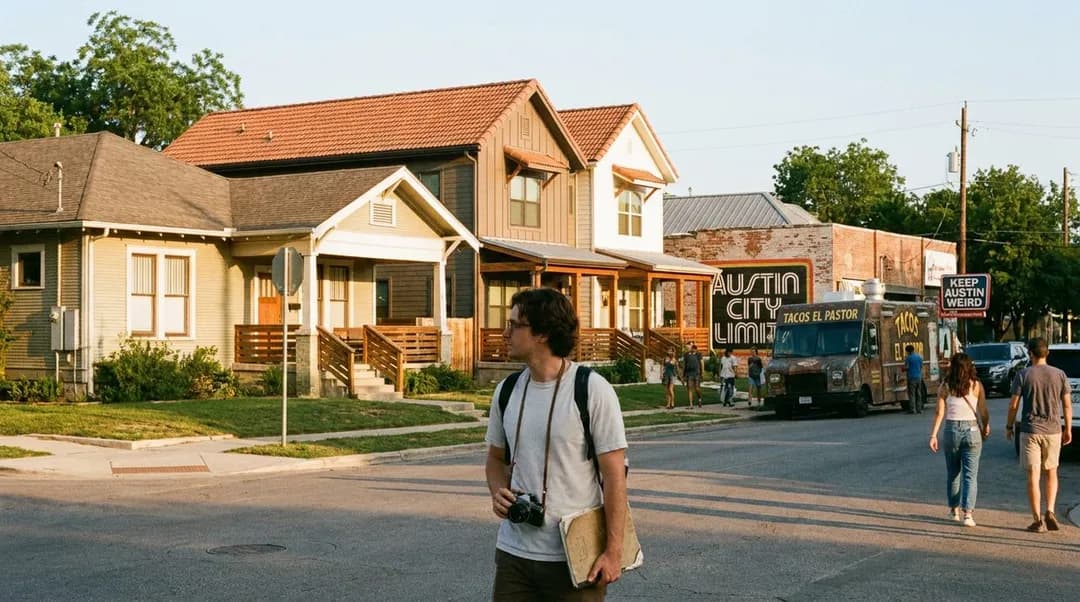
Payment is cash or check only, which he mentions apologetically but doesn't compromise on. There's a Chase Bank ATM two blocks east on 6th Street, just past the taco truck that sets up around lunch. He provides a handwritten receipt on carbon-copy paper, the kind mechanics used before computers. Your copy includes the leather type, order date, and his cell number in case you need to reschedule pickup.
The Studio Visit You Should Schedule
The space itself measures maybe 400 square feet, narrow and deep like a railroad apartment. The front third is the "showroom"—those three display bags, a wooden stool, and a shelf holding leather samples. The middle section is the work zone: cutting table, sewing machine, edge-beveling station. The back holds leather storage and a small desk where Marcus does his bookkeeping. Natural light comes from the front window and a skylight he installed himself, which means the space glows warm in late afternoon.
He doesn't mind if you watch him work, but call ahead because sometimes he's at the tannery or making leather runs. His cell number is written on the door, and he typically responds within a few hours. The best time to visit is Wednesday or Thursday afternoon when he's usually in the middle of a build and willing to talk through his process. He'll let you handle the tools—the beveler, the edge slicker, the heavy shears that cut through double-layer leather like paper.
Practical Notes
Marcus Webb Studio is at 1614 East 6th Street, Unit B, tucked between Cream Vintage and Flat Track Coffee. Studio hours are Tuesday through Saturday, 11 AM to 6 PM, but call first: (512) 940-7733. The #4 and #300 Capital Metro buses stop at 6th and Chicon, two blocks west. Street parking is metered until 6 PM, $2 per hour. The nearest lot is at 7th and Onion, $8 flat rate after 5 PM. Bags are $340, cash or check only. Production time is three weeks from order date. No shipping, no deposits, no custom sizing. The studio closes for two weeks every August and the week between Christmas and New Year's. If you're visiting from out of town, he can store your completed bag for up to 60 days past the pickup date.
Tags: #AustinCraftsmanship #EastSixthStreet #LeatherGoods #SingleDesignPhilosophy #VegetableTannedLeather #SlowFashionATX #AustinMakers #TheOddEdit #ToteLife #BuyItForLife #AustinArtisans #LeatherTote #MadeInAustin #EastAustinStudios #HandmadeATX
All trademarks are the property of their respective owners.
Ask Karpo for more information.
Keep reading
- Botanical Boutique Near Me in Tai Seng: Plunt.co Design Studio
 Botanical Boutique Near Me in Thomson: Pick a Plant Air Plants
 Botanical Boutique Near Me in Jalan Besar: Jungalore Studio