 Fast Food Near Me in the East Village: Crif Dogs Deep-Fries Its Franks
Free Things to Do
The Largest Free Contemporary Art Museum in New York City Is in the Bronx
The Bronx Museum of the Arts went permanently free in 2012 and promptly quadrupled its attendance. The museum at 1040 Grand Concourse holds more than 800 works by artists of African, Asian, and Latin American descent, collected since 1986. The entrance fee is zero. The train ride from Midtown is thirty minutes.
The Street Before the Museum
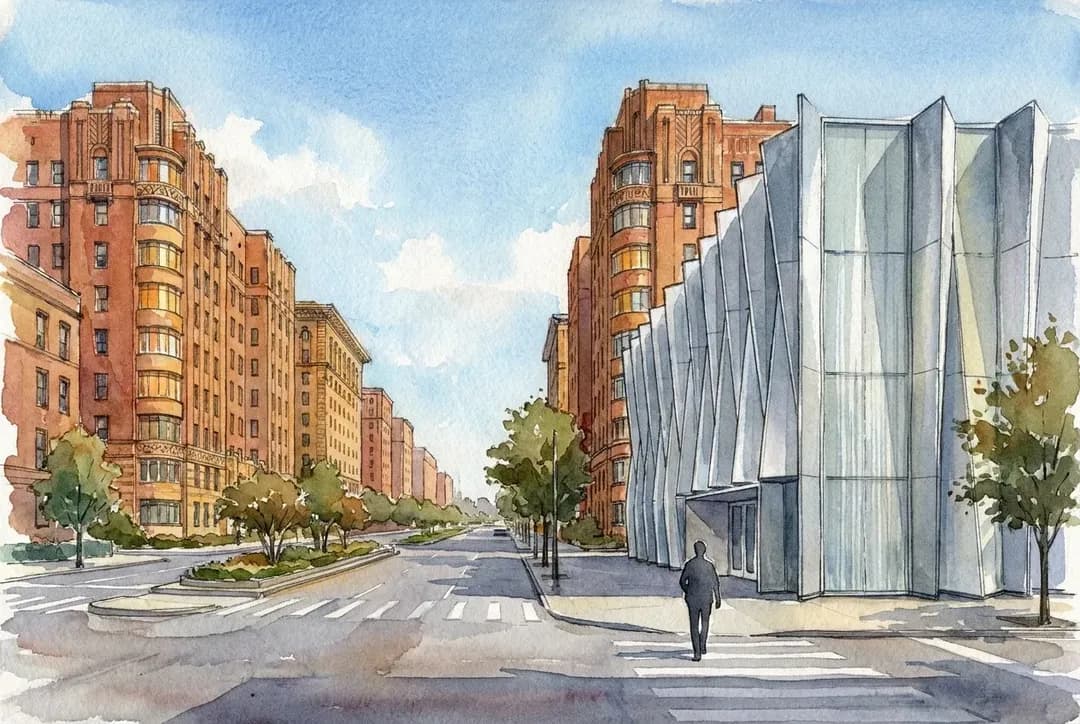
The Grand Concourse is worth arriving early for. The boulevard runs four miles through the Bronx and was modeled, when it opened in 1909, on the Champs-Elysees — a triumphal road designed for leisure promenading rather than commercial traffic. The Art Deco apartment buildings that line it were built primarily between 1922 and 1942, and the Grand Concourse Historic District designation protects several hundred of them. The details repay slow attention: curved corner windows, geometric stone reliefs above doorways, lobby floors with original terrazzo.
The Bronx Museum sits at 165th Street and Grand Concourse, its aluminum facade — seven pleated vertical panels connected by fritted glass, an accordion of industrial material that somehow reads as elegant — deliberately in dialogue with the Art Deco context around it. The building started as the Young Israel of the Concourse synagogue, designed by architect Simon B. Zelnick and built between 1959 and 1961. The city purchased it in 1982 when it stood vacant; the museum opened here in May 1983. The 19-million-dollar Arquitectonica expansion, completed in 2006, doubled the footprint to 33,000 square feet.
What the Collection Is Actually About
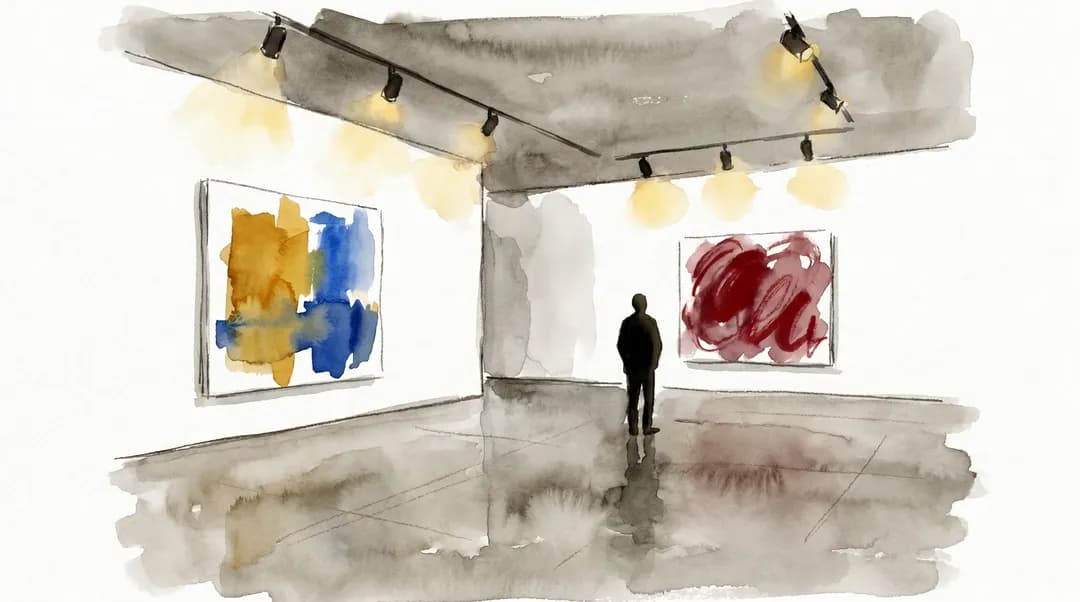
The Bronx Museum's permanent collection was established in 1986 and has always been organized around a specific thesis: contemporary art by artists of African, Asian, and Latin American descent, plus artists for whom the Bronx itself was central to their practice. The 800-plus works — paintings, sculptures, photographs, works on paper — were assembled with cultural relevance and community connection as primary criteria, not market value.
This was a distinctive position in 1986. The major Manhattan institutions were still largely organized around a Western European canon, occasionally supplemented. The Bronx Museum was acquiring differently from the start, which means its collection now looks less like a corrected course and more like a consistent institution. The work does not feel compensatory. It feels curated.
The Free Admission Decision
On March 29, 2012, the Bronx Museum eliminated its admission fee for all exhibitions and programs. This was not a trial. It was a permanent structural commitment. The stated reasoning was access: the museum sits in one of the lower-income counties in the United States, and a ten-dollar ticket was a meaningful barrier.
The measurable outcome was that attendance quadrupled. The Bronx Museum became, as a result, the largest contemporary art museum in New York City to offer completely free admission. The Metropolitan Museum's pay-what-you-wish policy applies to New York State residents; MoMA and the Guggenheim charge thirty dollars and above. The Bronx Museum charges nothing on any day.
The Renovation and the Current Visit
In 2024, the museum broke ground on a 42.9-million-dollar renovation funded by the City of New York that will unify its buildings into a cohesive campus, add a triple-height lobby, introduce an adjoining cafe, and improve accessibility. The project is expected to complete in 2026. During construction, exhibitions and programs continue in the north galleries: the collection is accessible, the programming is running, and the admission is still free.
The Bronx Museum was founded in 1971 by Irma Fleck and the Bronx Council on the Arts, in explicit response to redlining and urban decay in the South Bronx. It has arrived, fifty years later, at a position of having the city fund a 43-million-dollar building project. That arc is worth noting.
Practical Notes
- Address: 1040 Grand Concourse at 165th St, Bronx, NY 10456
- Hours: Wed-Sun 11am-6pm (Mon-Tue closed)
- Admission: Free, always
- Getting there: D or B train to 167th St (2-min walk south); 4 train to 161st St-Yankee Stadium (6-min walk north)
- During renovation: Exhibitions in north galleries — check bronxmuseum.org for current show
- Before or after: Walk the Grand Concourse north — Art Deco concentration densest between 161st and 170th Streets
- Time needed: 45 min for the collection; 90 min with a current exhibition
The Point
The Bronx Museum made a decision in 2012 that most cultural institutions still have not made: it decided that access was the mission, not a feature of the mission. The attendance figures — four times what they were the day before the policy change — are the reply. The collection is the argument for why that access matters: 800 works, assembled over four decades, on a thesis that was considered niche in 1986 and looks like foresight now. The Grand Concourse is the walk you take before and after. None of it costs anything.
Tags: #bronxmuseum #nycmuseum #freemuseum #grandconcourse #bronxnyc #contemporaryart #freeartnyc #nycfree #africandiaspora #latinart #bronxart #artdeconyc #nicebutfree #freemuseumsnyc #bronxculture
Sources consulted: bronxmuseum.org · wikipedia.org · masterworks.com · nyctourism.com
All trademarks are the property of their respective owners.
Ask Karpo for more information.
Keep reading
- Fast Food Near Me in the East Village: Crif Dogs Deep-Fries Its Franks
 Things To Do Near Me in NYC: Riding the Roosevelt Island Tram
 Things To Do Near Me in Washington Heights: The Cloisters' Medieval Galleries