Archer Huntington's Bet on the Wrong Borough
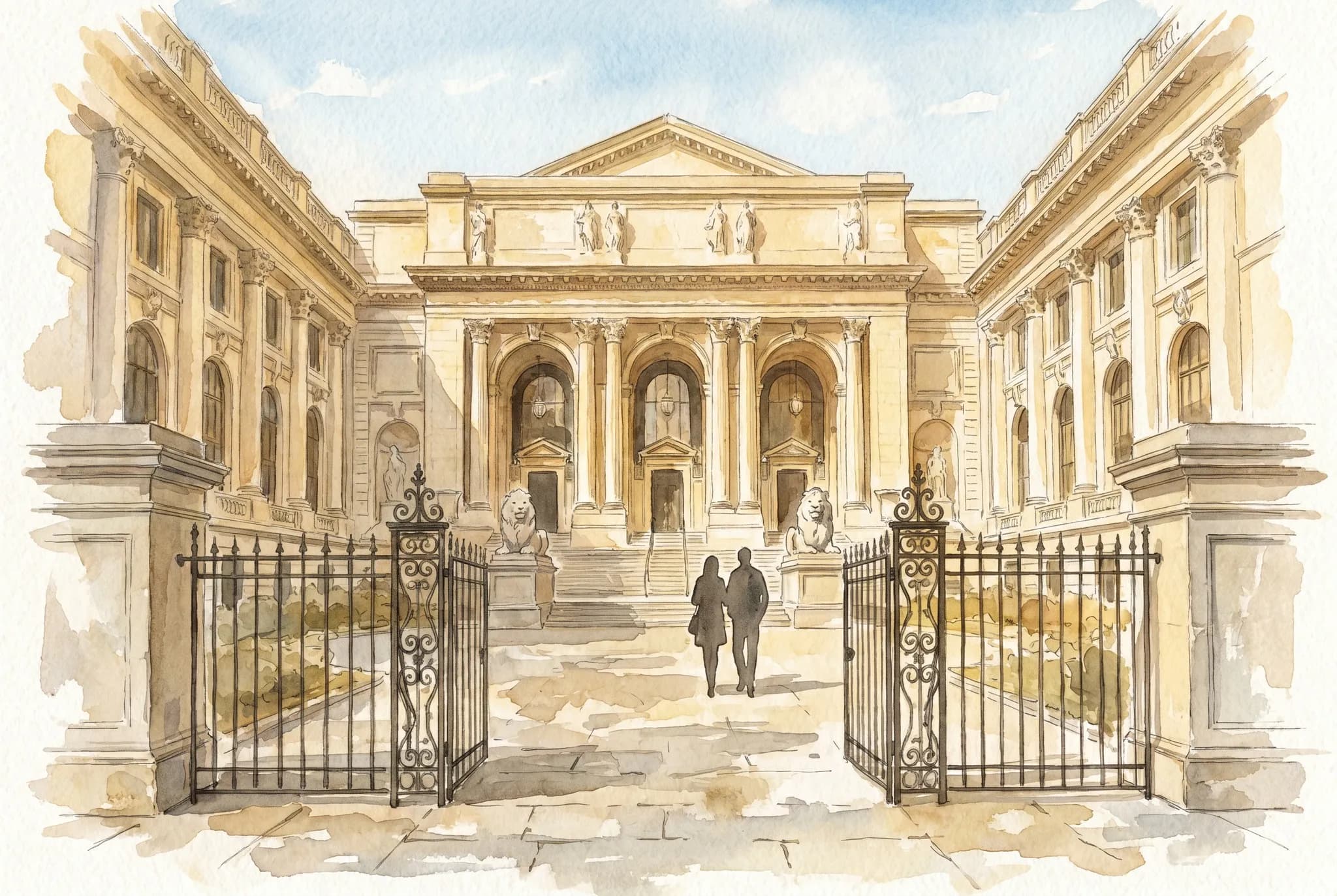
Archer Milton Huntington was one of the stranger figures in American cultural philanthropy. The heir to a railroad fortune, he taught himself Spanish from dictionaries as a teenager, traveled extensively through Spain, and became convinced that the Hispanic world's art and literature deserved a permanent institution in New York. In 1904, he founded the Hispanic Society of America. In 1908, its Beaux-Arts building on Audubon Terrace in Washington Heights opened to the public.
Huntington's instinct was not that this collection would be downtown, accessible to the city's power center. He built it where he built it. The complex — which also housed the American Numismatic Society, the American Academy of Arts and Letters, and the American Geographical Society — was a cluster of serious institutions at 155th Street and Broadway, then a residential edge of Manhattan, now a neighborhood with its own deep history. The museum has been a National Historic Landmark since 2012.
The Sorolla Room
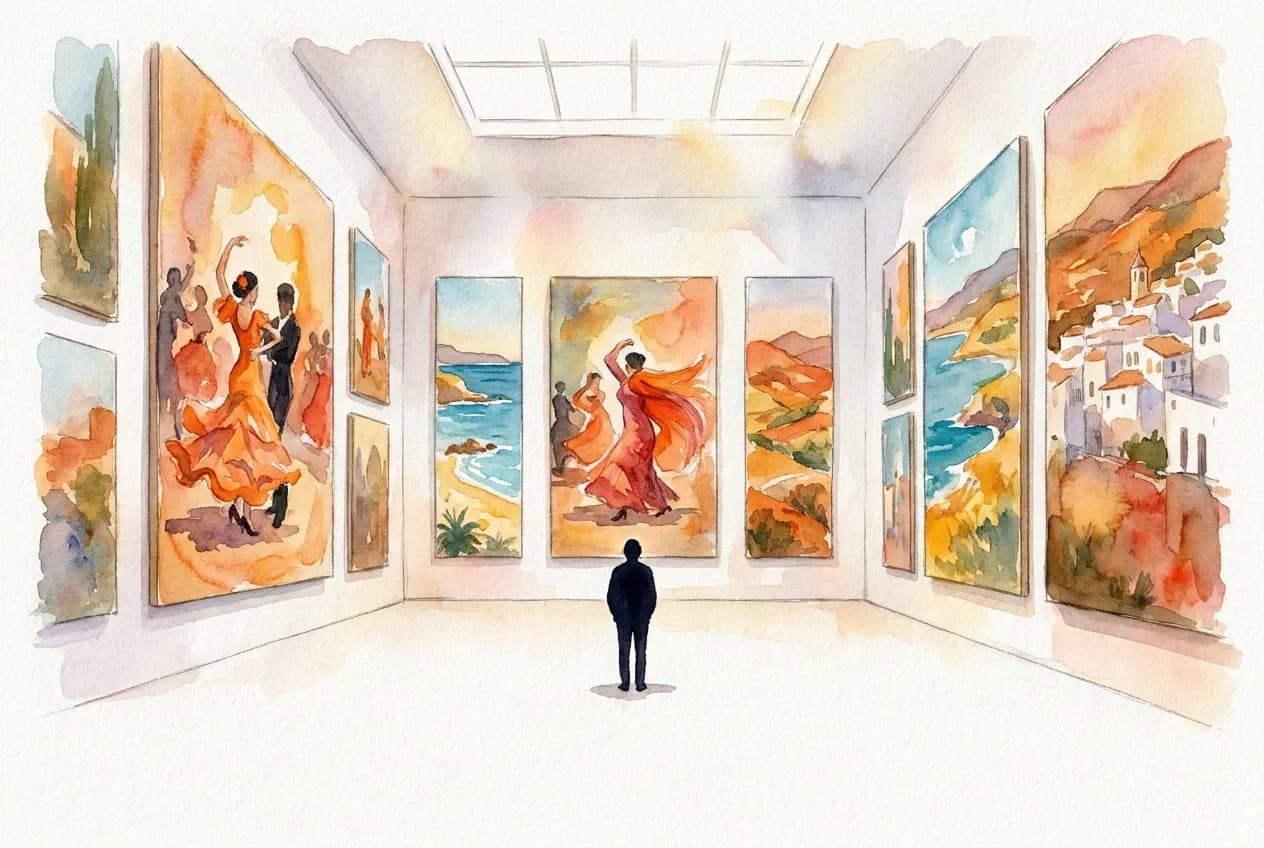
Huntington commissioned Joaquín Sorolla — the Spanish painter already known for his brilliantly lit Mediterranean canvases — in 1911. Sorolla had mounted two exhibitions at the Hispanic Society in 1909 and 1911, the first of which drew 160,000 visitors in a single month. The commission was for a cycle of paintings depicting the regions of Spain: their customs, costumes, landscapes, and light.
Sorolla spent the next eight years traveling to each region and painting on site. He worked mostly en plein air, on fourteen canvases that range from 12 to 14 feet in height, totaling 227 feet in length. He painted Navarre, Aragon, Catalonia, Valencia, Seville, Galicia, Extremadura — moving through a Spain he and Huntington both believed was already passing. He suffered a stroke in June 1920 while painting in his garden, before the cycle was complete. He died in 1923. The murals were inaugurated at the Hispanic Society in 1926, three years after his death, and have been here ever since.
What Else Is in the Collection
The Sorolla room is the centerpiece but the museum's 18,000-work collection contains considerably more. Francisco de Goya's portrait of the Duchess of Alba (1797) — one of two paintings Goya made of her, the other at the Alba Foundation in Madrid — is here. So is Diego Velázquez's Portrait of a Little Girl (ca. 1638–42), El Greco's St. Jerome (ca. 1600), and an extensive library of manuscripts, maps, and atlases that traces Hispanic history from the medieval period forward.
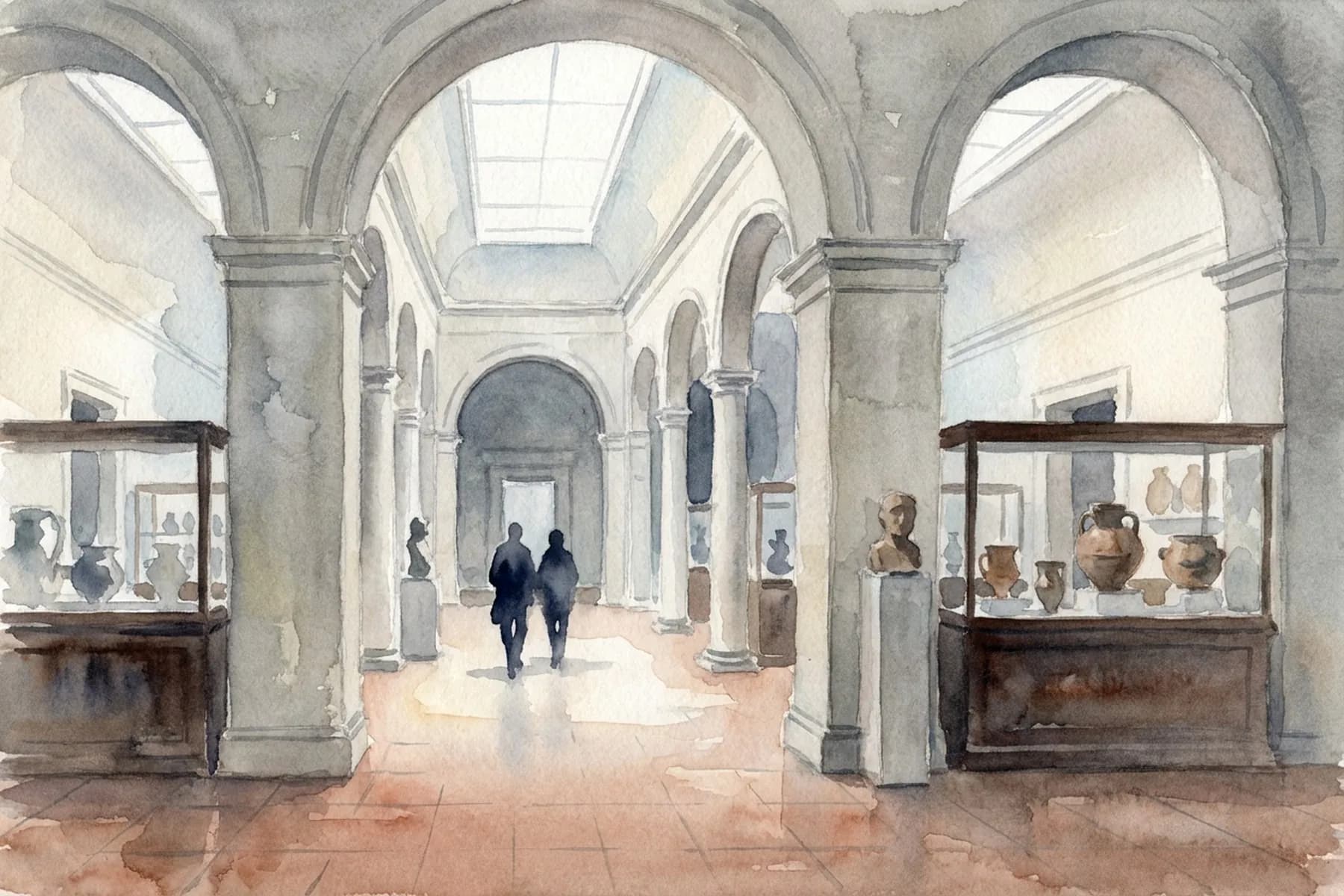
The building itself is worth attention. The main hall has stone columns, terracotta tile floors, and display cases of ceramics and antiquities arranged along the walls. The Beaux-Arts proportions feel correct — grand enough to give the collection room, intimate enough that you can actually see what's in front of you without pressing through a crowd.
Getting There, and What That Ride Feels Like
The 1 train runs from midtown to 157th Street in about twenty minutes. One block south on Broadway, past a stretch of neighborhood that has nothing to do with the museum — laundromats, bodegas, a few phone repair shops — you arrive at the wrought iron gates of Audubon Terrace. The contrast is part of the experience. This is not the institutional corridor of the Upper East Side. The museum sits in its neighborhood like any other building on the block, with no particular announcement of its existence.
The C train also connects, stopping at 155th Street, a two-block walk west. Whichever route you take, the walk from the subway to the gate takes less than five minutes.
Timing and the Ticket
The museum is open Thursday through Sunday, noon to five. Admission is free. As of January 2026, visitors need to reserve a free ticket online before arriving — the reservation takes about thirty seconds and is available at hispanicsociety.org. Without it, entry is not guaranteed.
Thursday and Friday early afternoons are the quietest windows. Weekends draw more visitors, though the scale of the galleries means the museum never feels crowded in the way that the Met or MoMA can on a Saturday. The collection is large and the rooms are spacious. You can spend two hours here and still not cover everything.
Practical notes
- Address: 613 W 155th St (Audubon Terrace), New York, NY 10032
- Hours: Thursday–Sunday, noon–5:00 PM; closed Monday through Wednesday
- Admission: Free; reserve a free timed-entry ticket at hispanicsociety.org before visiting
- Getting there: 1 train to 157th St (1 block south on Broadway); C train to 155th St (2 blocks west)
- Go for: The Sorolla room first — then the Goya Duchess of Alba portrait, then the main hall ceramics
- Best window: Thursday or Friday, 12:30–1:30 PM — lightest attendance, Sorolla room largely to yourself
- What to do after: The Trinity Cemetery and Mausoleum on 155th St (New York's oldest active cemetery, founded 1843) is two blocks east and free to walk through; from there it's a short walk to the George Washington Bridge Bus Terminal for views of the Hudson
The point
Two million Spaniards waited in line to see these paintings when they toured Spain for the first time. In Washington Heights, on a Thursday at noon, you can stand in front of the full cycle alone. That is not a reflection on the quality of the paintings — it is a reflection on how easy it is to not know what's on the 1 train.
Tags: #hispanicsociety #nicebufree #karpofinds #freenycmuseum #washingtonheights #nycart #sorollavisionofspain #goyanyc #nycculture #hispanicsocietyofamerica #upperManhattan #nycmuseums #freetodonyc #spanishart #audubonterrace
Sources consulted: hispanicsociety.org · timeout.com · wikipedia.org · dailyartmagazine.com
All trademarks are the property of their respective owners.


