The Greenpoint Bar That Ran an Extension Cord Across the Sidewalk for the World Cup
A Hundred Feet of Orange Cable and a Neighborhood's Heart
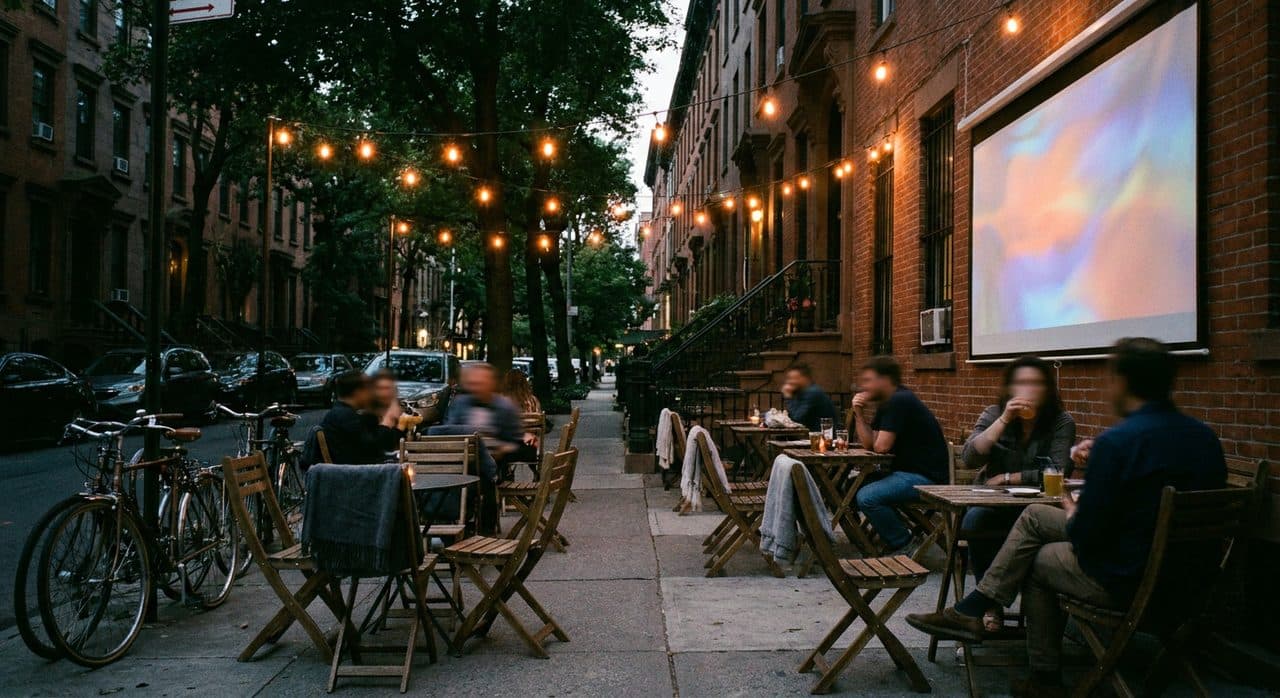
There's a bar on a side street in Greenpoint where the floor tiles have been worn smooth by forty years of work boots, where the tap handles are brass and slightly crooked, and where, for the 2026 World Cup, someone made the decision to run a hundred feet of bright orange extension cord across the sidewalk, through a gap in the alley fence, and into a projector that turns the wall of the neighboring building into a screen the size of a garage door.
The setup has no permit. There's no official capacity, no velvet rope, no bouncer with a clipboard. There's just the sidewalk, some folding chairs that have seen better decades, and whoever shows up. On match nights, that's been anywhere from a dozen regulars nursing pilsners to a crowd of sixty spilling into the street, their faces lit blue and white by the projected glow of the pitch.
The bar itself has been a cornerstone of Greenpoint's Polish community since the 1980s, back when this stretch of Brooklyn was dense with immigrants from Kraków and Gdańsk, when the bakeries sold pączki by the dozen and the butcher shops hung kielbasa in their windows like Christmas lights. The neighborhood has changed — the laundromats became coffee roasters, the hardware stores became vintage boutiques — but this bar remained, stubborn and warm, smelling of hops and history.
The Deal That Built a Screen
The projection wall exists because of a handshake, a shared meal, and a monthly bar tab.
In March, the bar's owner sat down with the man who runs the laundromat next door — a business whose alley-facing wall happened to be the perfect size and angle for a projected image. The laundromat owner, a second-generation Greenpoint resident himself, agreed to whitewash that wall a clean, bright white. In exchange, his staff — three employees who fold sheets and sort quarters six days a week — would drink free at the bar for as long as the arrangement lasted.
The deal was made over a meal of pierogi and hunter's stew, the kind of negotiation that doesn't involve lawyers or contracts, just two men who've known each other's families for years, who understand that a neighborhood is built on exactly these kinds of arrangements. The wall went white the following week. The projector bracket went up on the bar's facade a month later. And now, when the sun sets and the matches begin, that alley transforms into something between a living room and a stadium, intimate and electric all at once.
The Orange Cord as Landmark
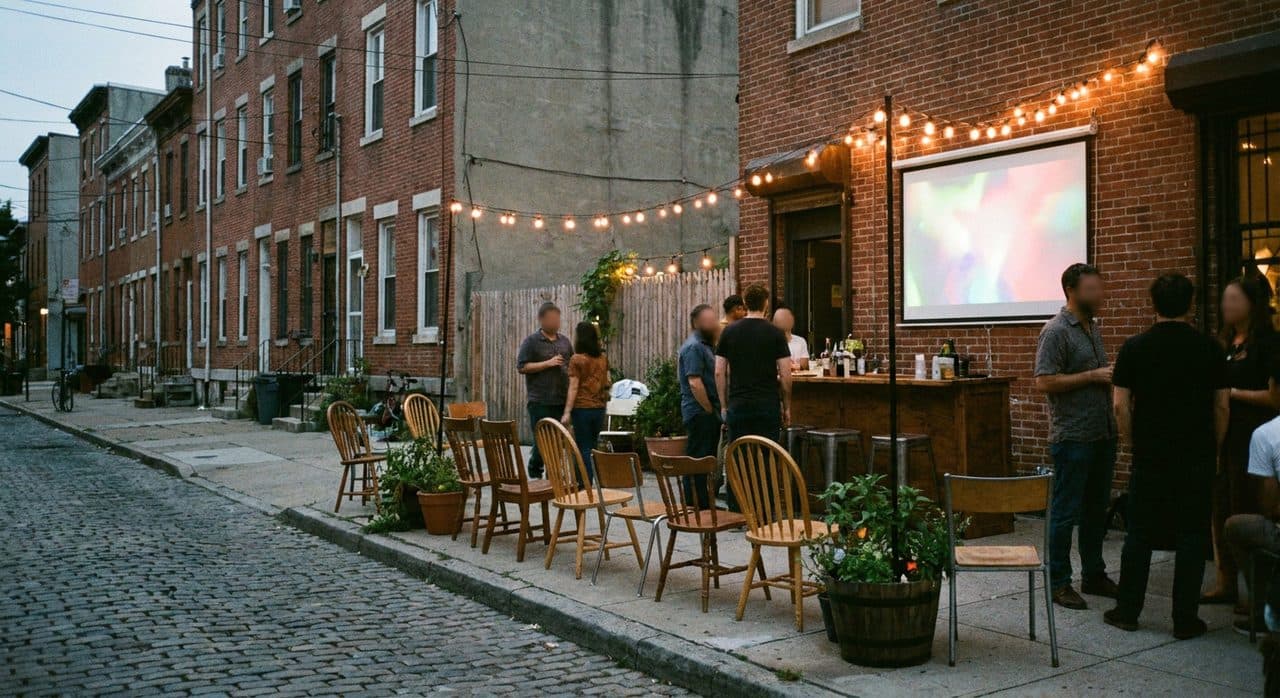
The extension cord has become famous, in the quiet way that neighborhood things become famous.
It's a hundred feet of bright orange cable, the kind you'd buy at a hardware store for outdoor work, visible from half a block away. It runs from an outlet inside the bar, snakes across the sidewalk, and disappears through a gap in the chain-link fence that separates the alley from the street. During matches, it hums with the electricity that powers the projector, the speakers, the small string of lights someone added for atmosphere.
Locals have started using it as a directional reference. "Turn at the orange cord," they'll say, or "just past where the orange cord crosses." It's become an unofficial landmark, a bright thread stitching together the geography of the neighborhood. Delivery drivers know it. Dog walkers step over it. Kids on bikes have learned to bunny-hop it without slowing down. The cord is, in its own small way, a piece of public art — functional, absurd, and deeply specific to this particular corner of Brooklyn.
Rituals of Victory and Mourning
Poland's World Cup journey has been followed here with the kind of intensity that borders on the sacred.
When Poland wins, the bar gives out a round of żubrówka on the house — the bison grass vodka that tastes like hay and vanilla, served cold in small glasses that fog with condensation. The ritual is automatic, almost liturgical: the final whistle blows, the crowd erupts, and within minutes the owner is lining up shots along the bar, his face split into a grin that erases twenty years from his features. Strangers clink glasses. Someone always starts singing.
When Poland loses, the mood shifts to something older, something inherited. The owner puts on Chopin — the nocturnes, usually, or the preludes — and the bar closes thirty minutes early. It's a form of mourning, a recognition that some losses deserve silence and space. The regulars understand. They finish their drinks, leave their money on the bar, and file out into the night, the piano following them through the door until it clicks shut. The next day, everything resets. But for those thirty minutes, the bar belongs to grief.
Match Nights in the Alley
The alley itself is nothing special — cracked concrete, a dumpster pushed to one side, a fire escape climbing the laundromat's back wall. But on match nights, it becomes something else entirely.
The folding chairs appear first, arranged in rough rows by whoever arrives early. Then the coolers, packed with ice and bottles. Then the people: old men in flat caps who remember watching matches on grainy televisions in Warsaw, young couples who moved to Greenpoint for the rent and stayed for the community, kids who don't speak Polish but know all the players' names. The projector flickers to life as the sun drops behind the Manhattan skyline, and suddenly the whitewashed wall is a window into a stadium thousands of miles away.
The sound setup is modest — a single speaker, slightly tinny — but it doesn't matter. The crowd provides its own soundtrack: gasps, groans, the particular silence of a penalty kick, the roar that follows a goal. People who've been tracking the FIFA World Cup 2026 bracket on their phones all week finally get to watch together, shoulder to shoulder, the algorithm of tournament progression made human and loud.
Why It Works
There's no secret formula here, no marketing strategy, no carefully curated aesthetic. The bar works because it's real — because the owner has been pouring drinks in this room since Reagan was president, because the regulars know each other's names and troubles, because the extension cord is bright orange and everyone just steps over it.
In a city that often feels like it's being optimized out of its own soul, places like this persist through sheer stubbornness. They don't scale. They don't franchise. They exist because someone decided, decades ago, to open a bar for their community, and then kept showing up, year after year, through recessions and gentrification and a pandemic and whatever else the world threw at this particular block.
The World Cup setup is just the latest expression of that stubbornness — a refusal to let the absence of permits or proper equipment stop a neighborhood from gathering to watch the game. It's makeshift and imperfect and, for exactly those reasons, more alive than any official fan zone could ever be.
Practical Notes
The bar is located on a residential side street in Greenpoint, roughly a ten-minute walk from the Nassau Avenue G train stop. Match screenings happen in the alley adjacent to the bar; look for the orange extension cord crossing the sidewalk. There's no cover charge, no reservation system, and no guaranteed seating — folding chairs are first-come, first-served, and standing room fills quickly for popular matches. The bar serves Polish beers on tap alongside standard American options, and the żubrówka is worth trying whether Poland wins or not. Food is limited to bar snacks, but several Polish delis within walking distance stay open late. The alley screenings depend on weather; rain cancels everything. Cash is preferred, though cards are accepted with a small minimum. Arrive at least thirty minutes before kickoff for any chance at a chair.
Tags: #Greenpoint #WorldCup2026 #NYC #WatchParty #PolishBrooklyn #AlleyScreening #NeighborhoodBar #Zubrówka #SoccerNYC #BrooklynNightlife #HiddenGems #SummerInBrooklyn #FutbolCulture #LocalLegends #KarposFinds
Sources consulted: timeout.com · nymag.com · thrillist.com · eater.com
Please drink responsibly. Must be of legal drinking age.
All trademarks are the property of their respective owners.
Ask Karpo first
Want to know if tonight's match is being projected outside, what time the sidewalk setup opens, and whether there's still space? Ask Karpo for the latest Greenpoint World Cup watch party update.


