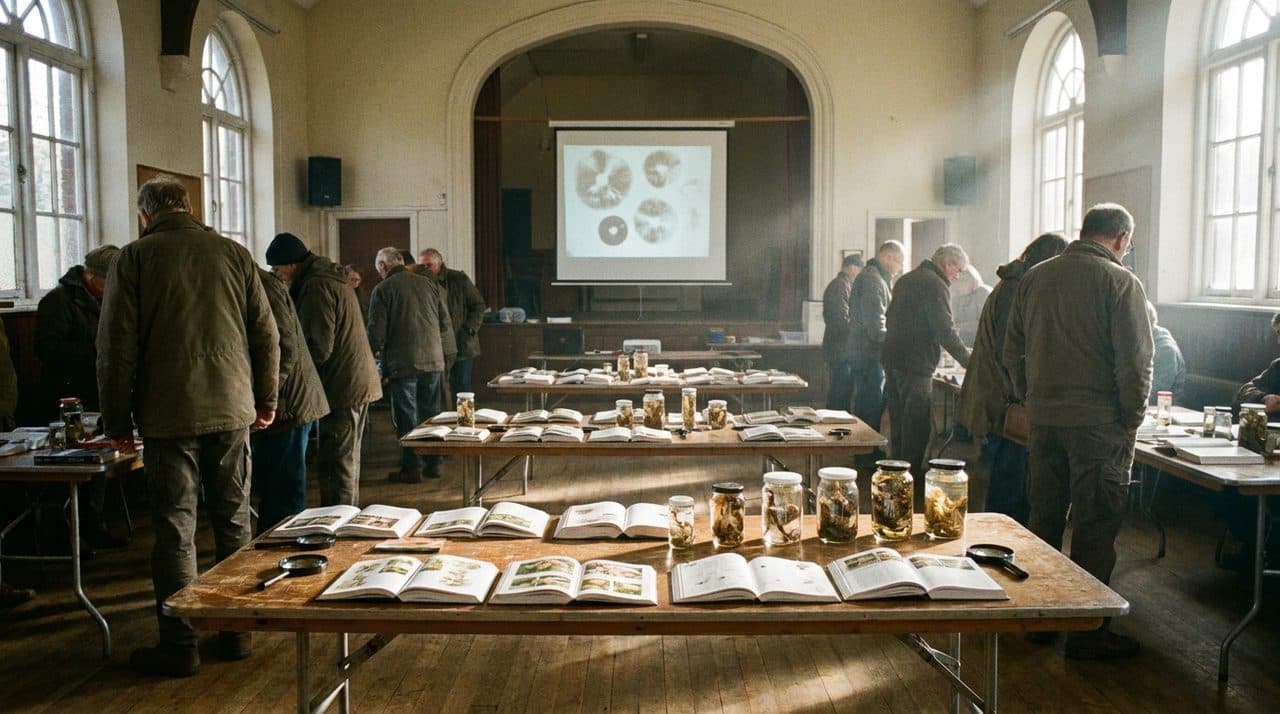
You meet at the trailhead before the sun clears the ridge, when the air still holds that cold eucalyptus bite and the dog walkers haven't yet claimed the fire roads. The Fungus Foraging Club doesn't advertise on Instagram. You find them through a friend of a friend who knows someone who went once and came back with chanterelles and a new theory about cordyceps transmission vectors. They gather every Saturday during mushroom season, a loose collective of mycologists, preppers, set designers, and people who've watched The Last of Us so many times they can quote the Kansas City episode verbatim.
The Weekly Hunt Starts in a Parking Lot
The group assembles near the reservoir, maybe fifteen people on a slow week, thirty when the rains have been good. Someone always brings thermoses of coffee that taste faintly of last week's chai. You sign a liability waiver on someone's phone—actual legal language about assuming risk of consuming wild mushrooms, which nobody reads but everyone signs. The club founder, a UCLA mycology PhD dropout who now does prop work for post-apocalyptic TV shows, does a quick safety briefing that's half fungi identification and half zombie survival tactics. She's wearing the same faded green field jacket every week, pockets bulging with specimen bags and a dog-eared copy of a mushroom guide that's been rained on so many times the pages ripple.
What You're Actually Looking For
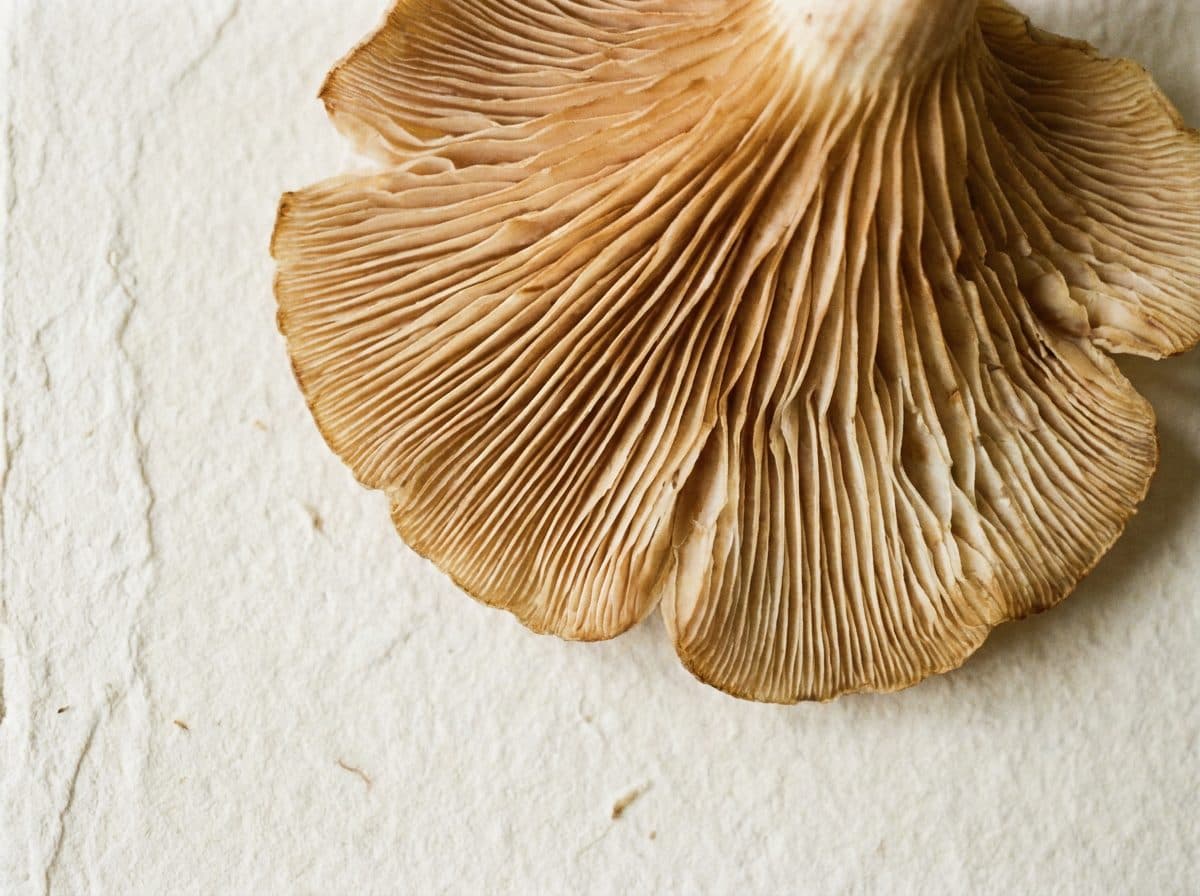
The conversation starts with mushrooms and ends with societal collapse timelines. You're hunting for oyster mushrooms on downed oak branches, turkey tail on rotting logs, maybe chicken of the woods if you're lucky and the conditions are right. But you're also debating whether a cordyceps-style fungal pandemic could actually happen, whether spore-based transmission is plausible, what the incubation period might look like. Someone always brings up the ophiocordyceps unilateralis that controls ant behavior. Someone else counters with mammalian immune system arguments. A costume designer talks about the practical effects work on the show, how they achieved certain textures with actual mushroom cultures and silicone. The hike becomes a moving seminar, people breaking off into smaller groups, stopping to examine bracket fungi or photograph decomposition patterns.
The Smell of Wet Earth and Mycelium
You learn to recognize the scent of active mycelium before you see the fruiting bodies. It's a rich, almost sweet decay smell, different from regular rot—more like fresh bread dough mixed with damp basement. The group moves slowly, scanning the understory, flipping logs carefully and replacing them exactly as found. There's an etiquette here: never take all the mushrooms from one spot, always leave some for spore dispersal, photograph everything before you harvest. People crouch in the leaf litter for ten minutes examining a single specimen, comparing gill patterns to phone photos, arguing about whether it's a true chanterelle or a false one. The light filters green through the oak canopy, and everyone's boots are caked with the same red-brown clay that'll stain your car floor mats for weeks.
Between-Season Survival Training
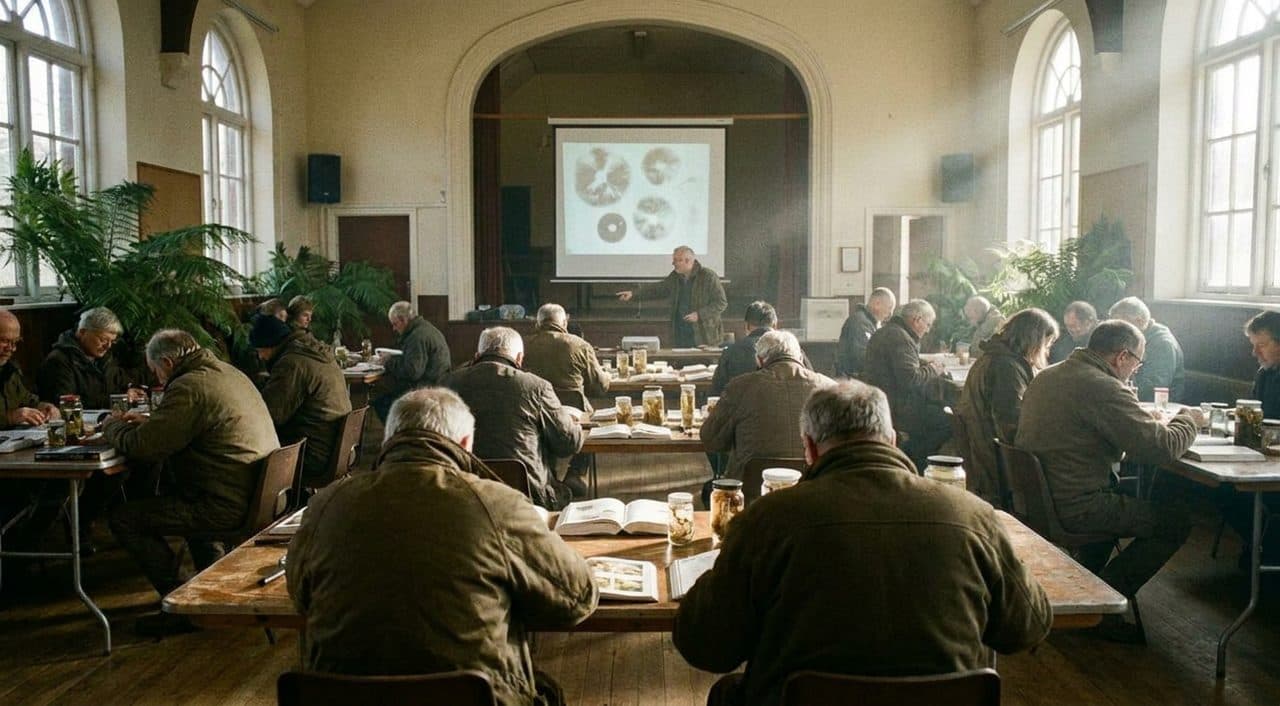
When the show's off-air and mushroom season wanes, the club pivots. They meet at someone's Silver Lake bungalow for what they call "skills exchanges"—basically post-apocalypse prep disguised as dinner parties. You might learn fire-starting techniques using bracket fungi as tinder, or water purification methods, or which local plants are edible versus which ones will shut down your kidneys. Someone teaches basic suturing using chicken breasts from the grocery store. Someone else demonstrates how to make cordage from yucca fibers. There's always a potluck component featuring foraged ingredients, and there's always someone who brings store-bought hummus and pretends they didn't. The living room smells like woodsmoke and garlic, and people argue about whether the infected in the show are technically zombies or something else entirely.
The Regulars You'll Recognize
You start noticing the same faces. There's the guy who works in VFX and brings printouts of real cordyceps microscopy to compare with show screenshots. The woman who runs an urban farming collective and knows every edible weed in a five-mile radius. The couple who met at a previous season's foray and now coordinate their matching field gear. A few actual epidemiologists show up sometimes, mostly to gently correct everyone's pandemic modeling assumptions while still engaging seriously with the thought experiments. Someone's always wearing a Firefly logo jacket. Someone's always barefoot by the end of the hike, boots tied to their backpack, talking about earthing and mycelial networks. The group text thread runs hot between meetings—photos of mystery mushrooms, links to scientific papers about fungal cognition, memes about Joel and Ellie, arguments about whether the Denver chapter would realistically have that much fuel.
What Happens With the Harvest
The mushrooms you collect get divided communally, everyone taking a share based on what they can actually use. Nobody's trying to fill a chest freezer—it's more about the hunt than the haul. People swap recipes in the parking lot after: oyster mushrooms sautéed with thyme, turkey tail dried for tea, chicken of the woods breaded and fried until it actually tastes like chicken. There's a strict rule about gilled mushrooms—if there's any identification doubt, it goes in a separate "study only" bag for spore printing and microscopy later, never consumption. The club's had zero poisoning incidents in three years, which they attribute to paranoid caution and the fact that half the members have actual mycology training. You leave with muddy boots, a small bag of verified edibles, and several new theories about whether humans could develop cordyceps immunity through gradual exposure.
Practical Notes
The club meets during mushroom season, typically late fall through early spring when the rains come. You need to know someone to get added to the group text—they don't do open recruitment. Expect early morning starts, before the trails get crowded. Bring water, real hiking boots, bags for specimens, and a phone with a decent camera for documentation. No foraging experience required, but you should probably watch the show first or the references won't land. The vibe is welcoming but serious about safety—they'll kick you out if you eat something without group consensus on identification. Parking near the reservoir fills fast on weekends. Some between-season meetups involve a small potluck contribution. The whole thing runs on volunteer energy and shared obsession.
Tags: #TheFungusForagingClub #SilverLakeLosAngeles #MushroomHunting #TheLastOfUs #MycologyLA #ApocalypsePrep #UrbanForaging #LAHiking #WildMushrooms #PostApocalyptic #SilverLakeLife #LASubculture #ForagingCommunity #FungiFriday #HBOTheLastOfUs
Sources consulted: atlasobscura.com · timeout.com · nytimes.com
All trademarks are the property of their respective owners.


