 Tate Modern and the Turbine Hall — The 152-Metre Free Cathedral of Contemporary Art on Bankside, London
Free Things to Do
The Free London Gallery That's Been Thinking About AI and Bodies Since 2019
The week "ai" is back in Google's U.S. top-ten search trend, the most considered free permanent gallery in London for thinking about machines and bodies has already been on Euston Road for seven years. The Wellcome Collection's "Being Human" gallery opened in autumn 2019 with around fifty works on genetics, infection, mental health, and environmental breakdown — algorithmic medicine before "algorithmic medicine" was a phrase you could put in a headline.
Why "Free" Means Something Specific Here
Most London museum talk misses the point. The British Museum, the National Gallery, the Tate are all free to enter, which is enormous, and which also means free for a city that already pays them attention.
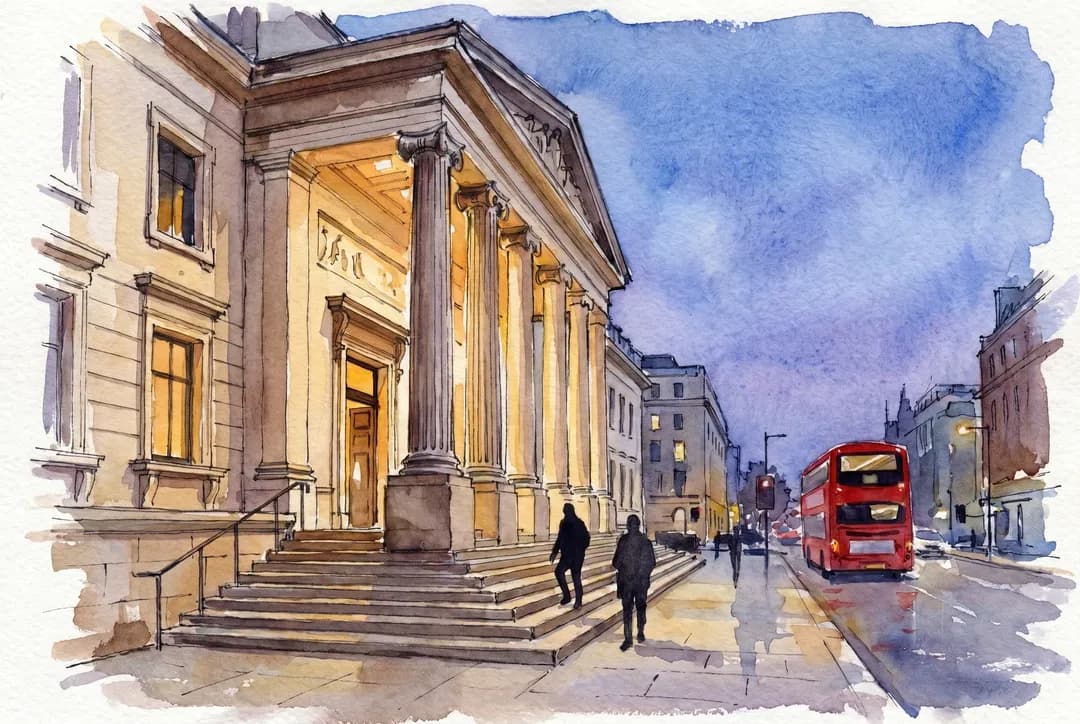
The Wellcome Collection is a smaller bet. The neo-classical building at 183 Euston Road was completed to Henry Wellcome's specifications in 1932 to house his pharmaceutical company's headquarters and library. The public museum opened in June 2007. Admission has been free from the first day. Not "pay-what-you-wish on Tuesdays" free. Just free, every day, including the temporary exhibitions.
The reason this matters in May 2026: the cheapest way to think seriously about AI in medicine — without the press cycle, the venture dashboard, or the airport-bookshop bestseller — is to walk into a room that has been showing the messy, embodied, computational version of that conversation for half a decade.
The "Being Human" Gallery, Specifically
"Being Human" is the second permanent gallery at Wellcome, opened October 2019 (the first, "Medicine Man," holds Henry Wellcome's collection of medical instruments and amulets). It was designed by Assemble — the Turner Prize-winning architecture-and-arts collective — with graphic identity by Kellenberger-White.
The gallery is divided into four sections: Genetics, Minds & Bodies, Infection, and Environmental Breakdown. About fifty works sit across the four. The point of the gallery, in its own description, is to ask what it means to be human in the twenty-first century. Most of the answer involves machines.
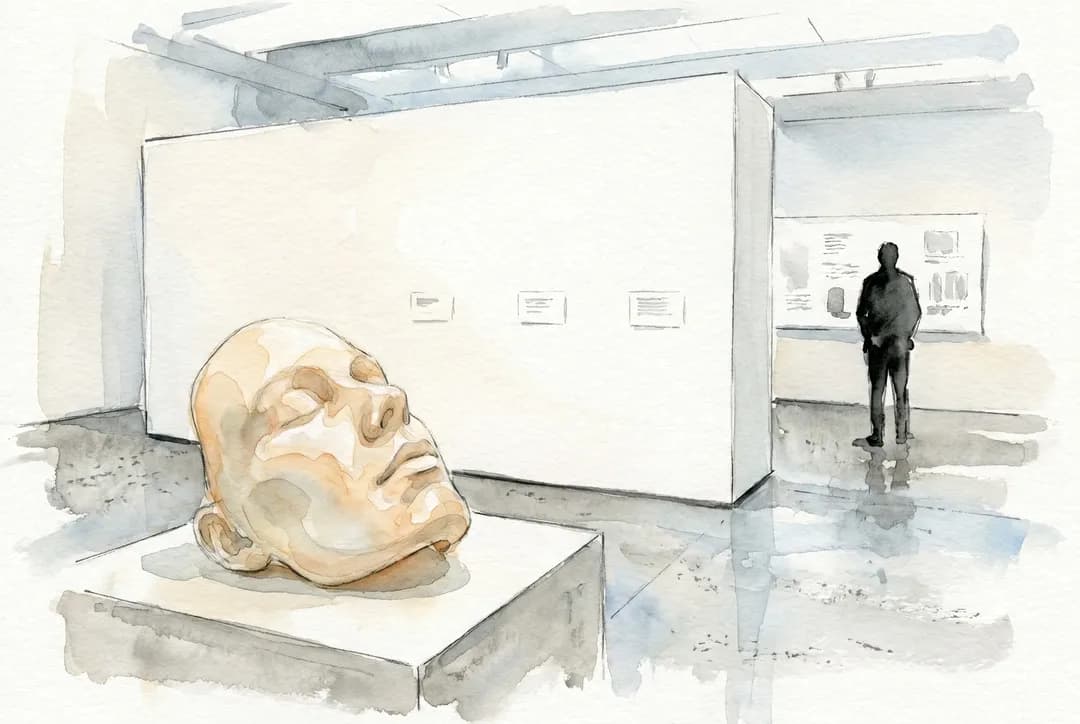
The marquee piece in the Genetics section is Heather Dewey-Hagborg's "Stranger Visions," a series of life-size 3D-printed portraits computationally generated from DNA found on cigarette butts and chewing gum picked up off the New York City sidewalk. The portraits are not photographs of real people. They are predictions made by an algorithm trained on which DNA markers correlate with which face shapes. Whether you find that funny, terrifying, or both is the work.
Other rooms hold a DIY CRISPR gene-editing kit, a smell-piece that synthesises the scent of extinct nineteenth-century plants from sequenced DNA, and a series of photographs and short films on data + bodies + identity. The thread connecting them is that the boundary between "biological" and "computational" stopped being clean somewhere around 2012, and the museum is one of the few public rooms in the city that takes that as a starting point rather than a conclusion.
What Else Is Free Right Now
"The Coming of Age" is the current major temporary exhibition, free, running until 29 November 2026. It looks at perceptions of ageing across art, science and popular culture, with works on adolescence, mid-life, dementia, end-of-life. It pairs unusually well with "Being Human" — the temporary show is the soft tissue around the permanent show's harder questions.
"Tenderness and Rage," opening 29 May 2026, will run until 30 May 2027, examining HIV and AIDS through histories of protest and care. The first London-based museum exhibition dedicated to artist Audrey Amiss (1933–2013) opens in July 2026. All of this is free, on the same admission, with the same Tuesday-through-Sunday hours.
The half-hour guided tours run free, three times a day, Tuesday through Sunday at 11:30 a.m., 2:30 p.m., and 3:30 p.m. The tour is the fast on-ramp if you have an hour and want a doctor or curator to point at the things that matter.
The Reading Room Above the Galleries
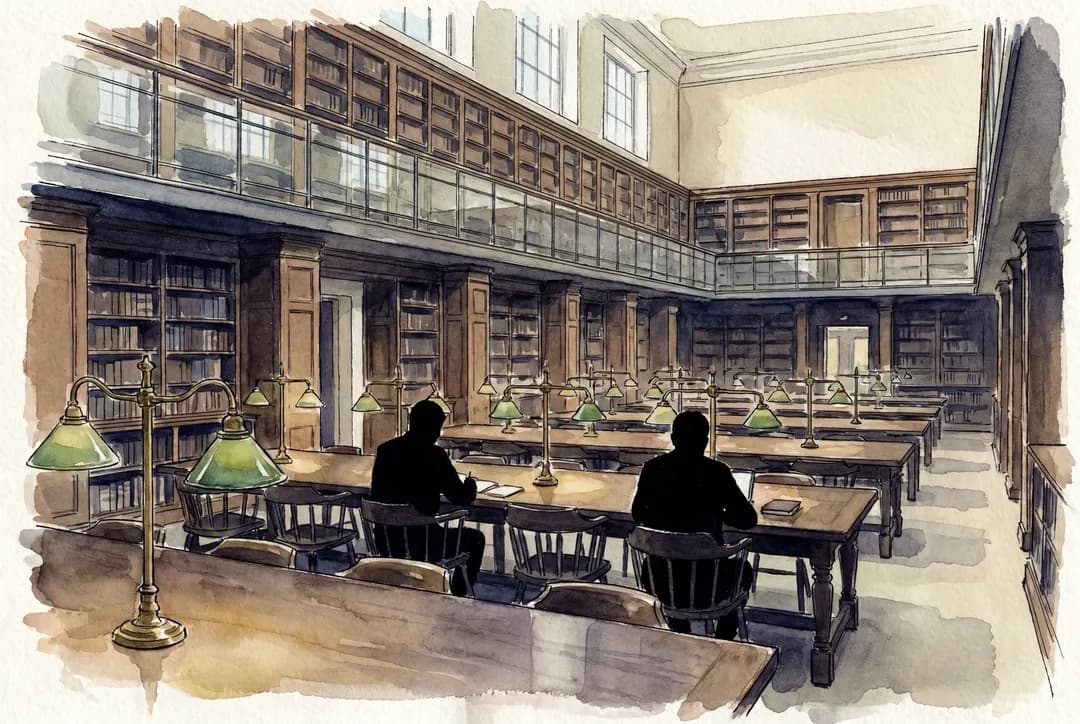
On the second floor is the Reading Room, a hybrid library-cum-exhibition that opened in 2015. Long oak refectory tables. Brass library lamps with green glass shades. Walnut bookcases against the walls. The mezzanine looks down onto the gallery floor.
Anyone can sit and read. The book selection is curated by Wellcome staff, drawn from across the Library's collection of over two and a half million books, manuscripts, archives, films and pictures on the history of medicine. Pick up a book, sit down at a table, you are inside the largest medical history library in the country, and you have not paid anything.
This is where the "free" claim earns its weight. The temporary exhibition is free. The permanent gallery is free. The library reading room is free. The guided tour is free. There is a cafe and a bookshop, both fairly priced. The ratio of considered programming to ticket cost is the highest on London's central Tube map, and it has been that way for nineteen years.
How to Use a Wellcome Visit, Specifically
One hour: the Genetics section of "Being Human," then the Reading Room for fifteen minutes.
Two hours: add "The Coming of Age" before the gallery.
Half-day: the 11:30 guided tour, then "Being Human," then "The Coming of Age," then the Reading Room. Lunch in the ground-floor café — the better end of museum cafés.
From outside London: Euston tube is one block north (Northern, Victoria, Overground). Euston and St Pancras International are five minutes' walk. The British Library is two minutes east. The two together are the cheapest considered afternoon on the central Tube map.
What "AI in Medicine" Actually Looks Like When You Stand In Front of It
A 3D-printed face that was guessed by an algorithm. A library shelf of nineteenth-century medical drawings sitting next to a CRISPR kit. A short film about data and identity that asks what your phone knows about your sleep cycle. None of these are about AI in the press-release sense — none of them are demos, none of them are about a particular model release. All of them are about what happens when computation enters bodies, which is the more useful version of the question.
The week "ai" is a top-ten US search trend, the gallery has not changed its programming. It does not need to. The room has been doing the slow version of that conversation for seven years.
Practical notes
- Address: 183 Euston Road, London NW1 2BE (between Gower Street and Gordon Street; on the south side of Euston Road; main entrance up a flight of stone steps)
- Hours: Tue–Sat 10 a.m.–6 p.m. (Thu until 9 p.m.); Sun 11 a.m.–6 p.m.; closed Monday. Reading Room follows the same hours
- Getting there: Euston Square (Hammersmith & City / Circle / Metropolitan) one block; Euston (Northern / Victoria / Overground) two blocks; King's Cross / St Pancras five minutes east; the 18, 30, 73, 205, 390 buses run Euston Road
- Go for: "Being Human" permanent gallery; "The Coming of Age" temporary exhibition (until 29 November 2026); the second-floor Reading Room
- Best window: Thursday 6–9 p.m. is the late opening — the gallery is at its emptiest after 7. Saturday morning at 10:15 also works for the just-opened-doors quiet
- What to do after: British Library (free, two minutes east on Euston Road); Grant Museum of Zoology (free, four minutes south on Gower Street); Drummond Street's Indian-restaurant block (one minute north for a low-cost dinner)
The Point
A "free" museum is only as valuable as what it programs in the years it has the room. The Wellcome Collection has been programming for the conversation London is currently catching up to since well before that conversation had a Google-trend ranking. Walk in. The lights are on. The room is asking the question already, and there is no admission desk to clear first.
Tags: #wellcomecollection #beinghuman #wellcomelibrary #freelondonmuseums #eustonroad #londonmuseums #aiandmedicine #geneticsart #freelondon #thingsfreelondon #nicebutfree #karpofinds #londononabudget #medicalhumanities #permanentgallery
All trademarks are the property of their respective owners.
Ask Karpo for more information.
Keep reading
- Tate Modern and the Turbine Hall — The 152-Metre Free Cathedral of Contemporary Art on Bankside, London
 BFI Southbank: The Best Thing in London That Costs Nothing to Walk Into
 London Park Loops For Weather Heat Wave Recovery