 Dog Costume Parade Near Me in East Village: Boris and Horton
Free Things to Do
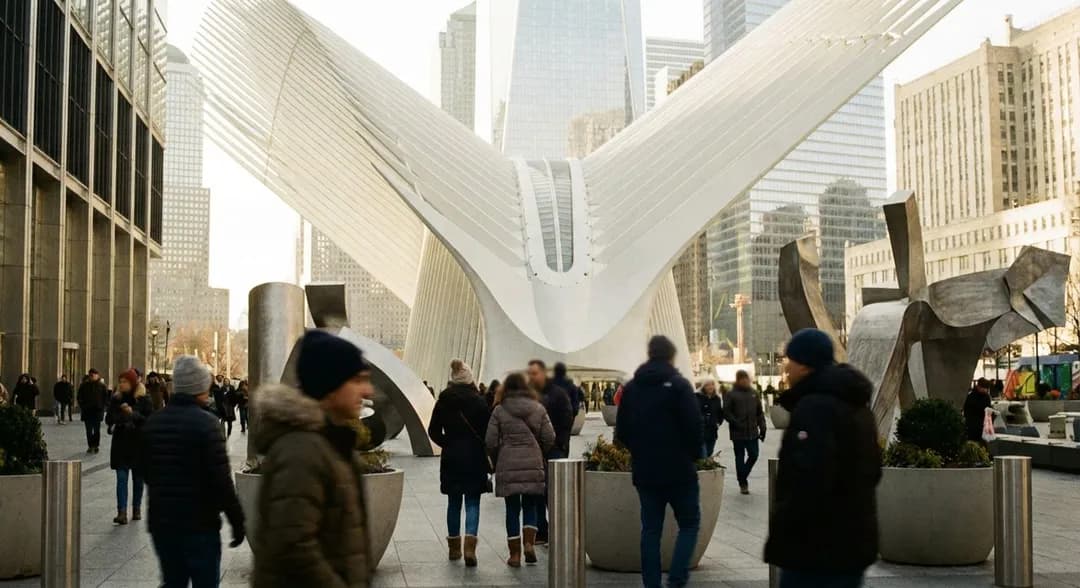
The Free Art Collection Inside the Oculus Nobody Mentions
Site-specific installations rotate quarterly; the Calatrava hall amplifies everything
You walk through the Oculus most days thinking it's just an expensive mall with good lighting, but Santiago Calatrava's cathedral to transportation doubles as a rotating contemporary art gallery where admission costs exactly nothing. The installations change every three months, commissioned specifically for this space, and the building's acoustics turn every opening reception into an accidental performance piece.
When Marble Echoes Like a Concert Hall
The white ribbed ceiling acts like a giant tuning fork. Stand near the eastern entrance around 8:47 AM on weekdays and you'll hear the PATH train arrivals create a low frequency hum that resonates through Calatrava's steel ribs for exactly four seconds after each train stops. Artists know this. The fall 2023 installation by Rashid Johnson included suspended bronze sculptures that vibrated audibly when trains arrived, turning the transportation schedule into an unintentional musical score. You can't experience that piece anymore, but whatever's hanging now was designed with those same acoustic properties in mind. The building curates as much as any human does.
The art program launched in 2016, quietly, with no permanent signage explaining what you're looking at. Port Authority commissioned the pieces but doesn't advertise them. You'll find small plaques near each work, mounted low on the marble walls where most people rushing to catch trains never look. The installations occupy three zones: the main hall's central axis, the mezzanine level overlooking the PATH platforms, and a small alcove near the Cortlandt Street subway entrance that stays empty between exhibitions.
The Mezzanine Perspective Changes Everything

Take the stairs up to the second level on the western side, near the Apple Store entrance. From here you see how artists use the building's symmetry against itself. The current installation runs along the railing, visible from below but designed to be experienced from above. Previous exhibitions have included fiber works by Sheila Hicks that cascaded down toward the main floor, and a series of photographs by Carrie Mae Weems that required you to stand at specific marked spots on the mezzanine to align the images with architectural elements below.
The lighting shifts throughout the day as the skylight opens and closes with the sun's position. Morning light hits the eastern wall at an angle that makes certain materials glow. By 3 PM in winter, the entire hall goes briefly golden. Artists submit proposals knowing their work will look completely different depending on when you visit. The Port Authority's art committee meets quarterly in a conference room on the fourth floor of 4 World Trade Center to review submissions. They prioritize artists who've worked with institutional architecture before, people who understand that commuters won't stop moving to contemplate their work.
The Alcove Nobody Uses
Walk past the Shake Shack toward the Cortlandt Street connection and you'll find a recessed space about fifteen feet deep. It's technically part of the memorial site's circulation path, but most people flow around it without noticing. This spot hosts smaller, more experimental pieces. In summer 2022, a sound installation by Christine Sun Kim played here, audible only if you stepped fully into the alcove. The acoustics created a pocket of silence from the main hall's noise, then filled it with recorded interviews with deaf commuters describing what they imagine the Oculus sounds like.
The alcove installations change on a different schedule than the main hall pieces, sometimes monthly. Check the small digital screen mounted near the entrance to the R train for current exhibition dates. The screen also lists artist talks, which happen irregularly on Thursday evenings around 6:30 PM. These talks draw maybe twenty people, mostly architecture students and a few curious commuters who stumbled into the announcement.
Opening Receptions As Accidental Theater

New installations debut on Monday evenings, typically the first Monday of March, June, September, and December. The Port Authority doesn't publicize these openings beyond a small notice on their website's art page, buried under transportation updates. Show up around 7 PM and you'll find wine in plastic cups, the artist usually standing near their work looking simultaneously proud and uncomfortable as thousands of commuters stream past without pausing.
The receptions reveal how the building performs. Conversations echo and multiply. Someone laughing near the eastern entrance sounds like they're standing right next to you on the western side. Artists often incorporate this during their talks, speaking from different positions in the hall to demonstrate how sound travels through Calatrava's ribs. At the December 2023 opening, the artist walked the perimeter while speaking, her voice seeming to come from everywhere and nowhere.
What the Security Guards Know
The guards stationed near the center of the main hall rotate shifts every four hours. The morning crew, arriving at 6 AM, sees the art in the best natural light before crowds arrive. Ask them what they think of the current installation and you'll get surprisingly detailed opinions. One guard, who works the Tuesday and Thursday early shift, keeps a notebook of observations about how people interact with the pieces. He's noticed that commuters touch the art more often on rainy days, despite the "do not touch" placards.
Guards also know which artists return to see their work after the installation period ends. Apparently several have come back months later, standing anonymously in the crowd to watch how their pieces have aged or been ignored. The guards don't approach them. There's an unspoken understanding that artists get to haunt their own exhibitions.
The Archive That Doesn't Exist Yet
No comprehensive catalog documents what's been shown here. The Port Authority maintains records, but they're not publicly accessible. Your best resource is a photographer named Marcus Chen who's documented every installation since 2017, posting images to a dedicated Instagram account without commentary. He shoots each piece at different times of day to capture the lighting variations. His archive shows how certain materials deteriorate faster in the high-traffic environment—fabrics fade, metals develop patina from thousands of hands brushing past.
The lack of official documentation feels intentional. These pieces exist temporarily in a space defined by transience. Commuters flow through, art appears and disappears, the building remains. Nothing's meant to be permanent here except the architecture itself, and even that shows wear. The marble floors near the PATH entrance have developed distinct traffic patterns, darker channels where millions of feet have walked the same path.
Practical Notes
The Oculus is open daily from 5 AM to midnight, though art is best viewed during off-peak hours: weekdays between 10 AM and 2 PM, or after 7 PM. The space connects to the E train at World Trade Center station, the R at Cortlandt Street, and PATH trains to New Jersey. Bring headphones if you want to stay a while—the ambient noise level averages around 75 decibels during rush hours. Artist talk schedules appear on the Port Authority's website under "Arts & Culture," updated monthly. Entry is free, always. The building's skylight opens when exterior temperatures allow, typically April through October on clear days. Photography is permitted. No booking required.
Tags: #FreeArtNYC #OculusArt #WorldTradeCenter #ContemporaryArt #PublicArt #NYCInsider #LowerManhattan #HiddenGalleries #CalatravaArchitecture #PathTrain #FinancialDistrict #ArtInTransit #SecretNYC #UrbanCulture #CommissionedArt
Sources consulted: timeout.com · ny.curbed.com · nycgovparks.org
All trademarks are the property of their respective owners.
Ask Karpo for more information.
Keep reading
- Dog Costume Parade Near Me in East Village: Boris and Horton
 Dog Costume Parade Near Me in Astoria: Château le Woof
 Dog Costume Parade Near Me on Upper West Side: Black Lab Cafe