The East London Printmaking Collective That Books Out Its Friday Evening Press
Where the Canal Meets the Clatter of Metal Type
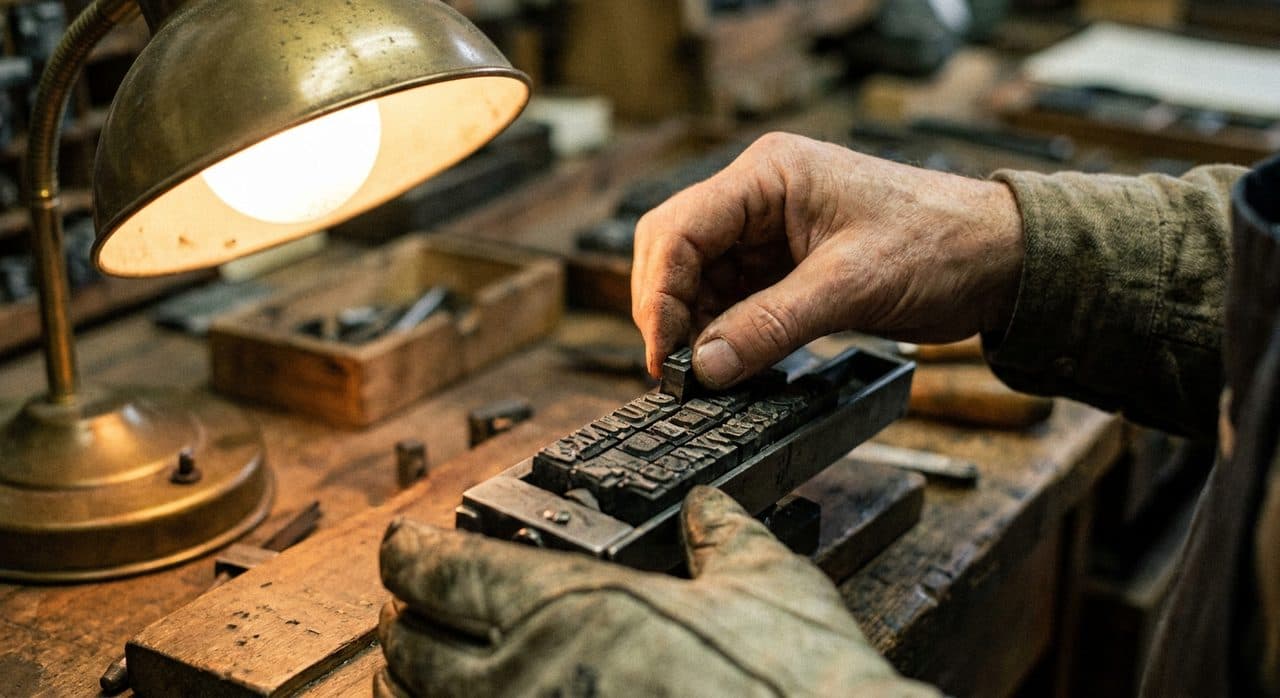
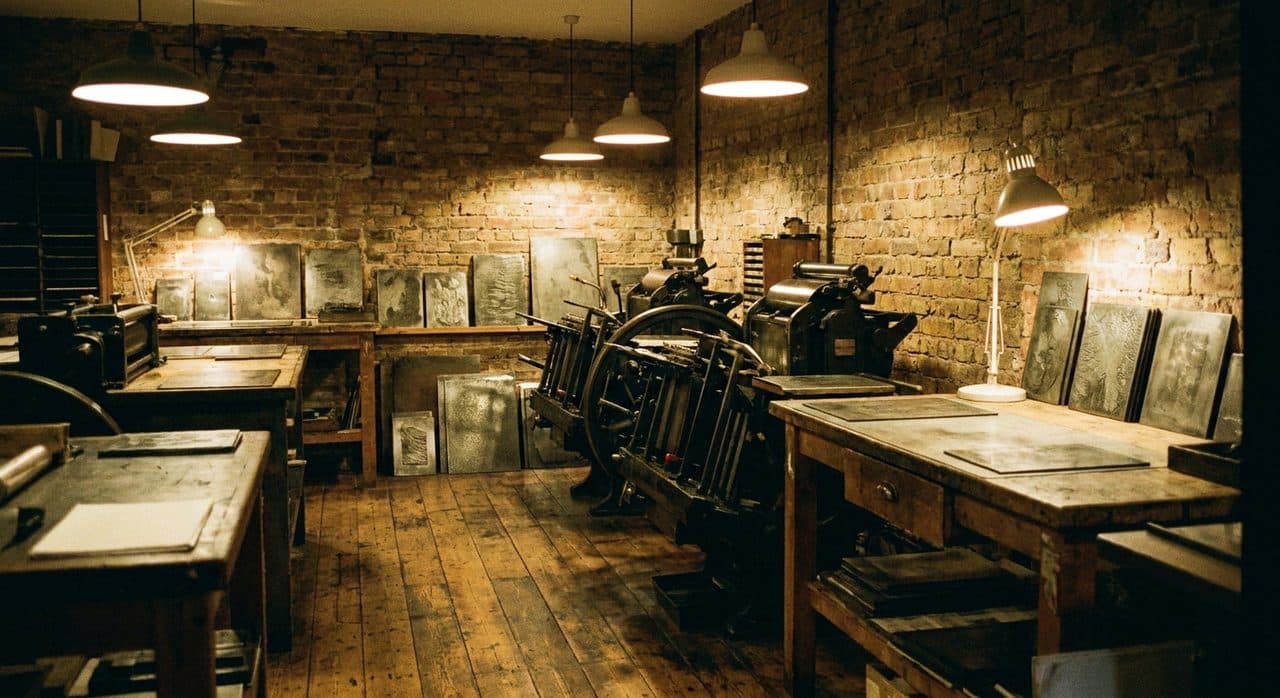
There is a particular quality of light that settles over the Hackney Wick canal basin on Friday evenings. It arrives slantwise through the industrial windows of the old warehouses, catching the dust motes that hang in the air above ink-stained workbenches. In one such converted building, tucked between a ceramics studio and a furniture restorer's workshop, the sound of a printing press punctuates the quieter rhythm of boats passing on the water below.
The collective has occupied this space since 2018, though the building itself has housed makers of one kind or another for the better part of a century. The concrete floors bear the scars of previous industries—textile manufacturing, then storage, then the slow creep of creative enterprise that has come to define this particular corner of East London. Now, every Friday from six until nine, the heavy door opens to admit eight participants who have secured one of the most sought-after creative workshop spots in the city.
A Machine That Remembers Fleet Street
At the heart of the studio sits a 1962 Heidelberg Windmill platen press, a magnificent piece of German engineering that weighs approximately a ton and operates with the precise, rhythmic motion that earned it the nickname "the Windmill" among printers worldwide. The press is still mechanically original—no retrofitted parts, no digital additions—making it one of perhaps a hundred such machines still operating in the United Kingdom. When it runs, the sound fills the studio: a whoosh-clack-whoosh that becomes almost hypnotic after the first few minutes.
The collective's lead printer learned to operate this particular beast from a retired Fleet Street compositor in 2019, spending weekends in the man's garden shed in Lewisham, learning the precise adjustments of impression, the temperament of different paper stocks, the way ink behaves differently in humid weather versus dry. That knowledge now passes to Friday evening participants, who stand transfixed as the press cycles through its motion, feeding paper, pressing type, delivering finished prints with mechanical grace.
There is something almost devotional about watching the Heidelberg work. The participants who come for letterpress evenings often arrive expecting a craft activity and leave having witnessed something closer to industrial choreography. The press demands respect—it will take a finger without hesitation if you reach where you shouldn't—but it rewards attention with prints of extraordinary clarity and depth.
The Birmingham Connection
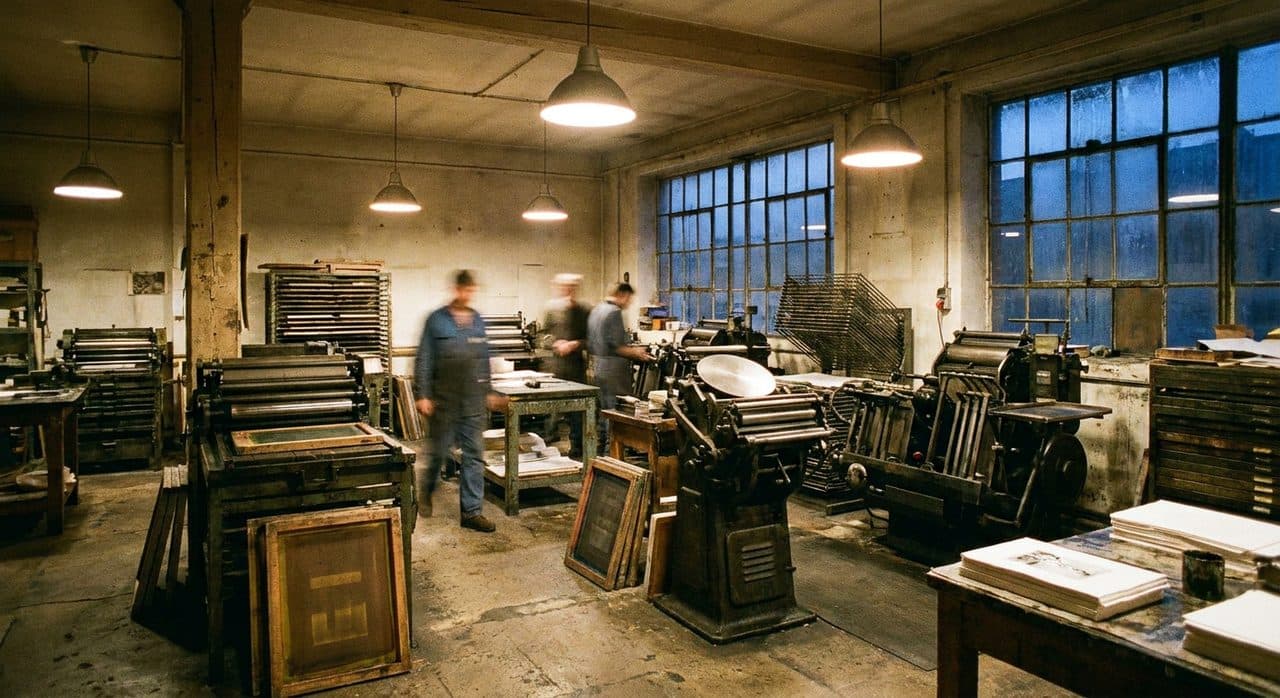
Screen printing evenings operate at a different tempo, messier and more immediate, with participants pulling squeegees across stretched mesh while ink bleeds through in controlled floods of colour. The collective sources its screen printing inks from a manufacturer in Birmingham that still produces oil-based formulations for industrial signage—the kind used for safety warnings on factory floors and directional markers in warehouses.
The collective buys these inks in bulk, a decision born of necessity that became a point of pride. The colour density outperforms standard art inks at any price point, producing blacks that are genuinely black and reds that hold their saturation even on absorbent paper stocks. Participants notice immediately: the prints they produce have a weight and presence that surprises them, a professional quality that seems at odds with their three-hour introduction to the medium.
The ink arrives in industrial tins, labelled with alphanumeric codes rather than poetic colour names. What an art supplier might call "Midnight Azure" is simply "B-47" here, and there is something refreshing about that honesty. The colours are what they are, mixed to specification, formulated to last decades on a loading dock sign. That they also happen to produce beautiful art prints is almost incidental.
The Accidental Souvenir
Every Friday evening participant leaves with their prints—that much was always the plan. But they also leave with something unexpected: a small edition certificate, no larger than a business card, handprinted on the Heidelberg itself. The card states the date, the technique covered, and a small colophon mark that identifies it as a product of the collective's press.
This detail started as a joke. In the early days, someone suggested that if participants were making "editions" of their work, however modest, they ought to have documentation to prove it. The first certificates were printed on scrap card, an afterthought squeezed into the final minutes of a session. But the response was immediate and unexpectedly fervent. People wanted these cards. They photographed them, framed them alongside their prints, posted them online with a kind of pride that seemed disproportionate to their size.
Now the certificates have become the session's most requested souvenir, more treasured in some cases than the prints themselves. There is something about holding a piece of card that has passed through a sixty-year-old press, feeling the slight impression where the type bit into the surface, that connects participants to a lineage of making they hadn't known they craved.
Etching by Twilight
The intaglio sessions occupy a different emotional register entirely. Where letterpress is mechanical and screen printing is physical, etching is slow, chemical, contemplative. Participants score lines into zinc plates, watching as acid bites into metal, learning to read the bubbles that rise from the surface as indicators of depth and progress.
By the time the plates are ready to print, the light outside has usually faded entirely. The canal basin becomes a dark mirror reflecting the studio's windows, and the participants gather around the etching press—a smaller, hand-cranked affair—to see their images emerge from the paper in reverse. There is always a moment of held breath as the paper lifts away from the plate, the slow reveal of lines that seemed tentative on the metal now bold and certain on the page.
The collective rotates through these three techniques on a roughly monthly cycle, occasionally introducing variations—linocut, monotype, collagraph—when the regular roster needs refreshing. But the core three remain the most popular, each offering a distinct relationship between maker and material, between intention and outcome.
The Community That Gathers
The Friday evening sessions draw a particular crowd. There are graphic designers seeking analogue counterweights to their digital days, retirees rediscovering interests abandoned decades ago, couples looking for something more substantial than dinner and a film. The cap of eight participants ensures that the studio never feels crowded, that everyone receives individual attention, that the presses can accommodate each person's work without rushing.
Conversation flows easily across the workbenches, facilitated by the natural pauses that printmaking requires—waiting for ink to tack, for acid to bite, for paper to dry. Participants exchange recommendations for exhibitions, for other workshops, for the best place to get a drink afterward along the canal. Some return week after week, working through the technique rotation until they have tried everything on offer. Others come once, satisfy a curiosity, and carry the experience with them as a single vivid evening in an industrial building by the water.
The collective does not actively seek growth. The Friday sessions remain capped, the techniques remain rooted in tradition, the Heidelberg continues its patient mechanical cycles. In a city that often celebrates the new and the scalable, there is something quietly radical about a space that has found its rhythm and sees no reason to change it.
Practical Notes
Friday evening sessions run from 6pm to 9pm and must be booked in advance through the collective's website. Spaces are limited to eight participants per session, and popular dates—particularly letterpress evenings—often fill within hours of release. Booking typically opens on the first Monday of each month for sessions occurring in the following month.
The studio is located in a converted industrial building accessible from the Hackney Wick Overground station, approximately a ten-minute walk along the canal towpath. Participants should wear clothes they don't mind staining, though aprons are provided. All materials, tools, and inks are included in the session fee. No prior experience is required for any technique.
The canal basin area offers several options for food and drink before or after sessions, including a well-regarded brewery taproom and a café that stays open until eight.
Tags: #HackneyWick #Printmaking #LetterPress #ScreenPrinting #LondonWorkshops #CreativeEvenings #HeidelbergPress #EastLondon #ArtClasses #IntaglioEtching #MakersOfLondon #CanalBasin #TraditionalCrafts #FridayNights #PrintmakingCollective
Sources consulted: timeout.com · londonist.com · eater.com · theguardian.com
All trademarks are the property of their respective owners.
Ask Karpo first
Want to know if Friday evening spots are still available, which printing technique is running this week, and how to get there from Hackney Wick station? Ask Karpo for the latest London printmaking update.