The Crown Heights Stained Glass Studio Running Saturday Drop-Ins at $35
Behind the Garden Gate, Light Takes Shape
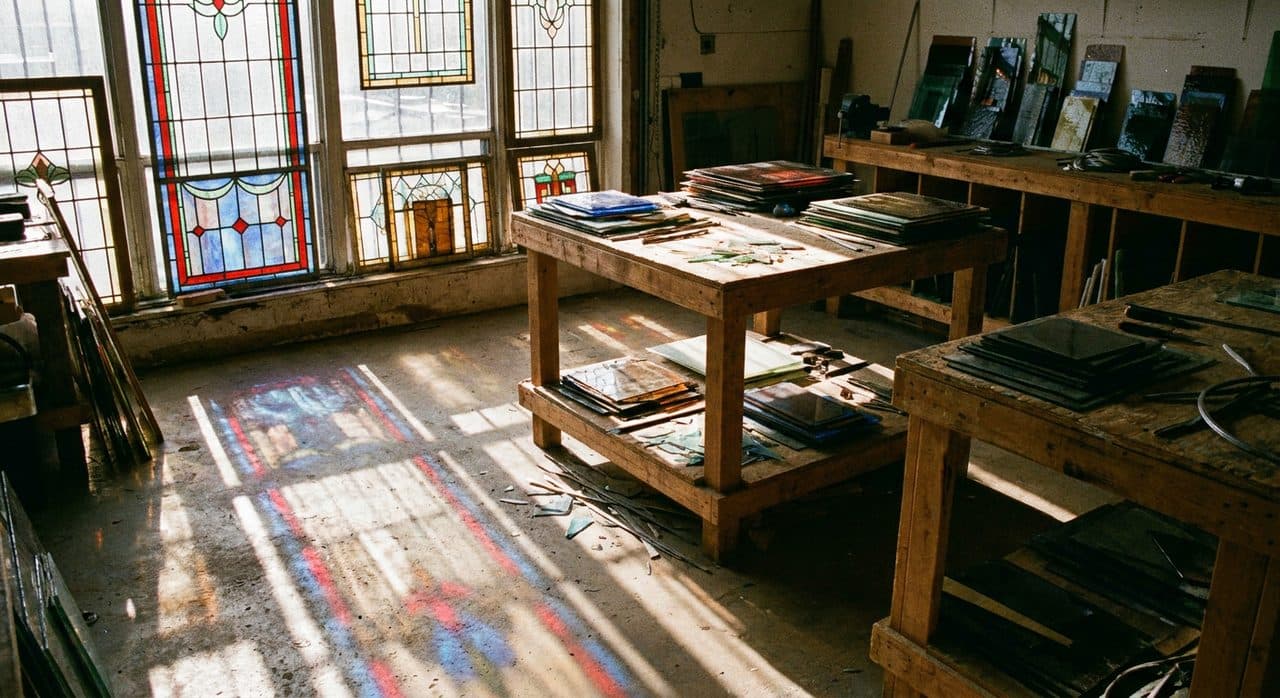
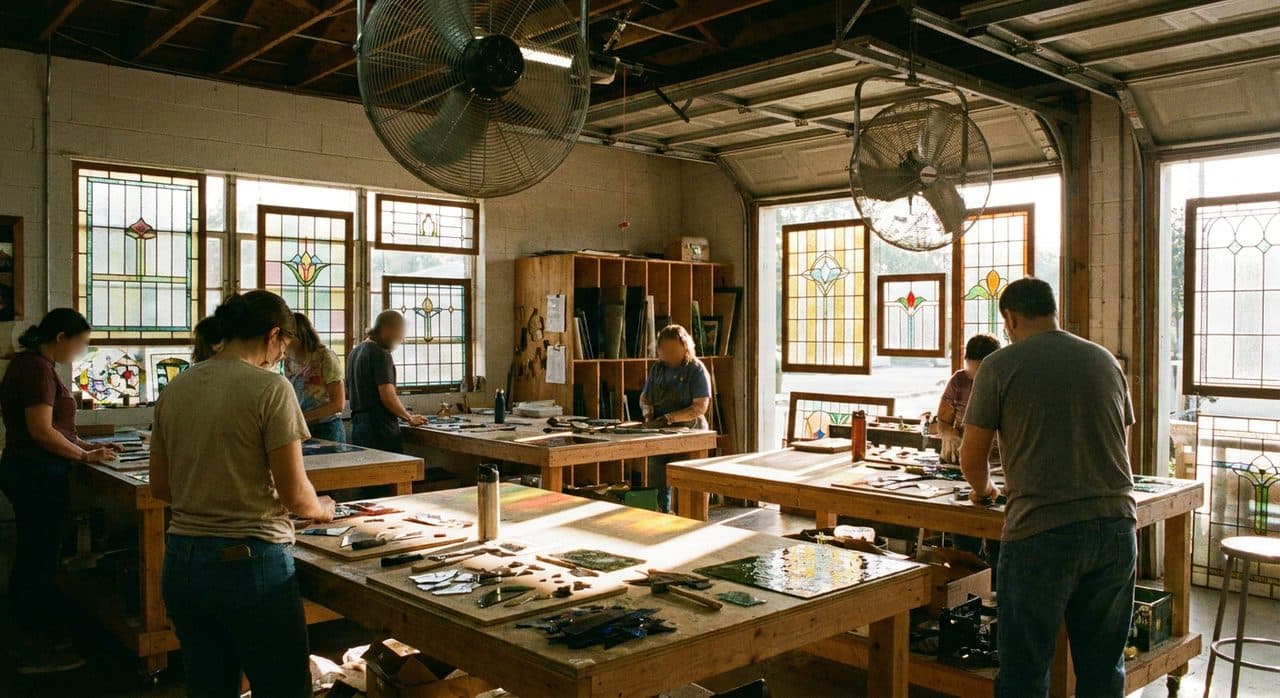
There's a gate on a residential street in Crown Heights that looks like it might lead to someone's backyard tomato plants. It doesn't. Push through, walk past the potted ferns and the rusted bicycle frame that's been there so long it's become sculpture, and you'll find yourself standing in front of a converted garage where the morning light does something extraordinary. It fractures. It multiplies. It throws ruby and cobalt and amber across concrete floors in patterns that shift with the clouds.
This is a working stained glass studio, and it's been operating here since 2020, when the world was shuttered and one artist decided that if she couldn't go anywhere, she'd build something worth staying for. The garage door rolls up on Saturday mornings, and for three hours, anyone with $35 and a willingness to work with their hands can learn an art form that predates the Renaissance.
The Saturday Morning Ritual
Drop-ins begin at 10am, and there's no reservation required. This is intentional. The owner believes that the barrier to trying something new should be low enough that you can wake up on a Saturday, decide you want to make something beautiful, and simply go. By 9:45, a small crowd typically gathers near the gate—some clutching coffee from the Trinidadian bakery down the block, others still shaking off sleep. The mix is always different: a retired postal worker who's been coming for two years, a college student who stumbled upon the studio on a walk to the Brooklyn Museum, a couple celebrating an anniversary with something more permanent than brunch.
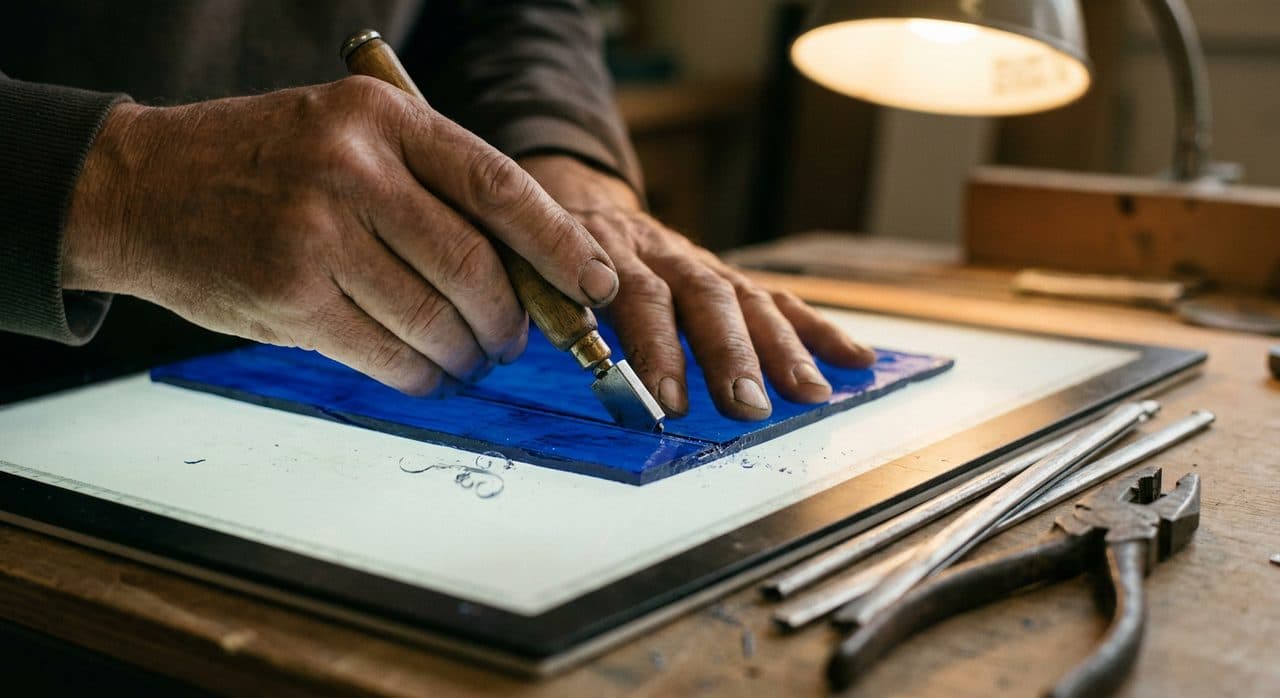
Inside, the space is organized chaos. Sheets of glass lean against walls in wooden racks, sorted roughly by color family. Soldering irons hang from hooks. A long worktable dominates the center, its surface scarred with the evidence of thousands of cuts and joins. The instructor moves through the room setting out tools, her hands quick and certain from years of practice. She'll demonstrate the basics—how to score glass, how to snap it clean, how to wrap edges in copper foil—but the real teaching happens one-on-one, her fingers guiding yours as you learn to feel when the cutter has bitten deep enough.
Glass That Remembers How It Was Made
The sheets waiting in those wooden racks aren't ordinary glass. They're mouth-blown antique glass, sourced from a manufacturer in Waldsassen, Germany, where artisans have been producing glass using traditional methods for generations. Each sheet carries the subtle imperfections of human breath—tiny bubbles, slight variations in thickness, a depth of color that seems to glow from within rather than simply reflect light.
It's significantly more expensive than the machine-made float glass that most beginner workshops use. The instructor knows this. She uses it anyway, insisting that the colour depth can't be replicated by machine, that there's no point in teaching someone to work with glass if they're not going to experience what glass can actually do. When you hold a piece of the Waldsassen ruby up to the window, you understand. It doesn't just look red. It looks like red has weight, has history, has temperature. Beginners deserve to work with materials that reward their effort, she argues. Otherwise, why bother?
The Economics of Keeping Craft Alive
That $35 drop-in rate includes everything: the antique glass, the copper foil, the solder, the use of all tools, three hours of instruction. It also includes lead came for those ready to work on larger pieces, the H-shaped metal channels that hold stained glass panels together in the medieval tradition. Add up the cost of materials alone, and the math doesn't work. The owner knows this too. She set the price deliberately below her own cost.
Crown Heights isn't what it was a decade ago. Studio space has become expensive, and the pressure to monetize every square foot is real. But she remembers learning this craft in a community workshop that charged almost nothing, remembers how that accessibility changed the trajectory of her life. The Saturday drop-ins are her way of paying that forward, of insisting that art-making shouldn't be a luxury good. She makes up the difference through commissioned work—restoration projects for churches, custom pieces for restaurants and private homes—and considers the weekend sessions an investment in keeping the craft alive.
When Individual Becomes Collective
On the last Saturday of each month, something different happens. The morning session extends to 3pm, and participants work together on a collective large-format piece. These aren't simple projects. They're ambitious panels, sometimes three feet across, designed to catch the afternoon light in the studio's front window.
The process is collaborative in the truest sense. One person might cut all the blue pieces while another handles the greens. Someone with steady hands takes on the intricate curves. The instructor moves between stations, troubleshooting, encouraging, occasionally stepping in to rescue a tricky cut. By 3pm, when the panel finally goes up, there's a moment of collective breath-holding—and then the light comes through, and strangers who spent five hours working side by side see what they made together.
Previous collaborations don't disappear when the next one goes up. They're archived on the studio's gallery wall, a growing mosaic of community effort. Some participants come back just to visit their piece, to show friends or family the section they contributed. The wall has become a kind of neighborhood memory, each panel marking a particular Saturday, a particular group of people who decided to make something that would outlast the afternoon.
The Texture of Three Hours
What happens in those three hours varies wildly depending on who shows up and what they want to make. First-timers typically start with a simple sun-catcher—a geometric shape, maybe four or five pieces of glass, something achievable in a single session. The satisfaction of finishing, of holding up a completed object that catches light, is part of the pedagogy. You leave knowing you can do this.
Regulars work on ongoing projects, pulling their pieces from labeled cubbies along the back wall. Some have been coming for months, slowly assembling elaborate panels that would cost thousands if commissioned. The studio becomes a kind of third place for them—not home, not work, but somewhere they belong. Conversations drift between worktables: neighborhood gossip, book recommendations, debates about the best jerk chicken within walking distance. The instructor tolerates chatter but draws the line at phone calls. This is a space for hands and eyes, she reminds people. Let your brain rest.
Practical Notes
The studio is located in Crown Heights, a few blocks from the Brooklyn Museum—look for the gate that appears to lead to a garden. Saturday drop-ins run from 10am to 1pm; no reservation required, just show up. The $35 fee covers all materials and instruction. Last Saturdays of the month feature extended sessions (10am-3pm) for collective projects. Wear closed-toe shoes and clothes you don't mind getting dusty. Street parking is limited; the 2, 3, 4, and 5 trains to Franklin Avenue or Eastern Parkway–Brooklyn Museum are your best bet. The studio does not have a public-facing website or social media presence—the owner prefers word of mouth. Cash and Venmo accepted. All skill levels welcome, including complete beginners. Bring patience and a willingness to make mistakes; both are essential to the process.
Tags: #CrownHeights #StainedGlass #BrooklynWorkshops #NYCArt #CreativeWorkshops #HandmadeNYC #WeekendActivities #BrooklynArt #GlassArt #ArtClasses #ThingsToDoNYC #BrooklynCreatives #CraftWorkshops #LocalArtisans #SaturdayVibes
Sources consulted: timeout.com · nymag.com · thrillist.com · eater.com
All trademarks are the property of their respective owners.
Ask Karpo first
Want to know if this Saturday's drop-in is happening, how many spots are usually left by 10:30am, and what project is running? Ask Karpo for the latest Crown Heights studio update.