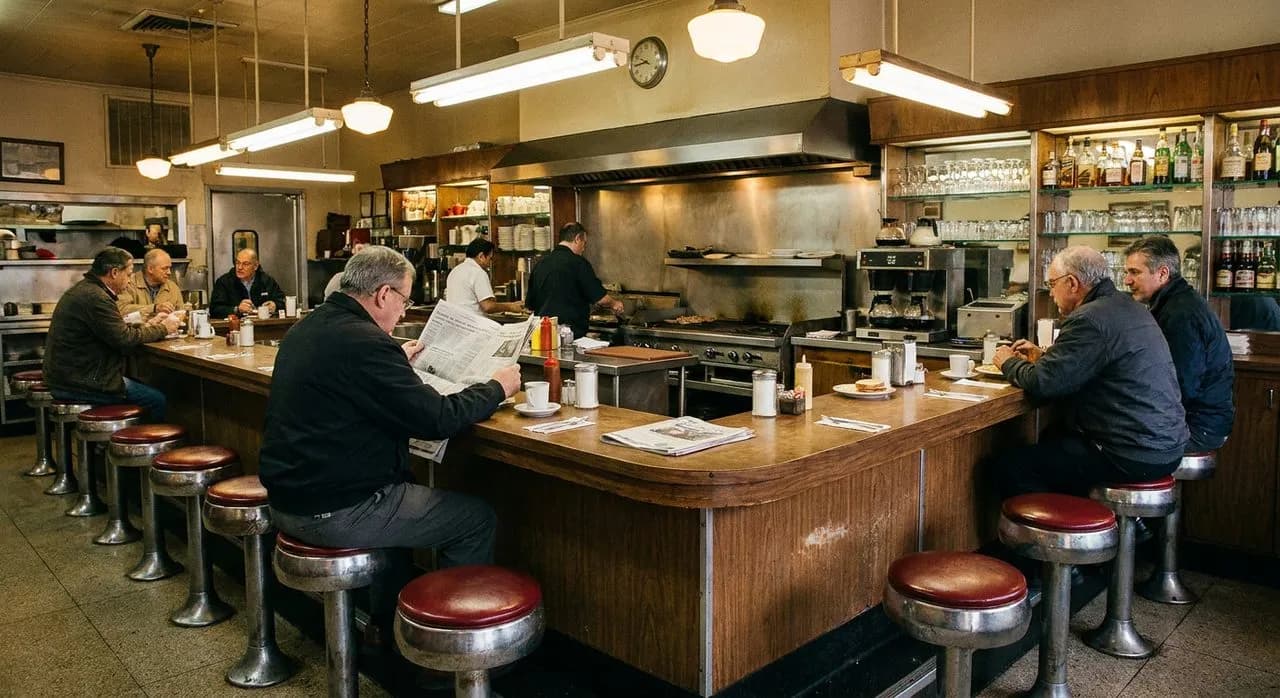
There's a particular stool at Eisenberg's Sandwich Shop—corner spot, right by the Fifth Avenue door—that hasn't budged in nearly a century. It wobbles slightly if you spin too fast, the chrome footrest is worn smooth, and from that perch you can see the register, the door, and every plate that leaves the grill. Regulars call it 'the conductor's seat,' and for good reason: sit there long enough and you'll watch the entire lunchtime symphony unfold. The clatter of spatulas on the flattop, the rhythmic ding of the register, the shuffle of office workers and retirees who know the menu without looking. This is old-New-York diners at their most elemental—no velvet ropes, no reservations, just Formica and function.
The architecture of a disappearing ritual
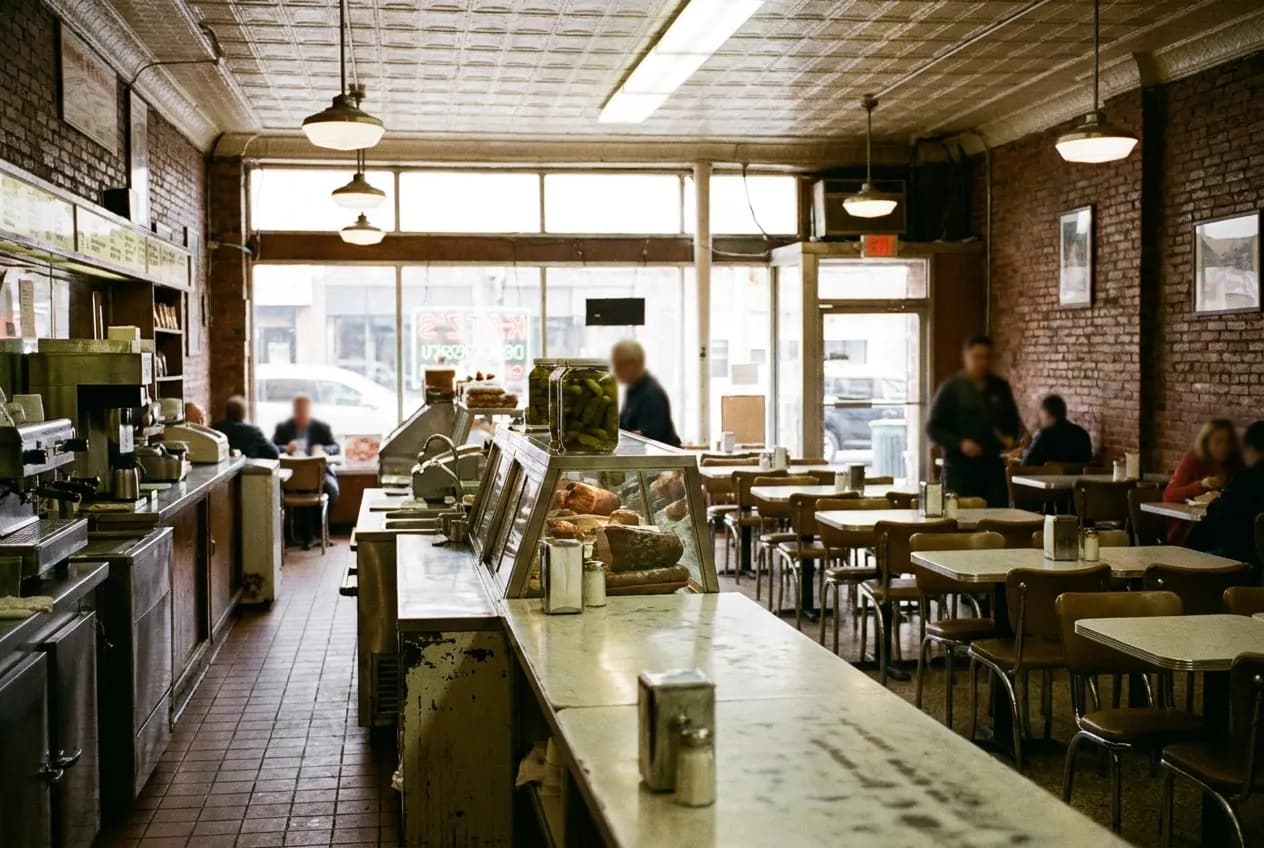
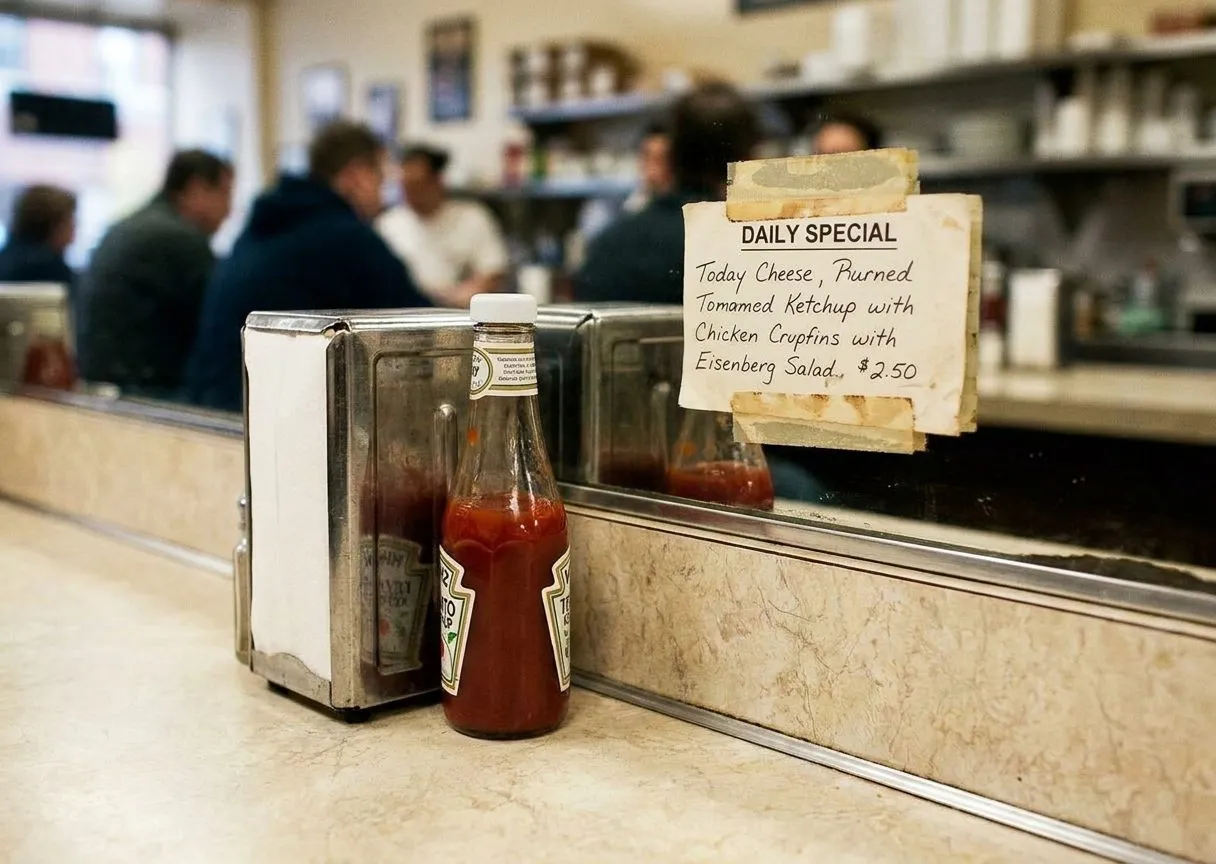
Eisenberg's Sandwich Shop was at 174 Fifth Avenue, in the Flatiron neighborhood like a time capsule with a liquor license. The U-shaped counter wraps around a grill station, and every stool swivels toward the action. The Formica is marbled beige, the kind that hides crumbs and coffee rings with equal grace. Overhead, fluorescent tubes cast a flat, democratic light that makes everyone—hedge-fund analyst and bike messenger alike—look slightly tired and deeply human.
The space hasn't been renovated so much as maintained, a distinction that matters. The floor tiles are original, the wooden phone booth in back is defunct but present, and the menu board still uses plastic press-on letters. By late 2026, this kind of restraint feels almost radical. The walls are papered with framed reviews and faded photographs, a visual résumé that spans decades but never shouts.
Timing your arrival
The weekday lunch rush hits like clockwork, 12:15 to 1:30 p.m., when the counter fills with a mix of publishing assistants, real-estate brokers, and the occasional tourist who wandered off the High Line. If you want the conductor's seat—or any stool, really—arrive by 11:45 a.m. or wait until after 2 p.m. The early window is quieter, populated by retirees and freelancers who treat the counter like a second living room. The late window catches the stragglers and the intentional, people who know that lunch-counter culture rewards patience.
There's no host, no wait-list app. You hover politely near the door, make eye contact with someone finishing their egg-salad sandwich, and slide in when they leave. It's a small negotiation, repeated a hundred times a day, and it works because everyone remembers being the one who waited.
The tuna melt and its secrets
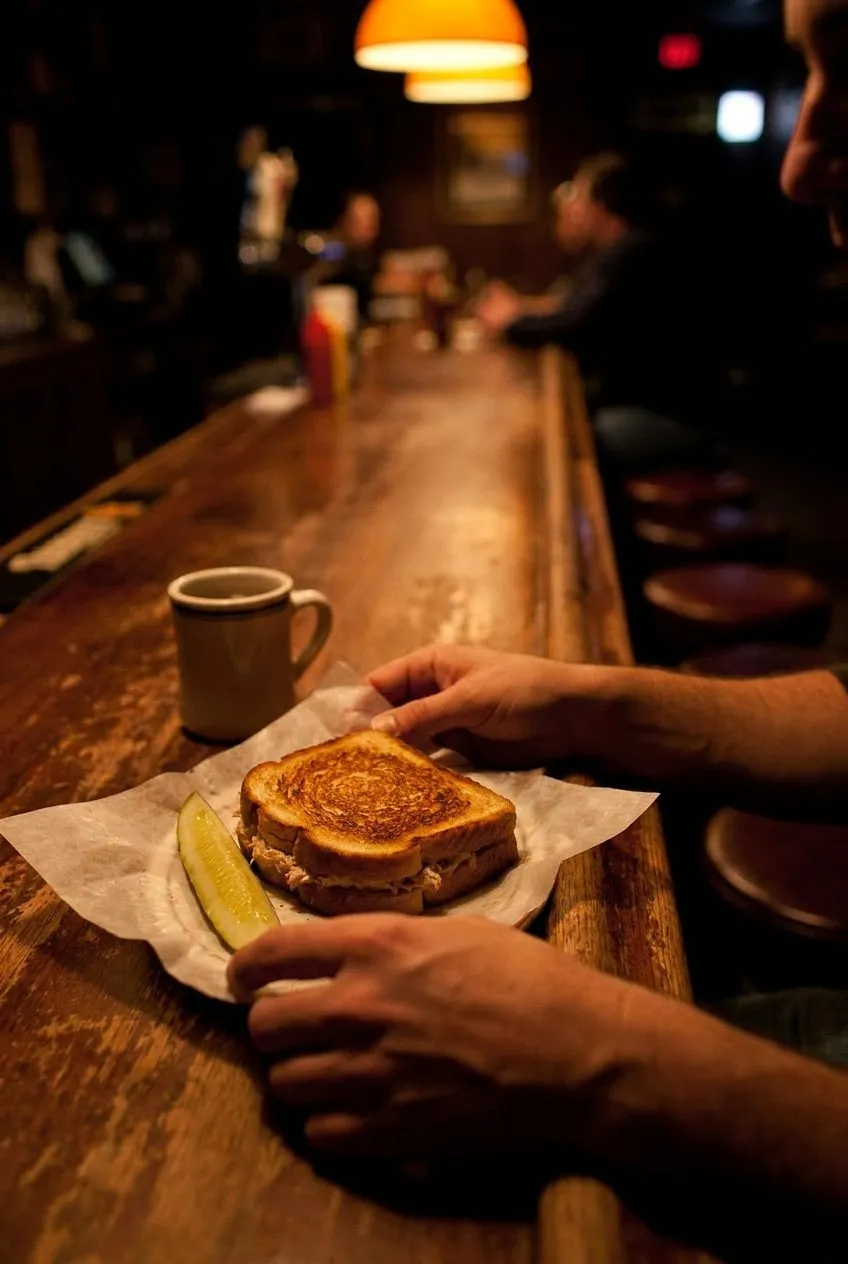
The tuna melt at Eisenberg's comes on a griddle-toasted roll, the fish mixed with just enough mayonnaise to hold together, topped with a slice of American cheese that melts into the crevices. It's straightforward in the way that good diner food should be—no capers, no artisanal sourdough, no apologies. But the pre-noon regulars know to ask for it 'well-done,' a request that sends the roll back to the griddle for a second pass. The result is a darker, crunchier shell that shatters slightly when you bite down, giving way to the warm, creamy center.
This isn't written anywhere. It's not a secret menu so much as a shared fluency, the kind of knowledge that gets passed from regular to newcomer in a low murmur at the counter. The griddle cook—usually the same guy who's been working the station for years—doesn't flinch when you order it. He just nods and flips the roll a second time, a small gesture that makes you feel briefly, unreasonably, like an insider.
What you see from the conductor's seat
From the corner stool by the register, you're in the path of every transaction. The cashier rings up egg creams and pastrami sandwiches, makes change from a drawer that jams slightly, and answers the phone with the same clipped efficiency every time. You'll see the guy who orders a black coffee and a buttered roll every Tuesday, the woman who always asks for extra pickles, the couple who split a Reuben and argue gently about whether the kraut is too sour.
You'll also see every plate leave the kitchen. The matzo-ball soup in its wide bowl. The French fries in their red plastic basket, glistening and too hot to eat immediately. The cheesecake, which arrives pre-sliced and unapologetic, a wedge of pale yellow on a small plate. There's a rhythm to it, a choreography that repeats and varies, and from the conductor's seat you're not just watching—you're part of the tempo.
The regulars and their unwritten rules
Eisenberg's has the kind of regulars who don't need to announce themselves. They walk in, claim a stool, and the order appears five minutes later without a word exchanged. They read the Post or scroll their phones, but they're also paying attention—to the door, to the grill, to the subtle shift in energy when a new face sits down. They're not unfriendly, just economical with their warmth. Earn your place by showing up, by not asking for substitutions, by leaving a decent tip, and eventually you'll get the nod.
There's an understanding here that the counter is a commons, not a stage. You can strike up a conversation if the moment presents itself, but you're not required to perform. Silence is fine. Reading is fine. Staring into the middle distance while you chew is more than fine. The counter accommodates solitude without making it feel like failure.
Why it still matters
By late 2026, the city is full of lunch options that promise speed, customization, algorithms that remember your last seven orders. Eisenberg's offers none of that. What it offers instead is constancy—the same stools, the same grill, the same slightly sticky counter that's been wiped down ten thousand times. It's a place where the transaction is simple and the stakes are low, where you can sit for twenty minutes and feel like you've stepped sideways out of the churn.
The conductor's seat is just a stool, but it's also a vantage point on a kind of New York that's increasingly rare. Not the New York of pop-ups and concept restaurants, but the New York of repetition and reliability, where the tuna melt tastes the same as it did last Tuesday and will taste the same next month. That's not nostalgia—it's continuity, and in a city that rebuilds itself every decade, continuity is worth the wait for a stool.
Practical notes
Eisenberg's Sandwich Shop is at 174 Fifth Avenue, between 22nd and 23rd Streets in the Flatiron District. The venue is no longer operating at that address The lunch counter is closed The space is small and not wheelchair accessible—entry involves a step, and the aisles are narrow. Cash is king, though cards are accepted. Bring patience during the lunch rush and an appetite for the straightforward. The egg cream is worth ordering. The cheesecake is divisive but consistent. Tipping is expected and noticed.
Tags: #EisenbergsSandwichShop #FlatironEats #PullUpAChair #OldNewYorkDiners #LunchCounterCulture #NYCLuncheonette #TunaMeltSeason #FifthAvenueFinds #CounterCulture #DinerDiaries #ClassicNYC #SwivelsAndSpatulas #MidtownMoments #LateWinter2026 #KarposFinds
Sources consulted: Flatiron District · Lunch counter · NY Times New York · Time Out New York Restaurants · NYC History
All trademarks are the property of their respective owners.