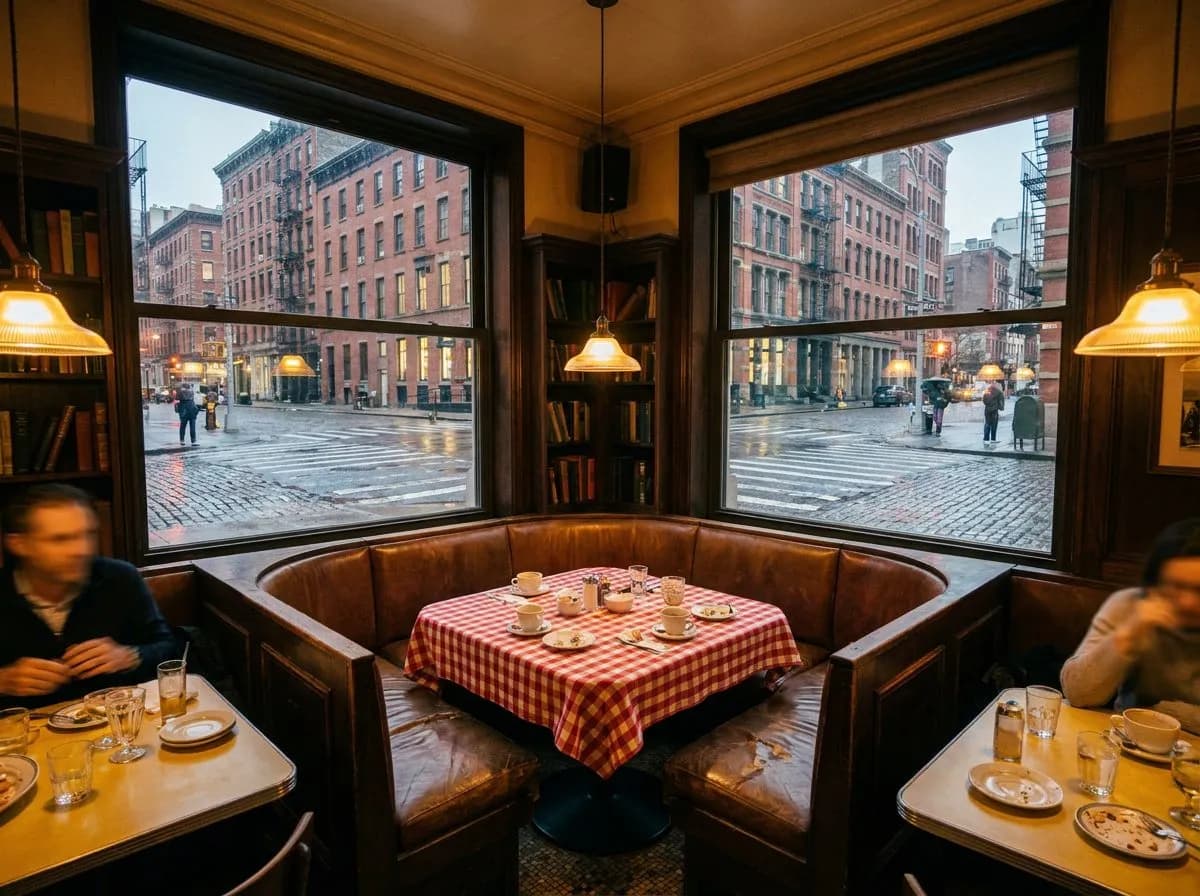
There are places in Tribeca that have survived by adaptation, shedding old skins for new concepts, and then there are places like Peter's, long-established in Tribeca, which survives by refusing to adapt at all. The corner booth—a red vinyl banquette wedged against two walls of original plate glass—frames the same Franklin Street intersection it has for decades. The cobblestones gleam after rain. Delivery trucks idle at the curb. The light changes from gold to blue as evening settles in. You sit, you order, and the city performs its small theater on the other side of the window.
Red sauce and inertia
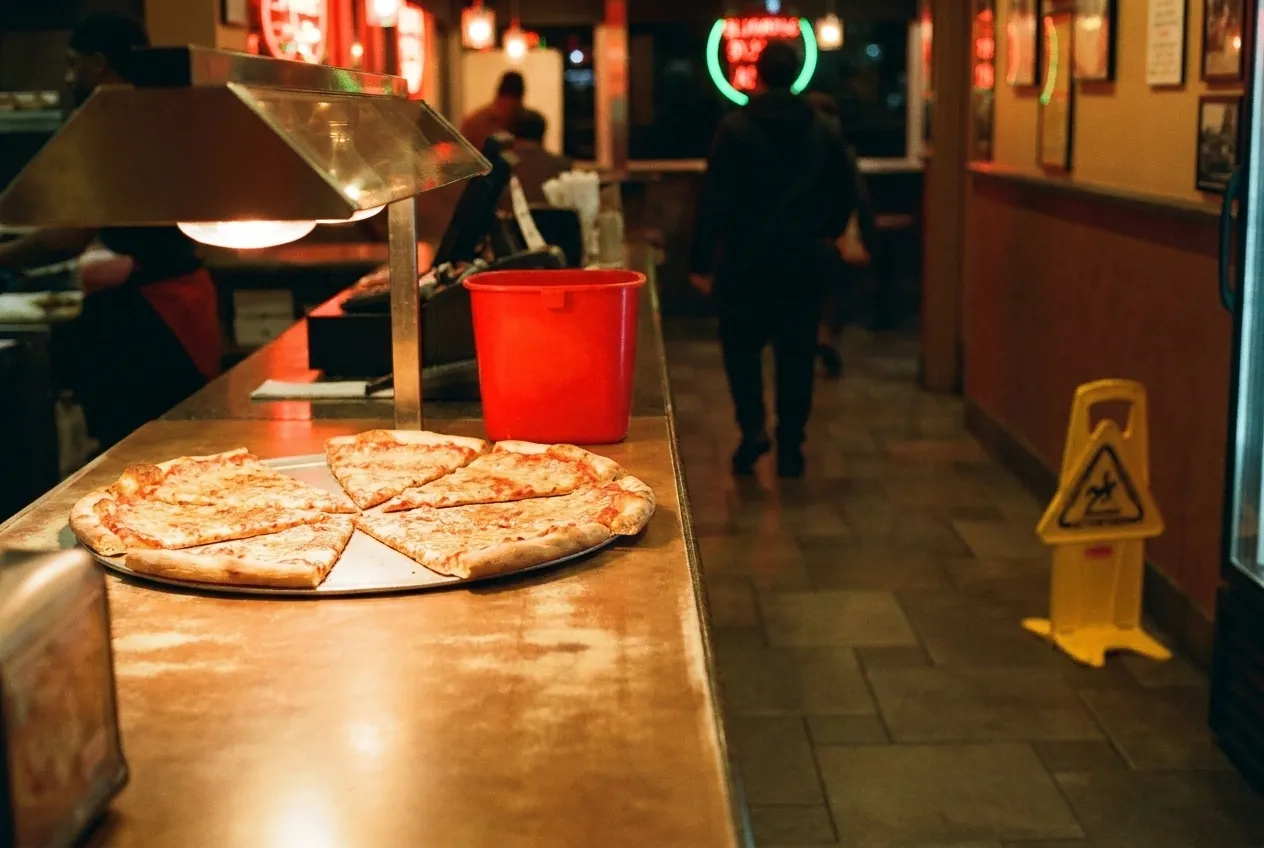
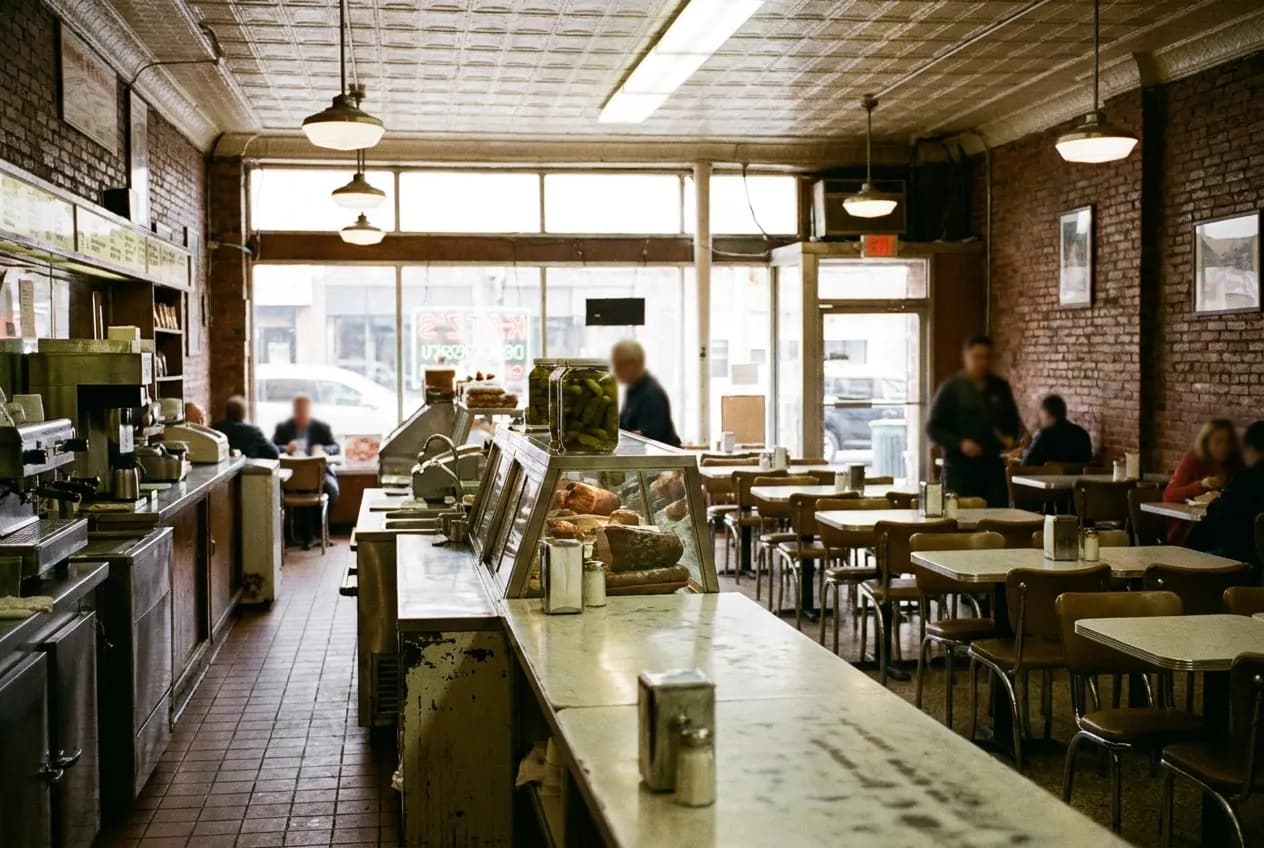
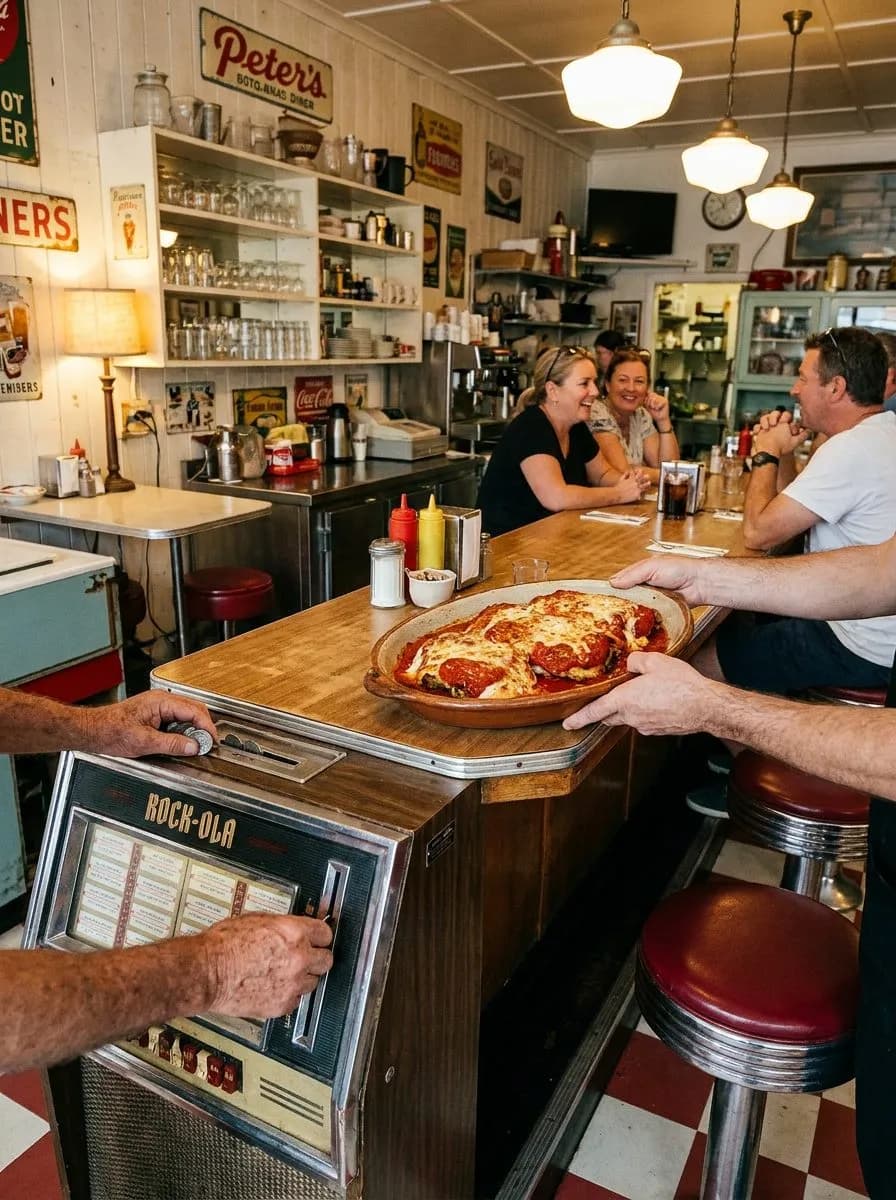
Peter's occupies its corner with the stolid permanence of a neighborhood tavern that has outlasted three generations of rent hikes. The interior hasn't been renovated so much as maintained—checkered tablecloths, dark wood paneling, framed photographs of boxers and mayors whose names you half-remember. The kitchen sends out veal parmigiana and chicken scarpariello on oval platters hot enough to warp the air above them. The regulars occupy the bar stools like senators. This is analog dining in its purest form: no reservation platform, no Instagram grid, just a phone number and a hostess pad by the register.
The menu lists the classics, but the regulars order off it entirely, requesting preparations the kitchen has made so many times the cooks no longer need to look up. A nod, a scribble, and twenty minutes later a dish arrives that exists nowhere on laminated paper. It's the kind of place where being known matters more than being early.
The geometry of the Franklin side
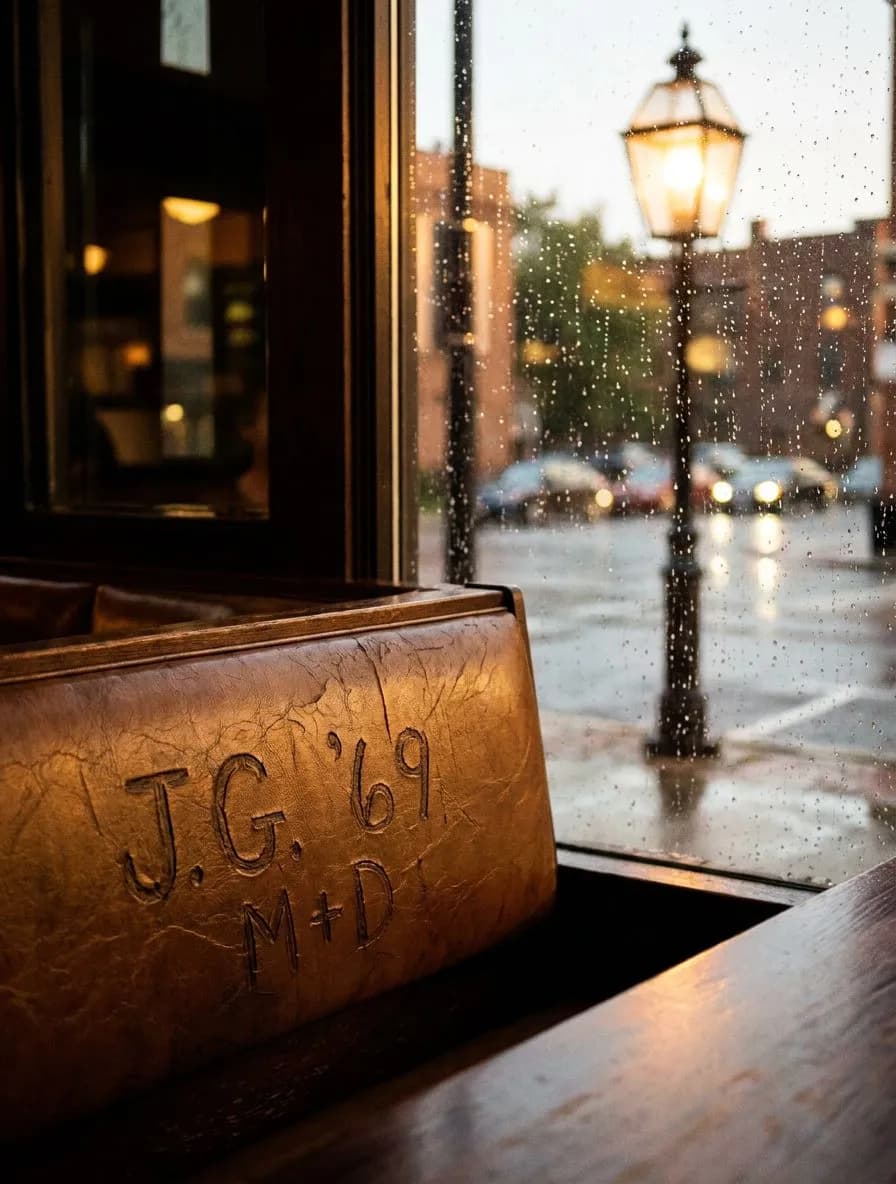
If you want the corner booth, you don't ask for the corner booth. Ask for "the Franklin side" and the bartender knows you mean the booth with the double window view—the one where two streets converge in your peripheral vision while you eat. Locals never say "corner booth." The terminology is a tell, a small shibboleth that separates the regulars from the walk-ins who found the place on a map.
The booth itself seats four comfortably, six if nobody minds elbows. The vinyl has been reupholstered at least twice but the frame is original, bolted to the floor with hardware that predates metric standards. The view changes with the light: mid-afternoon sun slants hard across the cobblestones, late evening turns the glass into a mirror with the city beyond it like a stage set. You can watch the same intersection for an hour and see a dozen small dramas—near-miss fender benders, couples arguing, a dog refusing to walk.
The unwritten reservation system
Peter's operates on a hybrid system that makes sense only if you've been coming here long enough to understand the rhythm. The corner booth is unofficially held until seven-fifteen in the evening for walk-ins—first come, first served, no exceptions. After that threshold, the rules shift: call ahead and they'll pencil you in on the hostess pad by the register, a lined notebook that looks like it was purchased during the Carter administration. Your name goes on the list in ballpoint, no confirmation email, no text reminder. You show up or you don't.
It's a system that rewards the punctual and the faithful. Walk in at six-thirty on a weeknight in late 2026 and the booth might be yours. Walk in at eight and you'll wait, or you won't get it at all. The hostess knows the difference between a regular and a tourist by posture alone.
Quarters and Sinatra
The jukebox stands against the back wall, a Wurlitzer-style console that still takes coins. Three plays for a dollar, cash only, and the selection hasn't been updated since the nineteen-eighties—Sinatra, Dion, a little bit of Darin. The machine is loudest between eight and nine in the evening, when the dinner rush peaks and someone inevitably pumps in five dollars' worth of quarters. The music competes with the clatter of flatware and the hum of conversation, turning the dining room into a kind of ambient orchestration.
There's something almost defiant about a jukebox that still works, still demands physical currency, still limits you to the songs that were popular when your parents were young. It's a rebuke to streaming, to algorithms, to the idea that every song ever recorded should be available at all times. Here, you get what's on offer. You make it work.
The architecture of staying
By late 2026, Tribeca has become a study in contrasts—glass towers and cast-iron facades, flagship boutiques and century-old freight tunnels repurposed into wine cellars. Peter's sits in the seam between these two cities, unchanged not because it's been landmarked but because it's been loved. The plate glass is original, single-pane, the kind that lets in cold drafts in winter and turns the booth into a greenhouse in summer. The door still sticks in humid weather. The floor still slopes slightly toward the back.
These imperfections are part of the appeal. A place this old survives not despite its flaws but because of them, because regulars return not for perfection but for continuity. The cobblestones outside have been repaved twice, but the view remains essentially the same. The light still falls the same way. The city still hums past the window, indifferent and essential.
What the window sees
From the Franklin side booth, you can watch the intersection transform across the hours. Morning brings coffee runs and dog walkers. Afternoon belongs to delivery trucks and construction crews on break. Evening is when the neighborhood softens—couples on their way to dinner elsewhere, solo walkers with tote bags, the occasional taxi cutting the corner too close. The seasons mark themselves in the quality of light and the layers people wear. Winter sun is sharp and low. Summer evenings stretch until nine.
It's not a dramatic view, not the kind that ends up in guidebooks. But it's honest. The city doesn't perform for you here; you simply get to watch it exist. And after an hour in the booth, red sauce on your plate and Sinatra on the jukebox, that feels like enough.
Practical notes
Peter's Since 1969 is located on Franklin Street in Tribeca; verify the exact address before publishing and current hours directly, as neighborhood taverns keep flexible schedules. Nearest subway is Franklin Street–1st Avenue (or verify the exact nearby station). Street parking is scarce; plan accordingly or use a nearby garage. The restaurant is a walk-up with a single step at the entrance. Bring cash for the jukebox and expect to wait if you arrive after seven-fifteen without calling ahead. The corner booth—ask for "the Franklin side"—is worth the effort.
Tags: #PetersSince1969 #TribecaDining #PullUpAChair #CornerBoothChronicles #NYCTaverns #FranklinStreet #AnalogDining #NeighborhoodTaverns #RedSauceForever #TribecaEats #NYCHiddenGems #ClassicNYC #JukeboxNights #WindowSeatWisdom #UrbanObservations
Please drink responsibly. Must be of legal drinking age.
Sources consulted: Tribeca · Italian-American Cuisine · NY Times - New York · Time Out New York Restaurants · NYC Landmarks Preservation Commission
All trademarks are the property of their respective owners.