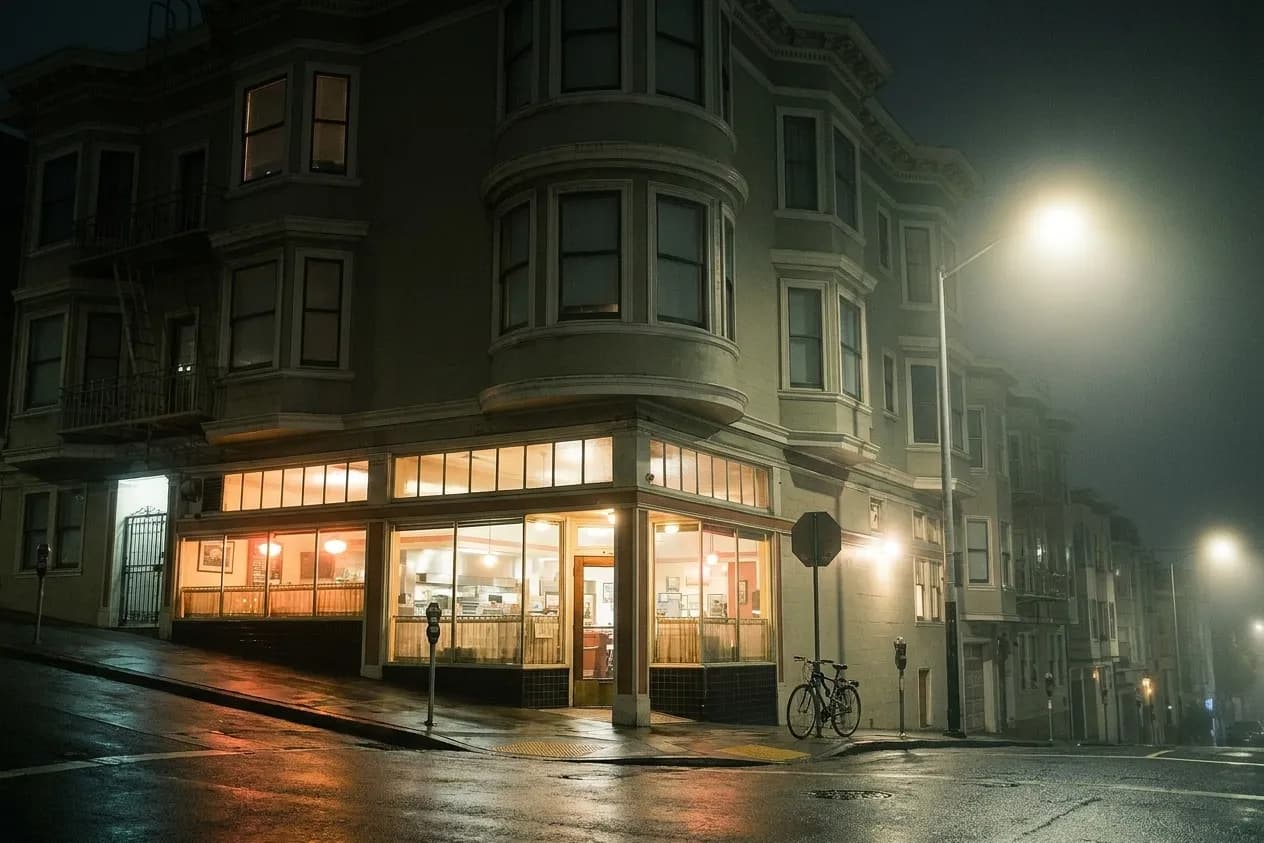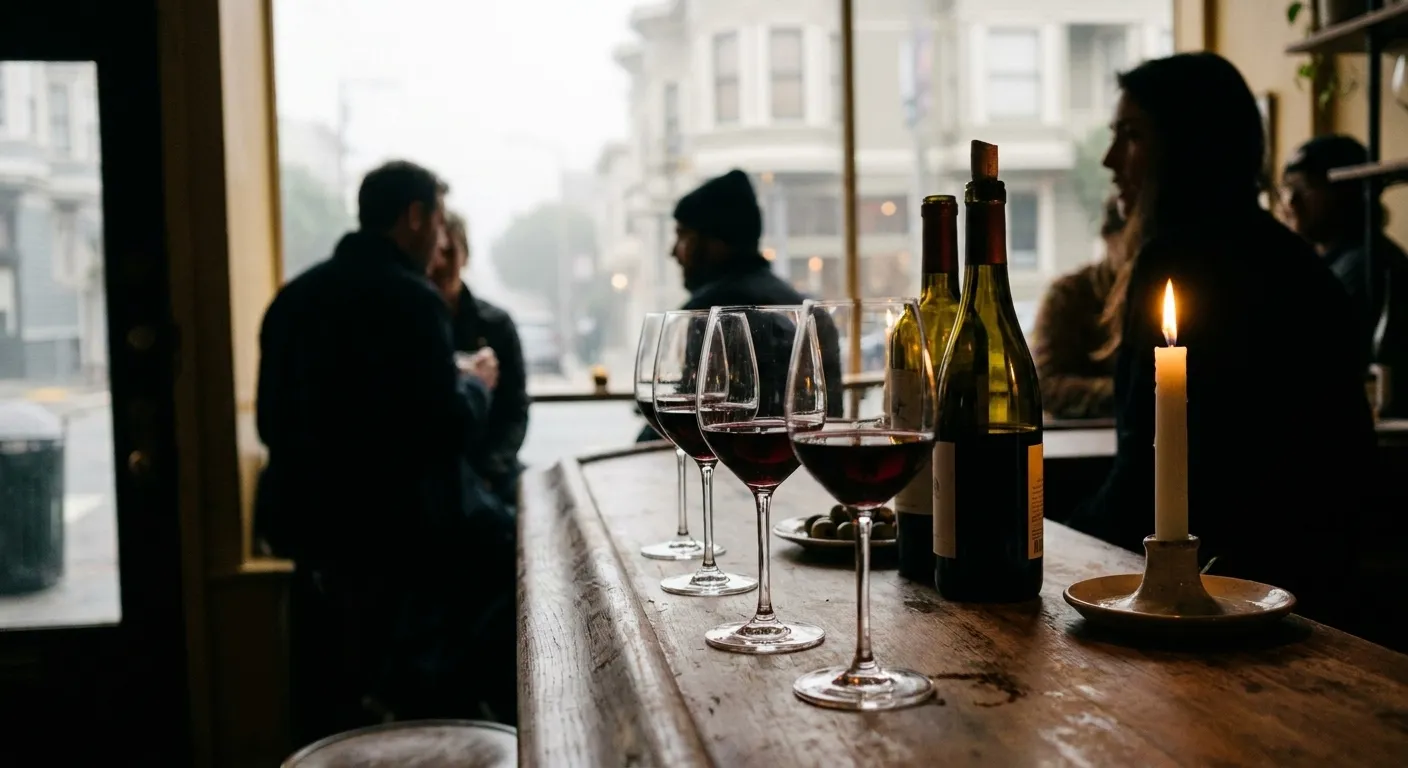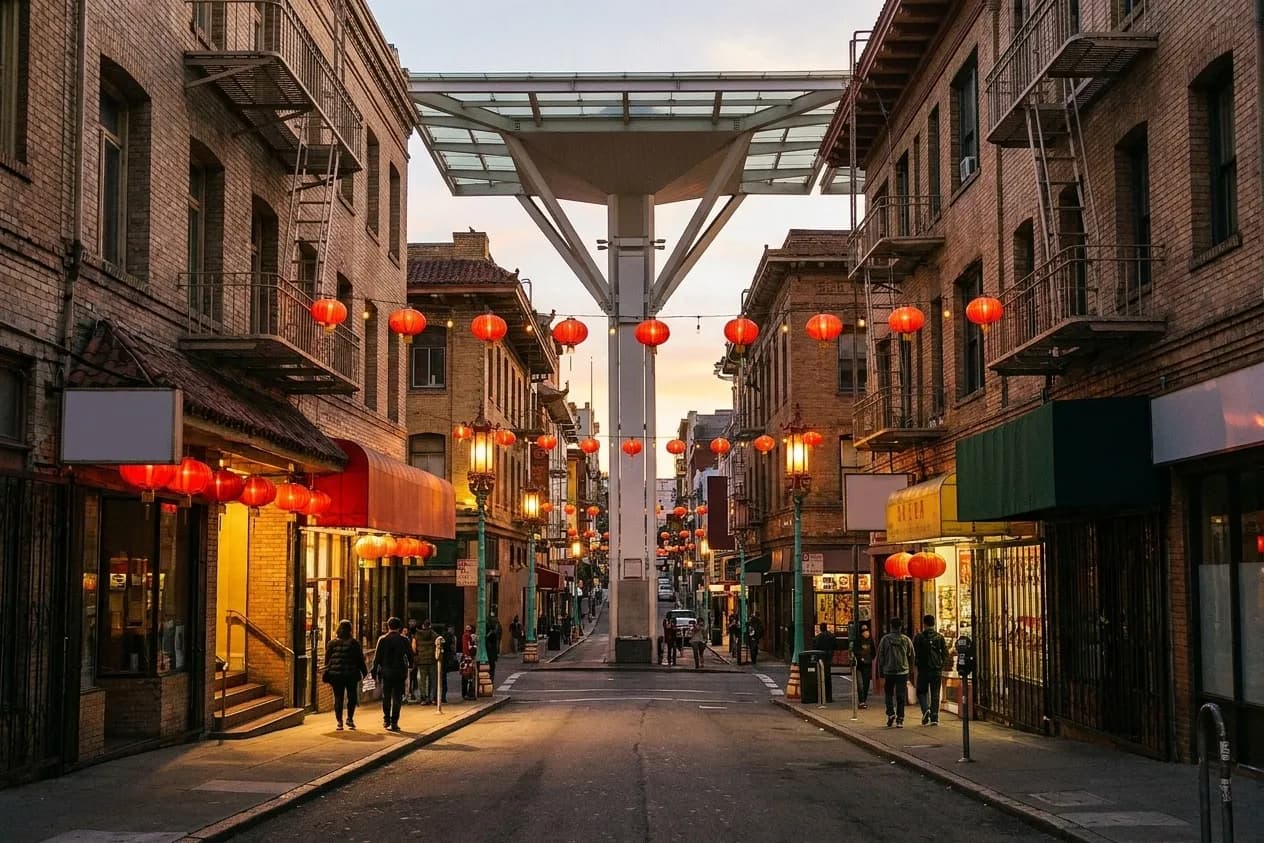
Chinatown is not a happy hour district in the way the Financial District or the Mission is, and that is precisely the argument for drinking here after work. There is no strip of bars competing on discounted pints. What there is instead is a dense grid of small rooms, upstairs bars, restaurants that will pour you a drink at the counter, and food good enough that the drink becomes the secondary reason to stop. For anyone finishing work downtown, it is a five-minute walk into a completely different evening.
The after-work drink in this part of San Francisco works differently — the deals are quieter, the rooms are smaller and the food is the real draw. Tell Karpo when you finish and it will build the route.
Why this works as an after-work district
The geography is the whole point. Chinatown sits directly uphill from the financial blocks, which means you can walk out of an office at six and be somewhere that does not feel like work in the time it takes to wait for an elevator. And because the neighbourhood's restaurant economy is built around residents and families rather than the after-work crowd, the rooms do not fill with the same people you just left.
The prices follow from that. A neighbourhood that is not competing for the office happy hour dollar does not need to discount to get you in, which is why the value here shows up as good food at a fair price rather than as two-for-one drinks. That is a better deal in practice, and it is why people who work downtown and know the area come up here instead.
The three kinds of stop
There are broadly three ways to drink in this neighbourhood. The first is the small upstairs or tucked-away bar — often unmarked, usually a single room, with a proper cocktail programme and room for perhaps twenty people. The second is the restaurant counter, where you sit at the bar of a place that is fundamentally a dining room and have a drink and a couple of dishes. The third is the old-line room that has been there for decades and has no interest in reinventing itself.
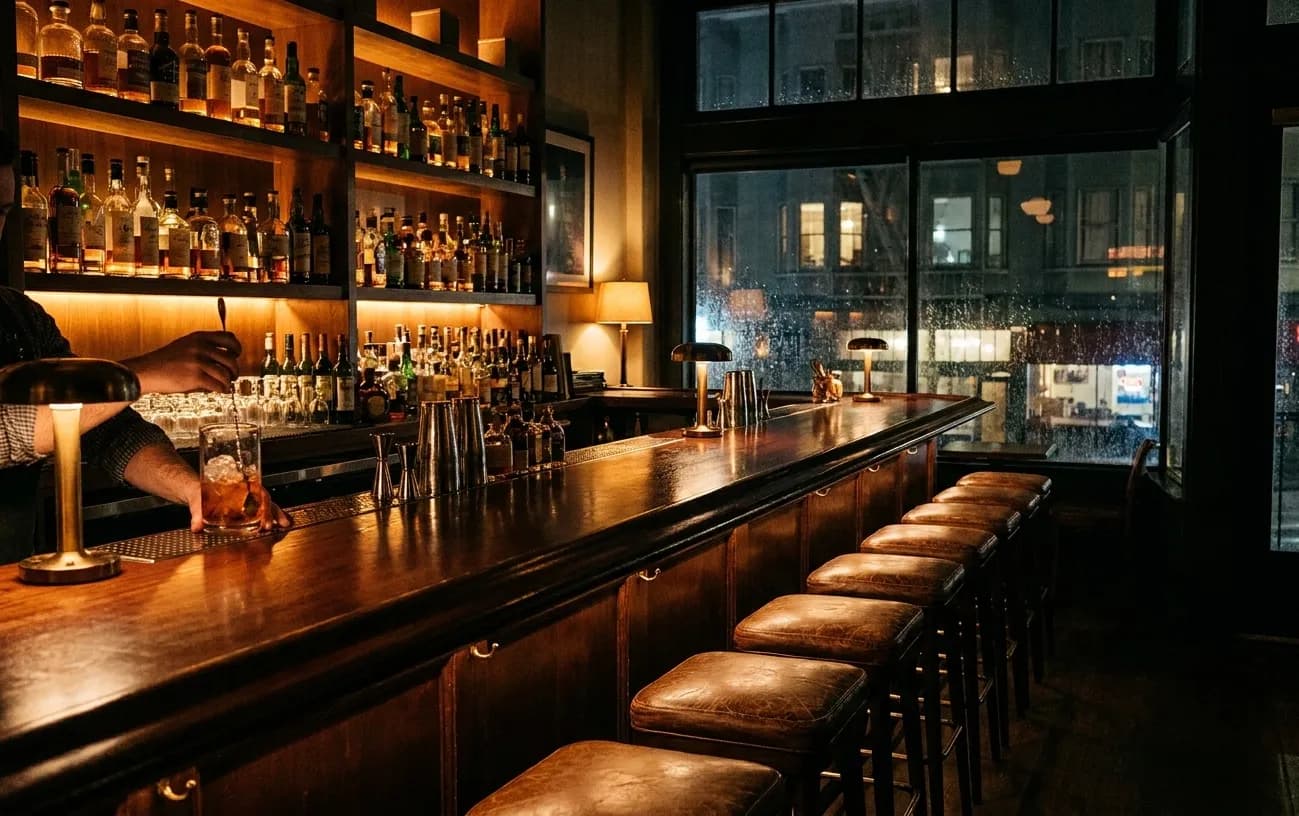
Each suits a different evening. The upstairs bar is for a proper conversation with one or two people. The restaurant counter is for when you are actually hungry and do not want to commit to dinner. The old-line room is for a cheap drink and a look at a piece of the city that is disappearing elsewhere. Doing all three in sequence is a very good Thursday.
Walking the grid
The neighbourhood is compact and steep, and the useful way to think about it is as three parallel routes rather than a single strip. The main commercial spine is busiest and most visible. The alleys running off it hold the small rooms, and they are where the interesting stops are — several of the best bars in this part of the city are on lanes you would not walk down without a reason. The upper streets toward North Beach are quieter and where the neighbourhood shades into its neighbour.
Start low and work uphill rather than the other way round. It sounds trivial and it is the difference between a pleasant hour and an argument about how far the next place is. Ending at the top also puts you within a couple of blocks of North Beach for dinner, which is the natural extension of the evening.
Eat while you drink
The single best piece of advice for this neighbourhood is to treat food as part of the drinking rather than a separate event afterwards. Small plates, dumplings, roast meats and noodles are available at nearly every stop and are cheap by the standards of anywhere else you could be at six o'clock in San Francisco. It makes the evening longer, cheaper and considerably better.
It also solves the pacing problem that ruins most after-work drinking. Two drinks over two hours with food in between is a completely different night from two drinks in forty minutes on an empty stomach, and this neighbourhood makes the first version easy.
Practical notes
Hours in Chinatown skew earlier than in the nightlife districts — many restaurants and shops close by nine or ten, and some of the small bars keep irregular days. Cash is still useful at the older places. Check current hours before building a route around a specific room, and keep a second door in mind on the same block.
Getting there and getting home
The walk up from the financial blocks is short but it is genuinely steep in places, and the route you pick matters more than the distance. Coming up through the gentler cross-streets rather than straight up the hill is worth the extra two minutes, particularly if anyone in the group is in work shoes.
Getting home is easier than people assume. Several major transit lines run within a few blocks, and the neighbourhood sits between two districts that stay busy later, so a ride is straightforward at any hour. The one thing to check is the last departure if you are relying on a specific line, since the evening service thins earlier than the bars do.
Tags: #SanFrancisco #SF #BayArea #NightsOut #BarHopping #AfterDark #Chinatown #HappyHour #SFEats #SFGuide #ExploreSF #SFLocal #SFWeekend #SFNights
Sources consulted: sfchronicle.com · sfstandard.com · eater.com
Please drink responsibly. Must be of legal drinking age.
All trademarks are the property of their respective owners.
Ask Karpo first
Karpo is a proactive AI assistant that lives in iMessage. Tell it where you finish work and it will plot the walk uphill.