 Live Music Near Me in the Theater District: Birdland's Nightly Jazz Sets
Bars & Nights Out
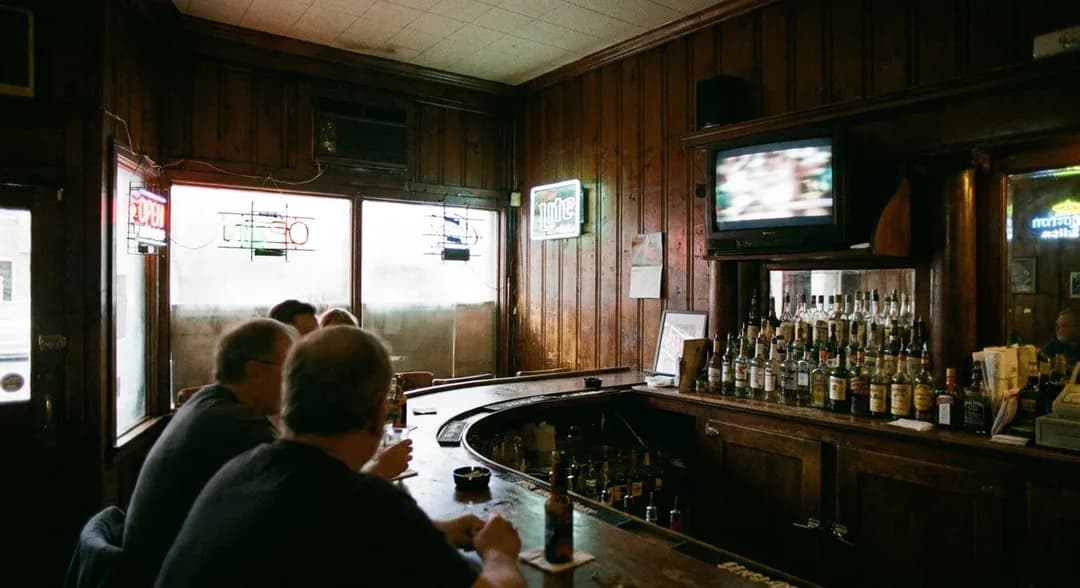
The Brooklyn Pub That Stays Open Late for West Coast First Pitch
A neighborhood bar keeps the lights on past last call when a Los Angeles team plays a night game, the jukebox silenced for nine innings of baseball.
You're watching the Dodgers play a home game at 10:07 p.m. Eastern, surrounded by guys in Mets caps who've stayed three hours past their usual bedtime because this bar on Fifth Avenue near the Seventies keeps the neon on when West Coast baseball matters. The kitchen's closed, the jukebox unplugged, and every screen in the room points toward Chavez Ravine while the R train rumbles underneath your barstool every eleven minutes.
The Handshake Agreement Nobody Wrote Down
The owner doesn't advertise late West Coast games on social media or chalk it on the sidewalk board. You find out because someone texts you during the seventh inning stretch, or because you walked past at 12:30 a.m. on a Tuesday and saw the windows still glowing blue from television light. The deal is simple: if a New York team plays a California team and first pitch happens after ten Eastern, the doors stay open until the final out. This applies to playoffs, regular season grudge matches, and those mid-summer series when the Mets faithful need to watch their bullpen implode in real time against the Padres. The bar doesn't serve food after eleven, but the popcorn machine stays hot, and the bartender keeps pulling Narragansett tallboys until someone wins.
The Crowd That Materializes After Midnight
You notice the room changes completely between the eleventh and twelfth innings. The after-work crowd cleared out hours ago, the couples on date night paid their tabs before the seventh. Who remains: the guy in the postal uniform who finished his shift at ten, the woman who teaches high school English and doesn't have first period until nine, the retired firefighter who lives two blocks away and hasn't adjusted his sleep schedule since 1987. They're not loud. They don't do the wave or chant. They watch baseball the way people used to, with the focused silence of radio listeners, erupting only when something genuinely surprising happens. The bartender knows everyone's drink and pours without asking. You hear ice clinking, the occasional groan, someone whispering statistics to themselves like a prayer.
What the Jukebox Silence Reveals
The jukebox sits against the back wall near the bathroom, unplugged and dark during West Coast games. Without it, you hear everything the music usually covers: the hiss of the draft lines, the scrape of glass on wood, the particular rhythm of a neighborhood bar at an hour when nobody's performing for anyone. The ceiling fan clicks on every third rotation. The neon Rheingold sign buzzes at a frequency you feel in your molars. When someone scores, the eruption sounds bigger than it should because the room's acoustic properties weren't designed for silence. The bartender plugs the jukebox back in after the game ends, and someone always plays the same Sinatra song, which serves as the unofficial signal that it's time to settle up and walk home through empty streets.
The Geography of Screen Placement
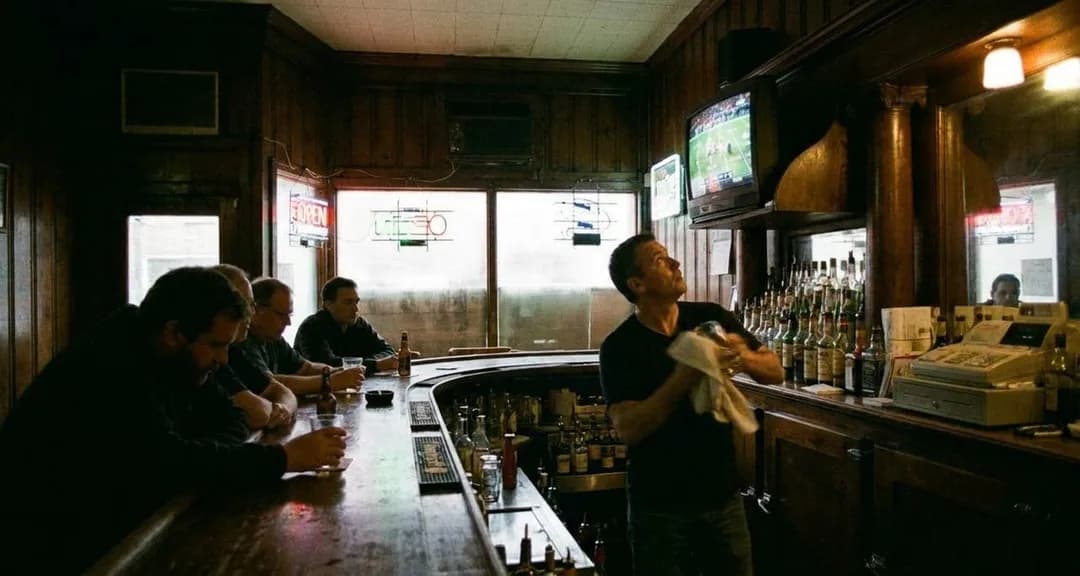
Five televisions hang at angles that took years to calibrate. The main screen sits above the bar, angled slightly downward so the guy on the corner stool doesn't get neck strain. Two smaller screens flank the pool table, positioned so players can watch between shots without turning their backs to the room. The fourth screen hangs near the front window, visible from the sidewalk, which is how you know from outside whether the game's still going. The fifth screen, smallest and oldest, sits above the cigarette machine that hasn't worked since 2009, and it's the one the bartender watches because it has the clearest picture despite being standard definition. Nobody complains about the angles. Everyone's found their spot after years of trial and error.
The Unspoken Protocol for Extra Innings
When a West Coast game goes to extras after 1 a.m., a specific energy settles over the bar. The bartender stops washing glasses and just watches. Someone orders a round for the remaining five or six people, no discussion, just puts down some bills and nods. You're all in it together now, committed to seeing how this ends even though you have to be functional in five hours. The bathroom runs out of paper towels and nobody mentions it. Someone's phone dies and they don't bother finding a charger. The world shrinks to this room, this game, this shared insomnia. If the visiting team wins, everyone leaves quietly. If the home team pulls it out, there's a brief moment of celebration, then the same quiet exit into the night.
The Morning After Geography
You see the same people the next day on the neighborhood streets, moving through their routines with the particular exhaustion of voluntary sleep deprivation. The postal worker sorting mail at the Fifth Avenue station. The teacher buying coffee at the diner on Fourth. The retired firefighter walking his dog past the shuttered bar in full daylight. Nobody acknowledges what happened, but there's a barely perceptible nod, a recognition that you were all present for something that mattered only because you decided it mattered. The bar opens again at four in the afternoon, jukebox playing, kitchen serving wings, no evidence of the previous night's vigil except maybe the popcorn smell that hasn't quite aired out.
Practical Notes
The bar opens late afternoon most days and typically closes around two, except when West Coast baseball extends the night. Take the R train to Bay Ridge Avenue and walk south, or catch the bus down Fifth Avenue. No reservations, no cover, no minimum. Cash helps but cards work. The popcorn's free after eleven. Check the baseball schedule yourself because they won't remind you.
Tags: #BayRidge #BrooklynBars #WestCoastBaseball #LateNightNYC #NeighborhoodBar #BaseballBars #NYCNightlife #BrooklynNights #SportsBarCulture #LocalWatering #RTrainLife #AfterMidnight #NYCInsider #BrooklynLocal #KarposFinds
Sources consulted: timeout.com · secretnyc.co · thrillist.com
Please drink responsibly. Must be of legal drinking age.
All trademarks are the property of their respective owners.
Ask Karpo for more information.
Keep reading
- Live Music Near Me in the Theater District: Birdland's Nightly Jazz Sets
 Live Music Near Me in the West Village: The Vanguard's Monday Big Band
 Live Music Near Me in Park Slope: Barbès' Back-Room World Music