Koreatown is the densest restaurant neighbourhood in Los Angeles and one of the least legible from a car. Searching for the best restaurants near me here gives you the places with the most reviews, which are almost entirely the ground-floor rooms with large signs. The neighbourhood's actual depth is on the second floor, in the basement, behind a supermarket, and at the back of a mall food court. Once you know that, the same twenty blocks become a completely different place.
Koreatown rewards knowing where to look more than knowing what is good, because so much of it is not at street level. Tell Karpo what you feel like eating and it will point you up the stairs.
Why so much of it is upstairs
The pattern is structural rather than mysterious. Koreatown's building stock is a mix of mid-century commercial blocks and multi-storey plazas, and upper-floor space rents for meaningfully less than street frontage. A kitchen that would need volume and a large sign to survive at street level can survive upstairs on regulars and word of mouth, which lets it be more specialised and often better.
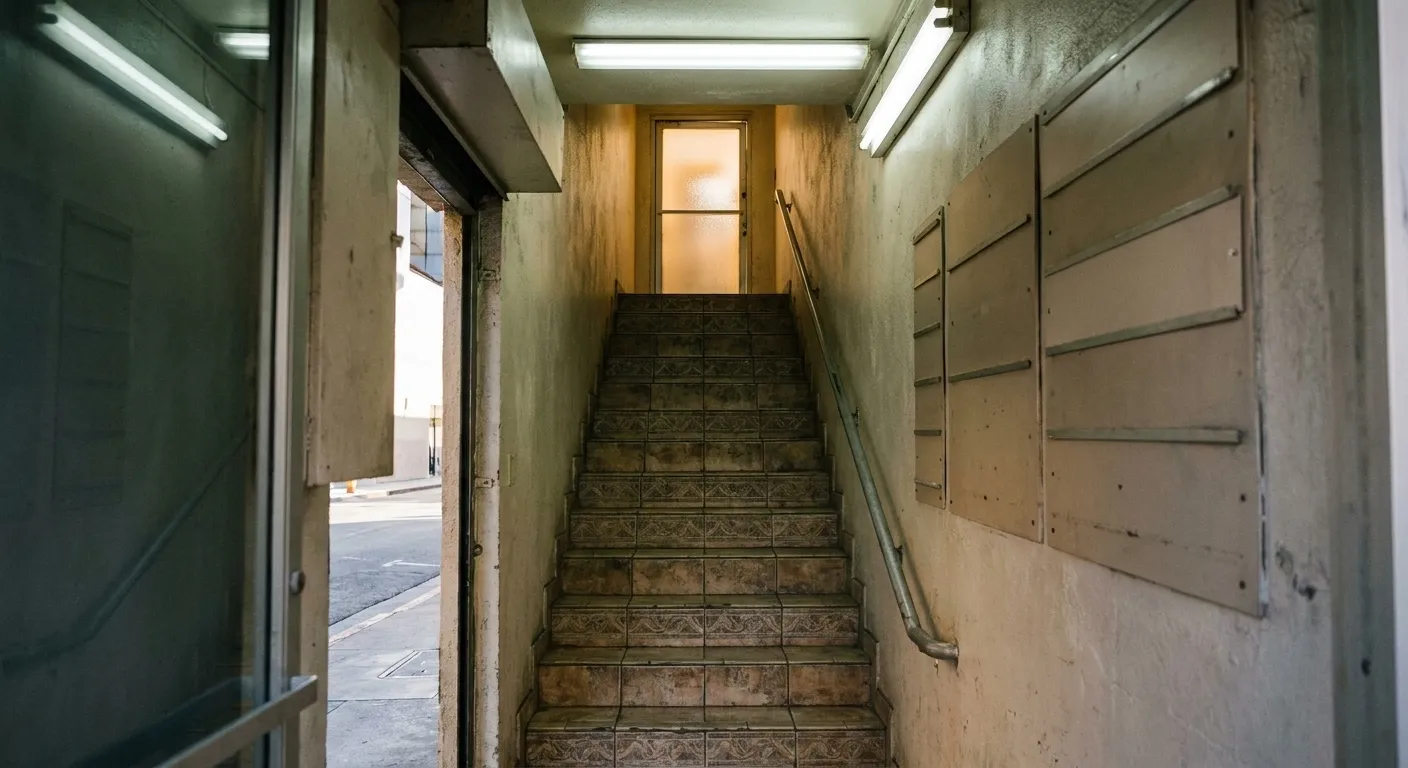
So the presence of a stairway with a directory panel and no window display is not a warning, it is an invitation. The same applies to plazas: a two-storey building set back from the boulevard around a parking lot may hold six restaurants, a bakery and a bar, none of which are visible from the street you drove in on.
The food court and market model
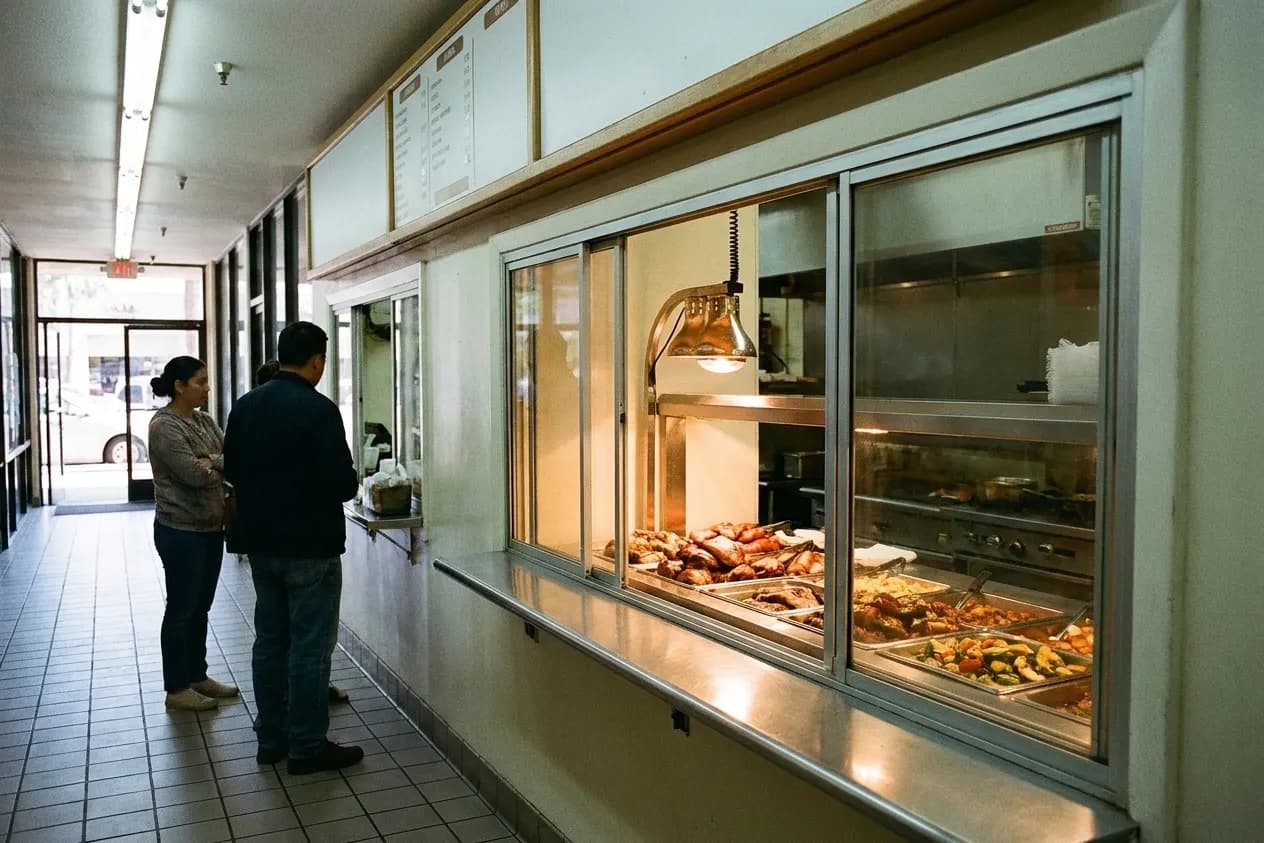
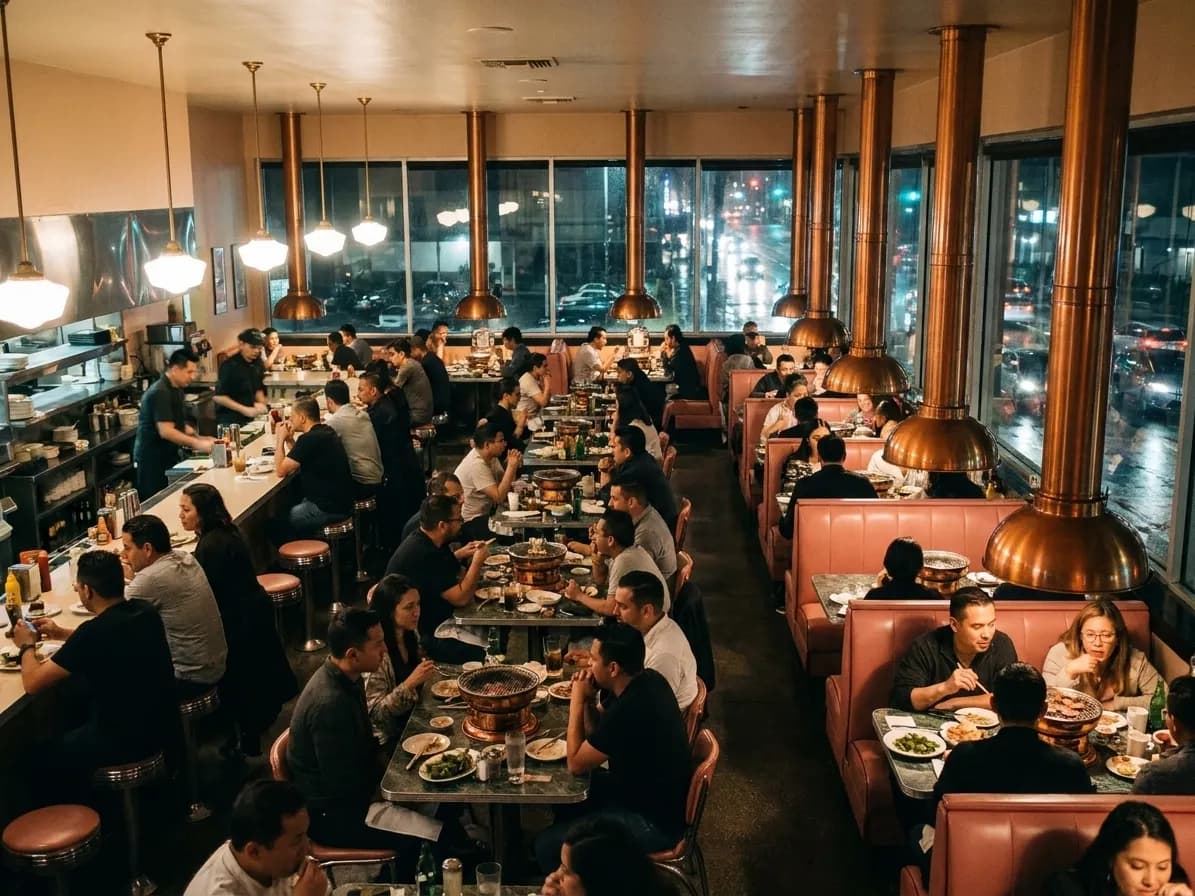
The other place Koreatown hides quality is inside markets and food halls. A supermarket with a hot food counter at the back is a genuinely serious kitchen in this neighbourhood rather than a convenience, and the same is true of the small stalls clustered inside plazas. These operations have low overheads and high turnover, which is the combination that reliably produces good cheap food anywhere in the world.
The ordering here is straightforward: look at what people are carrying, order that, and eat it hot. These counters are built for volume and their best items are the ones moving. It is also where a solo meal is easiest, which is not true of much of the neighbourhood's evening dining.
Specialisation is the real signal
The most reliable indicator of quality in Koreatown is a narrow menu. Restaurants here that do one thing — a single soup, one style of grill, one regional cuisine, one cut of meat — are almost always better than the broad-menu rooms, because the neighbourhood is competitive enough that a specialist has to be good to survive.
Broad menus exist to serve groups with mixed preferences and visitors who want to see everything at once. They are not bad, but they are not where the neighbourhood is interesting. If a room offers grill, soup, stew, seafood and a sushi counter, it is solving a social problem rather than a culinary one.
Hours are the neighbourhood's other advantage
Koreatown keeps later hours than almost anywhere else in Los Angeles, and it does so consistently rather than only at weekends. Kitchens running past midnight are normal here, and a few run considerably later. That makes it the default answer for a real sit-down meal at an hour when most of the county has closed.
The corollary is that the neighbourhood's rhythm is shifted. Rooms that are quiet at 7 are full at 10, and a table you cannot get at nine on a Saturday may be easy at eleven. If you are used to eating early, going late here is both easier and more representative of how the neighbourhood actually operates.
How to explore it without a list
Park once and walk. Read the directory panels at the base of stairways. Go into the plazas set back from the boulevards. Look at what is busy at the hour you are there rather than what has the most reviews. Parking is genuinely difficult on the main streets, so use a lot and treat the walk as the point rather than the cost.
Hours, closures and turnover are all high in this neighbourhood, and upper-floor rooms in particular come and go without much online trace. Confirm before you drive across town for a specific place, and have alternatives in the same building.
Parking, which is the real barrier
The reason many people never explore this neighbourhood properly is that they try to park in front of each place they visit. Street parking on the main boulevards is scarce, metered and heavily enforced, and circling for it burns the time you came to spend eating. The plazas and commercial buildings almost all have lots behind or beneath them, frequently with validation.
Park once in a lot near the middle of where you want to be and walk the rest. The neighbourhood is dense enough that a five-minute walk covers dozens of restaurants across several buildings, which is exactly the exploration that driving between destinations makes impossible.
Tags: #LosAngeles #LA #SoCal #HiddenGems #LocalFinds #OffTheBeatenPath #Koreatown #LAEats #LAGuide #ExploreLA #LALocal #LAWeekend #LANights #LAFood
Sources consulted: laist.com · eater.com · latimes.com
All trademarks are the property of their respective owners.
Ask Karpo first
Karpo is a proactive AI assistant that lives in iMessage. Ask what is good upstairs, not just what is on the corner.