 Dog Costume Parade Near Me in East Village: Boris and Horton
Free Things to Do
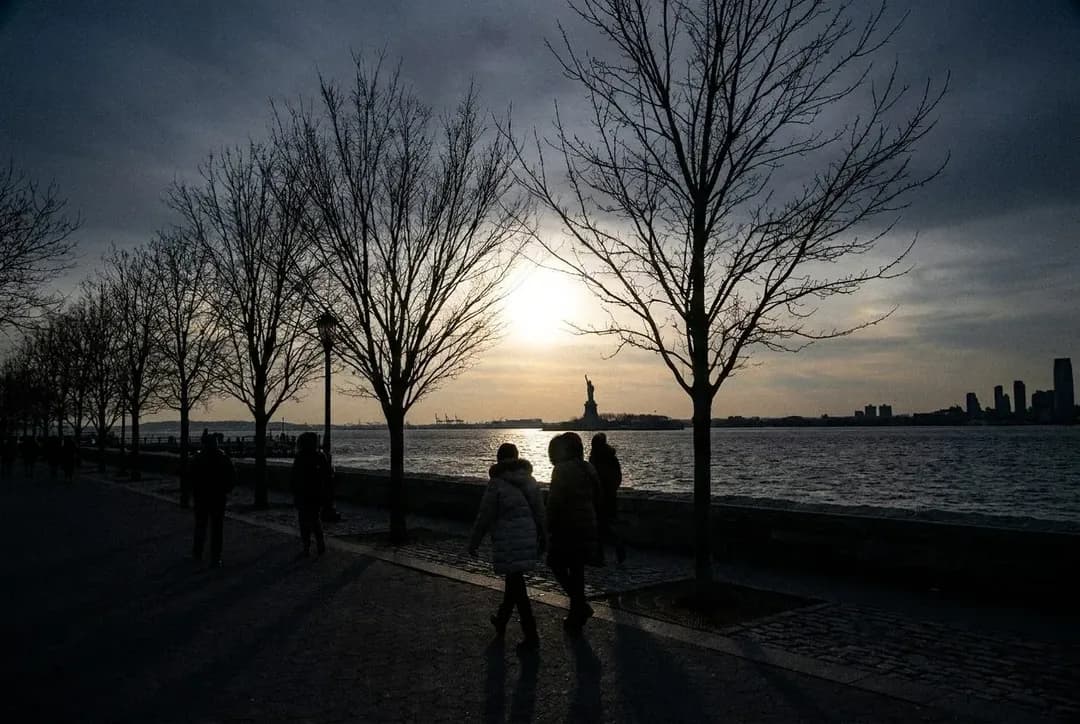
The Battery's Waterfront Promenade on a Clear Winter Morning
When winter strips away the crowds, Manhattan's southern tip reveals its best self: a promenade wrapped in harbor light, where the Statue of Liberty, Ellis Island, and Governors Island arrange themselves like monuments on a maritime stage.
The Battery in winter is a lesson in subtraction. Gone are the summer throngs, the wedding parties clustering near Castle Clinton, the school groups streaming off tour boats. What remains is clearer: the sweep of New York Harbor, the skeletal dignity of bare trees against water, and a promenade that lets you walk the city's oldest shore without negotiation. On a cold morning in late 2026, when visibility sharpens and the light turns surgical, this twenty-five-acre park at Manhattan's southern tip becomes the finest free theater in the city.
The Geography of Arrival
The 4 or 5 train to Bowling Green, or the R/W to Whitehall Street, places you near the park's northeastern corner, a five-minute walk to the waterfront promenade. You emerge into the financial district's canyon shadows, then spill south toward open sky. The transition is abrupt and clarifying—steel and glass giving way to bare branches and the sudden horizontal pull of the harbor. It's a threshold crossing that never gets old, no matter how many times you've made weekend plans that end here.
Follow the paths southwest, letting the water come into view gradually. The park's layout is intuitive, a series of overlapping shorelines that trace the landfill history of lower Manhattan. Each curve reveals another angle on the harbor's traffic: ferries carving white lines toward Staten Island, container ships moving with glacial patience toward the Narrows, the occasional sailboat leaning into the wind like an argument against efficiency.
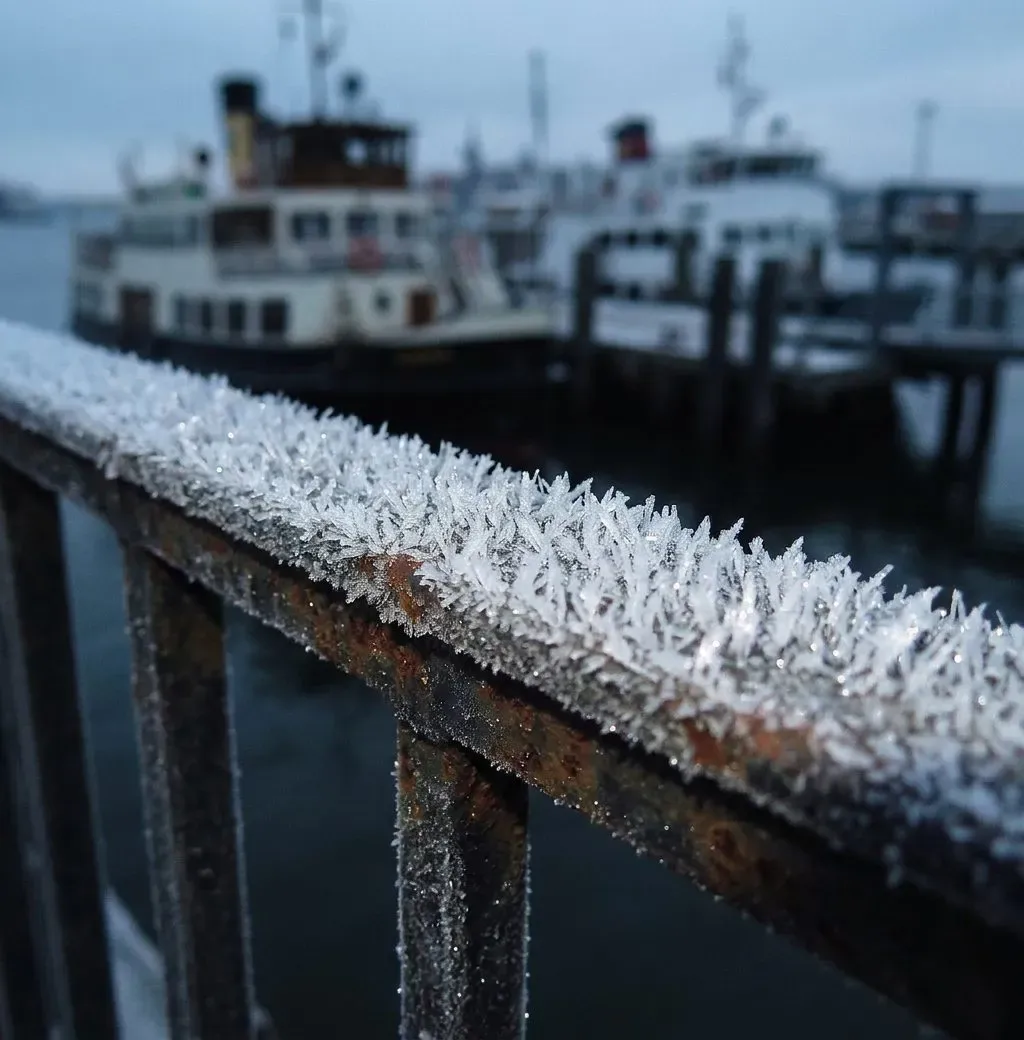
The Optimal Vantage
The southwestern corner near the SeaGlass Carousel offers the widest unobstructed view of the Statue of Liberty, approximately two miles across the harbor. It's a specific claim, but walk it yourself and you'll see why regulars return to this exact stretch of railing. Liberty faces you almost directly, Ellis Island stages left, Governors Island a low green interruption to the right. The sightlines arrange themselves with the logic of a painting—foreground, middle distance, horizon—and winter's leafless trees don't interfere.
The carousel itself, a spiraling pavilion of bioluminescent fiberglass fish, sits just inland. It's closed most winter mornings, which only improves the view. Without the summer crowds queuing for rides, the southwestern promenade becomes what it was designed to be: a platform for looking outward, not a destination in itself. Lean against the iron railing, let your eyes adjust to the scale, and give the harbor ten minutes. It earns them.
Light and the Photographer's Window
Morning light in December and January illuminates the statue and Ellis Island from behind the viewer, ideal for photography between eight a.m. and ten a.m. This isn't poetic license; it's geometry. The low winter sun rises over Brooklyn, crosses behind your shoulder, and lands squarely on Liberty's copper silhouette. The statue glows green-gold against darker water, a color combination you can't replicate in summer's harsher zenith light.
Serious photographers work this window religiously, tripods clustered near the promenade's southwestern benches. Even phone cameras catch the difference—Liberty rendered in relief rather than flattened by midday glare, Ellis Island's brick buildings suddenly legible across the water. The cold helps, too. Winter air is drier, cleaner, less atmospheric haze to soften edges. Details stay crisp a mile out.
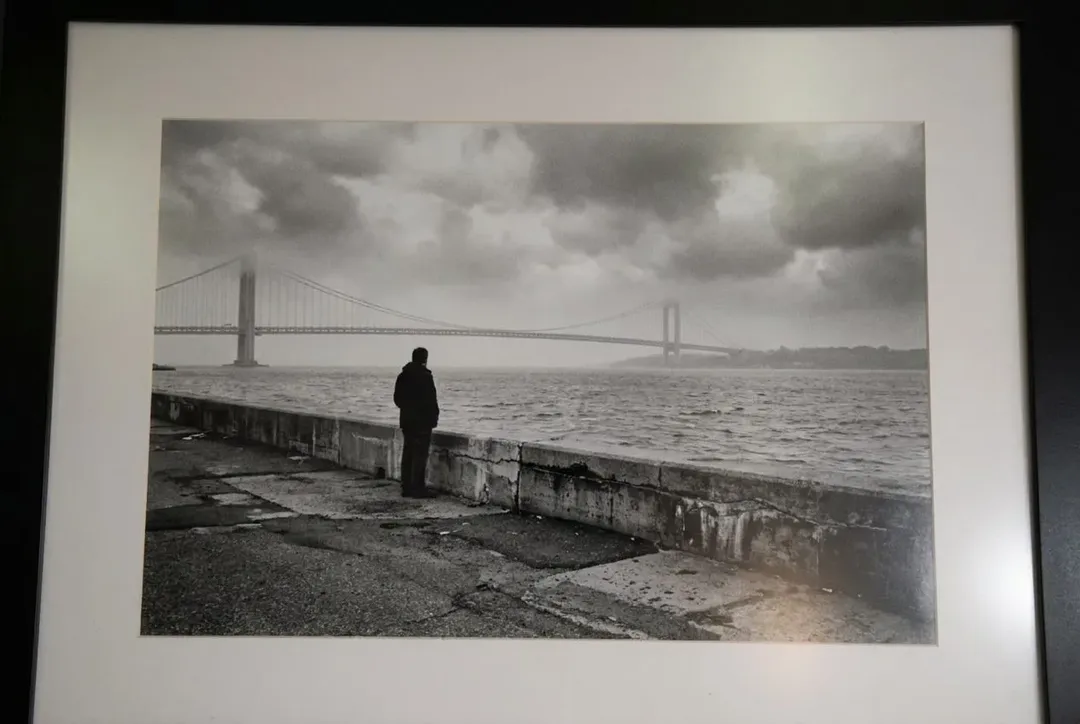
The Maritime Monuments
The Battery wears its harbor history without fuss. Castle Clinton, the circular sandstone fort at the park's center, began as a coastal battery in 1811, back when the waterline ran thirty feet closer. It's been an opera house, an immigration depot, and an aquarium since then—adaptive reuse before the term existed. Now it's a monument to its own transformations, open for self-guided walks when staffing allows. The thick walls and vaulted ceilings hold the winter cold beautifully; step inside for five minutes and you'll understand why fortifications were built of stone.
Closer to the water, smaller memorials punctuate the promenade: the Korean War Veterans Memorial, the Coast Guard Memorial, bronze plaques embedded in granite. They're easy to miss in summer's crowds but reward attention in winter's quiet. Each one frames a specific relationship with the harbor—military, mercantile, migratory. Walk slowly and you assemble a layered history of who has looked out at this water and why.
What Winter Subtracts, What It Reveals
Fewer people means more room to think, but it also changes what you notice. Without the ambient noise of crowded paths, the harbor's soundscape comes forward: the low rumble of ferry engines, the slap of water against the seawall, the industrial hum of a city that still moves freight by water. Gulls work the shoreline with businesslike efficiency. The wind off the harbor is immediate and personal, a reminder that Manhattan is an island, not just a metaphor.
The park's trees—London planes, honey locusts, a few stubborn oaks—stand skeletal against the sky, their branch structures finally visible. In leaf, they're pleasant enough. Bare, they become sculptures, each one a study in asymmetric balance. The same is true of the park itself. Winter strips away the ornamental and leaves the structural: the seawall's engineering, the promenade's intelligent curve, the way the whole park is calibrated to make you look outward, toward water and sky and the harbor's long horizon.
When to Go, What to Bring
Any clear morning will do, but aim for the eight-to-ten window if you care about light. Weekdays are quieter than weekends, though winter suppresses crowds across the board. Dress in layers—the waterfront wind is colder than midtown's sheltered avenues, and there's no ducking inside to warm up unless you count Castle Clinton's posted hours. Bring a thermos if you're the type; the nearest coffee is back up in the financial district, and retracing your steps breaks the spell.
Practical notes
The Battery occupies Manhattan's southern tip, with New York Harbor on three sides and access from the north via streets including State Street The 1 train to South Ferry is the most direct subway access, though the 4 and 5 to Bowling Green or the R to Whitehall Street also work. The park is open dawn to dusk year-round; verify Castle Clinton hours directly if you want interior access. The promenade is paved and accessible, though winter ice can complicate navigation—watch for maintenance alerts. Bring windproof layers, a charged phone for photos, and patience for the two-mile harbor views that justify the trip.
Tags: #TheBattery #NYCWaterfront #StatueOfLiberty #FreeAndFine #WinterInNYC #ManhattanParks #HarborViews #NYCWalks #BatteryPark #LowerManhattan #WinterPhotography #NYCWeekend #CityParks #PublicSpaces #UrbanNature
All trademarks are the property of their respective owners.
Ask Karpo for more information.
Keep reading
- Dog Costume Parade Near Me in East Village: Boris and Horton
 Dog Costume Parade Near Me in Astoria: Château le Woof
 Dog Costume Parade Near Me on Upper West Side: Black Lab Cafe