The Astoria Corner Pub Where Latin American Fans Claimed the Back Booth for Every World Cup Match
Where Panathinaikos Scarves Meet Tri-Color Flags
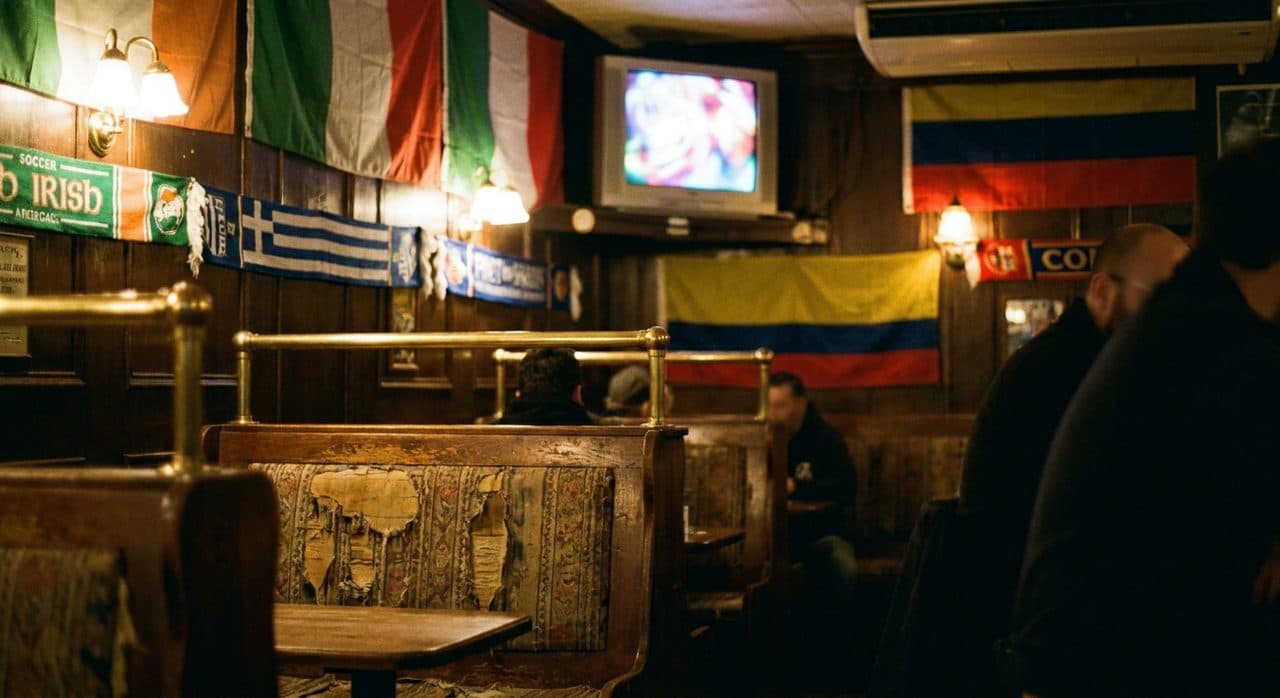
The television mounted in the back corner of Nikos's Place has been showing football since the Bush administration—the first one. Installed in 1988 to broadcast Greek league matches to a clientele of homesick immigrants and their American-born children, the screen has witnessed three decades of Panathinaikos FC victories, heartbreaks, and everything between. The green-and-white scarves draping the wood-paneled walls have faded to the color of old sage, their edges frayed from years of celebratory tugging whenever the Athens club scored.
But walk into this Astoria corner pub on any afternoon when a Latin American team takes the pitch in the 2026 World Cup, and you'll find something the original owner never anticipated: a back booth packed with Ecuadorian, Mexican, and Colombian fans who have transformed this Greek sports bar into their unofficial headquarters. The tricolor jerseys clash magnificently with the Mediterranean décor. The shouts of "¡Gol!" rise above the bouzouki music that still plays softly from speakers near the front door. And somehow, against all reasonable expectation, it works.
The Handshake Deal That Started Everything
The arrangement began in early June, just before the group stage kicked off. Roberto Mendez, a forty-three-year-old electrician from Guayaquil who has lived in Astoria for fifteen years, approached Nikos Papadopoulos with a proposition. Roberto had been watching matches at the bar sporadically for years, drawn by the reasonable prices and the fact that Nikos actually understood football—real football, not the American version. But with Ecuador qualifying for the knockout rounds for the first time since 2006, Roberto wanted something more permanent.
The negotiation happened over two beers and took less than twenty minutes. Roberto proposed exclusive rights to the back television during all Latin American World Cup matches. In exchange, his group would pre-order a fixed food and beer package for each session—a guaranteed minimum spend that would make the arrangement worthwhile for Nikos regardless of how many other customers wandered in. They shook hands across the bar top. Nikos pulled out a worn notebook from beneath the register—the same one where he tracks his liquor orders and his daughter's soccer practice schedule—and wrote down the terms in his cramped handwriting. The deal was done.
Within a week, Roberto had recruited a coalition. There was Javier, a Mexican graphic designer who lives above the laundromat on 30th Avenue. There was the Restrepo family, Colombian transplants who run a bakery three blocks away and close early on match days. There were others—friends of friends, coworkers, strangers who heard about the arrangement through the invisible network that connects immigrant communities. The back booth, which seats eight uncomfortably or six with dignity, became the most coveted real estate in the pub.
The Scarf That Changed Everything
Nikos Papadopoulos will tell you, if you catch him in the right mood, that he had never watched a South American football match in his sixty-one years of life. Greek football, yes. European Champions League, absolutely. He could recite Panathinaikos's 1971 European Cup run with the reverence of a man describing religious scripture. But Ecuador? Colombia? These were abstractions, countries that existed primarily as sources of the coffee he drank each morning.
Then Roberto brought him the scarf. It was custom-made—yellow, blue, and red stripes with "La Tri" embroidered in the center—and Roberto presented it with the solemnity of a diplomatic gift. Nikos accepted it with equal gravity. He hung it on the wall next to the Panathinaikos scarves that had been there since the Clinton years, and something shifted in the room's atmosphere. The Greek regulars, who had initially regarded the Latin American contingent with the polite suspicion of longtime tenants watching new neighbors move in, began nodding at them. The nods became waves. The waves became conversations.
Now Nikos watches every Ecuador match from his spot behind the bar, offering commentary in a mixture of Greek and heavily accented English. He has learned the names of the starting eleven. He argues about formation choices with Roberto. When Ecuador secured their spot in the fifa world cup 2026 bracket's knockout rounds, Nikos bought a round for the entire back booth—the first time anyone could remember him giving away drinks for a team that wasn't wearing green and white.
The Night the Beer Ran Out
July 3rd, 2026. Ecuador versus Germany in the round of 16. The pub was at capacity by 2 PM, a full hour before kickoff. The back booth was packed with its usual occupants, but the energy had spread throughout the entire establishment. Greek regulars who had come for their afternoon ouzo found themselves unable to look away from the screen. A group of German tourists, in town for matches at MetLife Stadium, had wandered in and claimed a table near the window, their presence adding an edge of genuine rivalry to the proceedings.
By halftime, with Ecuador up 1-0 on a stunning free kick, Nikos realized they had run out of Modelo. The cooler was empty. The backup cases in the basement were gone. He had underestimated demand by a factor of three. For a moment, panic flickered across his face—these were beer drinkers, serious ones, and the second half hadn't even started.
He made a decision. He pulled cases of Mythos from the back—the Greek lager he kept primarily for nostalgic countrymen and the occasional curious tourist—and began distributing bottles to the Latin American contingent without explanation or apology. Roberto looked at the unfamiliar label, shrugged, and took a long drink. The Restrepos followed suit. By the time Ecuador sealed their 2-1 victory, empty Mythos bottles covered every table in the back section, and nobody had complained once. Nikos still describes this as the moment the two communities merged—the night his Greek lager became the celebratory drink of Ecuadorian football.
The Booth's Unwritten Rules
Spend enough time at Nikos's Place during a match, and you'll begin to notice the rituals that have developed around the back booth. There is a seating hierarchy, though no one will admit to it directly. Roberto always takes the corner seat with the clearest sightline to the television. Javier sits to his left, phone ready to text updates to friends who couldn't make it. The Restrepo patriarch claims the aisle seat, allowing him to shuttle between the booth and the bar for refills without disturbing anyone.
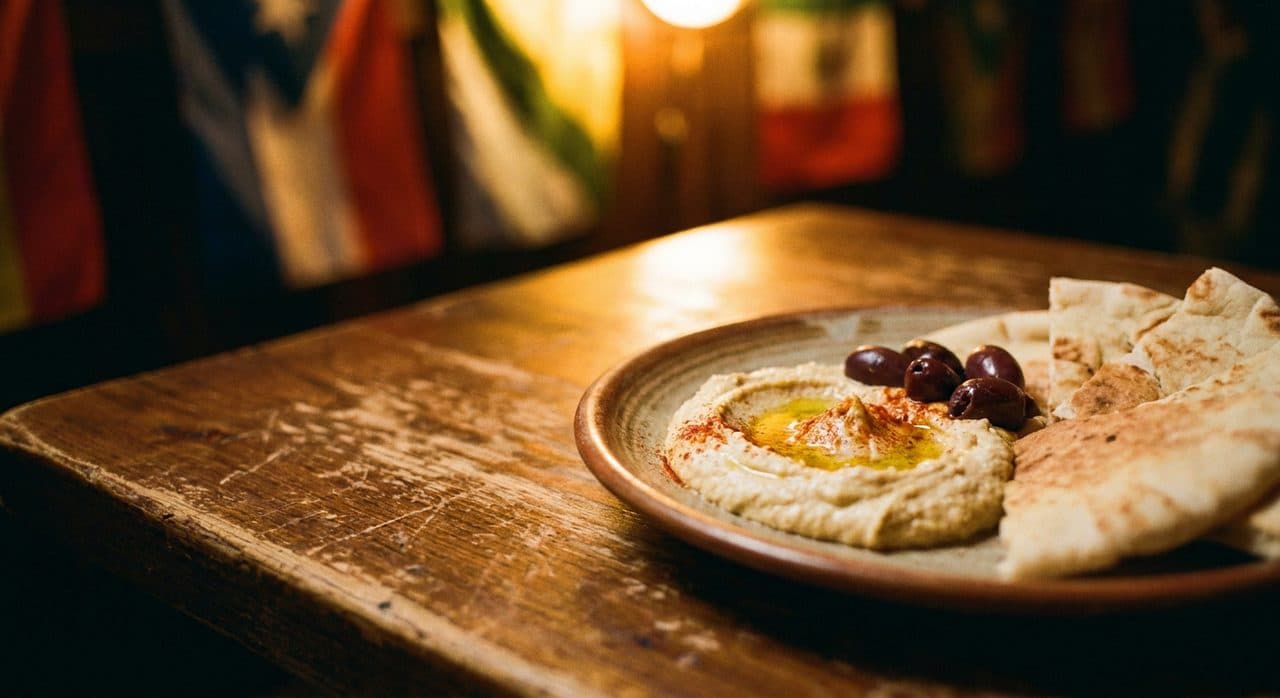
The food package, negotiated in that original handshake deal, has evolved over the weeks. It started as simple fare—wings, fries, the kind of bar food that exists primarily to justify continued drinking. But Nikos, inspired by his new clientele, has added items to the menu. There are now empanadas, made by Mrs. Restrepo at her bakery and sold on consignment. There is a Greek-Colombian fusion plate that Nikos invented one slow Tuesday—lamb souvlaki with chimichurri sauce—that has become the booth's unofficial match-day meal.
The television itself has been upgraded. The original set, a bulky CRT that had survived since 1988 through sheer stubbornness, finally died during a Mexico group stage match. Nikos replaced it within forty-eight hours with a flatscreen that seems almost aggressively modern against the pub's dated wood paneling. The Panathinaikos scarves frame it like a shrine.
What Remains When the Tournament Ends
The World Cup will conclude in a few weeks. The knockout rounds will narrow to semifinals, then finals, and then the global attention will shift elsewhere. The question that hangs unspoken over the back booth is what happens next. Will Roberto and his coalition return to watching matches at home, scattered across Astoria apartments with smaller screens and no one to celebrate with? Will the booth revert to its previous existence as overflow seating for Greek regulars during Champions League broadcasts?
Nikos doesn't seem worried. He has already told Roberto that the arrangement can continue for Copa América, for World Cup qualifiers, for whatever comes next. The notebook behind the bar has space for more entries. The wall has room for more scarves. And the television—that new flatscreen that replaced thirty-five years of history—doesn't care what league is playing, only that someone is watching.
On a recent afternoon, between matches, a young woman walked into Nikos's Place for the first time. She was looking for somewhere to watch Colombia's quarterfinal, having heard about the pub from a coworker. Roberto waved her over to the booth, made room, and handed her a Mythos without asking what she wanted. She looked at the Greek label, then at the Ecuadorian scarf on the wall, then at the Mexican flag someone had draped over a barstool. She didn't ask questions. She just sat down and waited for kickoff.
Practical Notes
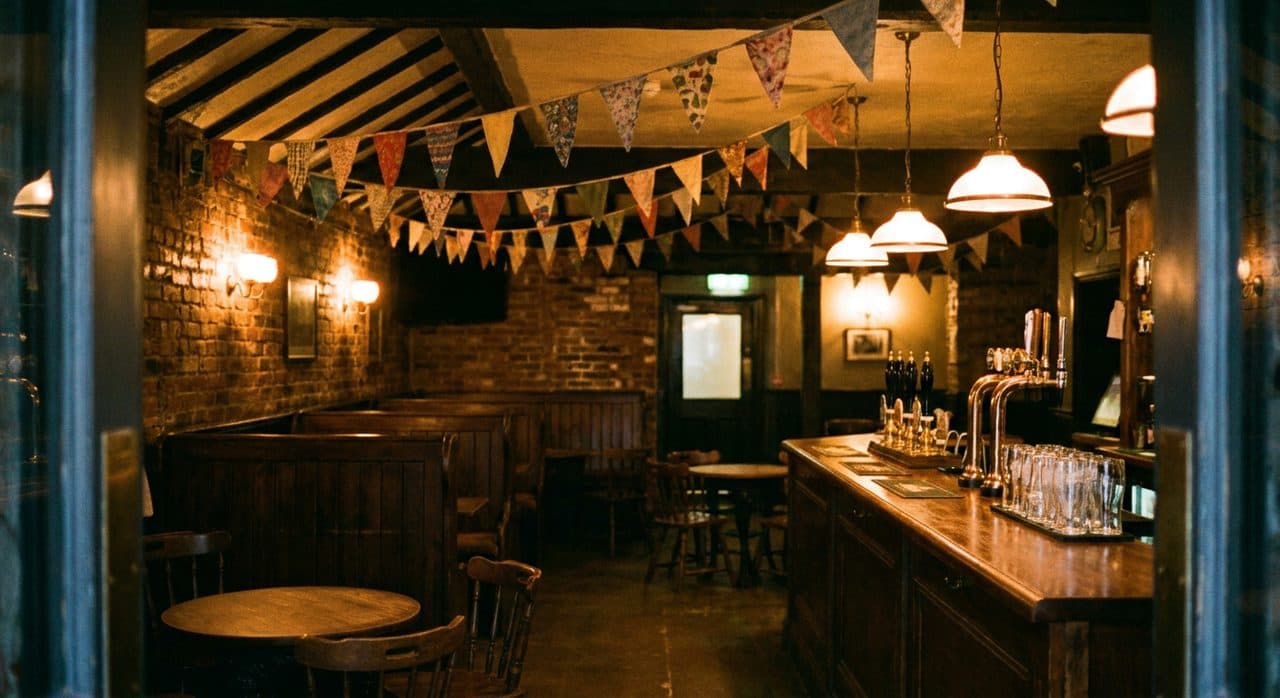
Nikos's Place occupies a corner lot on Steinway Street in Astoria, recognizable by the faded green awning and the Panathinaikos FC sticker in the window. The pub opens at noon daily and stays open until midnight or later during major matches. The back booth arrangement with Roberto's group covers all Latin American World Cup matches, but the front section remains available for walk-ins—arrive at least an hour before kickoff for any knockout round game to secure a seat with a decent view. The food-and-beer package runs approximately $25 per person and includes the empanadas, which are genuinely worth trying. Mythos lager is now available alongside the usual domestic and Mexican options. Cash is preferred but cards are accepted with a $15 minimum. Street parking is difficult; take the N or W train to Steinway Street station and walk three blocks north.
Tags: #AstoriaQueens #WorldCup2026 #NYCSportsBars #WatchParties #LatinAmericanFootball #EcuadorFutbol #GreekAmerican #SteelwayStreet #FutbolCulture #ImmigrantNYC #BarCulture #SoccerNYC #MythosLager #CommunitySpaces #QueensEats
Sources consulted: timeout.com · nymag.com · thrillist.com · eater.com
Please drink responsibly. Must be of legal drinking age.
All trademarks are the property of their respective owners.
Ask Karpo first
Want to know if the back booth is claimed for tonight's match, whether the Greek pub is showing the South American group stage, and what time the regulars arrive? Ask Karpo before heading to Astoria.


