
terremoto may be the word pulling attention into your feed today, but a smart New York City plan should not treat a search term as proof that something is happening locally. For visitors, commuters, and residents trying to choose a neighborhood outing on Tuesday, August 11, 2026, the better move is practical: decide what you actually need, pick the borough that reduces unnecessary travel, check official pages before leaving, and build a backup that works if crowds, weather, access, or timing shift. NYC is too large for vague plans. Its five boroughs each behave like a smaller city within the metropolis, so this guide turns attention into a public, executable route rather than a rumor chase.
Want a plan that checks the area, timing, transit risk, and backup before you leave? Text Karpo with your starting point, deadline, and must-do, and ask for a tighter NYC route.

Translate the headline into a neighborhood question
Start by stripping the word terremoto down to what it means for your day. Are you trying to find a place to eat, meet someone, take visitors around, cool off indoors, or avoid a crowded corridor? A headline or trending word is not an itinerary. In New York, the useful question is local and logistical: which neighborhood lets you complete the task with the fewest fragile assumptions?
NYC’s official tourism language is broad for a reason: the city has constant energy, endless sights, attractions, activities, and five boroughs with different strengths. Manhattan is the most visited borough and carries iconic skyline, Broadway, and Central Park associations. Queens is described as a place of wide-ranging tastes and global cuisines. Brooklyn is known for nightlife and boundary-pushing cuisine. The Bronx is tied to history, culture, hip-hop, and Little Italy. Staten Island offers historic attractions, beach views, global dining, and ferry access. Pick from that map, not from panic.
Choose the area by the actual task
If food is the reason you are going out, verify whether NYC Restaurant Week® Summer 2026 is relevant to your date and party. The official NYC Tourism extract lists it from July 20 through August 16, with two-course lunches and three-course dinners across all five boroughs starting at $30. That does not guarantee a seat, a menu, or a neighborhood fit; it only tells you there is an official citywide dining program to check before you commit.
If culture is the task, keep the borough choice honest. NYC Tourism points readers toward museums and galleries, Broadway and performing arts, tours and attractions, events and festivals, shopping, sports, and nightlife. It also highlights budget activities, free museums, arts and entertainment on a budget, walking tours, observation decks, family restaurants, and all-ages venues. Use those official categories as filters. A plan for grandparents, teens, coworkers, and a first-time visitor should not default to the same neighborhood just because one phrase is hot online.
For a citywide guide, the best neighborhood is often the one that reduces transfers and keeps your second option nearby. If your group is already in Midtown, Manhattan may be efficient for Broadway-adjacent activities or Central Park access. If the meal is the anchor and a Queens restaurant is the draw, do not add a Manhattan photo stop unless it earns the extra travel.
Use transit exits as planning anchors
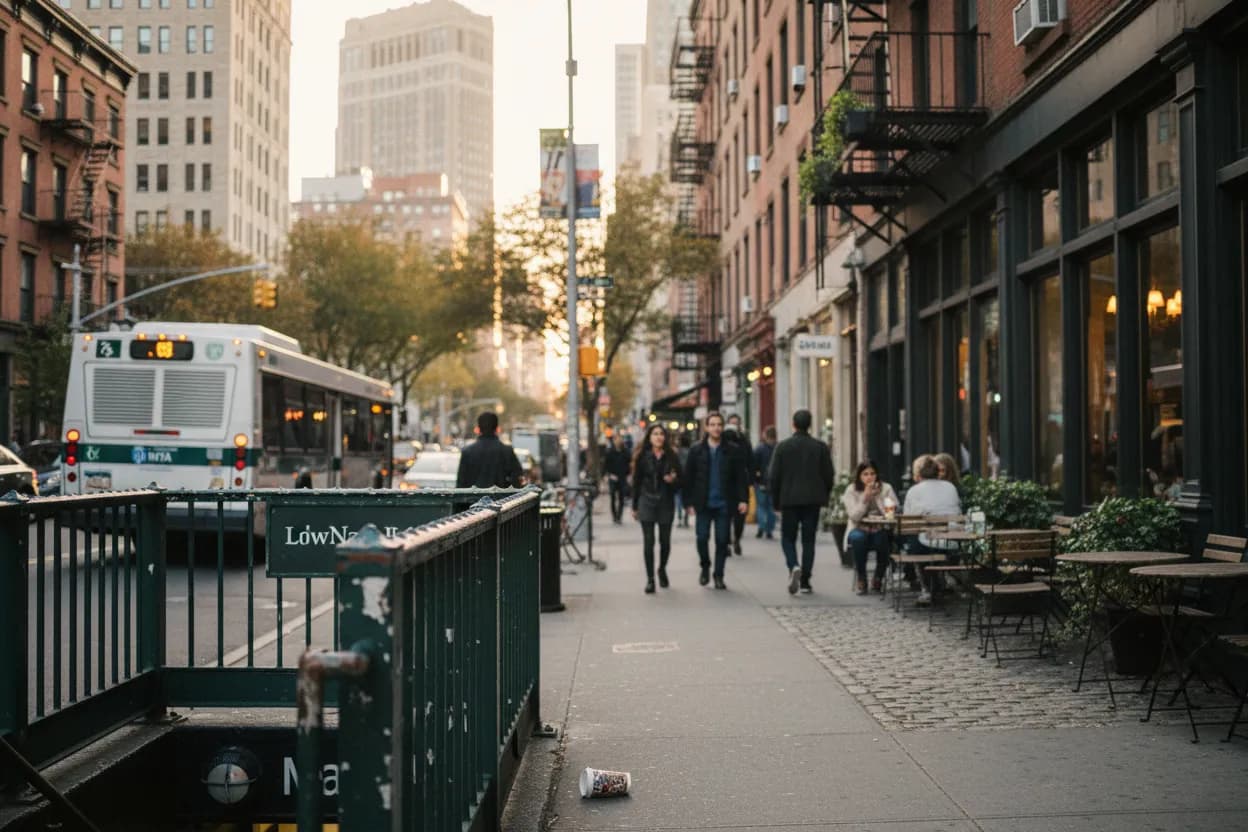
Plan from the exit, not just the station name. NYC Tourism describes subway-accessible stories beginning from Times Square and reaching every borough, which is a reminder that the subway can connect the city, but the last few blocks still matter. Before leaving, use the official transit source you trust to check the exact station, exit, service status, accessibility needs, and walking direction. If the official page is unavailable or unclear, pause rather than guessing.
Make your route legible to everyone in the group. Write down the arrival station, the street exit or corner you intend to use, the first indoor stop, and the place you will regroup if someone loses service. This is especially useful around major attractions, dining corridors, and performance areas where sidewalk flow can change quickly.
Do not assume that a short map distance equals an easy transfer. Heat, rain, luggage, mobility needs, platform changes, and crowding can turn a clever route into a bad one. A transit-smart NYC plan has a cutoff time: if the first route fails by that time, you take the backup instead of spending the day in motion.
Add one indoor and one outdoor backup
Every outing needs two backups: one indoors and one outdoors. The indoor option should be useful even if you abandon the original plan. NYC Tourism’s categories make this practical: museums and galleries, performing arts, shopping, budget culture, family restaurants, and all-ages venues can become fallback anchors if weather, crowds, or timing shifts. Check the official page for hours, access, reservations, tickets, age rules, and any same-day changes before you go.
The outdoor option should be simple, not heroic. Manhattan’s Central Park is identified by NYC Tourism as one of the borough’s signature features, but do not turn that into a guarantee about conditions, access, or crowd levels on a specific day. If you are considering any park, waterfront, walking tour, beach view, or outdoor neighborhood stroll, verify the relevant official information first and set a nearby indoor escape.
A good backup is close enough that you will actually use it. If your primary choice is a restaurant week lunch, your indoor backup might be a nearby gallery, shop, or budget attraction category you have already checked. Your outdoor backup might be a short walk, a public square, or a neighborhood sightseeing loop that does not require a timed ticket.
Avoid treating online attention as a local promise
The word terremoto can be a search hook, a language cue, a pop-culture reference, or just a momentary burst of curiosity. It is not evidence of a New York appearance, emergency, event, endorsement, private access, or special citywide condition. This article makes no claim that the phrase is tied to a local occurrence. In a city that already has enough real logistics, do not add fictional ones.
Be especially careful with screenshots, reposted flyers, short videos, and vague captions. If a listing claims a performance, taping, exhibition, tasting, or public appearance, confirm it on the official venue, organizer, tourism, or city source before traveling. NYC Tourism does include official guidance for things like live TV tapings, events, attractions, restaurants, and annual events, but the existence of a category is not the same as a same-day guarantee.
The same skepticism applies to crowds. A term getting attention does not mean a neighborhood will be packed, and a quiet feed does not mean a place will be empty. Build the plan around verifiable access, realistic travel time, and a clean exit strategy.

Verify conditions before crossing the city
Before crossing boroughs, run a five-minute verification checklist. Confirm the official page for the place you want, the date, the current hours or timed-entry rule, reservation or ticket requirements, accessibility details, age restrictions if relevant, and whether your backup is still open or usable. For dining, verify participation, menu details, and availability directly with the official listing or restaurant source rather than assuming the citywide program covers your exact plan.
Then check your route at the last responsible moment. Because conditions can change, treat transit status, station access, elevator availability, road disruptions, and weather-sensitive choices as live information. If your official transit source cannot be reached, use that as a risk signal and simplify the outing: choose a closer borough, reduce transfers, or switch to the backup.
Finally, set a turn-back rule. If you are not at the platform, ferry point, bus stop, lobby, or meeting corner by your cutoff, stop chasing the original idea. New York rewards decisive pivots. A neighborhood guide that works is not the one with the most hype; it is the one that still gives you a good afternoon when the first plan breaks.
Tags: #terremoto #NYC #NeighborhoodGuides #AskKarpo #BeforeYouGo #NYCTransit #Manhattan #Brooklyn #Queens #TheBronx #StatenIsland #NYCFood #NYCCulture #CityPlanning
Sources consulted: nyctourism.com · new.mta.info · nycgovparks.org
All trademarks are the property of their respective owners.
Ask Karpo first
Ask Karpo first before you cross the city for a rumor, a restaurant, or a maybe-open attraction. Share your starting point, borough preference, time window, mobility needs, and backup tolerance, and Karpo can help pressure-test the plan before the subway ride becomes the activity.


