For New Yorkers, the Taylor Swift and Travis Kelce wedding story was not only a celebrity item; it briefly became a Midtown service story about crowds, permits, traffic, police presence, and the limits of what the public is entitled to know. The useful question now is not who sat where, what was said privately, or how security worked step by step. It is what was actually reported, who said it, and what readers should treat as unverified. As of July 22, 2026, public information points to a private wedding celebration at Madison Square Garden, a city-approved multi-day event permit, partial street closures, and a layered security posture described mostly through law-enforcement sourcing and guest accounts.
Text Karpo if you want a quick read on what is verified, what is sourced, and what is only internet noise around a major NYC event. Ask Karpo before you detour to Midtown so you can separate useful service updates from celebrity speculation.
What public officials confirmed in NYC
The clearest official New York City statement came on July 2, 2026, when the Mayor’s Office published a transcript of Mayor Zohran Mamdani discussing heat safety on WCBS-FM. Asked for “Taylor news,” the mayor said the city had approved a permit for a multi-day event at Madison Square Garden and that there would be partial street closures around the venue. He also said necessary city resources would be present. That is a public, attributable city statement, but it did not name the couple, list security procedures, or provide a full traffic-management plan.
That distinction matters. A permit confirmation is not the same thing as a public invitation, and a partial street closure is not proof of every detail circulating online. NYC’s street-activity rules generally require applications for events using public streets and spell out requirements such as contacts, insurance where applicable, emergency access, and coordination with relevant city agencies. Those rules explain why a private event can generate public-facing logistics without making the private event itself public property.
What established outlets reported about the wedding itself
The marriage itself was later reported by the Associated Press in a story carried by NFL.com, which said Taylor Swift and Travis Kelce married on Friday night, July 3, 2026, at Madison Square Garden in New York. That report attributed some wedding-party details to Swift’s publicist, Tree Paine, and named Madison Square Garden as the venue. CBS News also reported the couple were married and described media, fans, and guests gathering outside the arena on July 3.
For readers trying to separate signal from noise, the AP/NFL.com account is stronger than anonymous social posts because it includes attribution and publication standards, while the CBS News pieces identify where information came from, including law-enforcement sources familiar with security planning. That does not mean every colorful detail published elsewhere is false. It means those details deserve different weight depending on whether they come from an official representative, named guest, public record, on-scene reporting, or anonymous secondhand claim.
What is actually reported about security
Security reporting falls into two broad categories: civic impact and private-event access control. On the civic side, the Mayor’s Office confirmed a permitted multi-day event and partial street closures near Madison Square Garden. CBS News reported that both private security and the NYPD were present and, citing law-enforcement sources, framed the city role as comparable to other major Garden events. NBC New York later reported a guest’s account of a highly controlled invitation process, including digital communication and verification steps.
This article is intentionally not repeating granular operational details such as access points, screening mechanics, staffing counts, or crowd-control layouts. Some of that material appeared in news reports, but a privacy-respecting service article does not need to function as a blueprint. The useful takeaway is simpler: a celebrity wedding at an arena above Penn Station required coordination among the venue, private organizers, and city agencies because the event affected public space, transit-adjacent streets, media gathering areas, and pedestrian movement.
What remains unverified or best treated as rumor
A large celebrity event creates perfect conditions for rumor: partial video clips, delivery labels, AI images, anonymous “insiders,” fan theories, and recycled claims that lose their original context. If a post claimed to know exact guest behavior, private vows, unreleased photos, family conversations, or security weaknesses without naming a source or linking to a document, readers should treat it as unverified. If an outlet relied on unnamed sources, the claim may still be reportable, but it is not the same as a public filing or a statement from a named representative.
The safest standard is to ask four questions before sharing: Who is the source? Did the outlet see a document or merely hear a claim? Is the information necessary for public understanding, or is it private curiosity? Could sharing it create a safety or harassment risk? In this story, the public-interest lane is narrow: street access, city resources, crowd conditions, and media literacy. The private-life lane is wide, tempting, and mostly not necessary.
Why Madison Square Garden made this a city story
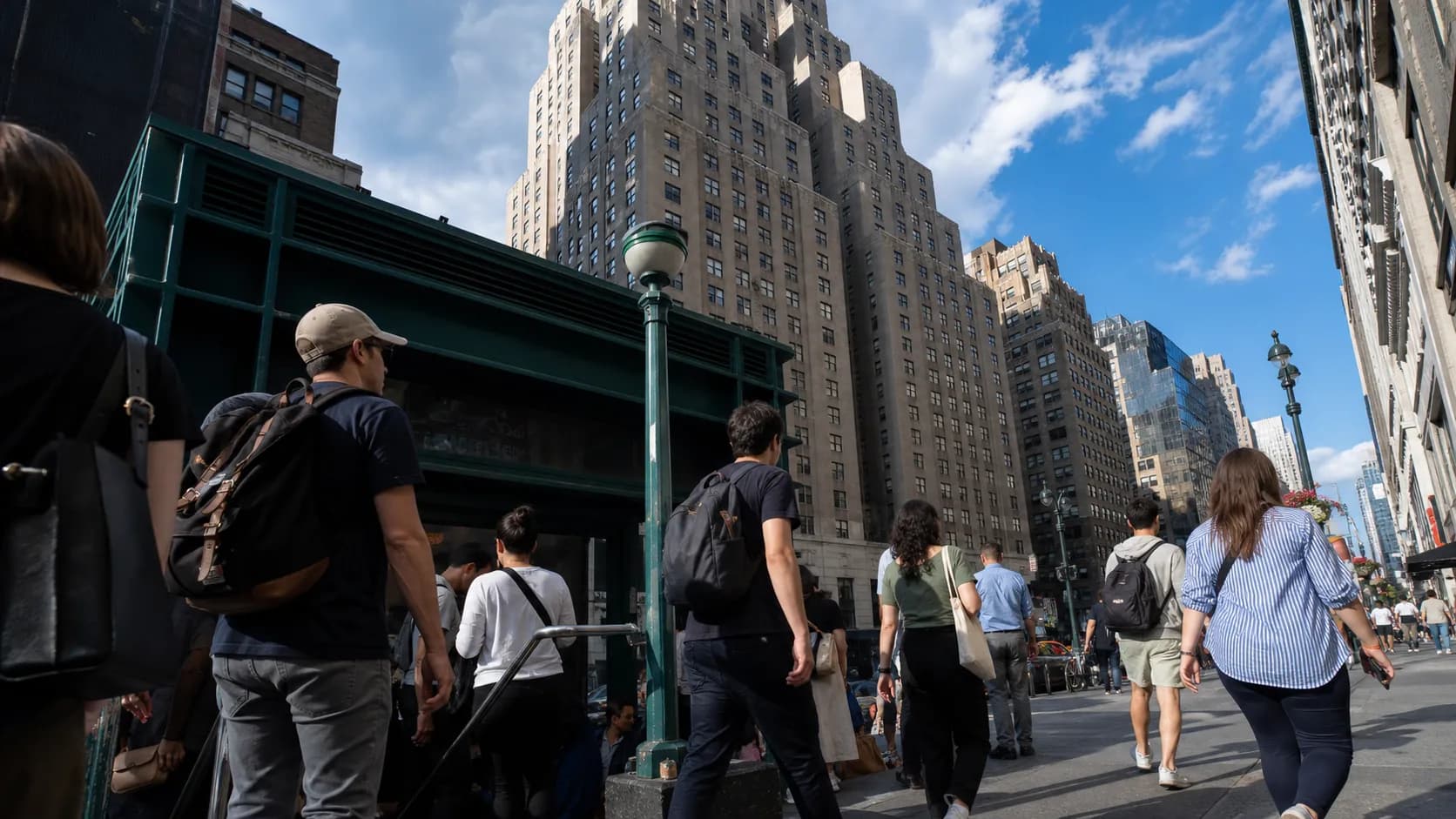
Madison Square Garden is not a secluded estate; it sits directly above Penn Station in one of the busiest transportation zones in the country. MSG’s own directions page highlights subway access at 34th Street-Penn Station and the venue’s connection to major transit. That geography explains why even a private celebration can become relevant to commuters, office workers, tourists, arena staff, nearby businesses, and emergency planners. Midtown around Seventh and Eighth avenues already handles sports, concerts, protests, construction, and holiday crowds.
The venue choice also helped blur the line between private and public attention. A wedding inside an arena can be closed to the public, but the sidewalks, streets, station entrances, and press positions around it are civic space. That is why the confirmed facts about permits and closures are more useful for New Yorkers than speculation about seating charts or décor. The real local issue was not whether fans approved of the venue; it was how the city managed a high-attention event in a congested transit district.
How to read anonymous law-enforcement sourcing
Several pre-event and day-of reports leaned on law-enforcement sources familiar with planning. That can be valuable, especially when agencies do not issue detailed public statements for sensitive events. It can also be incomplete. A source may know traffic planning but not private hospitality. Another may know crowd-control expectations but not what a couple’s representatives will later confirm. Good coverage signals those boundaries by saying “sources said,” “according to a permit,” or “a publicist said,” instead of flattening everything into certainty.
Readers should also notice tense. Before July 3, some articles described plans, expected closures, or anticipated guest counts. After July 3, stronger stories could report what happened, what was seen publicly, and what representatives confirmed. A plan can change. A permit can be modified. A rumored schedule can be wrong. That is why the most reliable post-event summary is modest: the wedding was reported as held at MSG on July 3, NYC had approved a related multi-day event permit, partial closures were confirmed, and security was described as a mix of private and public coordination.
A better way to cover celebrity security
Celebrity security stories often reward the wrong instincts: revealing routes, timing arrivals, zooming in on guests, or implying that privacy measures are suspicious. A better approach treats security as a civic-planning topic and a privacy boundary. It is fair to report that an event affected streets, required coordination, or drew crowds. It is not necessary to publish details that help people evade controls, harass attendees, or turn a private ceremony into a scavenger hunt.
For NYC readers, the service value is knowing how to navigate future high-profile events: check official traffic notices, expect changing pedestrian patterns near major venues, leave extra time around Penn Station, and do not rely on fan accounts for access information. For media consumers, the lesson is broader. The more famous the subjects, the more discipline readers need. Verification, attribution, and restraint are not boring; they are how a city keeps useful information separate from spectacle.
Practical notes
Practical notes for New Yorkers: when a high-profile private event touches public streets, use official city and transit sources before making plans. NYC 311 points residents to current and planned street-closure information, while venue pages can help confirm normal transit access and entrances. If you are near Madison Square Garden or Penn Station during a major event, assume pedestrian routes may shift, rideshares may be slower, and curb space may be limited. Do not share unverified arrival times, hotel guesses, license plates, security positions, or close-up images of private guests. If you see a suspicious package or unsafe crowd condition, move away and contact authorities rather than posting first. Curiosity is understandable; operational details and private family moments are not public necessities.
Tags: #NYC #TaylorSwift #TravisKelce #MadisonSquareGarden #MidtownManhattan #PennStation #MediaLiteracy #CelebrityNews #PrivacyMatters #NYCTraffic #CityService #EventSecurity #FactCheck #HiddenGemsOddFinds #hidden_gems_odd_finds
Sources consulted: NYC Mayor’s Office transcript confirming a multi-day MSG permit and partial street closures · NYC Rules: Street Activity Permit Office application requirements · Madison Square Garden official directions and transit access page · NFL.com carrying Associated Press report on Swift and Kelce marriage at Madison Square Garden · CBS News report on the wedding, crowds, street closures, and sourced security presence · NBC New York report on a guest account of the invitation-security process · NYC 311 guide to street, highway, bridge, and tunnel closure information
All trademarks are the property of their respective owners.
Ask Karpo first
Ask Karpo to turn fast-moving NYC stories into practical briefings: what happened, what officials confirmed, which claims need caution, and how the situation may affect transit, sidewalks, local businesses, or weekend plans without amplifying rumors.