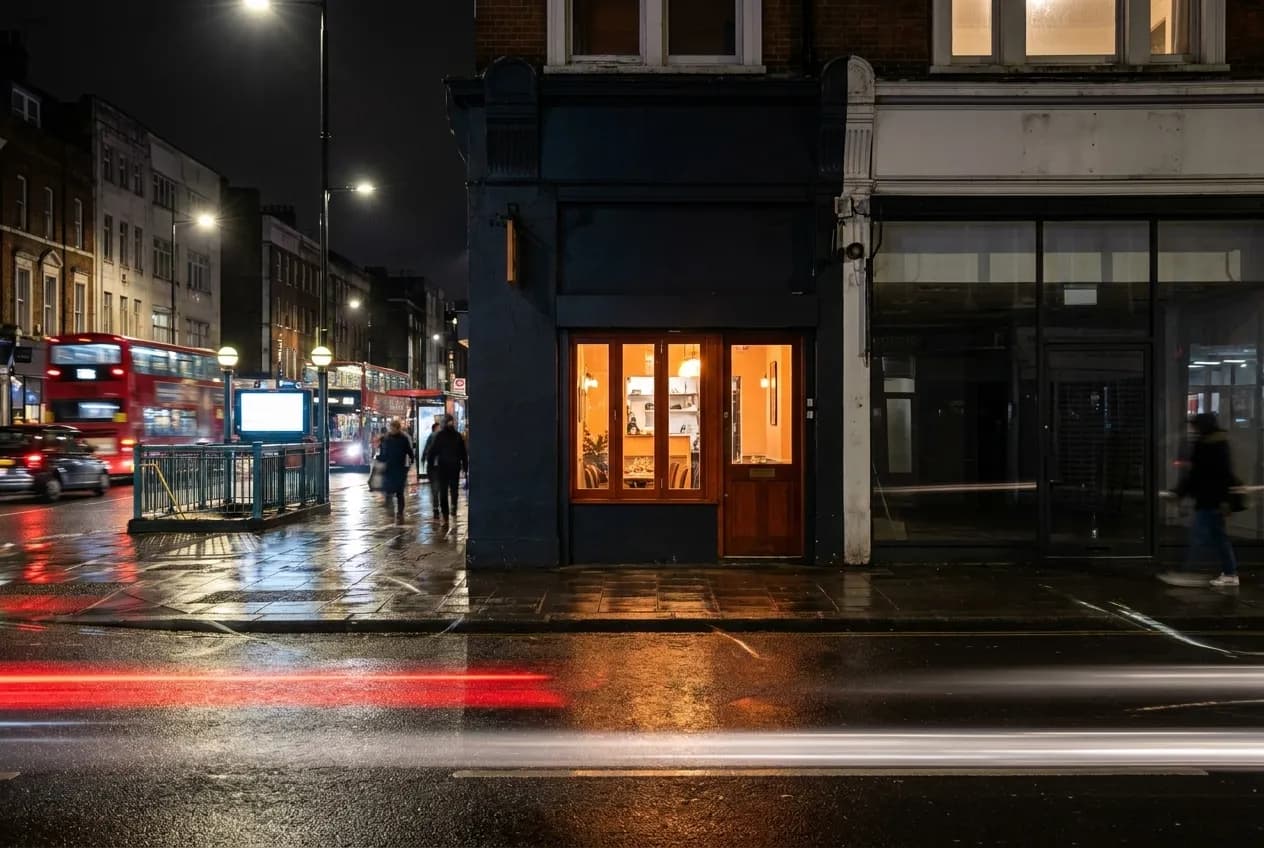
Twelve seats. Two seatings. Twenty-four people, in total, get to eat at this restaurant on any given night. Start from that number rather than from the food, because it explains everything else about how the place works — the price, the format, the difficulty of getting in, and why almost nobody who has not already been has heard of it.
A twelve-seat room books differently from a hundred-seat one, and the tables go long before anyone writes about them. Tell Karpo how far ahead you can plan and get the small San Francisco tasting menus that are actually gettable on the night you want.
The economics of a very small room
A conventional restaurant serves a hundred people a night and covers its costs across all of them: a large kitchen, a large front of house, a large rent. A twelve-seat room cannot do any of that, so it does the opposite. One short menu, cooked for everyone, changing constantly according to what is good that week. No choices to manage, no waste from a long menu, no brigade. The result at Mr. Pollo on Mission Street is four courses at a price that has sat in the forties and is now around the fifty mark — which, for a tasting menu in San Francisco in this decade, is genuinely remarkable.
It is worth being precise about the number rather than quoting one from an old article: the price has moved upward over the years as everything has, and what has not changed is the format or the ambition. Even at the top of that range it sits at roughly half of what the next cheapest serious tasting menu in this city costs, and a fifth of what the famous ones do.
What a changing menu actually means here
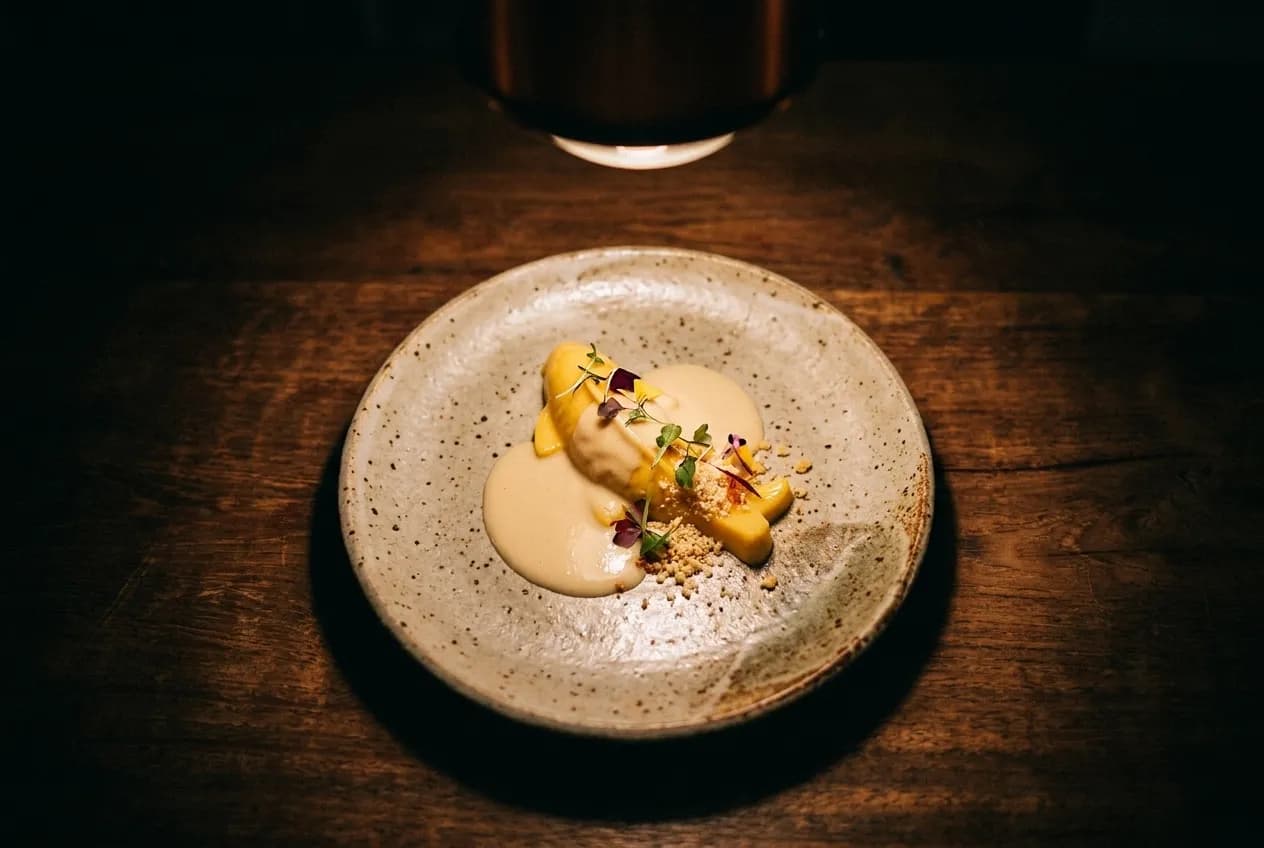
Most restaurants that describe their menu as seasonal mean they swap three dishes in the spring. A twelve-seat kitchen with four courses can change genuinely often, because the entire quantity involved is small enough to buy at a market rather than from a distributor. The menu draws on local Bay Area produce and moves accordingly, which means two visits a month apart are two different meals, and it means there is no signature dish to come back for. That is a feature if you want to be surprised and a frustration if you fell in love with something in February.
The kitchen's roots are Latin American — the restaurant began as a Colombian place and the influence has stayed while the format has evolved into something harder to categorise. Going in expecting a specific cuisine is the wrong approach. Going in expecting four courses of whatever the kitchen is interested in this week is the right one.
Getting a table
Reservations are required and this is not negotiable in a room this size — there is no bar to wait at and no chance of a cancellation absorbing a walk-in. The practical approach is the one that applies to any very small restaurant: know when tables are released, be ready at that moment, and be flexible about the night. Midweek is always easier than Friday and Saturday, and a twelve-seat room on a Tuesday is a considerably more relaxed experience than the same room on a weekend anyway.
A group of four is a third of the restaurant, which is worth thinking about before booking one. Two people is the natural unit here, and a solo diner is entirely unremarkable in a room like this. Six is a private hire in everything but name and should be discussed with the restaurant rather than booked blind. The same scale explains the etiquette once you are inside. In a room this size the kitchen can hear the dining room and the dining room can hear the kitchen, the pacing is shared across every table, and arriving twenty minutes late does not inconvenience a host — it holds up eleven other people's second course. Small rooms are generous in every way except that one.
- Twelve seats, two seatings, twenty-four covers a night — reservations essential
- Four courses, changing frequently, built on local Bay Area produce
- Well under a hundred dollars, at roughly half the price of the next cheapest serious tasting menu
- Directly across from the 24th Street Mission BART station
The BART thing is not a throwaway
The restaurant sits directly opposite the 24th Street Mission station entrance, which is a genuinely useful piece of information for a tasting menu. A long dinner with wine in San Francisco usually ends with a parking question or a car booking; here it ends with a two-minute walk to a train that runs to downtown, the East Bay and the airport. For anyone coming from Oakland or Berkeley this makes a fifty-dollar tasting menu a realistic Tuesday rather than an expedition.
The surroundings are the other reason the address works. The 24th Street corridor is the densest and most interesting eating stretch in San Francisco and it is open late, so a meal that finishes at nine does not end the evening — there is a drink, a pan dulce or a second dinner within two blocks in any direction, and the neighbourhood is at its best on exactly those weeknights when the restaurant is easiest to book.
Practical notes
Mr. Pollo, 2823 Mission Street, San Francisco, directly across from the 24th Street Mission BART station. Twelve seats and two seatings, serving roughly twenty-four people a night, so reservations are required and should be made as far ahead as the restaurant releases them. A four-course tasting menu, priced well under a hundred dollars and historically in the forties, changing frequently and built on local Bay Area produce; the kitchen's background is Latin American but the format is not tied to one cuisine. Midweek is easier to book and more comfortable to eat in. Arriving and leaving by BART is the obvious approach.
Tags: #SanFrancisco #MissionDistrict #TastingMenu #SFEats #24thStreet #SmallPlates #LatinFood #SFRestaurants #AffordableDining #DateNight #BARTAdjacent #ChefsCounter #ThingsToDoSF #BayArea
All trademarks are the property of their respective owners.
Ask Karpo first
Want to know which San Francisco tasting menus come in under a hundred dollars, how far ahead the small rooms release tables, and which nights are easiest to get? Ask Karpo for the options near you and what the booking window looks like this week.


