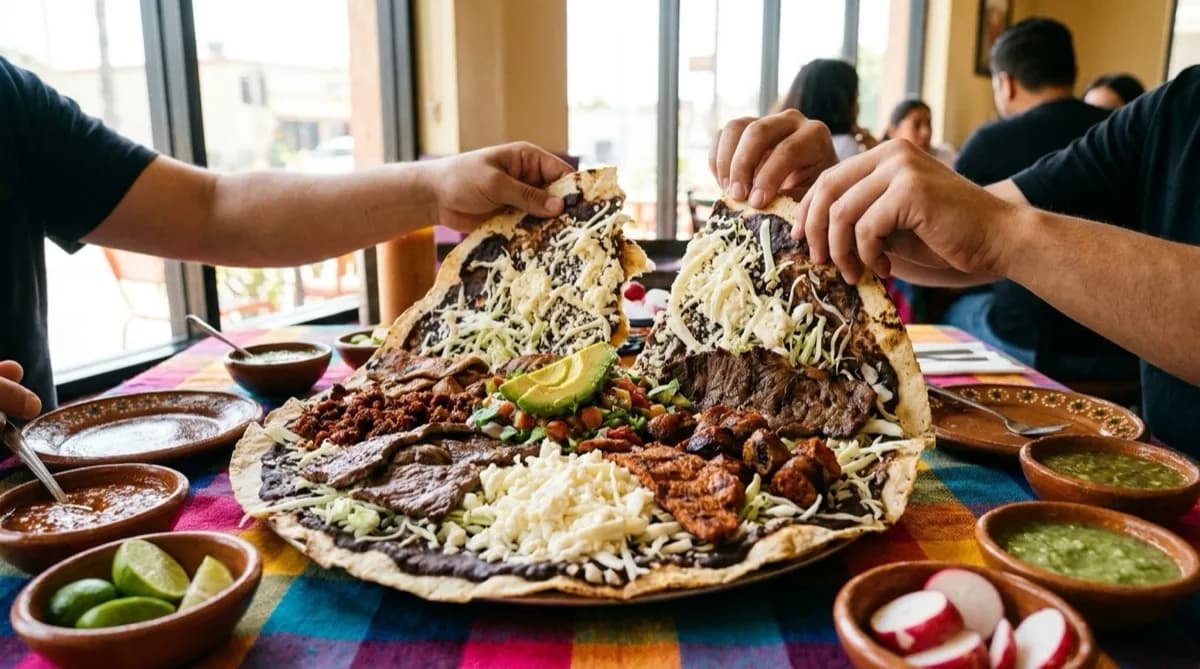
The Taco Bell Mexican Pizza—a branded menu item featuring seasoned beef, refried beans, and cheese between two fried tortillas—has captured online attention, but the comparison to a tlayuda misses the point entirely. A tlayuda is a Oaxacan preparation with deep regional roots: a large, thin, partially dried corn tortilla toasted until crisp, then layered with asiento (unrefined pork lard), black bean paste, quesillo Oaxaqueño (Oaxacan string cheese), and your choice of tasajo, cecina, or chorizo. The texture is part cracker, part flatbread; the flavor profile balances smoke, salt, and the earthy sweetness of heirloom corn. It's not a stacked item—it's an open-faced composition meant to be folded and eaten with your hands. Los Angeles, home to one of the largest Oaxacan communities outside Mexico, offers access to the authentic preparation without reducing it to a drive-thru analogy.
Text Karpo now with your neighborhood, whether you prefer tasajo or chorizo, your group size, car or Metro plan, spice tolerance, and whether you want a sit-down meal or a street-food-style counter experience. We'll map a personalized tlayuda route that respects your schedule and budget.
Understanding the Tlayuda Before You Order
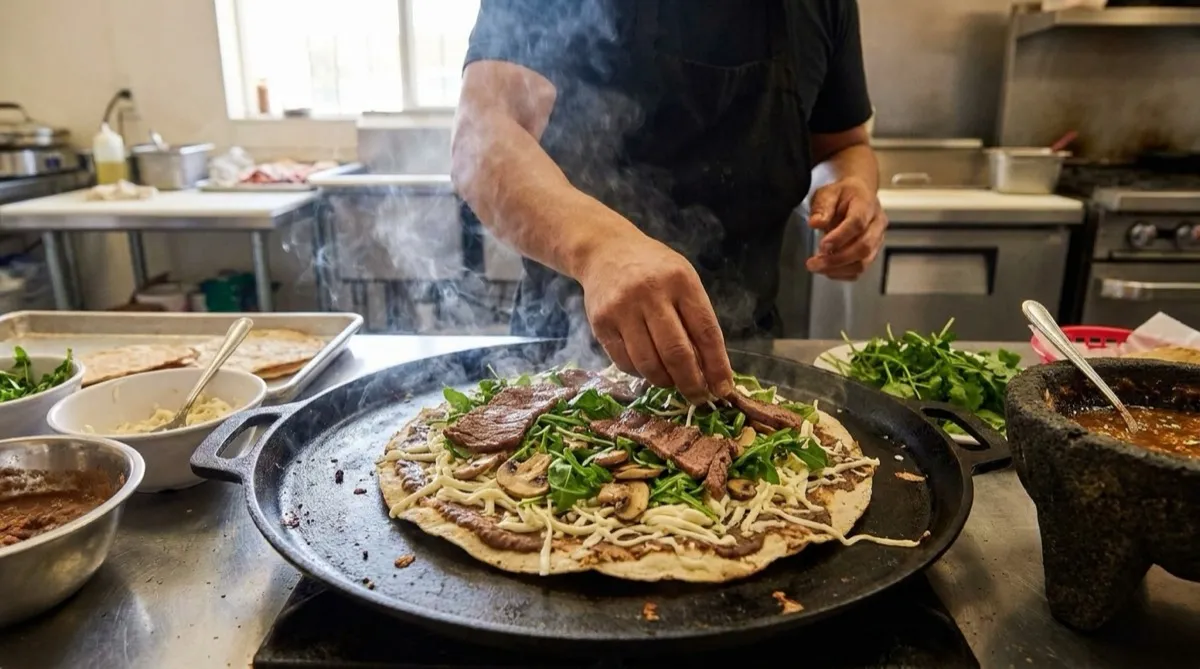
A tlayuda begins with a tortilla de agua—a hand-pressed corn tortilla that's been allowed to dry slightly, creating a base sturdy enough to support toppings without tearing. Traditional preparation involves toasting it over a comal (a flat griddle) to achieve a blistered, semi-crisp surface. Asiento, the rendered fat left after making chicharrón, is spread thinly across the surface, followed by a layer of frijoles negros refritos. Quesillo is torn into ribbons and draped over the beans, then meat—typically tasajo (thinly sliced, salted beef), cecina (marinated pork), or chorizo—is added. Some preparations include cabbage, avocado, and salsa. The result is folded in half or quarters, creating a handheld package where each bite delivers crunch, chew, smoke, and richness.
The tlayuda is not analogous to a pizza in structure or intent. It's closer to a tostada in concept but larger and more substantial, designed as a complete meal rather than an appetizer. Oaxacan cuisine emphasizes the quality of corn, the complexity of moles, and the craft of artisan cheese-making—all elements present in a well-made tlayuda. Understanding this context helps you appreciate what you're ordering and why it's worth seeking out.
Guelaguetza: The Sit-Down Starting Point
Guelaguetza, located on Olympic Boulevard in Koreatown, is Los Angeles's most established Oaxacan restaurant. The official site presents tlayudas among its food imagery and menu context, and the dining room offers a full-service experience with table service, a bar, and a mole menu that spans seven varieties. A tlayuda here arrives on a large plate, often folded once, with sides of salsa verde and salsa roja. Expect to share or plan for leftovers—the tortilla base is roughly twelve inches in diameter.
Ordering strategy: If you're in a group of three or more, order one tlayuda alongside other dishes—memelas, tetelas, or a mole sampler—to experience the breadth of Oaxacan technique. If you're dining solo or as a pair, the tlayuda can serve as your main course; add a side of esquites or a small mole dish for balance. Timing matters: Guelaguetza is busiest on weekend evenings, and waits can exceed forty-five minutes without a reservation. Weekday lunches move faster. Verify current hours on the official site before planning your visit.
Poncho's Tlayudas: The Specialist Counter
Poncho's Tlayudas operates in Los Angeles and centers its identity on tlayudas, though readers should verify the current service format and hours via the official site. The concept is counter-service, with a focus on speed and customization. You'll typically order at a window or counter, choose your protein and toppings, and receive your tlayuda wrapped in paper for portability. This format suits a quick lunch, a late-night stop, or a street-food-style experience without the formality of table service.
Practical considerations: Counter-service spots often lack seating, so plan to eat in your car, at a nearby park, or standing. Tlayudas are best consumed immediately while the tortilla retains its textural contrast—waiting more than fifteen minutes can result in sogginess. If you're coordinating a group outing, stagger your orders or call ahead to confirm the kitchen can handle multiple tlayudas simultaneously. Poncho's model emphasizes the tlayuda as a grab-and-go item, so adjust your expectations accordingly.
Texture, Temperature, and the Fifteen-Minute Window
A tlayuda's appeal hinges on the interplay between the crisp, blistered tortilla and the warm, yielding toppings. This balance is time-sensitive. In the first five minutes after preparation, the tortilla maintains its snap; by ten minutes, steam from the beans and meat begins to soften the base; by fifteen, you've lost the textural contrast that defines the dish. If you're picking up for takeout, plan your route to minimize transit time. If you're dining in, eat the tlayuda first, before moving to other dishes.
Temperature also matters. A properly prepared tlayuda arrives hot, with the quesillo partially melted and the meat freshly grilled. Cold spots indicate the tortilla was pre-toasted and assembled without reheating—a shortcut that undermines the dish. Don't hesitate to ask how the kitchen handles preparation, especially at unfamiliar spots. A good tlayuda takes time to assemble correctly, so if your order arrives in under three minutes, question the process.
Group Dynamics and Sharing Etiquette
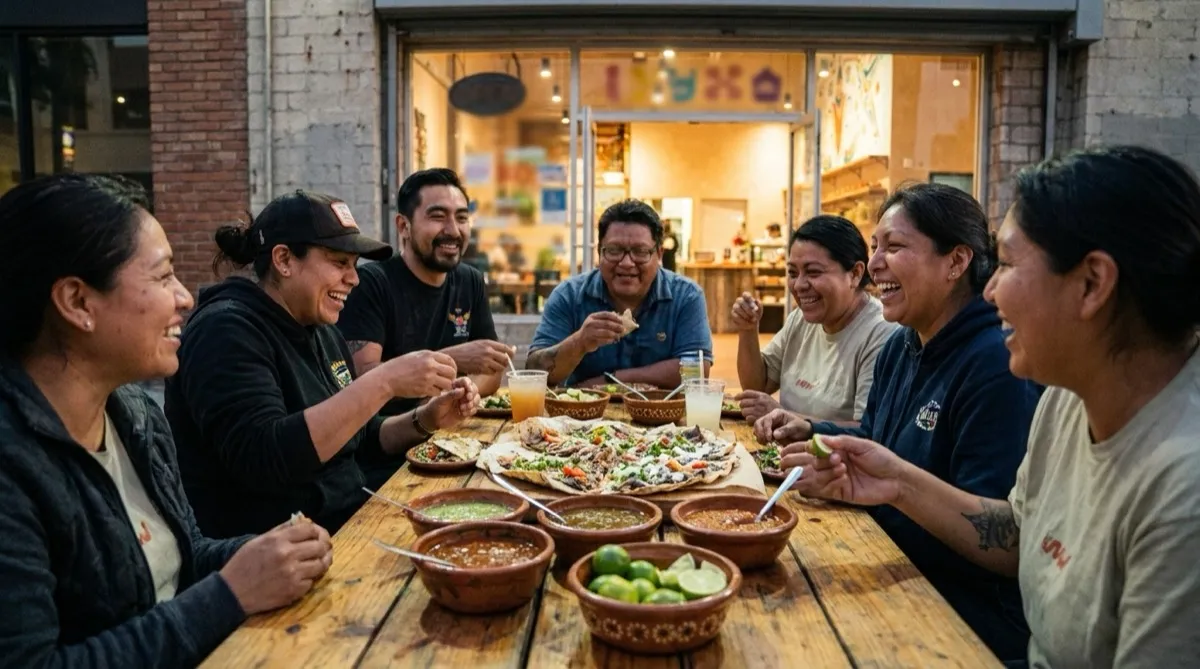
Tlayudas are large enough to share but awkward to divide cleanly. If you're splitting one between two people, request it unfolded and cut into quarters at the restaurant, or use a knife to portion it yourself. For groups of four or more, order multiple tlayudas with different proteins—tasajo, cecina, chorizo—and rotate plates family-style. This approach lets everyone sample variations without committing to a single flavor profile.
Spice tolerance varies widely within groups. Oaxacan salsas range from mild and smoky to intensely hot, and the heat isn't always predictable by color. Ask for salsa on the side rather than pre-applied, and taste cautiously before dousing your portion. If someone in your group has a low spice threshold, order a side of crema or queso fresco to temper the heat. Oaxacan cuisine respects the diner's ability to calibrate flavor, so don't feel obligated to accept the kitchen's default salsa application.
Transit, Parking, and Timing Your Route
Guelaguetza on Olympic Boulevard is accessible via Metro—the Wilshire/Normandie station on the Purple Line is a twelve-minute walk—but parking in Koreatown can be challenging during peak hours. The restaurant offers a small lot, but it fills quickly on weekends. Street parking on surrounding blocks is metered until 8 PM on weekdays. If you're driving, arrive before 6 PM or after 9 PM to avoid the dinner rush and parking scarcity.
For Poncho's Tlayudas and similar counter-service spots, verify the current address and operating hours before setting out. Some Oaxacan vendors operate on flexible schedules, especially if they're tied to events or markets. A phone call or text to confirm they're open can save you a wasted trip. If you're planning a multi-stop route, map your destinations in advance and account for LA traffic—twenty minutes of buffer time between stops is realistic during weekday afternoons.
What to Avoid and When to Walk Away
Not every spot advertising tlayudas delivers the authentic preparation. Red flags include pre-made tortillas that lack the characteristic large diameter and semi-dried texture, excessive toppings that obscure the tortilla itself, or the use of non-Oaxacan cheeses like cheddar or mozzarella in place of quesillo. A tlayuda should be visually simple—you should see the tortilla, the beans, the cheese, and the meat in clear layers. If it arrives looking like a loaded nachos plate, you're not getting the real thing.
Pricing can also signal quality. As of mid-2026, a legitimate tlayuda in Los Angeles typically costs between twelve and eighteen dollars, depending on protein choice and location. Significantly cheaper options may cut corners on ingredients or preparation. Conversely, prices above twenty dollars should come with clear justification—higher-end restaurants may use heritage corn tortillas or premium cuts of meat, but the markup should be transparent. If you're unsure, ask what type of tortilla is used and whether the quesillo is made in-house or sourced from an Oaxacan supplier.
Tags: Taco Bell Mexican Pizza, tlayuda, Oaxacan food Los Angeles, Guelaguetza, Poncho's Tlayudas, Mexican restaurants LA, authentic Mexican food, Koreatown dining, regional Mexican cuisine, quesillo Oaxaqueño
Karpo™ is a trademark of Karpo Inc. All recommendations reflect publicly available information as of July 2026 and are intended as starting points for your own research. Verify hours, menus, and accessibility details directly with each business before visiting.
Sources consulted: tacobell.com · ilovemole.com · ponchostlayudas.com · ordertlayudala.com


