San Francisco Public Library branches have long served as community hubs for film and television appreciation, offering free programming that spans decades of broadcast history. For visitors interested in 1970s television culture—including the era that featured susan dey in iconic roles—the library system provides accessible screening opportunities and discussion spaces across multiple neighborhoods. The Main Library and select branch locations maintain media centers where patrons can explore archival television collections, while periodic public programs create opportunities for group viewing and conversation. This route works best during weekday evenings or Saturday afternoons when programming schedules typically align, though specific event calendars vary by season and branch availability. The experience suits solo explorers and small groups equally well, requiring only a library card for media center access and no admission fee for public screenings when offered.
Planning a nostalgic television history tour across San Francisco library branches requires checking current event schedules, Muni connections, and seating availability. Text Karpo to share which neighborhood you're starting from, your preferred evening or weekend time slot, whether you're attending solo or with a friend, and if you'd like branches with café access nearby for post-screening coffee and conversation about classic television eras. We'll help you map a practical route that matches library programming to your schedule.
Main Library Media Center and Self-Service Viewing
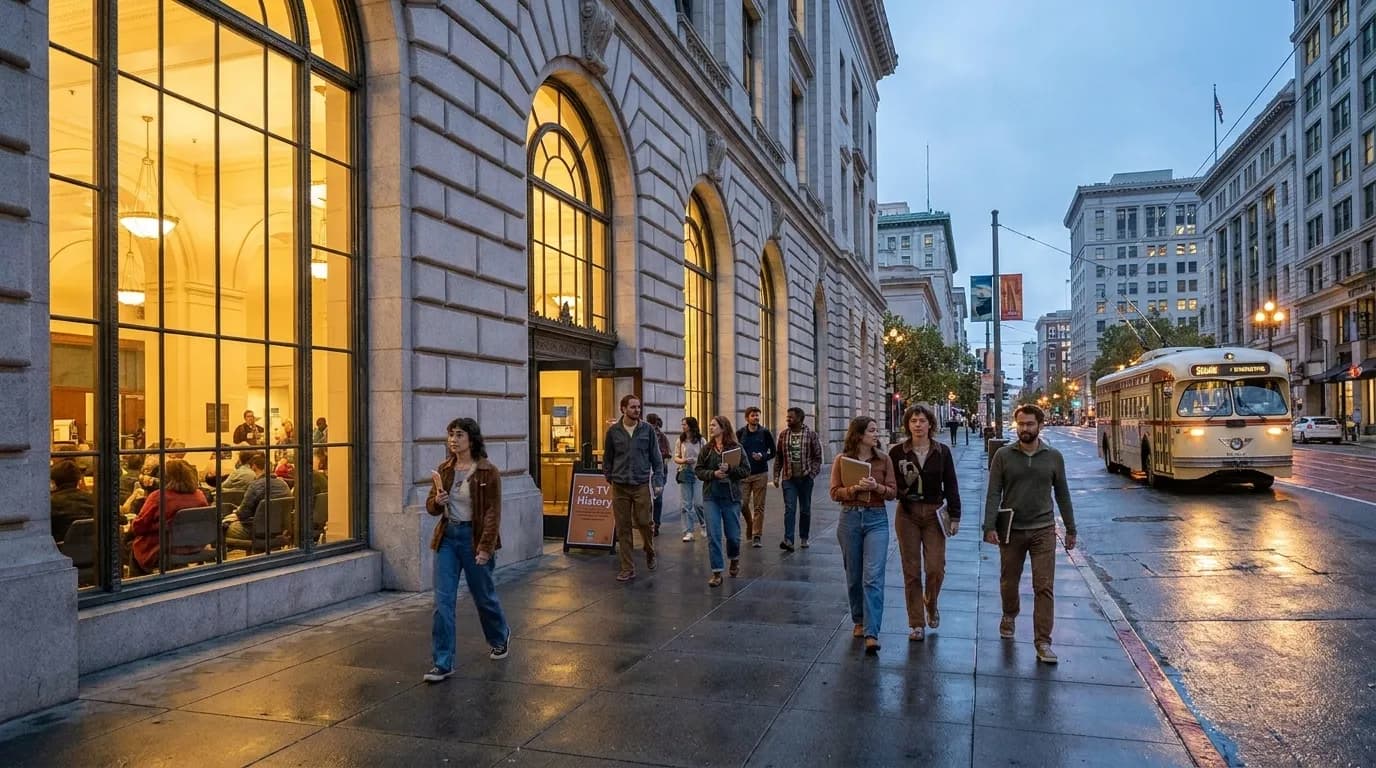
The Main Library at 100 Larkin Street houses the most comprehensive media collection in the San Francisco Public Library system, with self-service viewing stations available during regular operating hours. Patrons with a library card can reserve time at individual workstations to access television archives, including collections from the 1970s broadcast era. This serves as both a primary destination and a reliable backup when branch screenings reach capacity. The media center operates on a first-come, first-served basis for walk-ins, though online reservations may be available depending on system updates. Arriving fifteen minutes before your intended viewing time improves your chances of securing a station during busy periods.
Branch Locations and Muni Accessibility
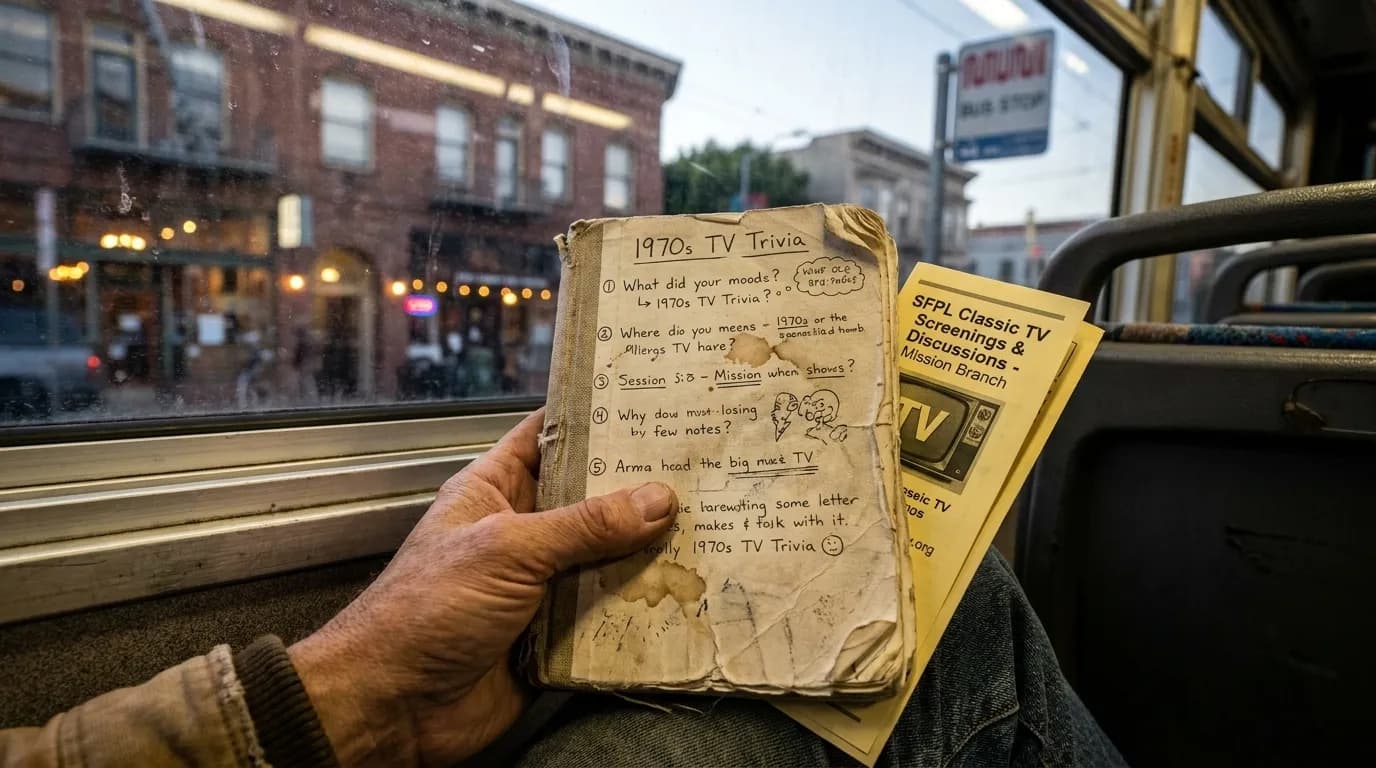
Mission, Richmond, and Sunset branches are referenced as potential stops on this route, each accessible via Muni with minimal walking required between transit stops and library entrances. The Mission Branch connects to multiple bus lines along Mission Street; the Richmond Branch sits near Geary Boulevard transit corridors; and the Sunset Branch is served by routes running through the outer neighborhoods. Specific programming at each branch fluctuates, so confirming event listings through the library's online calendar before travel is essential. Walking between branches is generally impractical given distances, making Muni the preferred connection method for a multi-stop route.
Timing Your Visit Around Programming Schedules
Library film and television programming typically occurs during weekday evenings after 6 PM or Saturday afternoons, aligning with community availability. However, schedules are not fixed and depend on staff availability, room bookings, and seasonal programming priorities. Checking the San Francisco Public Library events page in the week leading up to your visit provides the most current information. If no screenings are scheduled during your visit window, the Main Library's media center remains a consistent option for self-directed viewing. Building flexibility into your itinerary—such as identifying two or three possible branch events rather than committing to a single screening—increases the likelihood of a successful visit.
Seating, Arrival Strategy, and Capacity Limits
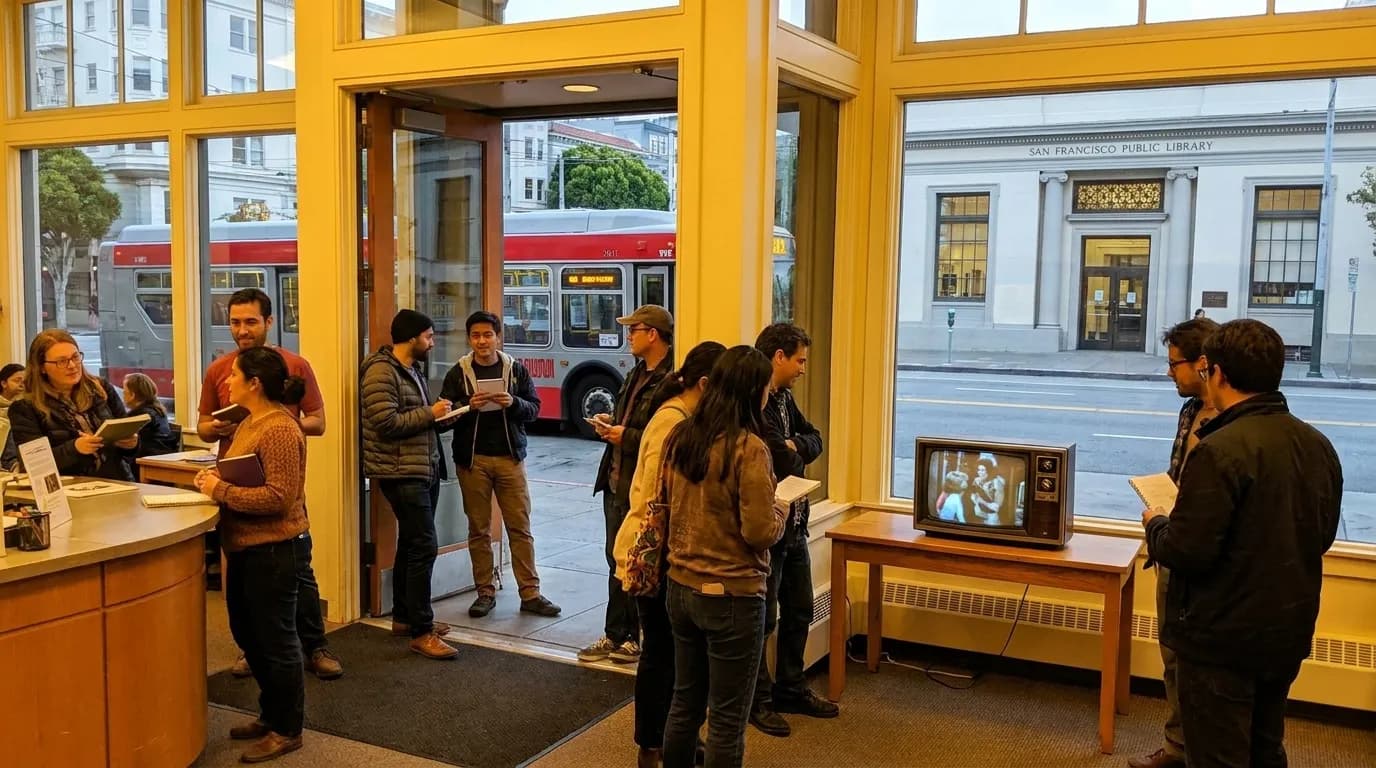
Public screenings at library branches operate on a first-come, first-served basis with no advance reservations. Seating capacity varies by branch and room configuration, with some venues accommodating 20–30 attendees and others limited to smaller groups. Arriving fifteen minutes before a scheduled start time is a practical buffer, especially for popular programs or branches with limited space. If a screening reaches capacity, staff may turn away additional attendees, making the Main Library media center a valuable fallback. Bringing a notebook for trivia or discussion notes enhances the experience, particularly if the program includes audience participation or panel commentary.
Solo Visitors Versus Small Groups
This route works equally well for solo visitors seeking a quiet, reflective experience and small groups interested in shared nostalgia. Solo attendees benefit from the flexibility to move between branches or shift to media center viewing without coordinating schedules. Small groups—typically two to four people—can enjoy post-screening conversation, though coordinating seating at capacity-limited events may require arriving together. The relaxed, nostalgic mood of library programming suits both approaches, with minimal social pressure and ample opportunity for independent exploration.
Nearby Café Access and Post-Screening Conversation
Several library branches sit within walking distance of neighborhood cafés, making post-screening coffee and conversation a natural extension of the visit. The Main Library is surrounded by Civic Center and Hayes Valley café options; the Mission Branch has numerous coffee shops along Mission Street and Valencia Street corridors; and the Richmond and Sunset branches are near residential café clusters. Identifying a café near your chosen branch before the screening allows for a seamless transition if you're interested in continuing discussion about classic television eras. This is particularly appealing for small groups or solo visitors open to striking up conversation with fellow attendees.
Budget Considerations and No-Cost Access
All library programming and media center access described in this route is free, requiring only a San Francisco Public Library card, which is also free for residents and available to visitors under certain conditions. There are no admission fees, ticket costs, or mandatory purchases. Optional expenses include café visits, Muni fares (unless you already hold a pass), and any personal purchases such as notebooks or snacks. This makes the route highly accessible for budget-conscious visitors, with total out-of-pocket costs potentially limited to transit alone.
Uncertainty and Backup Planning
Because library programming schedules are subject to change and seating is not guaranteed, building contingency plans into your visit is essential. The Main Library media center serves as the most reliable backup, offering self-service access regardless of event cancellations or capacity issues. Checking event listings within 48 hours of your visit reduces the risk of arriving at a canceled or rescheduled program. If you're visiting from out of town or have limited time, prioritizing the Main Library as your primary stop—with branch events as optional additions—provides the most predictable experience.
Tags: susan dey, San Francisco Public Library, free things to do San Francisco, 1970s television, classic TV screenings, Mission Branch, Richmond Branch, Sunset Branch, Main Library media center, Muni accessible, solo travel San Francisco, nostalgic programming, library events, first-come seating, self-service viewing, budget-friendly activities, neighborhood cafés, television history, discussion groups, community programming
Sources consulted: imdb.com · sfpl.org · sfpl.org
All trademarks are the property of their respective owners.
Ask Karpo first
Tell Karpo which San Francisco neighborhood you're starting from, your preferred evening or weekend time slot, whether you're attending solo or with a friend, and if you'd like branches with café access nearby for post-screening coffee and conversation about classic television eras.