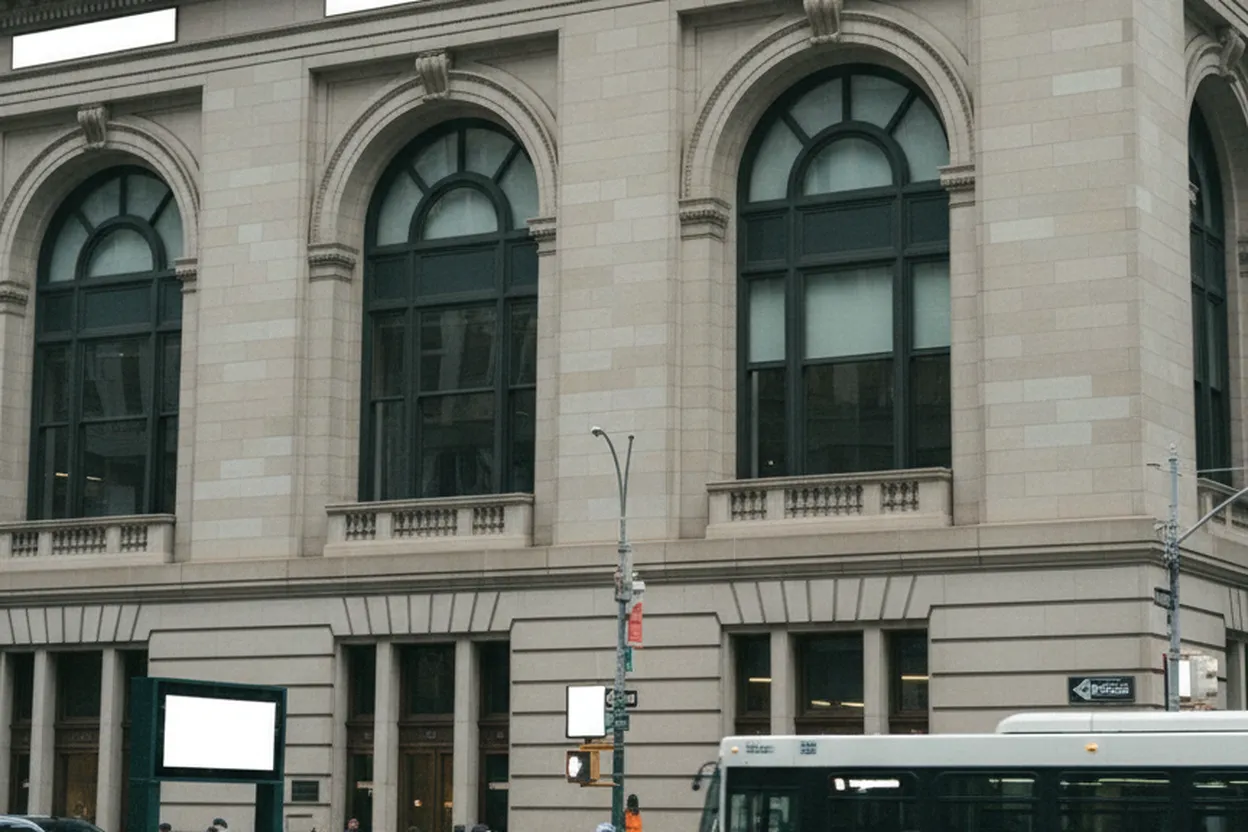
Supreme Court decisions can land like national breaking news, but New Yorkers often need a quieter next step: where to read the text, compare reliable explanations, and understand what may actually touch city life. As of Wednesday, July 29, 2026, the Court’s official site lists October Term 2025 opinions through late June, while NYC has several public-facing research options for people who want more than a headline. This guide centers on the New York Law Institute in the Equitable Building, then builds practical backups through the New York County Law Library, Queens law libraries, and NYPL’s Schwarzman Building.
Want a cleaner route from court headline to source text? Text Karpo for NYC-specific library options, transit checks, and what to verify before you go.
New York Law Institute at 120 Broadway
Start at the New York Law Institute if your goal is focused legal research rather than general civics browsing. NYLI lists its location as 120 Broadway, Suite 932, in the historic Equitable Building, with weekday hours of 9:00 AM to 5:00 PM except listed holidays and early closings. Its venue page describes public-access computer workstations with Westlaw and HeinOnline, plus librarians who can help identify sources and refine a research path.
The tradeoff is that NYLI is best treated as a serious research stop, not a drop-in museum. Bring a specific question, a docket number, or one decision name, and expect to work quietly. If access rules, database availability, or visitor procedures matter to your plan, call or email the library before leaving. For a solo daytime visit, budget more time for building security, sign-in, and deciding which database or print source fits your question.
Supreme Court Slip Opinions on Your Phone
Before you travel, read the Court’s own opinions page on your phone or laptop. The site explains that released opinions appear first as slip opinions, then may later be replaced by edited versions prepared for the United States Reports. That distinction matters: a breaking legal article may summarize a decision correctly, but the official text, syllabus, concurrences, dissents, and later revisions are where careful public learning should begin.
Use the Supreme Court site as your anchor, then use NYC libraries for context. On July 29, 2026, the current term page identified October Term 2025 as running from October 5, 2025, through October 3, 2026, and showed late-June releases near the top. If a news alert claims a newer ruling, verify the Court page directly, because release lists, revisions, emergency orders, and docket materials can change without matching social media timing.
4/5 to Wall Street or Fulton Street
For Lower Manhattan, the practical transit choice depends on your starting point and mobility needs. NYLI sits near Broadway in the Financial District, so Wall Street, Fulton Street, Bowling Green, and nearby downtown connections may all be plausible. Do not assume a single best subway stop on a court-news day. Check MTA service status before leaving, especially if you are threading a lunch-hour visit between work, school, or another appointment.
Accessibility needs deserve a separate check, not a last-minute guess. Publicly available MTA and accessibility resources can help, but elevator status changes quickly. Fulton Center is a stronger backup than a single-stair station for many riders because it has multiple lines and accessible routing information, yet outages still happen. If step-free access is required, confirm the elevator path in the MTA app or official alerts immediately before boarding.
New York County Law Library at 80 Centre Street
If NYLI is not the right fit, the New York County Public Access Law Library is a direct civic backup in Manhattan. The court system lists it at 80 Centre Street, Room 242, with Monday through Friday hours from 9:45 AM to 1:00 PM and closure on weekends and court holidays. Its page says patrons can use print and online legal materials, including cases, statutes, treatises, Lexis, and Westlaw.
This stop works well for residents trying to understand legal terminology, local procedure, or how a federal decision may be discussed through New York materials. The failure mode is timing: the listed hours are short, and staff cannot retrieve legal resources for you by phone, mail, or email. Go in person, bring the case name and citation if you have one, and remember that librarians help with research, not personal legal advice.
Queens Law Library Backup in Jamaica or Kew Gardens
Queens residents do not have to cross into Manhattan for every public legal research session. The Law Library of Queens page lists a Jamaica location at 88-11 Sutphin Boulevard and a Kew Gardens location inside Queens County Criminal Court at 125-01 Queens Boulevard. Listed hours are Monday through Thursday from 9:30 AM to 4:00 PM and Friday from 9:30 AM to 12:30 PM, with state-holiday closures.
Choose Queens when the commute is easier or when you want a less Wall Street-centered day. Its collection description includes state and federal jurisdictions, legal periodicals, statutes, codes, case law, government documents, and legislative materials. The pacing can be calmer than a compressed Manhattan errand, but court-building security and room locations still matter. Confirm the correct branch, room, ADA details, and holiday status before you commit your route.
Schwarzman Building at Fifth Avenue and 42nd Street
NYPL’s Stephen A. Schwarzman Building is the better fit when your question is civic context, history, journalism, or public policy rather than database-driven legal research. NYPL lists the building at Fifth Avenue and 42nd Street, with regular hours that extend later on Tuesday and Wednesday than on most other weekdays. It also offers research collections, public spaces, exhibitions, librarian help channels, and accessible entrances on 40th and 42nd Streets.
The Midtown option changes the mood of the day. It is more spacious and public-facing, but it is not a substitute for a law library workstation when you need premium legal databases or case-specific research support. NYPL also posts visitor rules, including restrictions on oversized bags, food, liquids, and last entry. Use it after reading the opinion, when you want background on constitutional history, affected agencies, or earlier New York debates.
Verify the Case Name Before Leaving Home
Your final action is simple: write down the exact case name, docket number, release date, and the source you used. Then check the official Supreme Court opinions or orders page again before you leave. If you are tracking a fast-moving issue, also note whether you are reading a slip opinion, an order, a docket entry, or a news summary. Those are not interchangeable, and confusing them is a common public-learning failure.
After that, verify the local access layer: NYLI hours and visitor expectations, court-library hours and court holidays, NYPL hours and entry rules, and MTA elevator or service status if transit reliability affects your day. If any detail cannot be confirmed on July 29, 2026, make the safer choice: call the venue, use the online official text first, and treat the in-person visit as conditional rather than guaranteed.
Tags: #AskKarpo #BeforeYouGo #NYC #NewYorkCity #SupremeCourt #CivicLearning #LegalResearch #NewYorkLawInstitute #LowerManhattan #PublicLibrary #LawLibrary #NYPL #TransitCheck #HiddenGems
Sources consulted: Source 1: nyli.org · Source 2: nyli.org · Source 3: supremecourt.gov · Source 4: supremecourt.gov · Source 5: nycourts.gov · Source 6: nycourts.gov
All trademarks are the property of their respective owners.
Ask Karpo first
Tell Karpo your date, group size, budget, and starting point. We’ll check current access, timing, transit, and the cleanest New York City plan for New York Law Institute before you head out.


