New York City is not changing its clocks yet. As of Wednesday, July 22, 2026, the Sunshine Protection Act has passed the U.S. House but has not become federal law. The proposal would make daylight saving time permanent, meaning NYC would stay on Eastern Daylight Time instead of returning to Eastern Standard Time each November. For New Yorkers, the practical tradeoff is simple but consequential: no more twice-yearly clock switch, more winter light after work and school, and darker winter mornings. That would affect 8 a.m. school drop-offs, early subway commutes, delivery shifts, park routines, prayer and event calendars, and anyone whose body clock already hates March.
Text Karpo if you want a neighborhood-specific daylight check for your school run, commute, or evening routine. Ask Karpo to compare sunrise and sunset times for your NYC block before and after a permanent daylight saving switch.
Where the Sunshine Protection Act stands on July 22, 2026
The current House bill is H.R. 139, the Sunshine Protection Act of 2025. The Office of the Clerk records that the House passed it on July 14, 2026, in Roll Call 238, by a 308–117 vote. That is a real legislative step, not just a committee hearing or a press conference. But it is not the end of the process. The Senate still has to pass the same measure, or a compatible version, and the president would have to sign it before any permanent daylight saving rule takes effect.
There is also a Senate version, S. 29, introduced in the 119th Congress. Congress.gov’s bill page has listed S. 29 as introduced, while the House-passed action came through H.R. 139. In plain English: the House has acted, the Senate has not finished the job, and New Yorkers should continue to plan for the currently scheduled end of daylight saving time on Sunday, November 1, 2026, unless federal law changes before then.
What the bill would actually change in New York City
Under current federal rules, most of the United States moves clocks forward on the second Sunday in March and back on the first Sunday in November. NIST says daylight saving time in 2026 runs from March 8 at 2 a.m. local time to November 1 at 2 a.m. local time. The Sunshine Protection Act would repeal that seasonal return to standard time for most places, effectively keeping NYC on Eastern Daylight Time all year.
That means New York would not “gain” daylight; the amount of daylight is set by the sun, season, and latitude. The bill would move the clock label attached to that daylight. Winter mornings would feel later because sunrise would appear one hour later by the clock. Winter afternoons would feel longer because sunset would appear one hour later by the clock. Summer days in NYC would look largely the same as they do now, because the city already uses daylight saving time in summer.
The NYC winter daylight tradeoff: later sunrise, later sunset
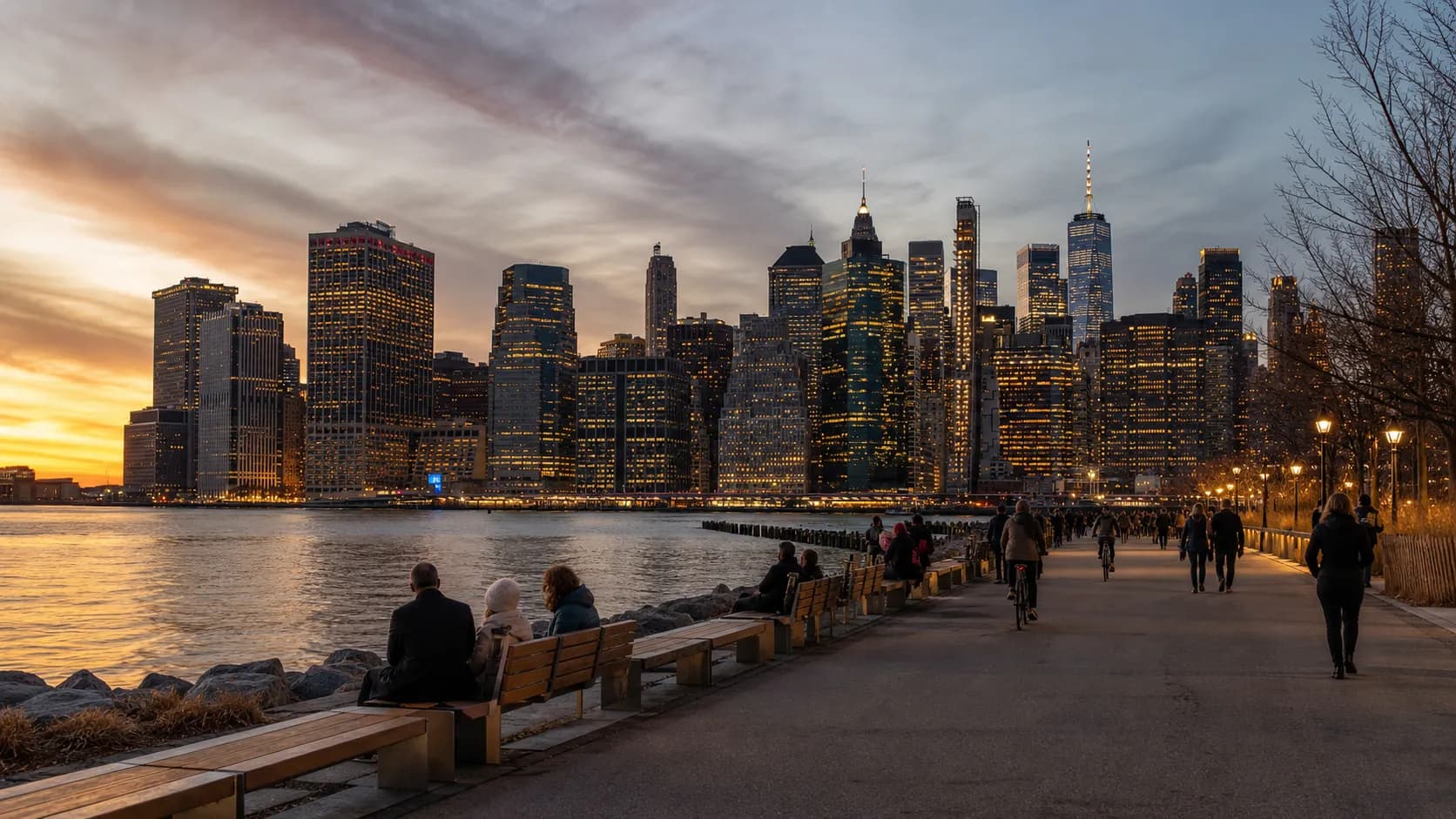
The clearest way to understand the impact is to look at December and January. Under current standard time, New York’s winter solstice period brings sunrise around the 7 a.m. hour and sunset around the 4:30 p.m. range. If permanent daylight saving time applied, those same solar events would be labeled roughly one hour later. A 7:16 a.m. sunrise would become about 8:16 a.m.; a 4:32 p.m. sunset would become about 5:32 p.m.
For after-work errands, youth sports, dog walks, neighborhood retail, and park use, that later sunset is the selling point. For parents, teachers, bus riders, construction crews, sanitation workers, hospital staff, and anyone reporting before 9 a.m., the drawback is equally concrete. Much of the morning rush would happen before sunrise in the darkest weeks of the year, especially from mid-December through early January.
Commutes, subways, buses, and streets after a permanent switch
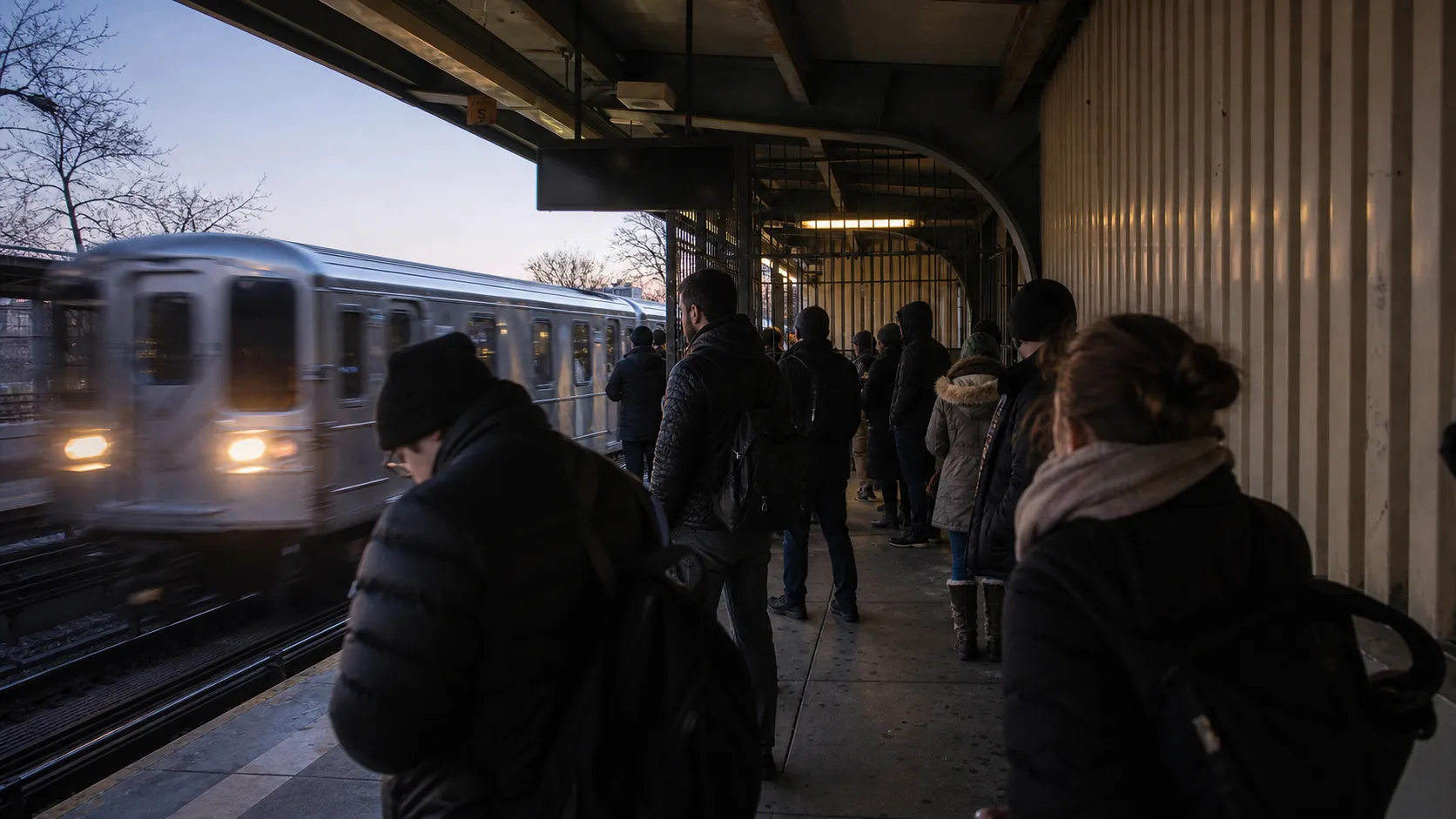
The MTA would not need to add an hour to the day or rewrite the laws of rush hour; trains and buses run by clock time, and agencies would update operating systems if federal time rules changed. The bigger everyday effect would be visibility. Morning riders walking to subway entrances, bus stops, Citi Bike docks, commuter rail stations, and school drop-off zones would see darker conditions in winter. Evening riders would get more post-work daylight during the same period.
NYC already treats darker evening commutes as a safety issue. The city’s Vision Zero “Dusk and Darkness” work has focused on the weeks after daylight saving time ends, when sunset suddenly lands closer to the evening rush. Permanent daylight saving time would remove that abrupt November evening shift, but it would not remove winter darkness; it would relocate more of it to the morning commute.
Schools, families, and early schedules may feel the change most
The most noticeable NYC debate would likely center on children and morning starts. A permanent daylight saving clock would mean many students heading to school in darkness during the shortest days. That matters differently across neighborhoods: a child walking a few blocks in Park Slope faces a different trip than a student taking a bus from eastern Queens, a ferry connection from Staten Island, or a long subway ride from the Bronx.
Families would also need to think about recurring appointments that depend on daylight rather than the clock: playground time, outdoor practices, elder care walks, religious observances, and after-school jobs. The upside is that late-afternoon darkness would ease. The downside is that wake-up routines would be more misaligned with sunrise in winter, which is why medical and sleep groups have often favored permanent standard time instead of permanent daylight saving time.
Why Washington, not City Hall, controls this clock question
New York City cannot unilaterally choose permanent daylight saving time. Federal time-zone and daylight saving rules come from Congress and are administered within the federal framework overseen by the U.S. Department of Transportation. DOT’s Uniform Time page explains that the Uniform Time Act of 1966 created a national system for daylight saving time and that official time-zone boundaries are listed in federal regulations.
That division matters for local expectations. Albany and City Hall can debate preferences, pass resolutions, or prepare agencies, but NYC’s clocks stay tied to federal law. Some places, including Hawaii and most of Arizona, do not observe daylight saving time under existing exemptions. The House-passed proposal preserves certain standard-time options for states or areas already exempted, but New York is not currently one of those year-round standard-time jurisdictions.
What happens next before New Yorkers can stop changing clocks
The next decisive step is in the Senate. If the Senate passes the House bill without changes, it could go to the president. If the Senate changes the text, the chambers would need to reconcile differences. Until that process is complete, the current 2026 rule remains in place: New York is scheduled to turn clocks back at 2 a.m. on Sunday, November 1, 2026.
For now, treat permanent daylight saving time as a serious proposal that has cleared one chamber, not as a done deal. Device calendars, airline schedules, broadcast times, school notices, train timetables, and international meeting planners will keep using existing time-zone data unless and until federal law changes and software systems are updated. The safest assumption for planning fall travel or appointments is the current official calendar.
Practical notes
Practical notes for NYC: do not change recurring appointments, payroll rules, school alarms, or travel plans based on the Sunshine Protection Act unless it is signed into law. For 2026, the official federal schedule still has daylight saving time ending at 2 a.m. on Sunday, November 1, 2026. If permanent daylight saving time becomes law before then, expect follow-up guidance from federal agencies, device makers, airlines, transit providers, schools, and employers. For winter planning, remember the tradeoff: later sunsets would help after-work errands and outdoor activity, while later sunrises would make early commutes and school trips darker. Keep bike lights, reflective gear, and pedestrian caution in the plan either way.
Tags: #NYC #NewYorkCity #SunshineProtectionAct #DaylightSavingTime #EasternTime #NYCCommute #NYCSchools #VisionZero #SubwayCommute #Brooklyn #Queens #Manhattan #Bronx #StatenIsland #NeighborhoodGuides
Sources consulted: Congress.gov bill page for H.R. 139, Sunshine Protection Act of 2025 · Congress.gov text PDF for S. 29, Sunshine Protection Act of 2025 · Office of the Clerk, U.S. House Roll Call 238 on H.R. 139 · House Rules Committee page for H.R. 139 · House Energy and Commerce Committee release on H.R. 139 passage · NIST Daylight Saving Time Rules for 2026 · U.S. Department of Transportation Uniform Time overview · Timeanddate sunrise and sunset data for New York, November 2026 · Timeanddate sunrise and sunset data for New York, December 2026 · Federal Highway Administration overview of Vision Zero in New York City
All trademarks are the property of their respective owners.
Ask Karpo first
Ask Karpo can help translate the clock debate into a local routine: when your nearest subway walk would be dark in January, how much evening light your park route would gain, and what to watch if Congress moves the bill forward. For now, Karpo will treat the Sunshine Protection Act as pending legislation, not an enacted schedule change.