Nestled quietly at the southern tip of Roosevelt Island, often overlooked by those rushing past on the tram, stands the Strecker Memorial Laboratory. This diminutive yet historically significant structure, a testament to late 19th-century medical science, holds a unique place in New York City’s landscape. Its Romanesque Revival architecture and pioneering past as a pathological and bacteriological research facility offer a fascinating glimpse into a crucial era of scientific discovery. Though its role has evolved, its exterior remains a compelling landmark for the discerning explorer of New York's hidden scientific heritage.
Want to uncover more of NYC's hidden gems and historical insights? Text Karpo to 555-123-4567 for curated explorations.

An Enduring Architectural Gem by Southpoint Park
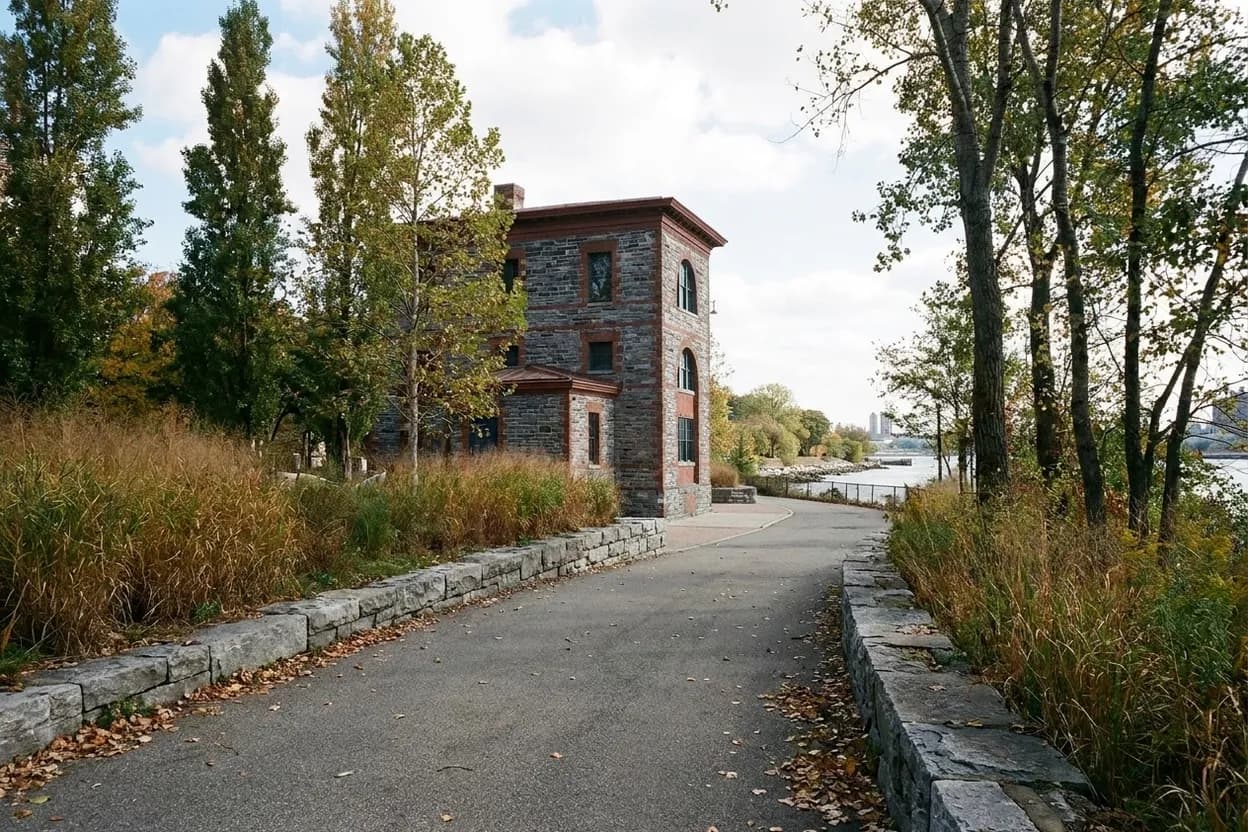
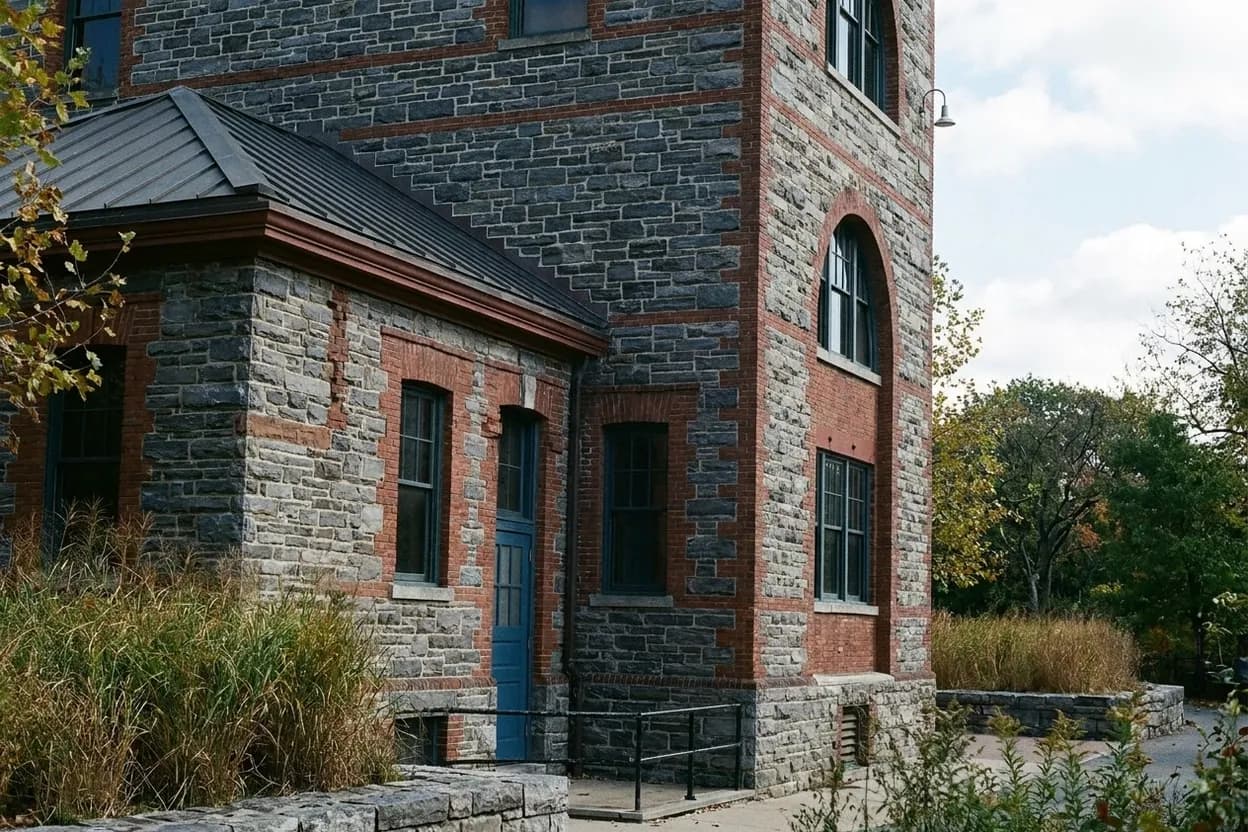
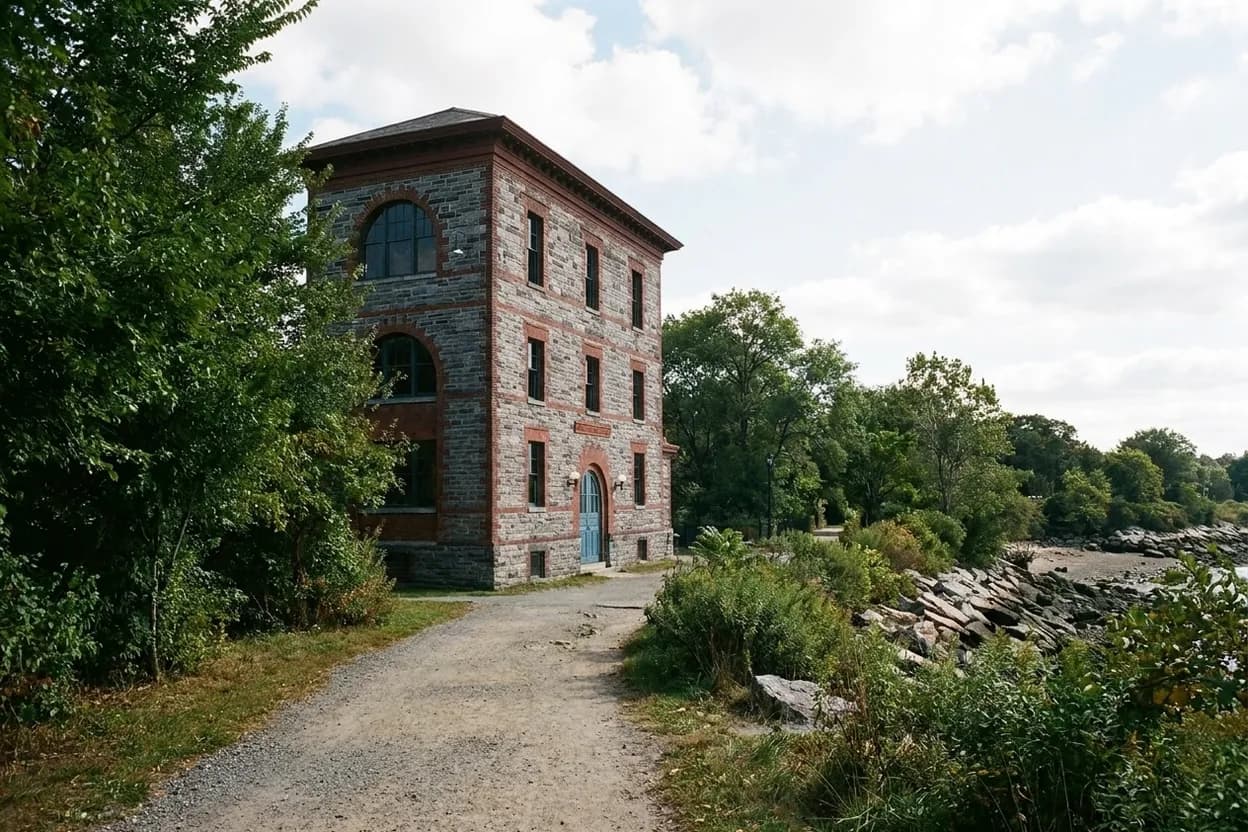
The Strecker Memorial Laboratory is distinctly situated at the southern end of Roosevelt Island, a stone's throw from the verdant expanse of Southpoint Park and just east of the dramatic Renwick Ruins. Its small stature and sturdy construction make it blend subtly into the island's unique landscape, often requiring a deliberate look to truly appreciate its historical and architectural significance. The building's exterior, notably refurbished, presents a compelling example of late 19th-century Romanesque Revival style, characterized by its robust stonework and distinctive arched elements.
Designed by the architectural firm of Frederick Clarke Withers and Walter Dickson, the laboratory was completed in 1892. It stands as a unique example of period architecture that eschews the more commonly associated Gothic styles, instead embracing the solid, rounded forms typical of Romanesque Revival. Its placement within what was once a bustling hospital complex speaks volumes about its original, critical function, despite its current role as an unassuming yet vital piece of infrastructure.
Pioneering Science for Charity Hospital
Originally constructed for Charity Hospital—later known as City Hospital—Strecker Memorial Laboratory was conceived with a groundbreaking purpose: to serve as a dedicated facility for pathological and bacteriological work. At the time of its completion, it was considered a pioneering institution in the United States, specifically designed for this type of research. This dedication to specialized scientific inquiry was a significant advancement in medical practice, moving beyond general hospital functions to focused laboratory investigation.
The laboratory's establishment was made possible through the generous funding of the Strecker family, whose name the building proudly bears. This philanthropic support underpinned critical research that would have contributed significantly to understanding and combating diseases in an era before modern antibiotics. The work conducted within these walls would have been instrumental in shaping public health approaches and medical knowledge, making it a foundational site in American medical science.
Architectural Clues of a Scientific Past
The exterior of the Strecker Memorial Laboratory offers several architectural clues that hint at its original scientific purpose. Its Romanesque Revival design, while aesthetically pleasing, also conveyed a sense of permanence and gravitas suitable for a serious research institution. The sturdy fieldstone and brick construction, coupled with its compact footprint, suggests a building designed for function and durability, rather than grand public display. These elements are characteristic of scientific facilities of the era, where practical utility was paramount.
While one might initially mistake its style for Gothic, a closer look reveals the distinct features of Romanesque Revival: round arches, heavy masonry, and a sense of solidity that differentiates it from the pointed arches and intricate tracery of Gothic architecture. This architectural choice for a medical laboratory underscores a period trend towards robust, functional design for scientific endeavors, reflecting the serious and often demanding nature of early pathological and bacteriological research.
A Landmark in the Southpoint Landscape
The Strecker Memorial Laboratory's integration into the Southpoint landscape means it is best experienced as part of a broader exploration of Roosevelt Island's southern end. Its proximity to the more widely recognized Smallpox Hospital ruins places another layer of institutional history along the island's southern walk. Walking along the island’s east shore, just north of the Smallpox Hospital, one encounters this small structure, which provides a serene contrast to the more dramatic ruins nearby.
The building’s designation as a New York City landmark in 1976, following its listing on the National Register of Historic Places in 1972, solidified its importance. The Landmarks Preservation Commission specified the landmark site as the entire lot on which the building stands, approximately opposite East 52nd Street in Manhattan. This designation ensures the preservation of its exterior and its contextual setting within the Southpoint area, allowing future generations to appreciate its historical significance.
From Research to Infrastructure
Following its pioneering years, the Strecker Memorial Laboratory continued to serve the medical community, housing the Russell Sage Institute of Pathology for a period beginning in 1907. While specific dates vary among historical accounts regarding the institute's tenure, its presence further underscores the building's sustained role in medical research for several decades. This evolution from one research entity to another highlights the continued value placed on dedicated laboratory spaces during the early 20th century.
In a significant transformation, the building was later repurposed by the Metropolitan Transportation Authority / New York City Transit. Today, the building functions as an MTA / New York City Transit power-conversion substation, an infrastructure role that keeps it in active use without turning it into a public visitor facility. This modern utility role, while far removed from its original scientific purpose, ensures the building's continued relevance and maintenance, with its exterior having undergone refurbishment to preserve its historic appearance.
Exterior Exploration and Historical Context
Visitors to Roosevelt Island can enjoy the Strecker Memorial Laboratory as an exterior-only historical landmark. The Roosevelt Island Operating Corporation confirms that the building's exterior has been refurbished, inviting observation from the surrounding park grounds. This approach allows for an appreciation of its architecture and historical footprint without needing to access its interior, which is not open to the public nor functions as a visitor laboratory.
The most rewarding way to experience the laboratory is to integrate it into a walk through Southpoint Park, taking time to pause and reflect on its significance. Understanding its context as a cutting-edge facility for its time, and later as vital infrastructure, enriches the exterior viewing. It provides a unique opportunity to connect with a less-seen aspect of New York City's scientific and architectural heritage, emphasizing the long and varied life of these historic structures.
Practical notes for Strecker Memorial Laboratory
To locate the Strecker Memorial Laboratory, plan your visit by heading towards the southern end of Roosevelt Island. The building is best approached on foot, situated conveniently along the island’s east shore path, just north of the more prominent Smallpox Hospital ruins. When mapping your route, note that the Landmarks Preservation Commission places the site approximately opposite East 52nd Street in Manhattan, providing a helpful reference point for its location within the broader urban landscape.
As the building functions as a utility substation and its interior is not accessible, your visit will focus entirely on its exterior and historical context. There are no confirmed public tours, reservations, or specific operating hours for the laboratory itself. For current conditions regarding Southpoint Park or Roosevelt Island access, it is advisable to verify with official park or site management before your visit. Enjoy observing this quiet piece of scientific history from the outside, appreciating its enduring presence on the island.
Tags: #RooseveltIsland #NYCHistory #StreckerMemorialLaboratory #HiddenGemsNYC #HistoricLandmarks #ScienceHistory #RomanesqueRevival #NYCArchitecture #SouthpointPark #ExploreNYC #ManhattanViews #UrbanExploration #AskKarpo #BeforeYouGo
Sources consulted: Roosevelt Island Operating Corporation — Strecker Laboratory · NYC Landmarks Preservation Commission — Strecker Memorial Laboratory Designation Report · Roosevelt Island Historical Society — Strecker Laboratory · Roosevelt Island Operating Corporation — MTA Sublease Amendment
All trademarks are the property of their respective owners.
Ask Karpo first
Tell Karpo when you are visiting Roosevelt Island and what else is on your route. We’ll plan an exterior-only Strecker walk-by with current park access, transit, and a sensible south-island sequence.