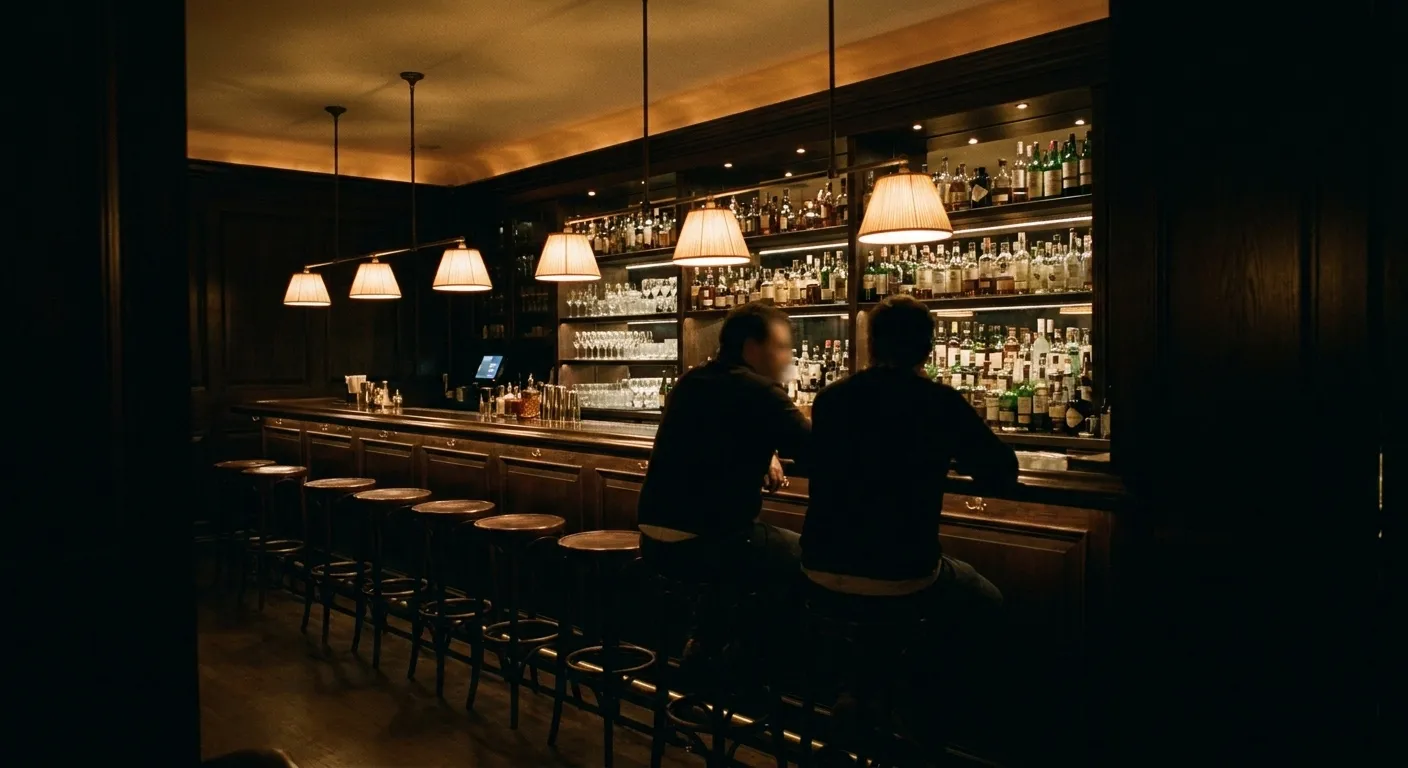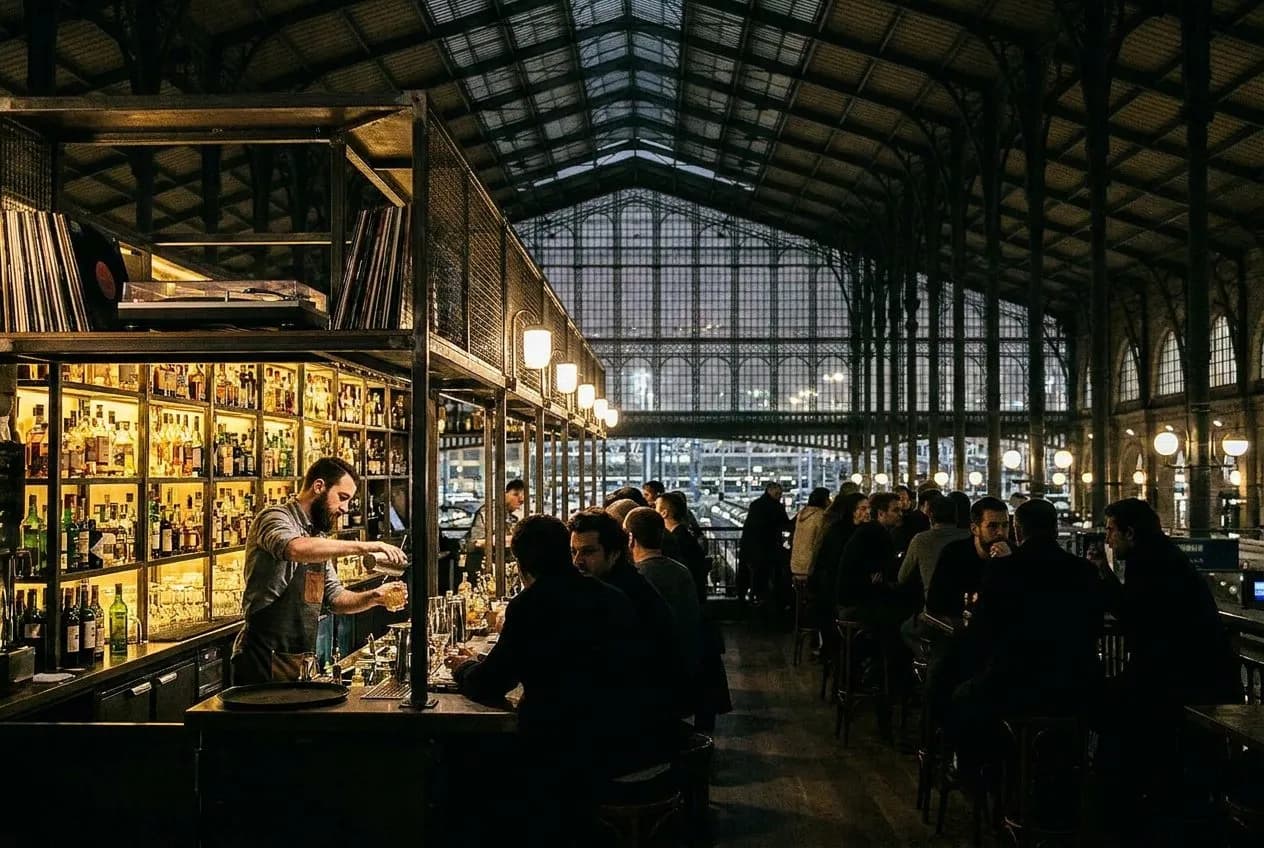
There are eight stools at Mace's, upholstered in cracked burgundy leather with brass footrails that show the oils of a thousand shoes. The bar is fourteen feet long, narrow as a galley kitchen, and the East Village sidewalk presses close against the glass. Inside, the light is amber and low, the kind that makes everyone look like they're in on something. The bartender works without speaking—not out of rudeness but out of a focused efficiency that feels almost monastic. Orders are taken with a nod. Martinis appear in silent procession. The turntable hums in the corner, playing records you half-recognize beneath the murmur of conversation.
The assembly line
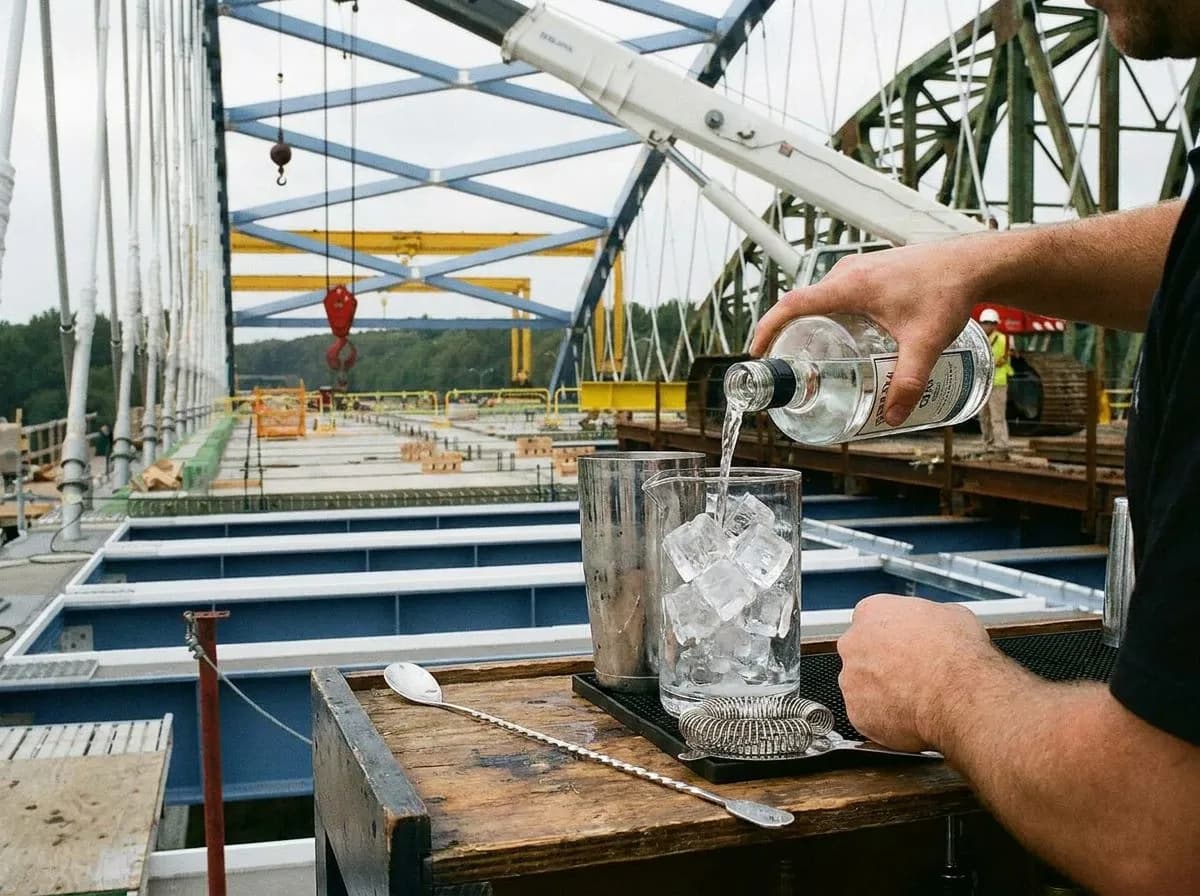
The bartender works in batches. If you order a martini when the bar is full, yours will be constructed in sequence with others—expect eight to twelve minutes during busy windows, particularly late on weekends when the stools fill by nine. This is not a flaw in service but the architecture of the ritual. Mixing glasses are lined up along the zinc bar top, gin or vodka measured with a jigger that catches the overhead light, vermouth added in precise tilts. Ice goes in with tongs, never scooped. The bartender stirs each glass in turn, twenty rotations clockwise, the bar spoon clicking softly against the rim.
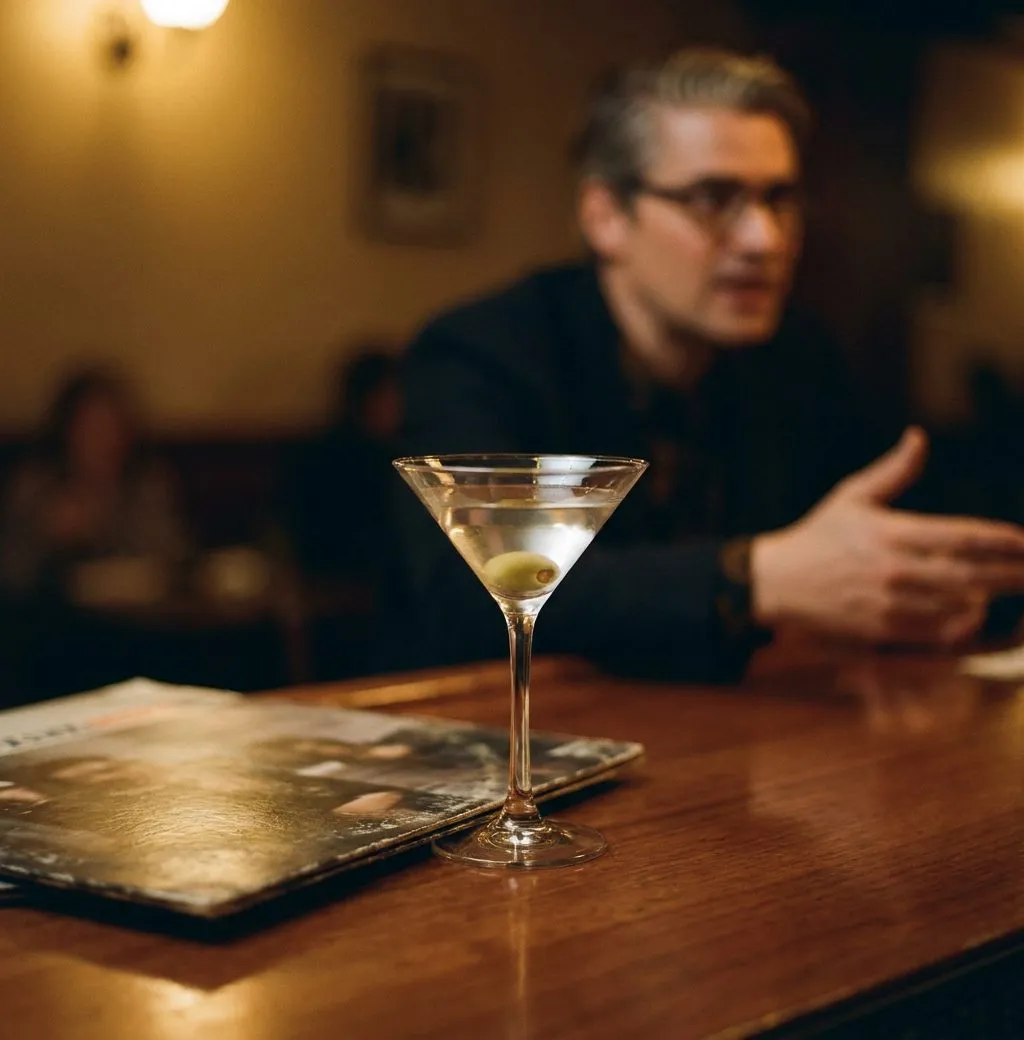
There's a strange comfort in watching your drink take shape alongside four others. It removes the transactional urgency, the impatience of waiting. You become part of a small, temporary assembly, all of you suspended in the same anticipation. By the time the martini lands in front of you—chilled coupe, single olive speared on a steel pick—it feels earned.
The sight lines
Stools three and four from the door offer the best view of the full martini construction process. From here you can track the bartender's hands as they move from bottle to jigger to glass, the choreography unfolding in a clean diagonal across your field of vision. The mixing glasses line up just past the well, backlit by a narrow shelf of spirits. You see everything: the vermouth rinse, the precise stir, the strain through the Hawthorne into the coupe. It's theater without announcement.
Stool one faces the turntable but misses the mixing glass work—the bartender's body blocks the critical middle section of the process. It's a trade you make if you care more about watching the vinyl spin than the pour. The Technics sits on a low shelf behind the bar, its silver tonearm lifting and resetting every twenty minutes. The selection rotates weekly, leaning toward jazz and late-seventies soul, the kind of records that sound best when you're not actively listening to them.
The acoustic design
The turntable volume is set to a specific level at opening and never adjusted. This is the detail that shapes the room more than any other. The music is present but subordinate, a layer beneath the voices rather than above them. Conversation naturally rises to meet it rather than compete. By ten o'clock the bar hums with overlapping talk, laughter breaking through in short bursts, and the vinyl becomes texture—a bassline you feel more than hear, a piano riff that surfaces during a lull.
It's an intentional acoustic balance, the kind that requires discipline to maintain. No one reaches over to turn it up. No one complains it's too quiet. The room finds its own equilibrium, and the music holds the space without demanding it. You can have a full conversation without leaning in, but you're never in silence.
The menu
The menu is a single laminated card, the size of a postcard, listing eleven cocktails and three vermouths by the glass. No flourishes, no flavor descriptions. Martini. Negroni. Manhattan. Old Fashioned. The type is set in a sans-serif so plain it borders on defiant. There are no seasonal specials, no fall-spiced variations as the year winds toward winter. What you see is what's available, and what's available has been available since the bar opened.
It's a menu that telegraphs the house philosophy: this is not a place that chases trends or imagines itself as a cocktail laboratory. The drinks are built correctly, poured without ceremony, and served without garnish beyond what's structurally necessary. If you're the kind of person who likes to debate the proper dilution ratio of a stirred drink, you'll find weekend plans here that don't require explanation.
The regulars
By late 2026, Mace has cultivated the kind of crowd that values restraint. They're not here to be seen or to sample the next viral serve. They're here because the bartender doesn't ask how their day was, because the stools are first-come and unjudgmental, because the martini will be cold and correct and will arrive when it arrives. There are faces you start to recognize if you come often enough—the woman in the cashmere turtleneck who always takes stool six, the couple who split a Negroni and leave after forty minutes.
No one performs their presence here. Conversations stay low and inward-facing. Phones remain in pockets. The bar rewards a certain kind of self-possession, a willingness to sit with your drink and let the room exist around you without needing to shape it.
The close
Mace's doesn't announce last call. The bartender simply stops taking orders, finishes the drinks in progress, and begins breaking down the bar. The turntable is lifted, the tonearm secured, the records slipped back into their sleeves. People settle their tabs without protest. The lights stay dim. By the time you step back onto the sidewalk, the East Village night feels louder than it should, the ambient hum of the city suddenly intrusive after an hour of curated quiet.
You'll remember the stool, the leather warm under your thighs, the sound of the bar spoon stirring in glass, the bartender's hands moving through their silent routine. And you'll come back, because some places earn repetition not by reinventing themselves but by refusing to.
Practical notes
Mace is/was located in the East Village at 35 Great Jones St, New York, NY 10012; verify current hours directly, as small bars in the neighborhood adjust seasonally. Nearest subway: Astor Place (6) or Bleecker Street/Bond Street area access via nearby stations. Street parking is scarce; plan to walk from transit. The bar is ground-level with a single step at entry; the narrow layout and stool-only seating may limit accessibility for wheelchair users. No reservations. Cash and card accepted. Bring patience during busy windows and a willingness to sit without your phone.
Tags: #PullUpAChair #MacesNYC #EastVillageBars #MartiniRitual #BarStools #VinylAndCocktails #NYCNightlife #CocktailCulture #QuietBars #FallInNYC #WeekendPlansNYC #SilentService #ClassicCocktails #NeighborhoodBars #Fall2026
Please drink responsibly. Must be of legal drinking age.
Sources consulted: Martini (cocktail) · East Village, Manhattan · NYC East Village Guide · Time Out New York Bars · Bar establishments
All trademarks are the property of their respective owners.