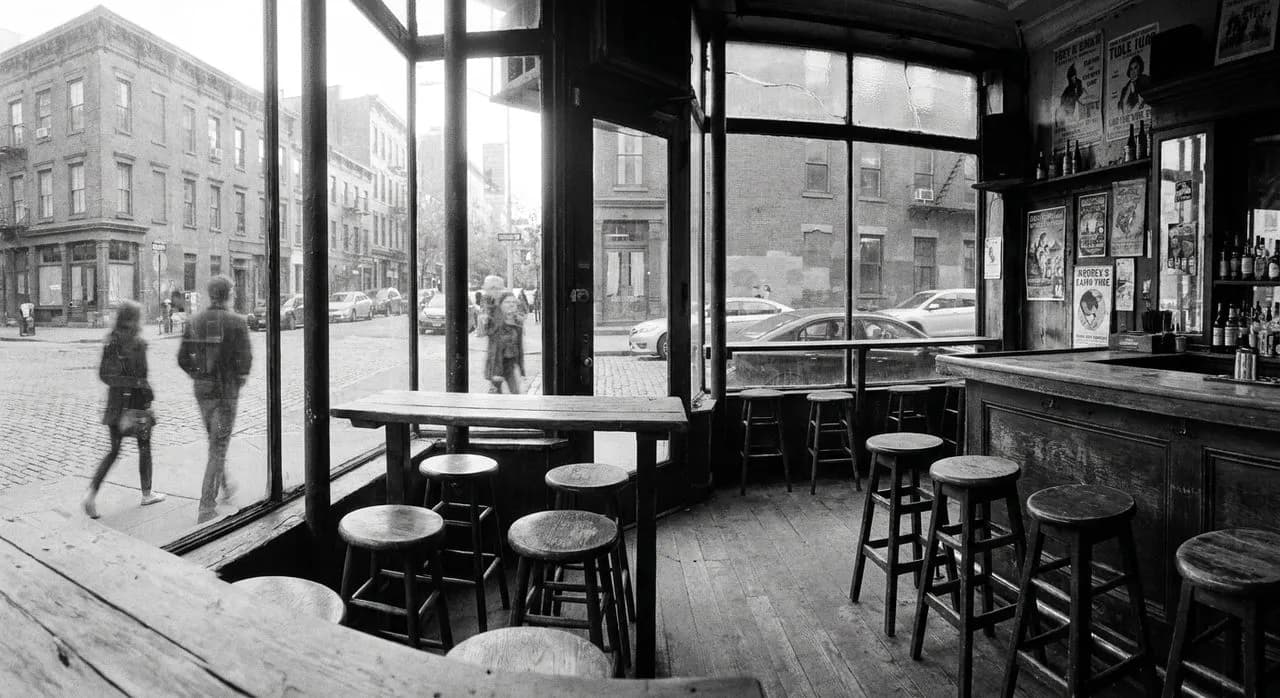
The stool closest to the front window at Ear Inn tells you everything you need to know about this bar. Set a coin on the floorboards and watch it roll, slow and deliberate, toward Spring Street. The building has been leaning toward the Hudson River since before the Civil War, and sitting here—backlit by afternoon sun filtering through wavy glass—you feel the architecture's slow surrender to gravity. The wooden seat is worn smooth by decades of corduroy and denim. The bar has been pouring beer in this Federal-style townhouse since long before SoHo had a name, and the tilt is part of the contract.
The 1817 lean
Ear Inn occupies a building constructed in 1817 as a boarding house for sailors and longshoremen, back when the Hudson River shoreline sat one block west of its current edge. The neighborhood was landfill and dockside grit, and the structure went up on fill that has been settling ever since. The tilt is attributed to centuries of compression and shift in that unstable ground. Stand at the back near the bar and you might not notice. Walk toward the front window and the slant becomes unmistakable.
The floor drops approximately two inches from back to front, most noticeable near that coveted front window stool where marbles and coins visibly roll toward Spring Street. Regulars know to keep their pint glasses centered. First-timers often glance around, wondering if they've had one too many before they've finished the first. The building's Federal lines—narrow clapboard facade, modest cornice, multipaned windows—remain intact, a rare survivor in a neighborhood that has been razed and rebuilt a dozen times over.
Mismatched stools and scarred wood
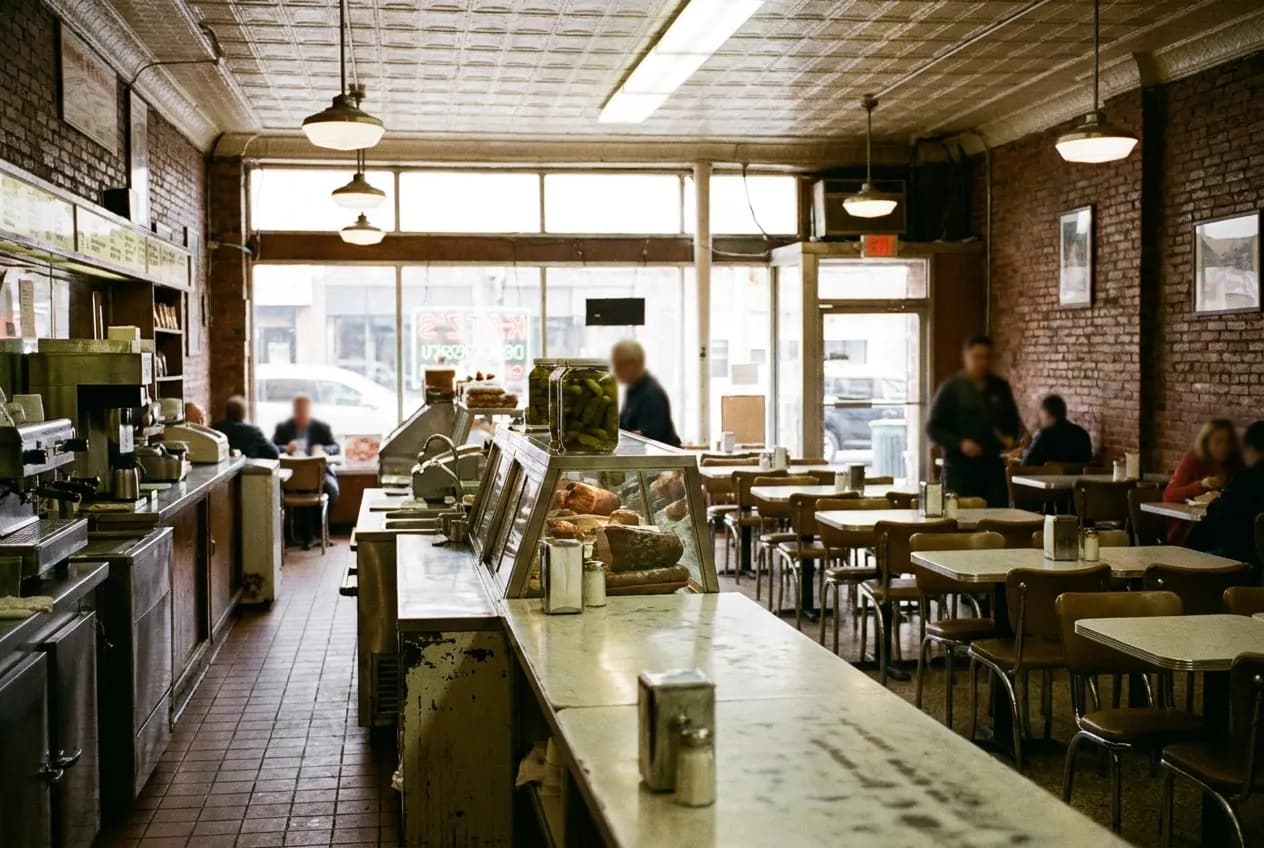
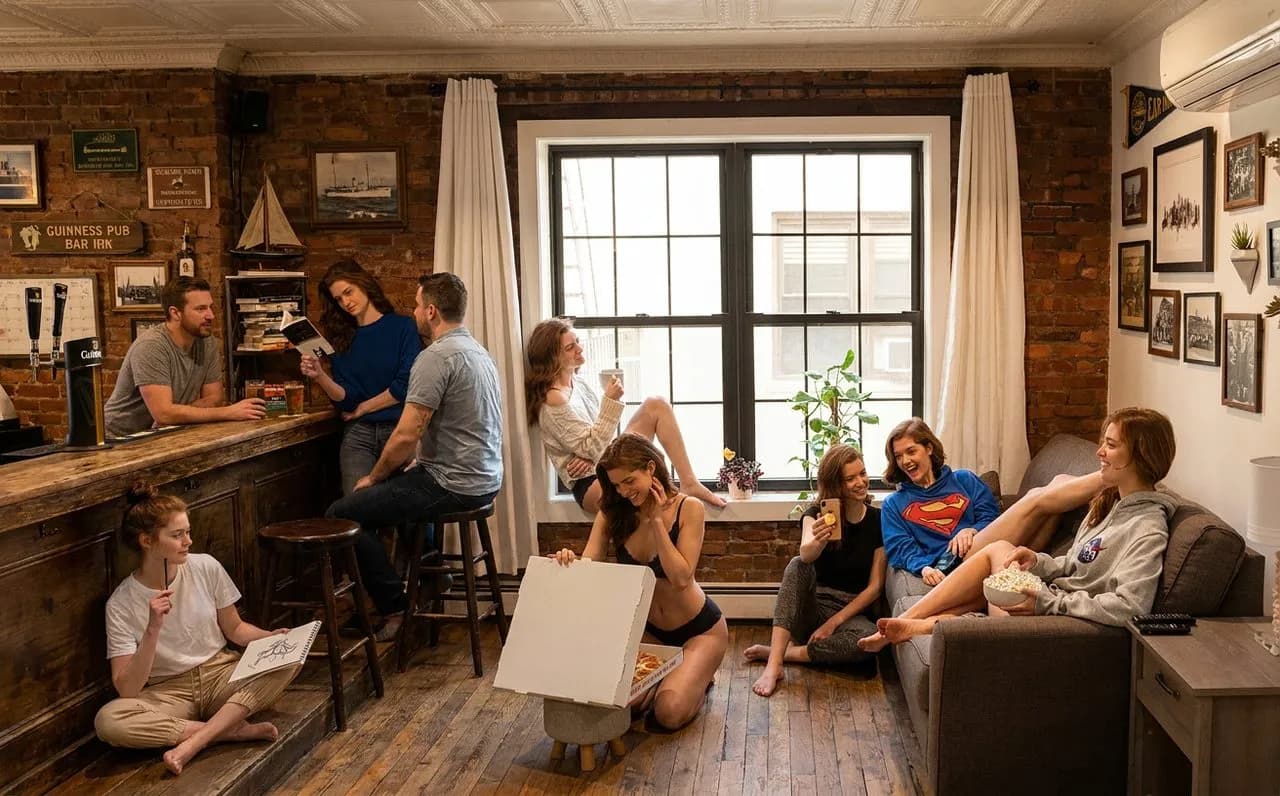
The bar stools are a collection, not a set. Some are backless rounds turned from dark hardwood, their tops dished slightly by wear. Others have spindle legs and traces of old varnish in the grain. None match. The bar top itself is a palimpsest of nicks, water rings, and initials carved decades ago, the wood darkened to the color of strong tea. Above, the tin ceiling bears its original pressed pattern, painted over in cream that has yellowed to parchment. Nautical prints and ship models line the walls—brass compasses, coiled rope, photographs of long-dismantled piers.
This is not a bar that has been restored so much as continuously inhabited. The aesthetic is accidental archaeology. You sit on a stool that might have been here in 1980 or 1950, and the distinction hardly matters. The room smells faintly of old wood and hops, and in late afternoon the light slants low through the western windows, catching dust motes and the amber glow of taps.
The Guinness protocol
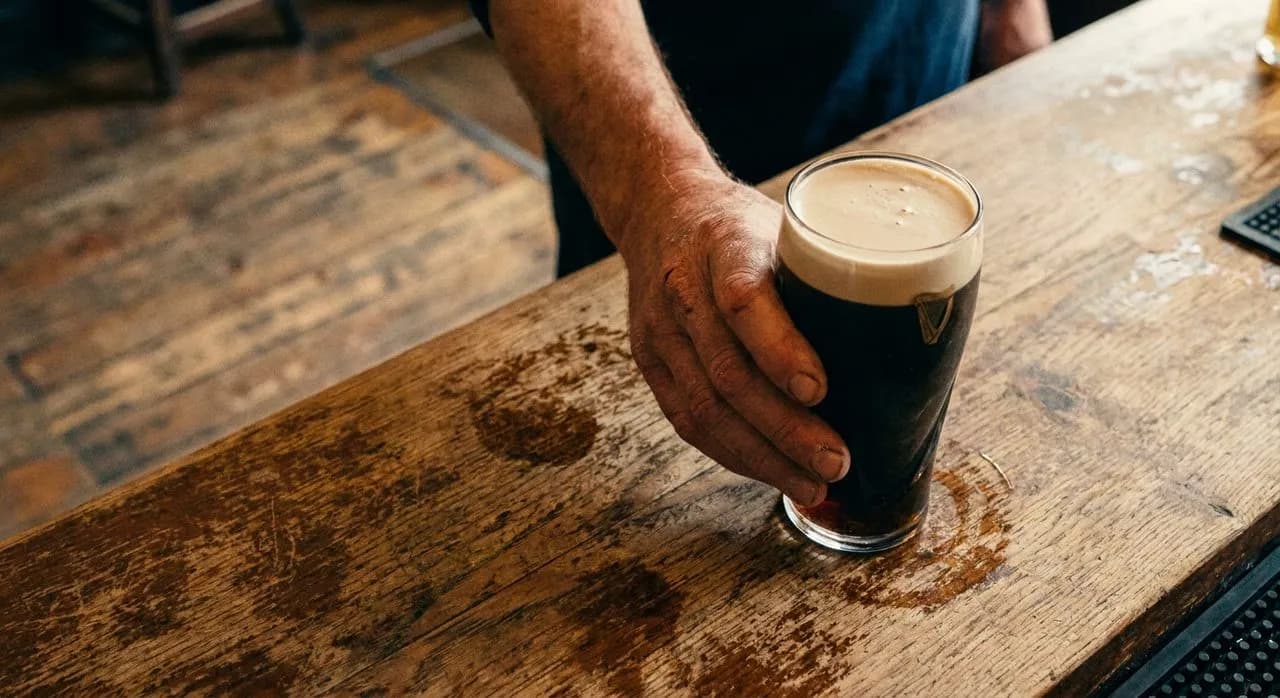
Order a Guinness at Ear Inn and you will wait. The bartenders pour using a strict two-part technique with a 119-second wait between pours, a timing enforced by the bar's owner and taught to all new staff. The first pour fills the glass three-quarters full at a forty-five-degree angle, then rests while the surge settles and the head tightens. The second pour tops it off, crowned with a tight, creamy cap. No shortcuts. No rushing. The protocol is taken seriously, and you can watch the bartender's eyes flick to the clock between stages.
The beer list is short and reliable—Guinness, a handful of lagers and ales on tap, nothing precious or rotational. This is not a craft-beer incubator. It is a bar that knows what it does and has been doing it for longer than most of its patrons have been alive. The pours are correct. The glassware is clean. The Guinness, when it finally arrives, is cold and velvety and worth the wait.
Maritime provenance
The bar's name is a typo made permanent. Originally the "Bar" Inn, a faded painted sign on the brick exterior lost its serif, and "Ear" it became. The maritime history is no accident. When the building went up, the Hudson was a working waterfront, and Spring Street was a thoroughfare for dock laborers, cargo handlers, and sailors between ships. The boarding house served that transient population, and when it eventually became a tavern, the clientele remained waterfront men—longshoremen, tugboat crews, fish-market workers.
The memorabilia on the walls is not decorator salvage. Much of it was left by regulars or pulled from nearby piers before they were demolished. Ship models in cases, framed naval charts, a brass bell, a battered life preserver. The bar has outlasted the working waterfront by half a century, but the aesthetic remains stubbornly nautical, a monument to a New York that has mostly vanished.
The best seat
The stool at the front window is the one to claim if you want the full experience. Here the tilt is most pronounced, the light best, the view onto Spring Street unobstructed. You can watch the neighborhood drift past—delivery trucks, tourists consulting phones, the occasional dog walker—while feeling the floor slope gently beneath your feet. Set your pint down and it wants to slide. Adjust your posture and you realize you've been leaning slightly backward to compensate for the incline.
It is a stool that makes you conscious of the building's age and instability in a way the back seats do not. You are perched at the prow of a sinking ship, two centuries into its slow descent. The romance of that position is hard to resist. Regulars know it. They arrive early to claim it, settling in with a newspaper or a paperback, nursing a beer through the afternoon while the light shifts and the floor holds steady—or as steady as it ever does.
Why it endures
Ear Inn has survived because it has never tried to be anything other than what it is. No renovations to sand away the patina, no cocktail menu or small-plates program, no DJ nights or branded events. It is a old bar in an old building, serving beer the correct way, to people who appreciate the lack of artifice. In a neighborhood that has cycled through industrial grit to artist lofts to luxury condos, the bar remains a fixed point, indifferent to trends.
The tilt helps. It is a physical reminder that the building is provisional, that all of this—SoHo, the boutiques, the cobblestones repaved for effect—is built on fill and hope. The floor slants toward the river because the river was here first and will outlast every structure we build near it. Sitting on a wooden stool in a room that has been leaning for two hundred years, you feel that truth in your bones. And you order another Guinness, because there is time yet.
Practical notes
Ear Inn is located at 326 Spring Street at the corner of Greenwich Street in Manhattan. The nearest subway is the 1 train to Houston Street, a short walk. Street parking is scarce; public garages are available nearby. The bar is typically open seven days a week from afternoon into late evening; verify hours directly, as they may shift seasonally. The space is small, narrow, and not wheelchair accessible due to the age of the building and the slanted floor. Cash is accepted; card payment available. Dress is casual. Bring patience for the Guinness pour and an appreciation for worn wood and tilted floors.
Tags: #EarInn #PullUpAChair #SoHoNYC #HistoricBars #FederalArchitecture #NYCBars #GuinnessPour #Spring2026 #OldNewYork #MaritimeHistory #TiltedFloors #NYCHistory #HudsonRiver #AuthenticBars #CityFinds
Please drink responsibly. Must be of legal drinking age.
Sources consulted: Ear Inn - Wikipedia · Historic NYC Bars · Federal Architecture · NY Times New York · NYC Landmarks Preservation Commission
All trademarks are the property of their respective owners.