The phrase “stockard channing reclusive life” may be what pulled you into a San Francisco search today, but it should not be treated as a tip, sighting, invitation, or event clue. A useful city guide starts by separating curiosity from logistics. For restaurants, that means choosing a public neighborhood, checking food-safety information through the San Francisco Department of Public Health, confirming transportation through SFMTA, and keeping the night flexible. As of Tuesday, August 11, 2026, the practical move is not to chase rumor; it is to build a dinner plan that works even if the first room is full, the bus is delayed, or a vendor changes hours.
Want a no-hype San Francisco dinner route with transit checks, health-score reminders, and a backup nearby? Text Karpo before you leave and ask for a plan you can actually follow.

Use the trend as a dinner conversation hook
A search phrase like “stockard channing reclusive life” can be a harmless opener at dinner, especially in a city that loves theater, film talk, neighborhood gossip, and strong opinions. Keep it there. Do not build a night around assumptions of a celebrity appearance, a private location, or a hidden gathering. This guide treats the phrase as a timely conversation hook only, then turns attention to public restaurants and practical city movement.
The verification-first habit is simple: before picking a table, check what the city actually publishes. The San Francisco Department of Public Health says it protects and promotes the health of all San Franciscans, and its environmental programs include food safety education, inspection, permitting, and other measures. For diners, that means official health information is a better starting point than a viral post, a clipped screenshot, or a friend-of-a-friend claim.
Your executable plan should answer four questions before you leave: where is the first stop, how will you get there, what will you do if the wait is too long, and what official page should you check again just before departure. If your group cannot answer those, the plan is still just a mood.
Choose the room before choosing the menu
San Francisco restaurant nights often succeed because the room fits the group, not because the menu sounds impressive in isolation. A quieter two-person catch-up needs different conditions than a loud birthday table, a family meal, or an after-work drop-in. Decide first whether you need low noise, fast counter service, accessible entry, room for a stroller, a short walk from transit, or an easy exit if the evening runs late.
For access and public-health confidence, use official checks where they exist. SFDPH specifically lists “Open a Restaurant or Check Health Scores” among its environmental health services and says it works to make sure food in San Francisco is safe for the public. The useful action is not to assume a place is fine because it is popular; it is to look for current official information before committing your group.
Treat photos and reviews as secondary evidence. They can help you judge vibe, but they do not replace official health-score checks, current vendor notices, or transportation updates. If a restaurant’s own page is unclear about hours, reservations, or accessibility, call or choose a more transparent option.
Match the market or hall to the group
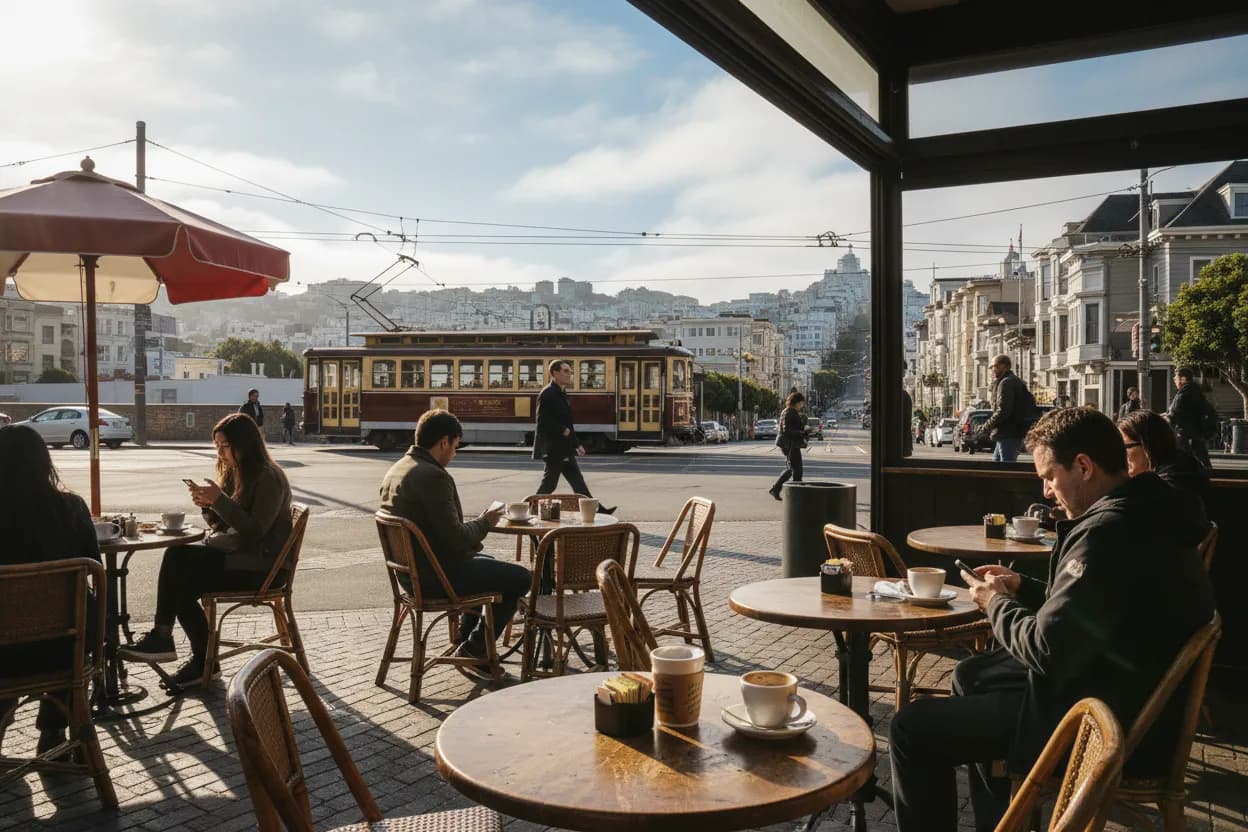
Food halls, markets, and multi-vendor stops can be smarter than a single restaurant when your party has mixed preferences. They reduce menu risk, let people split up briefly, and make it easier to pivot if one counter has a line or is closed. The tradeoff is that vendor hours can vary, seating can be contested, and noise can spike during peak periods.
Use this format when the group includes indecisive diners, people arriving from different parts of the city, or anyone who needs a low-commitment first stop. It is also useful when you do not want a reservation to control the whole evening. But do not assume every stall operates the same hours as the building or nearby businesses. Verify the individual vendor, not just the venue name.
If health, sanitation, or nuisance concerns come up around a business or public setting, San Francisco directs people to 311 for health issues connected to businesses, apartments, or other living and working spaces, including garbage and refuse, water quality, and sewage. That is not a dining review tool; it is a city service path when something looks like a public-health issue.
Keep the first stop easy to reach
The best first stop is not always the most famous one. It is the one your group can reach without burning all its patience before dinner. SFMTA provides a Trip Planner with options for Muni, bike, walk, drive, and parking-related planning. Use it before leaving, then check again close to departure because city movement can change quickly.
Build the route around the least flexible person in the group. If someone is coming from work, has limited mobility, or needs a direct return trip, choose a restaurant area that does not require complicated transfers. SFMTA also publishes information on Muni routes and stops, visitor transportation, neighborhood service, travel maps, and guides. Those official tools are more dependable than guessing based on distance alone.
On August 11, 2026, the SFMTA homepage showed transit alerts and recent travel updates, including a cleared M Ocean View delay and a note that Muni service changes start August 29. The lesson is not that your route will be disrupted; it is that you should check current SFMTA alerts before you walk out the door.
Save a nearby option for long waits
A good San Francisco restaurant plan has a backup within the same general area. Not across town, not three transfers away, and not dependent on a table that may disappear before you arrive. Pick a second public option before you leave: another restaurant, a market counter, or a simpler takeout stop where the group can reset without turning dinner into a commute.
Crowd risk is highest when a plan relies on a single popular room, a single dining hour, or a single assumption about availability. Avoid making the backup feel like failure. Tell the group in advance: first choice if the wait is reasonable, second choice if the line is heavy, transit gets messy, or someone needs a faster meal.
Check the city calendar and SFMTA travel updates when planning around weekends or special activity. The SFMTA site lists meetings, events, and travel and transit updates; one example displayed on the official page was the SF Pizza, Bagel, Beer Festival for Saturday, August 15, 2026. Event-related movement can affect crowds and travel even when your restaurant is not part of the event.
Verify vendor hours before leaving
The final check should happen close to departure, not the night before. Restaurant hours, vendor participation, seating rules, and transit conditions can change. This article does not guarantee availability, service, menus, or access. It gives you the safer sequence: official health check, current restaurant or vendor page, SFMTA route check, then a nearby backup.
If the first stop is a market or hall, verify each vendor you care about. If the plan depends on Muni, confirm route and stop information through SFMTA. If a business raises a food-safety question, use SFDPH’s restaurant health-score resources where available. If a nuisance or hazard needs reporting, San Francisco points residents to 311.
Most importantly, keep the celebrity-search energy in perspective. “stockard channing reclusive life” can start the conversation, but it should not steer anyone toward private spaces, speculation, or crowd-chasing. San Francisco is better when the plan respects public access, staff capacity, neighborhood flow, and the reality that a good dinner often depends on boring checks done at the right time.
Tags: #SanFrancisco #SanFranciscoRestaurants #AskKarpo #BeforeYouGo #SFDPH #SFMTA #Muni #FoodSafety #DinnerPlan #RestaurantGuide #CityGuide #LocalLife #TransitCheck #BackupPlan
Sources consulted: sftravel.com · sfdph.org · sfmta.com
All trademarks are the property of their respective owners.
Ask Karpo first
Ask Karpo first when your San Francisco dinner plan depends on timing, transit, or a room you have not verified. Share the neighborhood, group size, mobility needs, and first-choice restaurant, and ask for a practical route with official checks and a nearby fallback.