When the stefon diggs conversation heats up around trade windows, Miami fans do not need a perfect prediction as much as they need a room where everyone can stay for the whole debate. For friends with mixed mobility needs, the best sports bar is not simply the loudest screen wall in Brickell, Wynwood, or Coconut Grove. It is the place that can confirm an accessible entrance, a usable restroom path, table space that works for wheelchair users, and a reservation policy that protects the group from being pushed into a tight corner. As of August 6, 2026, Miami planning should also account for public-space access and transit checks before arrival. Use this article as an accessibility audit, not a venue ranking, so each group can compare real conditions before choosing a recurring Thursday night or deadline-week meetup.
Which Miami neighborhood do you visit most often, and do you need van-accessible parking within one block? We'll map three ADA-verified sports bars with step-free entries and one backup with valet assistance for mobility devices.

Start With The Route, Not The Screen
A strong Miami sports bar plan begins before anyone debates route trees, salary space, or whether stefon diggs would change a contender's ceiling. The first question is whether every person can reach the front door without turning arrival into the hardest part of the night. For Brickell, the Metromover is a useful planning reference because Miami-Dade describes it as a free elevated people mover serving downtown Miami, Omni, and Brickell. It operates seven days a week, and the county lists 21 stations across the system. That does not make a nearby bar accessible by default, but it gives groups a public transit framework to compare against rideshare, parking, and sidewalk approaches.
The route audit should name the exact station, garage, curb drop-off, or sidewalk corner the group expects to use, then test the last block in practical terms. Is the curb cut obvious? Is construction narrowing the sidewalk? Can a wheelchair user enter without using a service entrance or asking staff to move storage? If Metromover is part of the plan, check elevator and escalator status before departure because the county publishes a status resource. Miami-Dade also states that if a wheelchair or mobility-aid user finds an inoperable elevator at a Metromover station, backup accessible service is available within 30 minutes upon request. That matters when timing kickoff, table holds, and late arrivals.
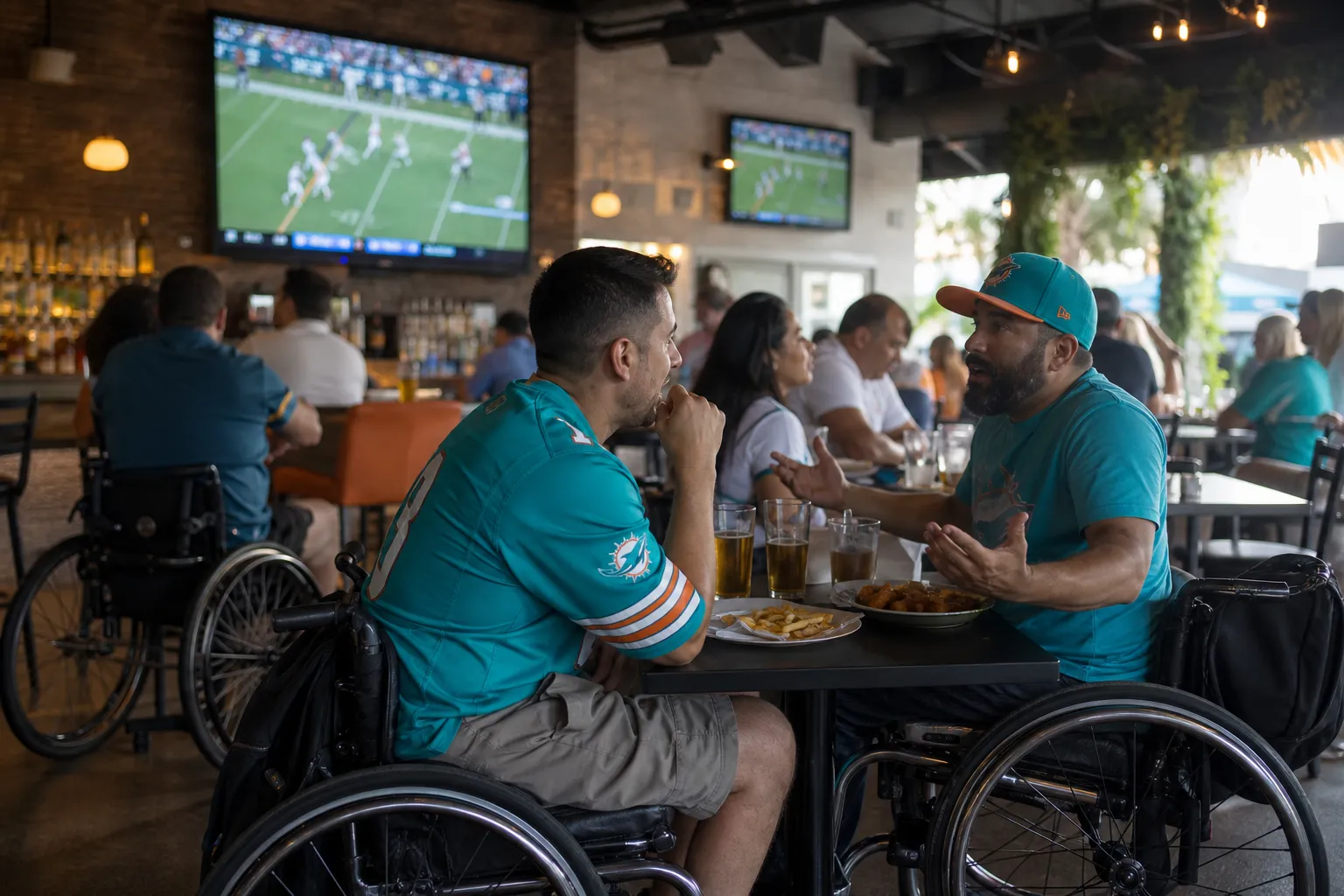
Door And Entry Checks For Brickell, Wynwood, And Coconut Grove
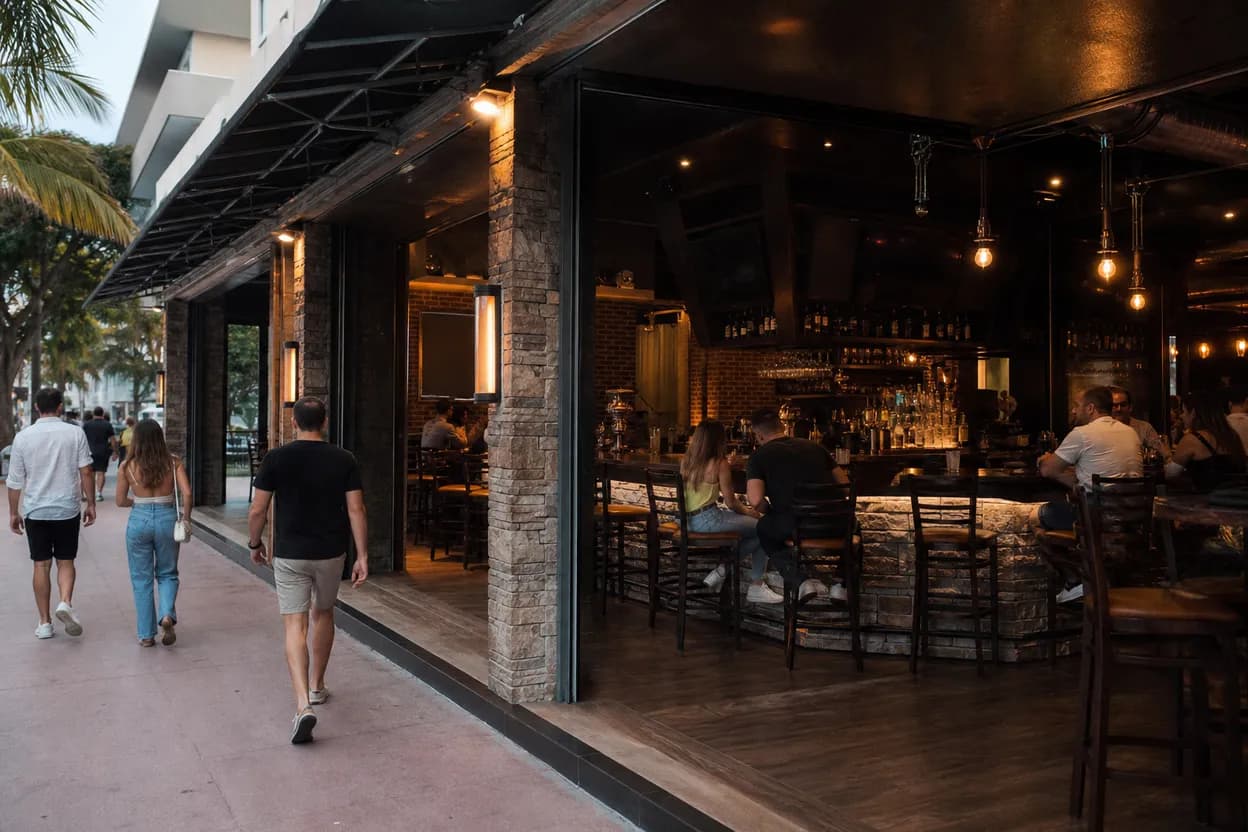
Brickell, Wynwood, and Coconut Grove each create a different access tradeoff. Brickell may offer stronger transit proximity, especially near Metromover coverage, but dense sidewalks and high-demand towers can make entrance logistics confusing. Wynwood often has lively social energy, yet groups should verify whether the usable entrance is the same one everyone else uses and whether outdoor crowd flow blocks the path. Coconut Grove may feel better for recurring neighborhood meetups, but older storefront conditions can vary. The right question is not which district sounds more accessible; it is which specific bar can answer measurable access questions without vague language, rushed promises, or dependence on one unusually helpful employee being on shift.
Before reserving, call or message each candidate and ask for the narrowest point from sidewalk to table, whether any step exists at the public entrance, and whether a ramp is permanent, portable, or absent. Ask for a current photo if the answer is uncertain. A portable ramp is not automatically a dealbreaker, but it does require staff awareness, storage access, and a plan for busy arrivals. For a trade-deadline debate night, when people may stay through pregame, game action, and postgame argument, avoid entrances that require repeated staff intervention. A group should be able to arrive, leave, and re-enter with dignity, not negotiate access every time someone wants fresh air.
Restrooms Decide Whether The Meetup Can Last
A bar can have a good screen, friendly staff, and strong atmosphere, yet still fail the real test if the restroom route does not work. For multi-hour NFL discussions, restroom access is not a secondary feature; it decides whether wheelchair users can participate on equal terms. Ask whether the accessible restroom is on the same floor as the reserved table, whether the path is kept clear during crowded nights, and whether doors, turns, sinks, hand dryers, and stalls can be used without staff rearranging furniture. If the venue says the restroom is accessible, follow with specific questions about grab bars and turning space rather than accepting the label.
This is where friend groups should be disciplined. Do not wait until kickoff to discover that a hallway is blocked by high stools, a storage cart, or a line that cannot be bypassed. A good pre-arrival script is simple: 'We have wheelchair users joining for a long game night. Can you confirm the accessible restroom route will remain clear from our table?' If the staff member cannot answer, ask for a manager before booking. Public Miami-Dade recreation language emphasizes accessible, engaging spaces and accommodation processes for county programs, but private sports bars need direct verification from the venue. Confidence comes from confirmation, not from assuming every busy social setting will adapt in the moment.
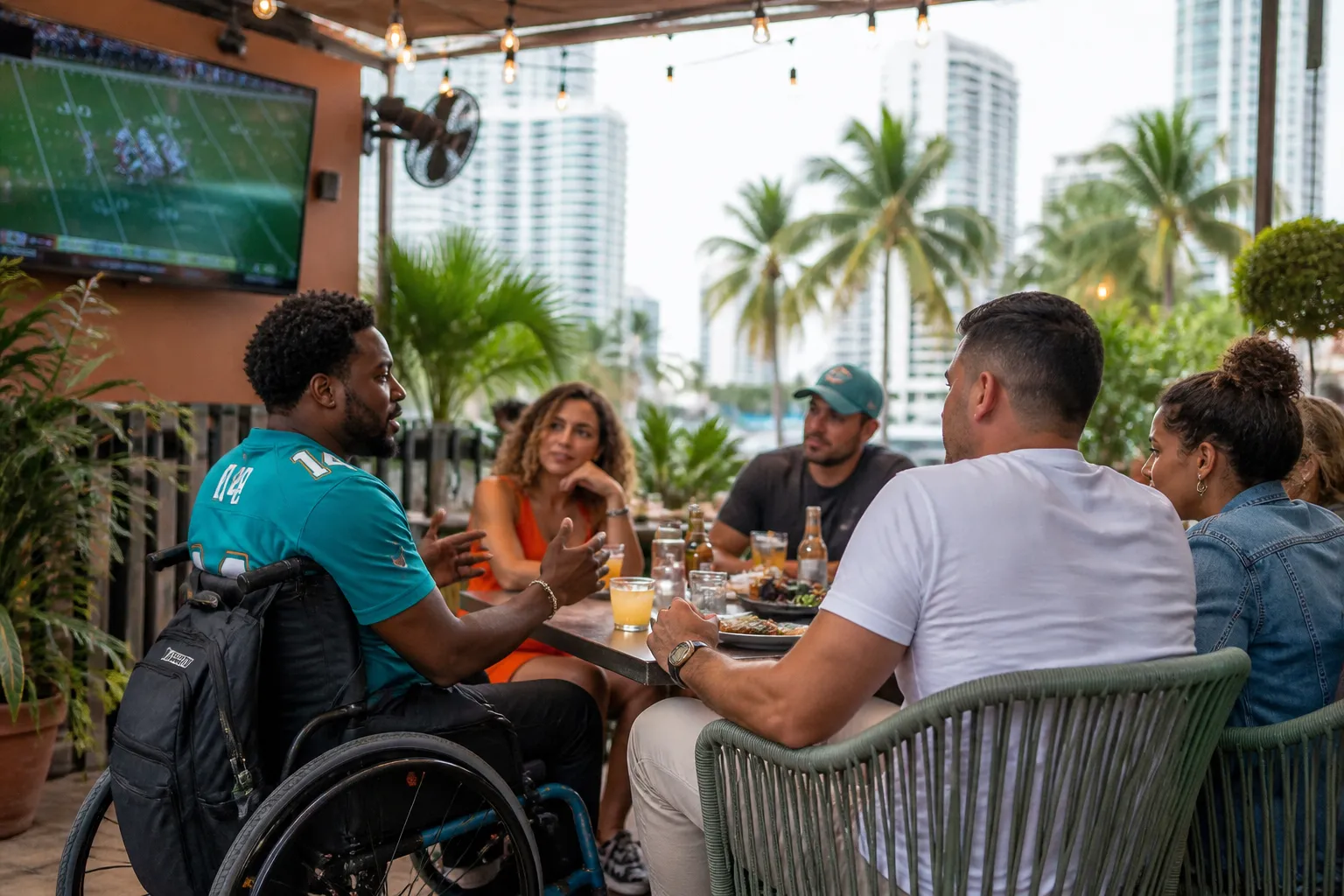
Seating Near Screens Without Blocking The Group
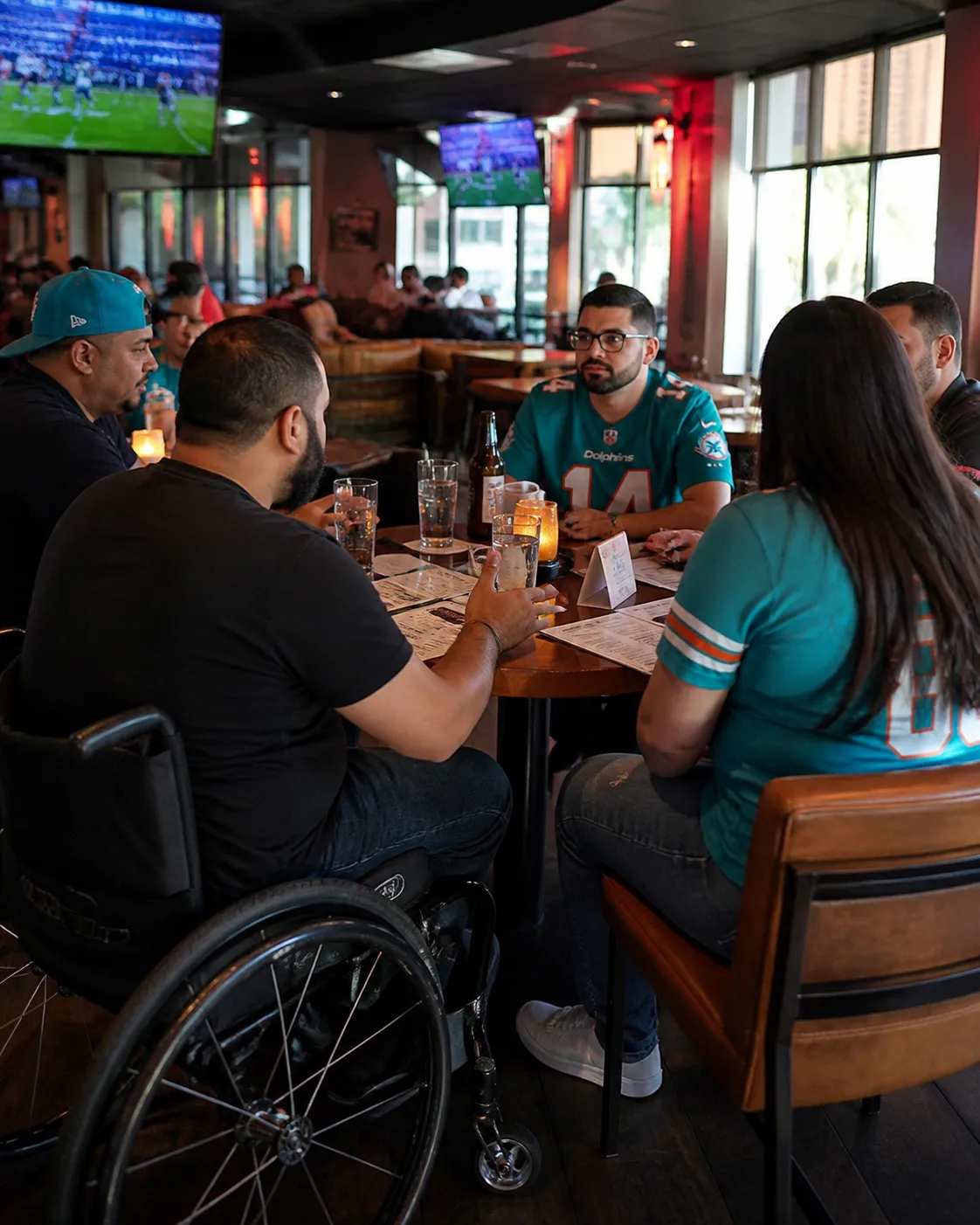
The best wheelchair seating zone for an NFL debate is close enough to screens and conversation, but not placed in a traffic lane. For friends comparing trade rumors, roster fit, and game flow, the wheelchair user should not be parked at the aisle end as an afterthought while everyone else forms the real table. Ask the venue whether accessible seating can be reserved near a screen, whether companion chairs can remain together, and whether the table surface works for food, drinks, phones, and notes during a long session. High-top tables may look social, but they often exclude wheelchair users unless a nearby standard-height setup is guaranteed.
The booking request should be framed around group function, not special treatment. Say that the meetup includes mixed mobility needs and requires a stable table zone with clear approach space, companion seating, and screen visibility. Ask if the venue can hold that specific area during Thursday night games or deadline-week evenings, when walk-in pressure can change seating behavior. If the bar refuses reservations or will only promise 'we will see when you arrive,' consider that a risk signal. A recurring debate group needs repeatability. The goal is a place where the group can return weekly without re-litigating basic seating access every time stefon diggs becomes the sports conversation hook again.
Counter Service, Ordering Flow, And Noise Tradeoffs
Sports bars often fail accessibility in small operational details. Counter service can be difficult if ordering areas are crowded, surfaces are too high, or payment devices cannot be reached comfortably. Before choosing a Miami venue, ask whether servers come to the table, whether mobile ordering exists, and whether staff can bring card readers to seated guests. None of those features should be invented or assumed; they need confirmation from the bar. If counter ordering is the only option, the group should decide whether friends will handle ordering together or whether that setup creates too much dependence. Independence is part of the access score, especially during long, high-energy games.
Noise is another tradeoff because inclusion is not only about ramps and restrooms. A packed bar may have the best atmosphere for a trade debate, but it can make conversation difficult for anyone who relies on clear sightlines, hearing aids, captioned screens, or calmer navigation. Ask whether screens use captions during games, whether the reserved area is near speakers, and whether staff can seat the group away from bottlenecks. Miami-Dade's public library event pages visibly include font-size and contrast controls online, which is a reminder that access includes communication, not just movement. In a sports bar, the equivalent is readable menus, visible screens, clear staff communication, and a layout where nobody is isolated by noise.
Tags: #Miami #SportsSocial #Accessibility #WheelchairAccess #NFL #SportsBars #Brickell #Wynwood #CoconutGrove
Sources consulted: Source 1: miamidade.gov · Source 2: miamidade.gov · Source 3: mdpls.org · Source 4: miamibeachfl.gov
All trademarks are the property of their respective owners.
Ask Karpo first
Ask Karpo to turn this Miami idea into a current plan for your date, budget, companion, transit preference, and energy level. Karpo can narrow the route and flag what to verify before you go.