 Dog Costume Parade Near Me in East Village: Boris and Horton
Free Things to Do

The Staten Island Ferry's Sunset Crossing Past the Statue of Liberty
New York's best-kept secret for harbor views costs nothing at all. Time your boarding right, claim the correct rail, and the commuter ferry becomes a front-row seat to golden hour over Lady Liberty and the Manhattan skyline.
The Staten Island Ferry occupies a curious place in the city's consciousness: utterly mundane to the 70,000 daily commuters who ride it, nearly mythic to visitors who've heard whispers of its free passage past the Statue of Liberty. Both perspectives are correct. What transforms the 25-minute crossing from utilitarian to sublime is timing—specifically, boarding during the hour before sunset when the western light turns the harbor into a study in amber and indigo. No ticket, no reservation, no velvet rope. Just you, the commuters heading home, and one of the finest vantage points in New York.
Why the ferry works as a viewing platform
Unlike the Circle Line or dedicated sightseeing cruises that narrate and curate your experience, the Staten Island Ferry simply moves through the harbor on its fixed route, indifferent to your presence. That lack of ceremony is precisely the appeal. There's no jostling for position among tour groups, no amplified commentary competing with the wind. The ferry's size—each vessel accommodates up to 4,400 passengers—means space to wander, to claim a section of rail, to step back inside when the breeze gets sharp.
The route itself traces a near-perfect line for harbor landmarks. Departing from Whitehall Terminal at Manhattan's southern tip, the ferry angles southwest toward St. George on Staten Island, passing within close range of Ellis Island and the Statue of Liberty before crossing the Narrows. The return journey reverses the choreography, delivering you back to Lower Manhattan with the skyline ablaze in sunset's afterglow. Round-trip takes an hour if you stay aboard at St. George, making it one of the city's most efficient free things to do when golden hour calls.

The starboard strategy
Geography and geometry conspire to make one side of the ferry far superior for Statue of Liberty views. On the outbound journey from Manhattan, the starboard side—that's the right side as you face the bow—offers the closest approach to Lady Liberty, bringing you to approximately 1,800 feet at the nearest point. Close enough to distinguish the folds of her robe, the tablet in her left hand, the spike-crown silhouette that photographs flatten into icon.
Seasoned riders know this. You'll notice the subtle drift of passengers toward starboard as the ferry pulls away from Whitehall, the quiet claiming of rail space by those who've made this crossing before. Follow their lead. The port side offers its own rewards—Ellis Island's red-brick profile, the Brooklyn waterfront—but for the statue, starboard is doctrine. On the return journey, reverse your position: port side now commands the western views as Manhattan rises ahead and the sun sinks behind you.
When to board for the light
Spring and summer travel seasons deliver the longest light and the warmest upper decks, with sunset sliding later into the evening as June approaches. Check the day's sunset time and work backward. You want to depart Whitehall roughly 45 minutes before the sun drops, giving you the outbound crossing bathed in that syrupy pre-sunset glow and the return trip as dusk settles. Ferries depart every 30 minutes during off-peak hours and every 15 to 20 minutes during rush periods, so you have flexibility to wait for the next boat if one is overcrowded.
Late spring into early autumn offers the gentlest conditions—warm enough that the outdoor decks feel inviting rather than punishing, late enough in the day that the commuter crush has thinned. Fridays carry a weekend buoyancy; the ferry fills with a different energy, people lingering rather than racing for the exit at St. George. Midweek crossings can feel almost meditative by comparison, the decks populated by deliberate sunset-seekers rather than crowds.
The upper deck calculus
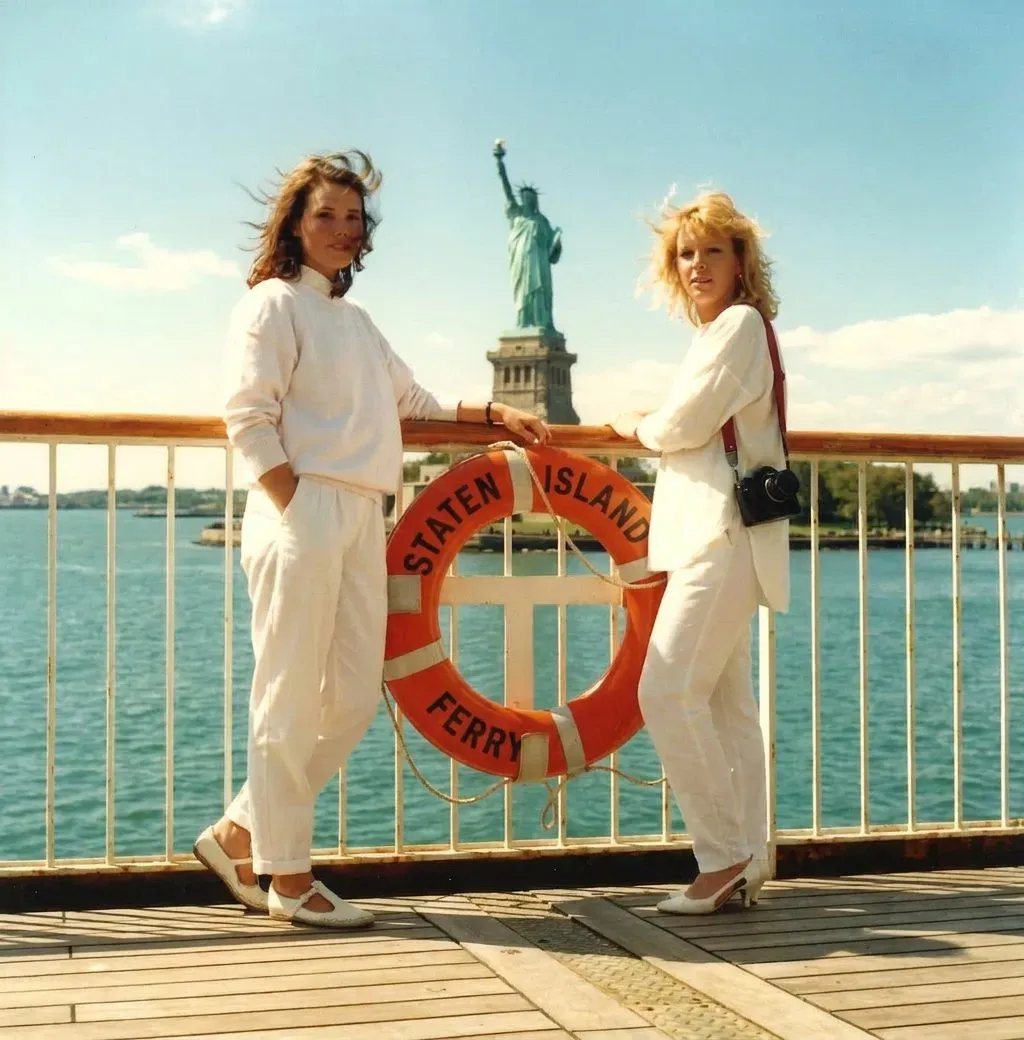
Each ferry offers multiple viewing zones, but the outdoor decks on the upper level provide unobstructed sightlines and the full sweep of harbor air. Accessible via stairs or elevator, these spaces deliver the experience most visitors imagine: wind, salt, the low thrum of engines below, and nothing between you and the view. The trade-off is exposure. The decks can be windy, particularly on the front and rear platforms where the breeze funnels and gusts. Spring evenings may start warm on land and turn brisk once you're mid-harbor.
The enclosed upper-level cabin splits the difference—windows on all sides, climate control, seating if your timing or stamina falters. Purists will scoff, but there's no shame in stepping inside to warm your hands before reclaiming your rail spot for the statue. The lower level, mostly interior seating, serves commuters and those indifferent to the view. You didn't come for upholstered benches and overhead lighting. Stay topside.
What you'll see
The Statue of Liberty is the headliner, but the supporting cast commands attention. Ellis Island's Great Hall catches the low sun on its façade, a thumbnail of immigrant history framed by water. Governors Island's green expanse floats to port. Behind you, One World Trade Center needles upward, its glass skin reflecting the color-shifting sky. The Verrazano-Narrows Bridge spans the horizon to the south, a steel necklace strung between boroughs.
As the ferry turns at St. George for the return crossing, Lower Manhattan assembles itself into the postcard view—the Financial District's stacked geometries, the Brooklyn Bridge's Gothic arches, the layered waterfront where landfill and ambition built a skyline. The light by now has softened, gone pink or violet depending on the clouds, and the city glows. It's the moment when passengers who've been scrolling their phones finally look up. The commuters, bless them, rarely do. They've seen it a thousand times.
After the crossing
Whitehall Terminal deposits you back into Lower Manhattan with the evening still young and the harbor light lingering in your vision. Battery Park sprawls just outside, its waterfront promenade ideal for extending the golden hour on foot. The South Street Seaport district lies a short walk north along the water, while the tangle of streets around Stone Street offers dinner options in settings that range from historic tavern to sleek modern. Or simply ride again—the ferry operates around the clock, and there's a particular magic to making the crossing twice, watching the same landmarks shift in changing light.
Practical notes
The Staten Island Ferry operates from Whitehall Terminal, 4 South Street, Manhattan (accessible via the 1 train to South Ferry, or the R/W to Whitehall Street). Service runs 24 hours daily; verify current schedules at siferry.com as frequencies vary. The crossing is wheelchair-accessible, with elevators to upper decks. No admission fee, no ticket required. Bring a light jacket even on warm evenings—the harbor wind has opinions. Restrooms available onboard. No food service on most vessels; carry water and snacks if staying for the round trip. St. George Terminal on Staten Island has limited amenities; most riders remain onboard for the return.
Tags: #StatenIslandFerry #StatueOfLiberty #NYCHarbor #SunsetViews #FreeAndFine #NYCTravel #SummerTravel #GoldenHour #LowerManhattan #HarborCruise #FreeThingsToDo #NYCSunset #CityViews #TravelNYC #SpringTravel
Sources consulted: Staten Island Ferry · Statue of Liberty · Staten Island Ferry Official · NYC DOT Ferry Info · Time Out New York
All trademarks are the property of their respective owners.
Ask Karpo for more information.
Keep reading
- Dog Costume Parade Near Me in East Village: Boris and Horton
 Dog Costume Parade Near Me in Astoria: Château le Woof
 Dog Costume Parade Near Me on Upper West Side: Black Lab Cafe