Los Angeles has more genuinely spicy fried chicken than any other American city outside the South, and almost no consistency in how it describes itself. One restaurant's medium will outrun another's hot. A third will have a top level that requires a signature before they will serve it. If you order by the word on the board, you are guessing.
The word 'hot' is not calibrated across the city, and ordering one level too high ruins a good meal. Ask Karpo which counters near you match the heat you actually want.
The Nashville scale and where it actually starts
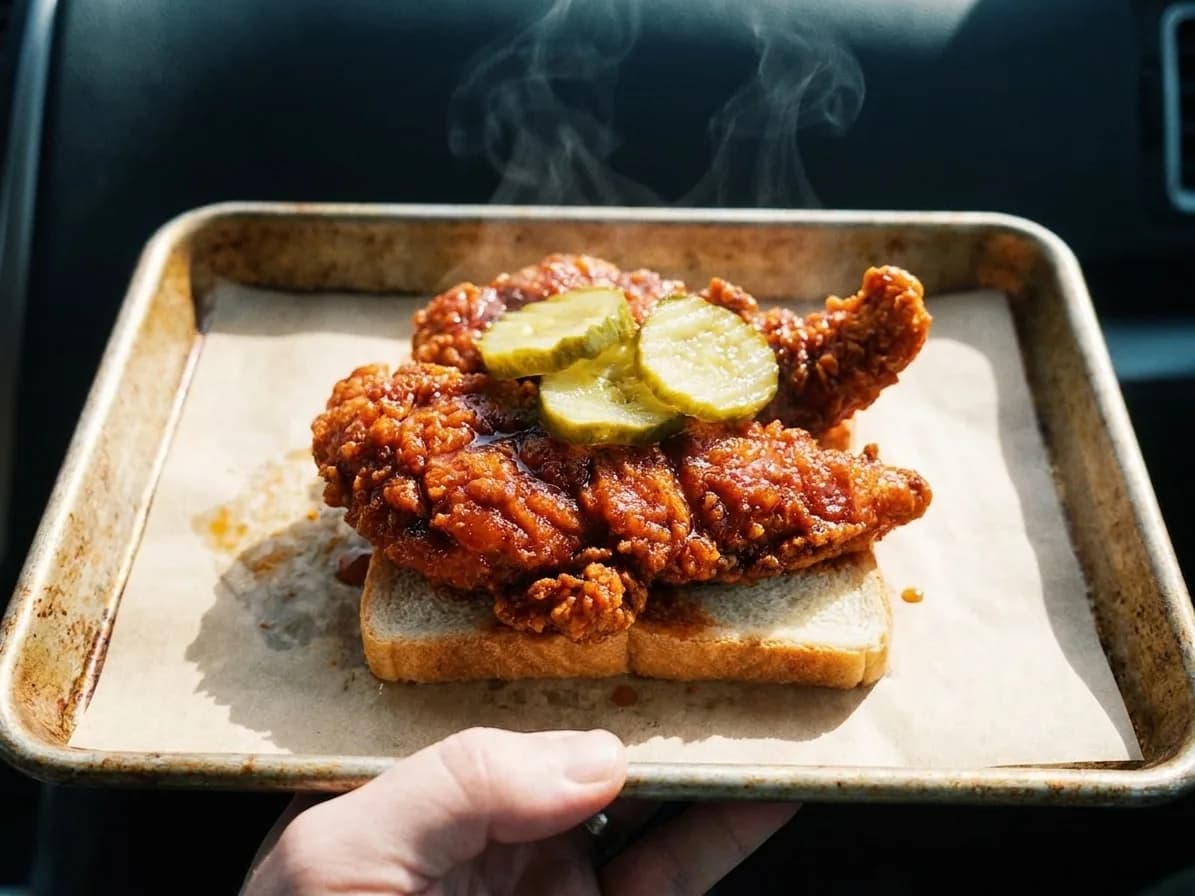
The Nashville hot tradition is the reference point, and the best-known version in the city is Howlin' Ray's, opened in 2015 by Johnny Ray Zone and Amanda Chapman and now running in Chinatown, Pasadena and Las Vegas. Its ladder is mild, medium, hot, extra hot and howlin' — five rungs, and the top one requires a signed waiver before the kitchen will hand it over. That level is built on Carolina reaper, ghost pepper and Trinidad scorpion, which is to say it is not a seasoning, it is a dare.
The useful thing about a five-level ladder is that it gives you a calibration point for the whole city. On this scale, most people who consider themselves comfortable with spice are happy at hot and struggling at extra hot. Anyone ordering the top level for the first time because they eat a lot of chillies at home is misjudging the category — cayenne and superhot peppers in fat, on hot chicken skin, behave differently from the same heat in a sauce.
Korean fried chicken is a different axis entirely
Koreatown's fried chicken is not a hotter or milder version of the Nashville idea. It is a separate technique with a separate goal. The chicken is fried twice for a thin, glassy, durable crust, then coated in a sauce — most often gochujang-based — after cooking rather than dusted with spice before it.
That produces heat that is sweeter, slower and much less punishing. A spicy Korean fried chicken order that tastes assertive will usually sit somewhere between mild and hot on the Nashville ladder, and it is far easier to eat in quantity. If you want a two-hour dinner with friends and beer rather than a fifteen-minute test of endurance, this is the category to be in.
The third tradition nobody ranks
Los Angeles also has a deep and largely uncatalogued set of spicy fried chicken from other traditions — the Sichuan-influenced popcorn chicken with numbing peppercorn, the Filipino and Thai versions, and the long-established Southern and soul food kitchens across South LA and Inglewood whose heat comes from a house seasoning rather than a labelled level.
The peppercorn versions are worth calling out because they confuse the scale entirely. Sichuan heat includes a numbing component that is not capsaicin at all, so a dish can be intensely stimulating without being hot in the way the Nashville ladder means. People who find Nashville extra hot unbearable often love this, and vice versa.
Where all of this lands geographically is worth a note, because the traditions are not evenly spread. The Nashville-style counters cluster in Chinatown, downtown and the eastern San Gabriel Valley. Korean fried chicken is concentrated in Koreatown and along the Wilshire corridor. The Southern and soul food kitchens are largely in South LA, Leimert Park and Inglewood. The Sichuan and Southeast Asian versions are in the San Gabriel Valley and Thai Town. In a city this size, choosing a tradition is effectively choosing a drive.
How to order without ruining your evening
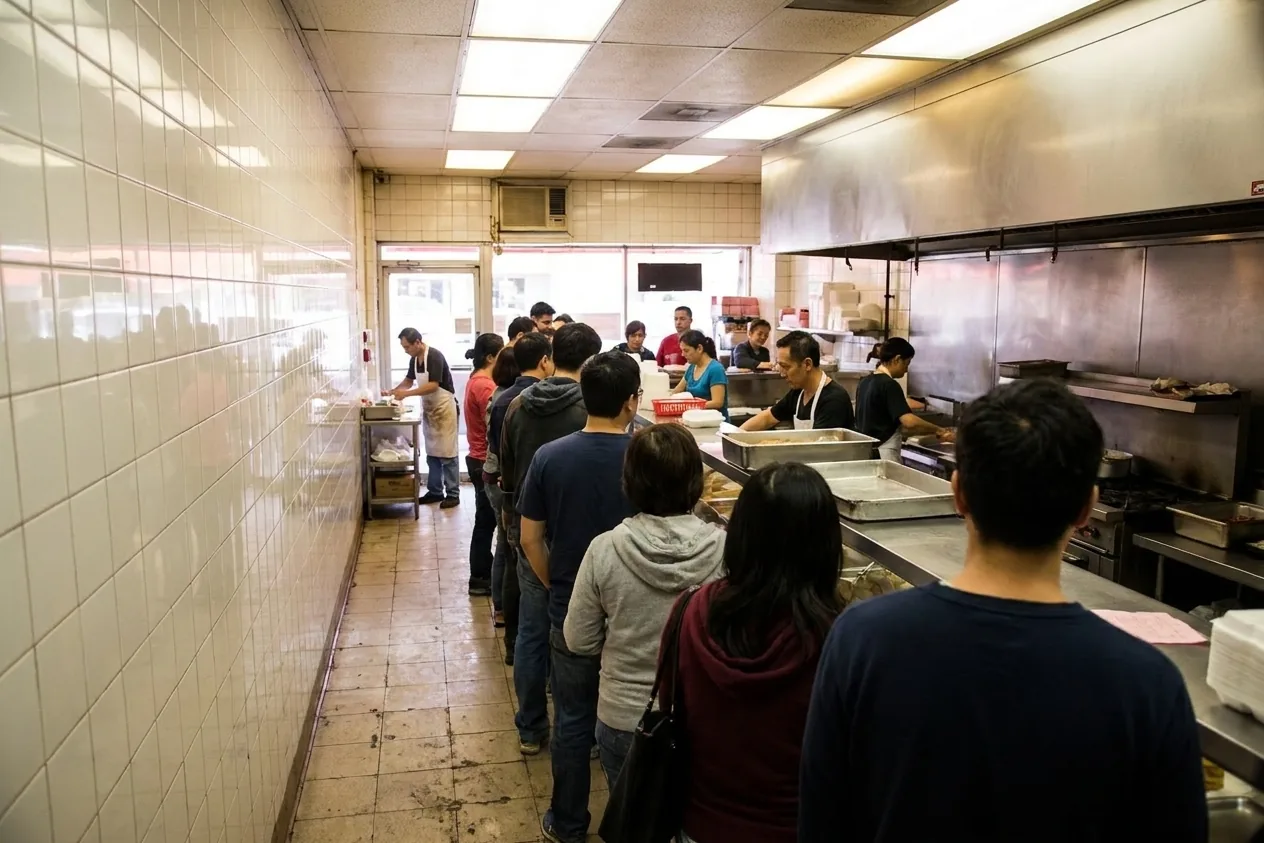
Three rules cover most of it. Order one level below whatever you think you are — the step between rungs at the top of a Nashville ladder is much larger than the step at the bottom. Get something dairy or starchy on the table before the chicken arrives rather than after, because once the heat has built, the remedy is late. And if you are going to a place with a queue, know that these are counter operations where lines of thirty to sixty minutes are normal at peak times, and the food does not travel well — a twenty-minute drive turns a crisp crust soft.
The last point is the one that separates a good version of this from a disappointing one. Spicy fried chicken is a category that rewards eating it where it was cooked, within a few minutes of it leaving the fryer. Whatever level you order, eat it there. The crust is the thing you are paying for, and it is also the first thing to go — fifteen minutes in a sealed container will undo work that took a kitchen years to get right.
Practical notes
Howlin' Ray's runs five heat levels — mild, medium, hot, extra hot and howlin' — with the top level requiring a signed waiver and built on Carolina reaper, ghost pepper and Trinidad scorpion. Korean fried chicken in Koreatown is sauced after frying and generally milder than it tastes. Expect 30-60 minute queues at peak times at counter operations, and eat in rather than driving it home.
Tags: #FriedChicken #LosAngeles #SpicyFood #NashvilleHot #Restaurants #Koreatown #LAEats #HotChicken #Chinatown #WhereToEat #SoCal #FoodGuide #KoreanFriedChicken
All trademarks are the property of their respective owners.
Ask Karpo first
Heat labels are not standardised between kitchens, which is why the same order lands differently across town. Ask Karpo which fried chicken near you matches the level you actually want, and how long the queue is running.