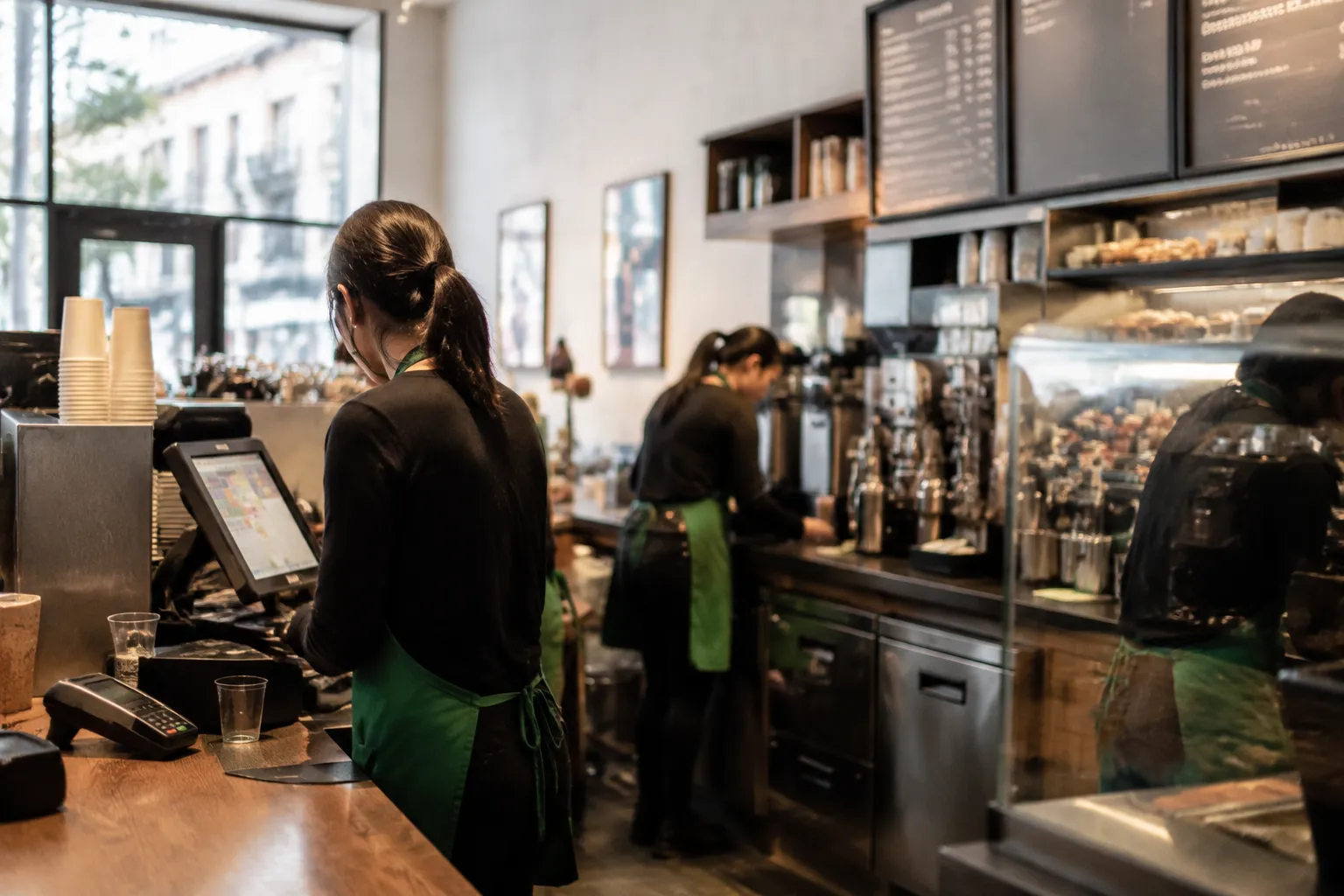
Few hosting nightmares rival the moment your screen goes black during a championship game and the spectrum outage notification appears on your phone. For San Francisco residents who've invited friends over to watch a pivotal match, the scramble to relocate a watch party within hours demands more than a quick Google search—it requires knowing which neighborhood bars and cafés use different internet service providers and whether they maintain generator backup for power failures. This guide addresses the high-urgency pivot facing frustrated hosts and their disappointed guests, mapping the decision tradeoffs between transit accessibility, venue capacity, and infrastructure redundancy that matter when cable reliability becomes the evening's main adversary.
Text Karpo your starting point, timing, group size, and priorities for a San Francisco plan tailored to this exact situation, with one realistic backup before you leave.

Why Provider Diversity Matters for Same-Day Venue Switches
Most San Francisco sports bars cluster around a handful of commercial internet providers, meaning a regional Spectrum outage often coincides with failures at venues using the same backbone infrastructure. Hosts facing a last-minute relocation need to identify establishments that publicly confirm their use of Comcast Business, AT&T Fiber, or satellite services—a detail rarely advertised but occasionally disclosed on venue websites under "connectivity" or "business services" pages. Calling ahead to ask the manager which ISP they use may feel awkward, yet it's the only verification step that prevents arriving at a backup location only to find their screens dark for the same reason your home service failed.
The tradeoff between proximity and provider diversity becomes acute when guests are already en route. A Mission District host might reflexively choose a Valencia Street bar two blocks away, but if that venue shares Spectrum infrastructure, the entire group faces the same blackout. Expanding the search radius to include North Beach establishments on AT&T or Sunset cafés with satellite backup introduces a 20–30 minute transit delay—manageable via SFMTA Muni lines if communicated quickly—but ensures the game actually appears on screen. Weighing travel inconvenience against viewing certainty defines the core decision hosts must make within the first ten minutes of discovering an outage.
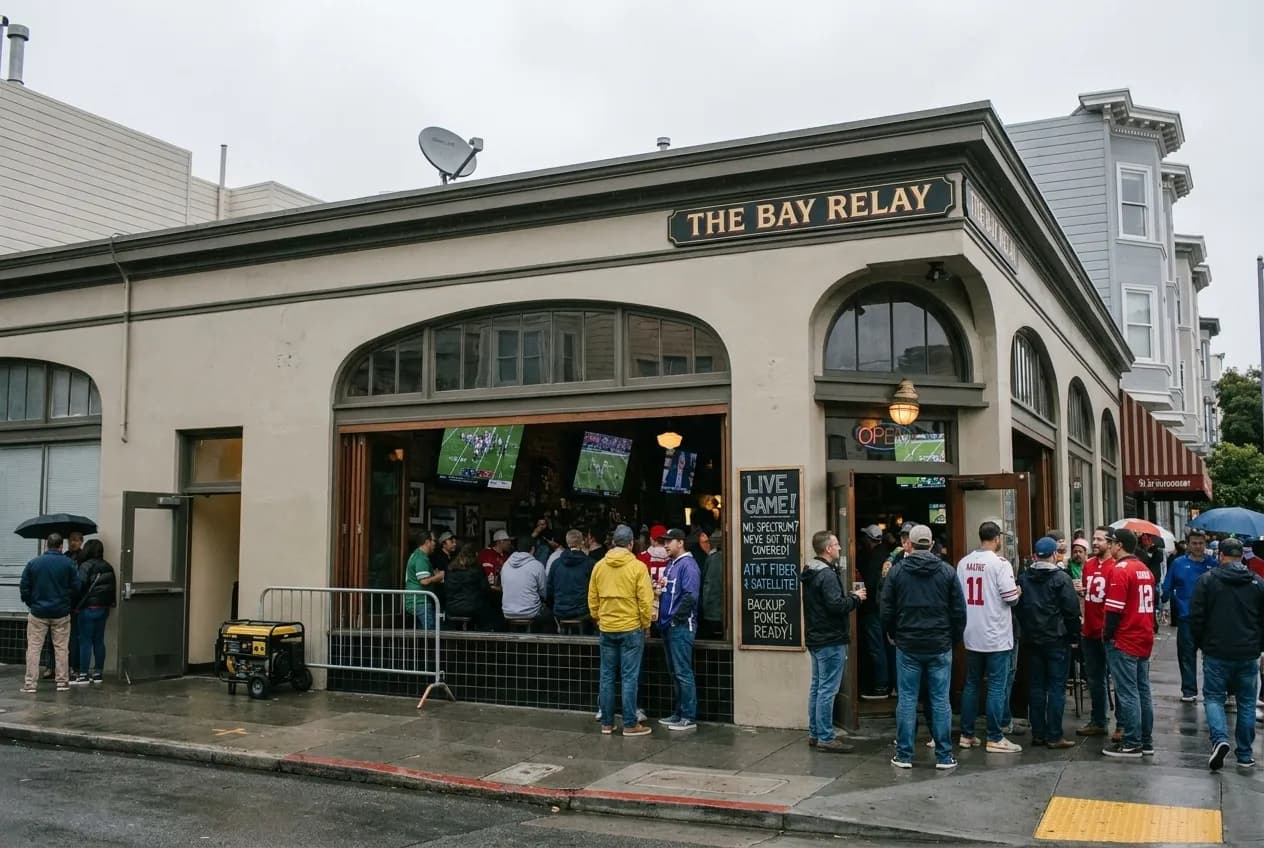
Generator Backup and Power Redundancy Verification
Internet provider redundancy solves only half the problem; a venue with AT&T service still goes dark if a neighborhood power failure takes down their router and screens. San Francisco's microgrid variability means that a Spectrum cable outage in one district can coincide with unrelated PG&E maintenance or equipment failure in another, compounding the host's challenge. Venues near critical infrastructure—hospitals, fire stations, or transit hubs—sometimes benefit from priority power restoration, but only establishments with on-site generator backup or battery systems guarantee uninterrupted viewing regardless of grid status. Identifying these venues requires direct inquiry, as few advertise backup power capabilities on social media or websites.
The practical verification step involves asking whether the venue has experienced screen downtime during past power events and how quickly service resumed. A bar manager's answer—"We stayed live during the February storm because our generator kicked in within thirty seconds"—provides more actionable intelligence than any online review. Hosts should also ask whether the backup system covers all screens or only essential lighting and refrigeration; some establishments maintain generator power for kitchen equipment but allow entertainment systems to fail. This granular questioning feels excessive until the moment your relocated watch party arrives at a venue where half the TVs remain black despite the internet working, leaving a crowd of twenty people craning to see two functional screens.
Transit-Accessible Venue Clusters by Provider Type
San Francisco's public transit network, detailed on SFMTA's getting-around resources, offers hosts a framework for grouping potential backup venues by reachable clusters rather than isolated addresses. A host in the Richmond District facing a Spectrum outage might direct guests toward establishments along the 38 Geary bus line that terminates downtown, where a higher concentration of venues use Comcast Business for redundancy. Similarly, Mission Bay venues near the T Third light rail often rely on AT&T Fiber due to newer building infrastructure, making that corridor a logical pivot point for hosts in eastern neighborhoods. The tradeoff involves communicating a new meeting point that guests can reach without individual rideshare expenses, preserving the communal spirit of the original home gathering.
Clustering also helps manage the disappointment inherent in last-minute changes. Rather than scattering guests across three different backup bars—each with uncertain capacity—a host who identifies two or three venues within a two-block radius along a single Muni line gives the group flexibility to move between spots if one proves too crowded. This approach requires knowing which establishments sit near the same transit stops and which use different providers, information that becomes valuable reconnaissance for future hosting decisions. A host who maintains a personal spreadsheet noting "Comcast—near 16th Street BART" or "AT&T—along the N Judah" transforms a crisis into a reusable contingency map.
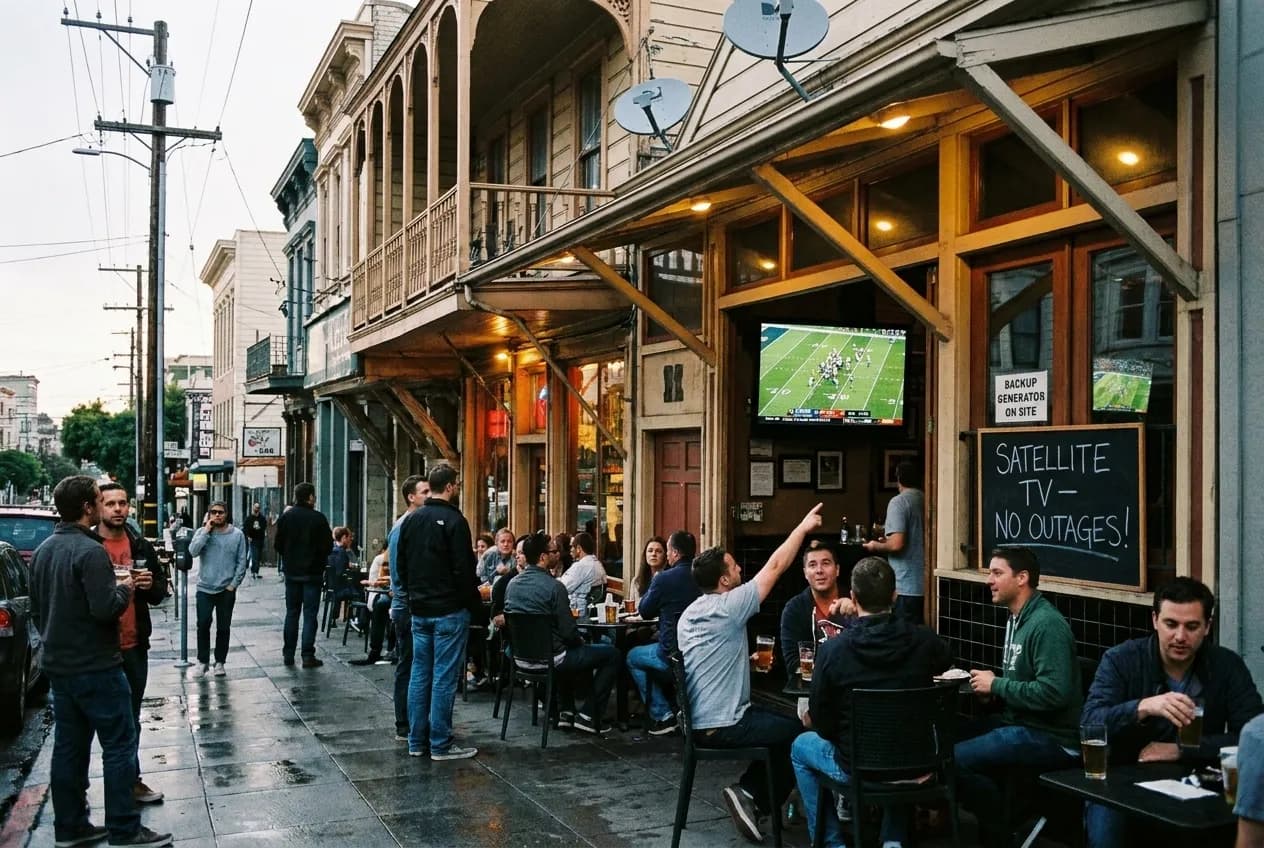
Capacity and Reservation Realities During Live Events
Even a venue with perfect infrastructure redundancy offers no solution if it's already at capacity when your group arrives. San Francisco fire codes and occupancy limits mean that popular sports bars fill quickly during marquee games, and same-day outages often send multiple displaced hosting groups toward the same backup locations simultaneously. Calling ahead to ask about current crowd levels provides a snapshot, but venues rarely hold space for groups that haven't made reservations—a step impossible to complete when you discover the outage thirty minutes before kickoff. The host's challenge becomes reading the manager's tone: a hesitant "We're pretty busy but you can try" signals a likely turn-away, while "Come by, we'll make it work" suggests flexibility.
The adaptive host considers splitting the group if necessary. Directing half the guests to a confirmed-available venue with Comcast while scouting a second location with AT&T for overflow preserves the social event even if it fragments the experience. This triage approach works best when communicated transparently—"We're trying two spots; text when you arrive and we'll consolidate"—rather than as a chaotic scramble. Some guests will prefer heading home rather than navigating uncertainty, and acknowledging that option without guilt maintains goodwill for future gatherings. The host who successfully pivots a watch party under these constraints earns a reputation for resilience that outlasts any single game outcome.
Who This Contingency Planning Fits and Who It Doesn't
This infrastructure-focused approach to backup venue selection suits hosts who prioritize continuity over comfort—people willing to trade their living room's familiar seating and free snacks for the certainty that the game will actually appear on a screen. It works best for groups already comfortable with San Francisco's bar scene and public transit, where a last-minute venue change feels like an adventure rather than an ordeal. Hosts with elderly guests, families with young children, or friends with mobility constraints may find the rapid pivot too disruptive; for those gatherings, canceling and rescheduling often proves less stressful than attempting a same-day relocation across neighborhoods.
The strategy also assumes a certain baseline of technical curiosity and assertiveness. A host who feels uncomfortable calling multiple venues to ask about their ISP and backup power systems will struggle to execute this plan under time pressure, and there's no shame in recognizing that limitation. Some people host best by creating a warm, predictable environment; others excel at improvisation and logistics. Knowing which type of host you are before inviting guests prevents the compounding frustration of both a failed cable connection and a failed rescue attempt. For the adaptive host with a high tolerance for same-day chaos, however, a well-researched provider redundancy map transforms a potential disaster into a story your guests will retell for years—the night you kept the watch party alive despite the outage.
Tags: #spectrumoutage #SanFranciscowatchparties #cablebackupplan #ISPredundancy #sportsbaralternatives #poweroutagebackup #samedayvenuechange #ComcastvsSpectrum #ATTfibervenues #generatorbackupbars #SFMTAtransitaccess #hostingcontingency #livesportsviewing #neighborhoodbarguide #emergencypivotplanning
Sources consulted: Source 1: sf.gov · Source 3: sfmta.com · Source 4: sfpl.org
All trademarks are the property of their respective owners.
Ask Karpo first
Ask Karpo to turn this San Francisco idea into a current plan for your date, budget, companion, transit preference, and energy level. Karpo can narrow the route and flag what to verify before you go.