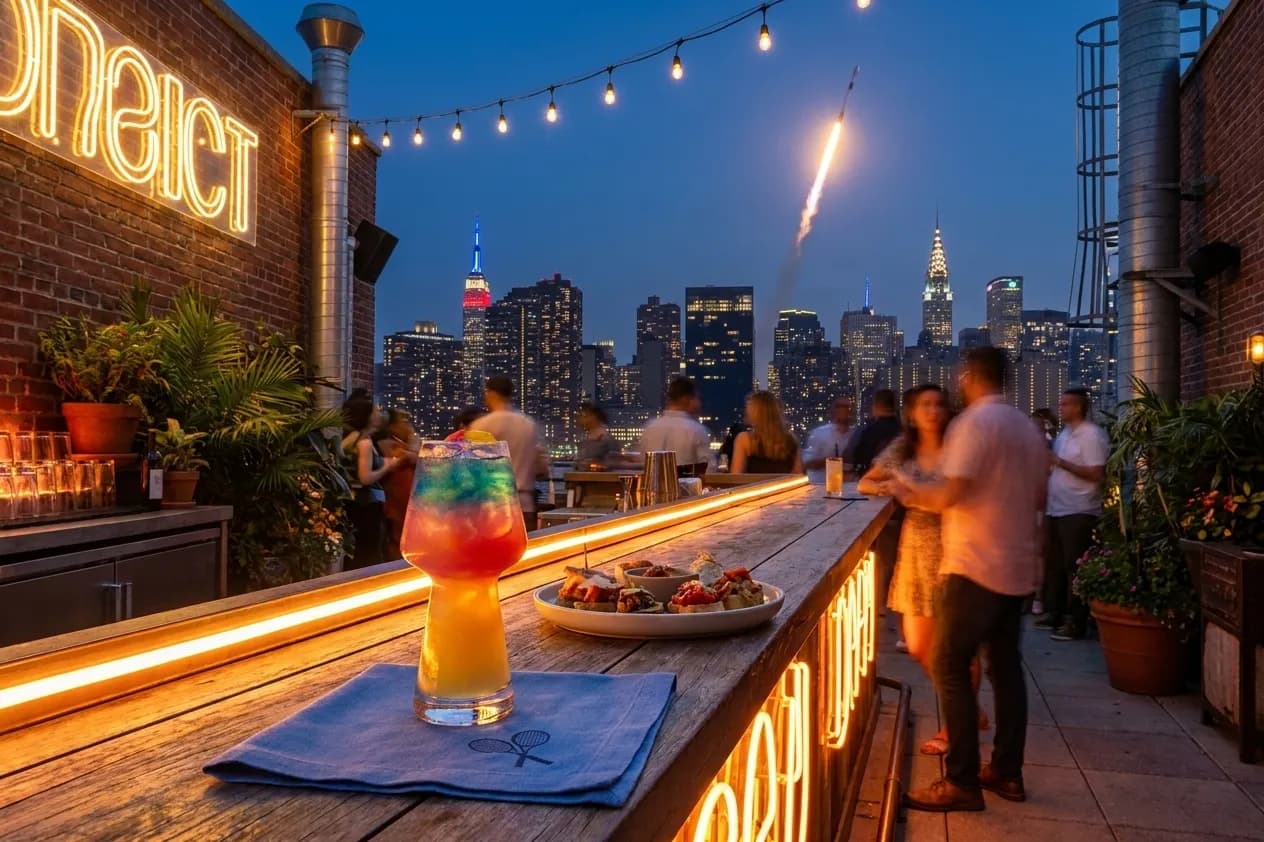
If you're planning to attend evening or night sessions at the 2026 US Open in Flushing Meadows, you might find yourself walking out of Arthur Ashe Stadium well after dark, energized by the match but not quite ready to head home. SpaceX launches from Cape Canaveral and Vandenberg are sometimes visible from the Northeast corridor as bright moving points tracing across the night sky, and Queens—with its mix of low-rise residential blocks, industrial rooftops, and waterfront vantage points—offers surprisingly good conditions for casual sky-watching. This guide helps you think through the practical side of adding a rooftop viewing attempt to your US Open evening, from access and sightlines to timing and transportation.
Text Karpo with your US Open session time and Queens starting point, and we’ll turn this rooftop viewing idea into a practical local plan.

Why Queens Works for Sky Watching After Tennis
Queens sits at the eastern edge of New York City's densest light pollution, with Flushing Meadows Corona Park acting as a dark buffer zone. The borough's mix of building heights—especially along the 7 train corridor and in neighborhoods like Long Island City, Astoria, and Jackson Heights—means you're never far from a mid-rise residential building or accessible rooftop with a clear view of the southern and southeastern horizon. SpaceX launches heading to polar or geostationary orbits often follow trajectories visible from the mid-Atlantic and Northeast, appearing as a bright, slow-moving light that can be tracked for several minutes if conditions are clear and the launch window aligns with local darkness.
The US Open's night sessions typically run late into the evening, putting you outdoors during prime sky-watching hours in late August and early September. If a launch is scheduled for that window, you'll already be in one of the city's most transit-accessible neighborhoods, with multiple options for extending your evening into a casual stargazing session.
Rooftop Access: What's Realistic in Queens
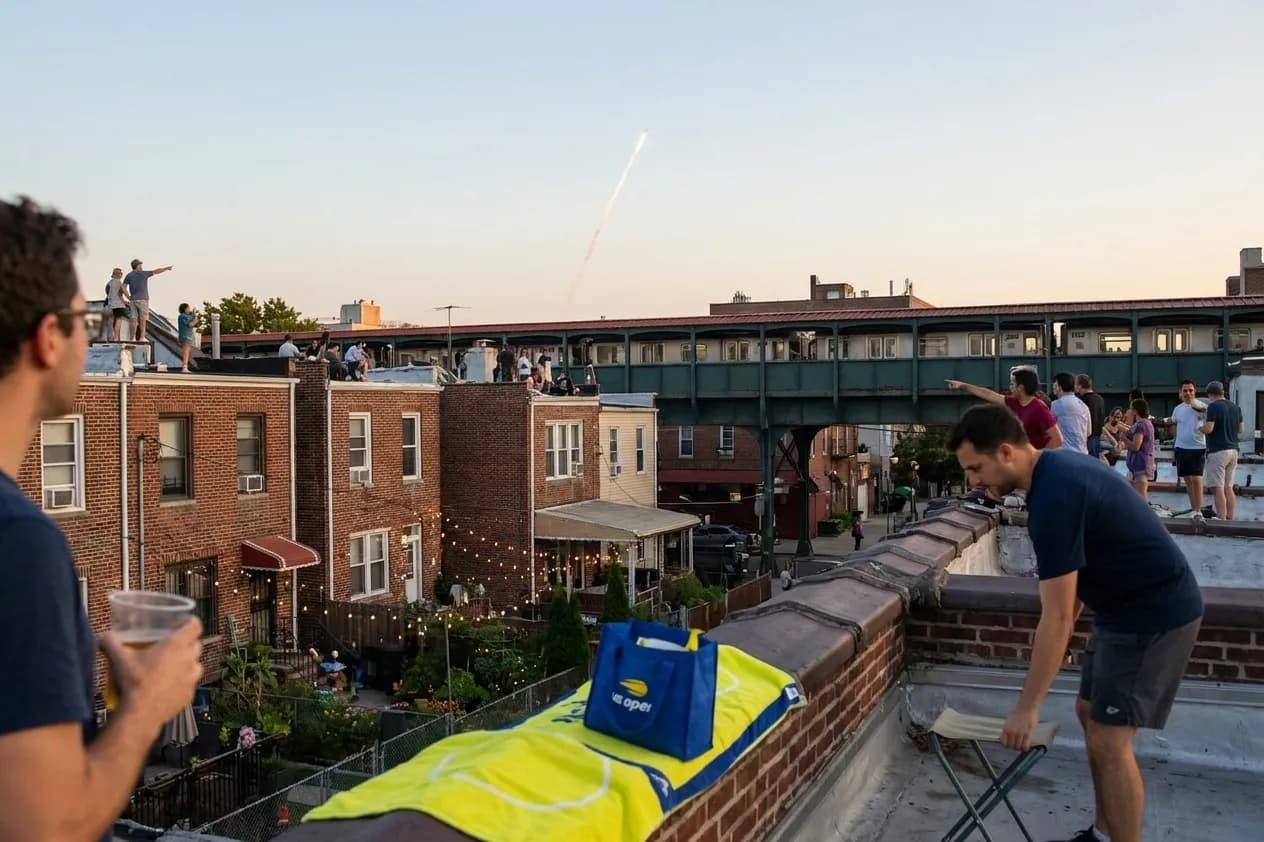
Most residential rooftops in New York City are locked or restricted to tenants, and commercial rooftop bars typically require reservations or minimum spends that may not align with a spontaneous post-tennis plan. Your most practical options fall into three categories: buildings where you or a friend live, publicly accessible parks with elevated sight lines, and hotel rooftops that may allow walk-in guests. If you're staying at a hotel near the US Open, ask the front desk about rooftop or terrace access policies before you check in—some properties in Long Island City and Flushing may allow registered guests to use outdoor spaces after standard hours, though policies vary by property.
Flushing Meadows Corona Park itself offers wide-open sightlines from elevated areas near the Unisphere and along the park's southern edge. Confirm current park hours and security policies on the NYC Parks website before you go, as access rules and staffing can change.
Timing a Launch Window with Your Match Schedule
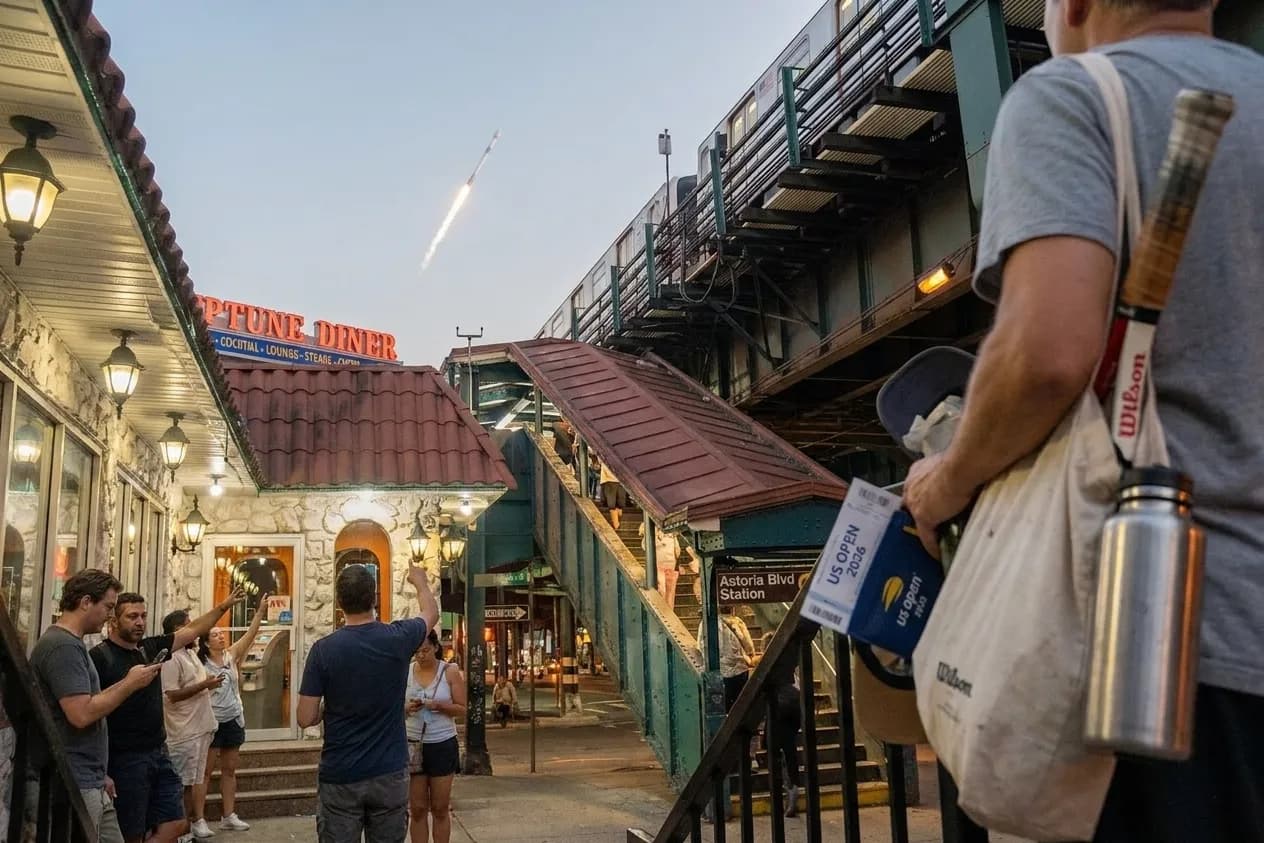
SpaceX publishes launch schedules on its website and social media channels, typically with a primary target time and a backup window. Launches can be delayed by weather, technical holds, or range conflicts, so even a well-planned viewing attempt requires flexibility. If you're attending a night session at the US Open, check the launch schedule a day or two before your visit and note the window—if it falls during evening hours Eastern time, you'll have a reasonable chance of catching the event from Queens if skies are clear.
Visibility depends on the launch site, trajectory, and your local weather. Launches from Cape Canaveral heading northeast or east are more likely to be visible from New York than westward trajectories from Vandenberg. A launch that occurs during twilight—when the rocket is in sunlight but you're in darkness—produces the most dramatic visual effect, with the exhaust plume glowing against the dark sky. Full darkness launches appear as a bright moving star, less theatrical but still worth the effort if you're already outside.
Sightlines and Horizon Considerations
To see a launch from Florida, you'll want a clear view toward the south and southeast, ideally from a location with minimal obstruction below the horizon line. In Queens, this means avoiding spots hemmed in by tall buildings or dense tree cover. Long Island City's waterfront parks along the East River offer excellent southern exposure, though they're a subway ride west from Flushing. Astoria Park, perched above the river, provides elevated sightlines and is accessible via the N and W trains.
- Check the weather forecast for cloud cover and visibility on the evening of your planned viewing—even a thin overcast layer will block the view entirely.
- Bring a jacket or layer; rooftops and waterfront parks in Queens can be breezy and cooler than street level, especially in late August and early September.
- Download a stargazing or satellite-tracking app to help orient yourself toward the expected trajectory—apps like SkySafari or Heavens-Above can show real-time positions.
- If you're traveling with a group, designate a meeting point and share a backup plan in case the launch scrubs or weather doesn't cooperate.
- Respect private property and building access rules—trespassing on locked rooftops is illegal and unsafe.
Transit Timing After Night Sessions
The 7 train runs frequently between Flushing and Manhattan, with service extending late into the evening on most nights. If you're planning to head to a rooftop viewing spot after your match, confirm the current schedule on the MTA website and allow extra time for platform crowding—US Open nights can pack the Mets-Willets Point station. The Long Island Rail Road also serves the tennis center during the tournament; check the LIRR timetable if you're planning to travel east into Nassau County or west toward Jamaica and Brooklyn.
If you're driving, parking near the US Open is limited, and street parking in residential Queens neighborhoods is tightly regulated. Ride-share pickup zones are designated near the tennis center; consult the official US Open transportation guide for current locations and procedures.
What to Bring and What to Skip
Binoculars can enhance the experience, letting you track the rocket's ascent and spot the separation of booster stages, but they're not necessary for a casual viewing. A smartphone with a camera capable of long exposures can capture the light trail if you have a tripod or stable surface, though don't expect professional results without practice. The US Open prohibits certain items inside the tennis center—check the official prohibited-items list before you pack—but once you're outside the venue, standard city rules apply.
Skip the lawn chairs and bulky gear unless you're heading to a park where you know you'll have space and permission to set up. Most rooftop and waterfront viewing will be standing or leaning against a railing, and you'll want to stay mobile in case you need to adjust your position for a better sightline.
Backup Plans and Realistic Expectations
Launch scrubs are common, and even confirmed launches can be difficult to spot from hundreds of miles away. If the viewing doesn't work out, you're still in Queens with plenty of late-night food options—Flushing's restaurant scene stays active well into the evening, and Jackson Heights offers South Asian and Latin American spots that serve late. Treat the launch viewing as a bonus rather than the centerpiece of your evening, and you'll avoid disappointment if conditions don't align.
Recheck the SpaceX launch schedule, MTA service status, and local weather forecast within 24 hours of your planned outing. Space operations and urban transit both require last-minute flexibility, and the best viewing experiences come from staying informed and adaptable.
Tags: #USOpen2026 #Queens #FlushingMeadows #KarpoFinds #Karpo #spacexlaunch #NewYorkLocal #TennisTravel
Sources consulted: usopen.org — Official event schedule · usopen.org — Official visitor A-Z guide · usopen.org — Official transportation directions · usopen.org — Official prohibited-items guide · NYC Tourism — Queens · MTA — Official service status
All trademarks are the property of their respective owners.