There is a lot of advice about eating alone that is really advice about feeling fine while eating alone, which misses the point. The experience is mostly determined by the room, and rooms are designed. A restaurant with nothing but four-tops will seat one person at a four-top and both of you will feel it for ninety minutes. So when you search for restaurants open near me in San Francisco with the intention of eating by yourself, the filter that matters is furniture.
Counter seats are usually walk-in only and go early. Ask Karpo which nearby rooms have them and roughly when they fill up on the night you are going.
Three things the good rooms have
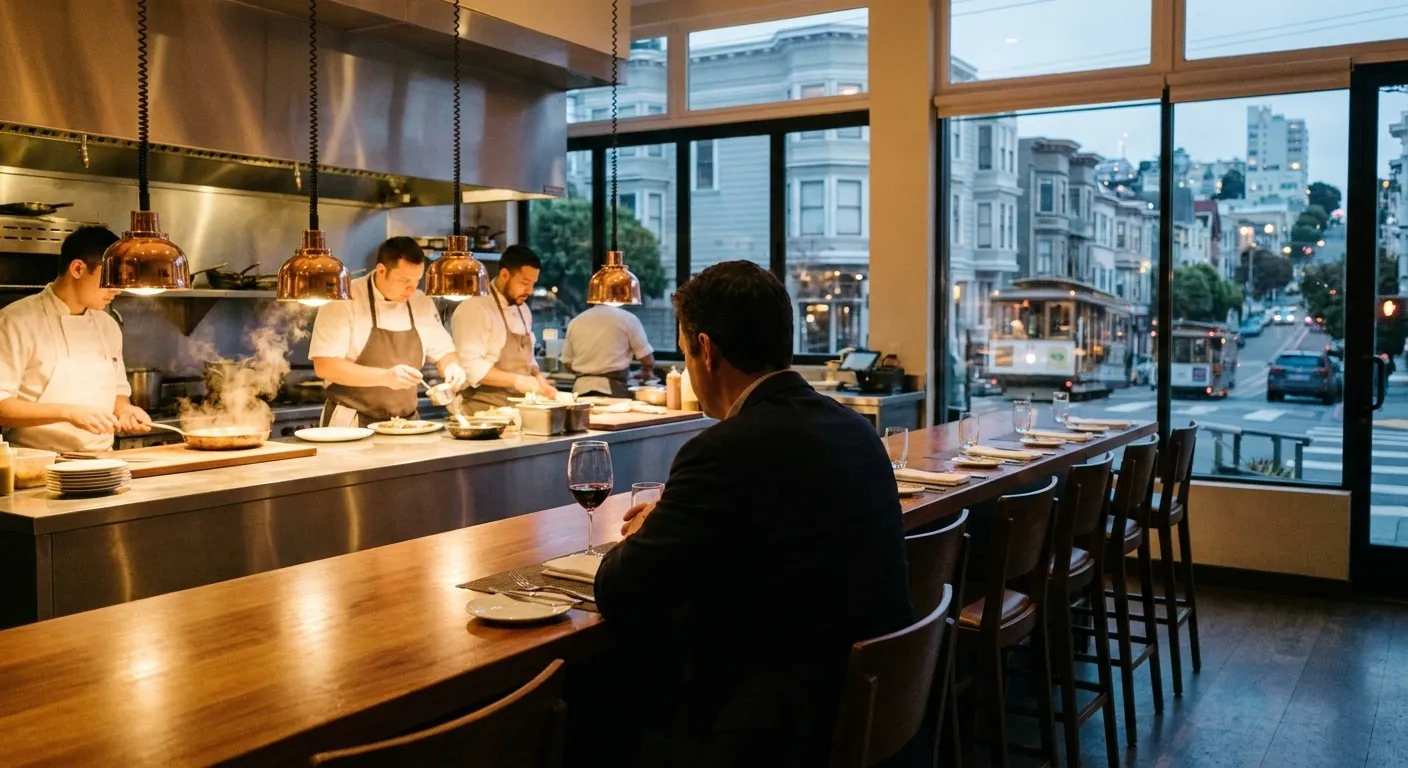
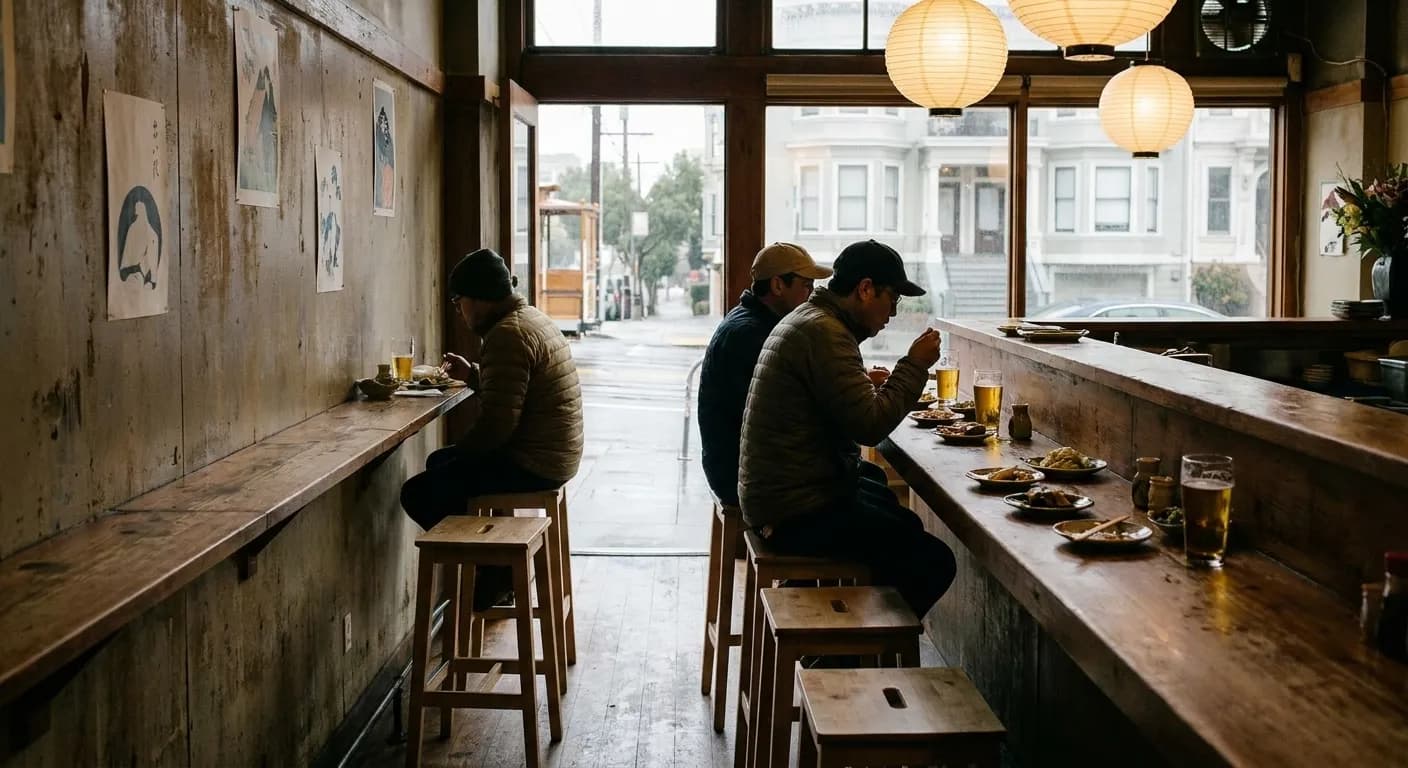
The first is a counter — a real one, facing a kitchen or a bar, with single stools rather than a bench. A counter converts the awkward part of eating alone into the best part, because you are facing something happening rather than an empty chair. The second is a menu that works in small units: small plates, a single bowl, a set lunch. The third, and the most overlooked, is a service culture where a solo diner is normal rather than accommodated. You can read that in about a minute from the door.
San Francisco is unusually well supplied on all three counts, largely because of its Japanese and Chinese dining traditions and a long history of counter-service seafood. The izakayas in particular are built for exactly this — a long counter, a menu of small plates, and no expectation whatsoever that you arrived with anyone.
The formats that work, ranked
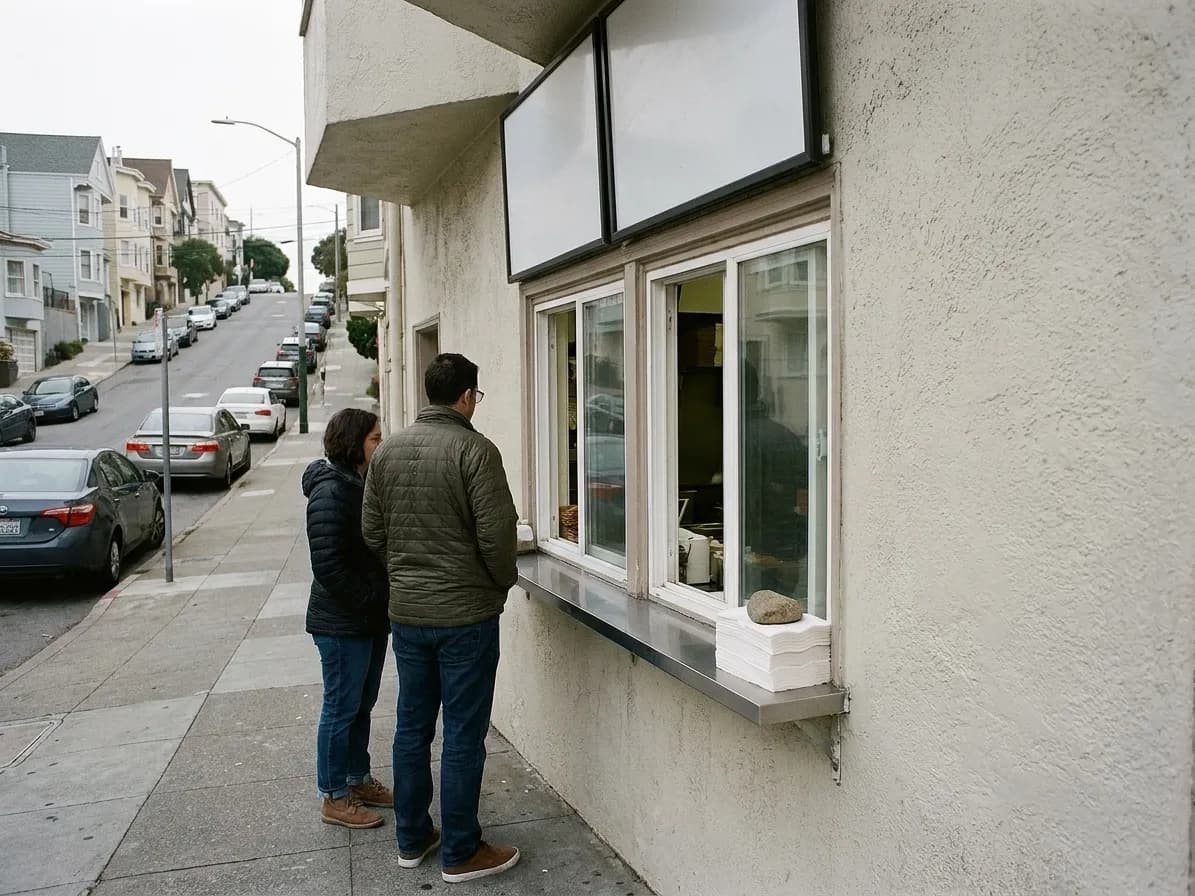
Ramen and noodle rooms are the easiest possible entry point: fast, counter-based, and structurally designed around one person eating one bowl. Sushi counters are the classic answer and remain correct, with the caveat that the good ones are expensive and the cheap ones are usually table service in disguise. Taquerias and counter-service Chinese are excellent and cost nothing socially. Wine bars with a food menu are the best option if you actually want to linger, because the bar is the main seating rather than the overflow. The format that consistently disappoints is the mid-range bistro, where you will be given a two-top by the service station and a slightly sympathetic tone of voice.
Timing is most of the battle
Counter seats in San Francisco are almost universally walk-in, and they are gone by seven-thirty on any night people go out. The two good windows are early — turning up at opening, which in this city is often five-thirty or six — and late, after about nine, when the first sitting has cleared. Both are better experiences than the middle, because the staff have time to talk to you, which is a large part of what makes counter dining worth doing at all. The early slot has a further advantage: it is when kitchens are freshest and least behind.
Lunch, and the case for the set menu
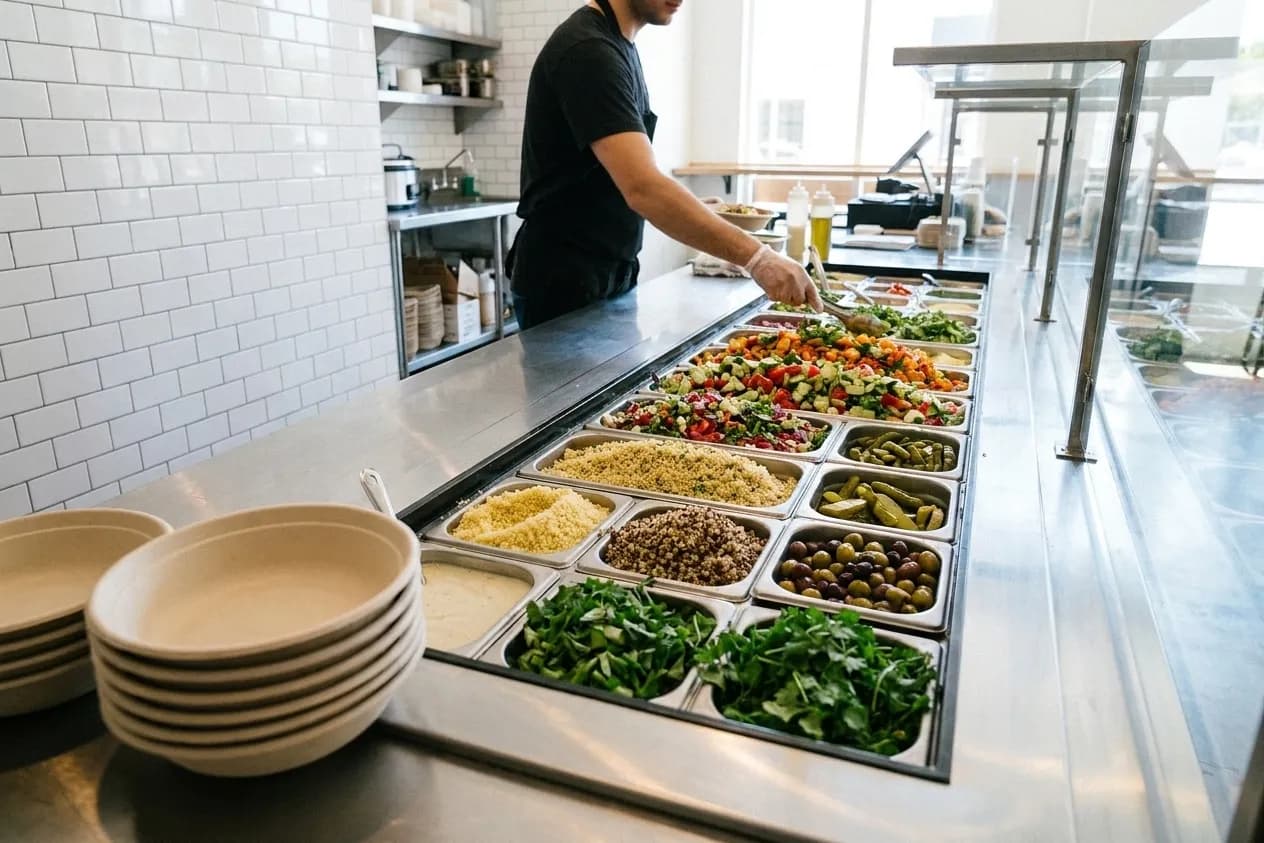
The easiest solo meal in San Francisco is lunch, and it is underrated because people think of eating alone as an evening problem. At midday the entire city eats alone — the rooms are full of single diners, nobody is celebrating anything, and the set lunch is a format explicitly designed for one person with an hour. The Japanese teishoku lunch, the Chinese rice plate and the SoMa office-district prix fixe are all the same idea: a complete meal, one price, twenty minutes, no decisions. If eating alone at dinner feels like a stretch, this is where to start, and it is also where the value is.
There is a second advantage that is specific to this city. Because so much of San Francisco's best food sits in neighbourhoods that empty out at night, lunch is when a lot of genuinely excellent rooms are at their best and least pressured. A counter seat at one in the afternoon in the Financial District or SoMa is trivially easy to get and is the same kitchen you would have queued forty minutes for at eight. The trade-off is that many of those rooms do not open at weekends at all, so this is a weekday strategy.
The things nobody tells you
Bring something to read but do not hide behind it. A book or a newspaper is completely normal at a counter and functions as a signal that you are content, whereas a phone held at reading distance for an hour reads as waiting for someone. Order in two rounds rather than all at once — it paces the meal and it is how counters are designed to work. And do not accept a bad table out of politeness. Asking whether there is a seat at the bar is a completely ordinary request, and in most San Francisco rooms the honest answer from the host is that they would rather give you one anyway, because it frees the four-top.
The larger point is that this city is one of the easier places in the country to eat alone well, and the constraint is almost never social. It is that the twenty seats designed for you fill up early, and the people who get them are the ones who turned up at six. Once you start choosing rooms by their furniture rather than by their reviews, the whole category opens up — and a solo dinner stops being the thing you do when plans fall through and becomes a genuinely good way to eat, with better seats, faster service and more contact with the people cooking than a table of four will ever get you.
Tags: #SanFrancisco #SFEats #SoloDining #EatingAlone #CounterSeating #Izakaya #RamenSF #SFFood #TableForOne #BarDining #BayArea #SFDining #FoodGuide #SoloTravel #EatLikeALocal
All trademarks are the property of their respective owners.
Ask Karpo first
Ask Karpo which restaurants near you in San Francisco have proper counter seating, which of them take walk-ins tonight, and what time you would need to turn up to get a stool.