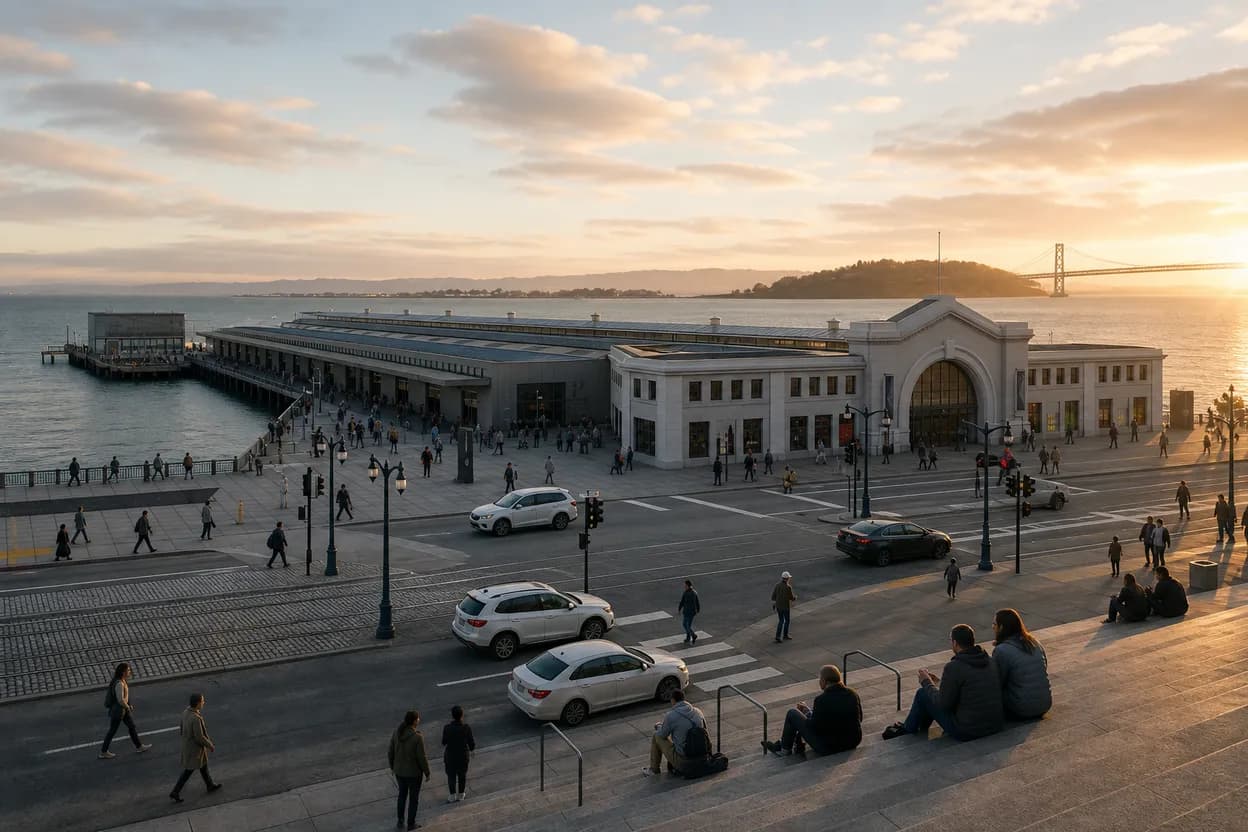
San Francisco will not sit in the path of totality for the August 12, 2026 eclipse, but the city still has a useful way to turn eclipse curiosity into an afternoon plan. The Exploratorium at Pier 15 is livestreaming telescope views from Spain and anchoring the science side, while the Embarcadero gives you an easy, mostly flat waterfront route if the late-day sky cooperates. The better move is not to chase a perfect view. Build a flexible outing: check official eclipse coverage, keep eye safety strict, use transit to avoid parking friction, and let fog decide whether the walk becomes sunset watching or indoor science time.
Want the cleanest Pier 15 plan without rereading weather, transit, and eclipse pages? Text Karpo for an SF-ready route that adapts if fog rolls over the Embarcadero.

Start at Exploratorium Pier 15, Not a Random Rooftop
The Exploratorium is the most reliable anchor for this plan because its official eclipse page lists the August 12, 2026 total solar eclipse livestream at 10:30 am PDT, with telescope coverage from Villalibado, Spain, and a special in-person watch party. That makes Pier 15 useful even if San Francisco skies are unhelpful. It also keeps the outing grounded in educators, exhibits, and public science instead of improvised viewing advice from social feeds.
For Monday, August 10 planning, remember the museum itself is closed on Mondays, then generally open Tuesday through Saturday from 10 am to 5 pm, Sunday from noon to 5 pm, and Thursday evenings from 6 pm to 10 pm for ages 18 and up. Regular hours can change, so treat the live Exploratorium visit page as the deciding source before buying tickets or promising kids a gallery stop.
Use NASA Eye Safety Rules Before Looking Up
The safety rule is simple and non-negotiable: do not look directly at the uneclipsed or partially eclipsed Sun without proper solar filters. NASA says ordinary sunglasses and homemade filters are not safe, and optical devices need appropriate front-mounted solar filters. That matters in San Francisco because casual waterfront plans can turn into quick glances, phone photos, or binocular experiments. Keep solar eclipses educational, not improvised.
If you do not have verified eclipse glasses or a proper solar viewer, use indirect viewing methods or watch the Exploratorium stream. Families should supervise children before anyone looks up, and damaged filters should be discarded. The waterfront is bright, windy, and distracting, so assign one adult to hold the safety line. If the group cannot confirm equipment quality, make the decision easy: no direct solar viewing.
Walk Embarcadero Station to Pier 15 the Low-Friction Way
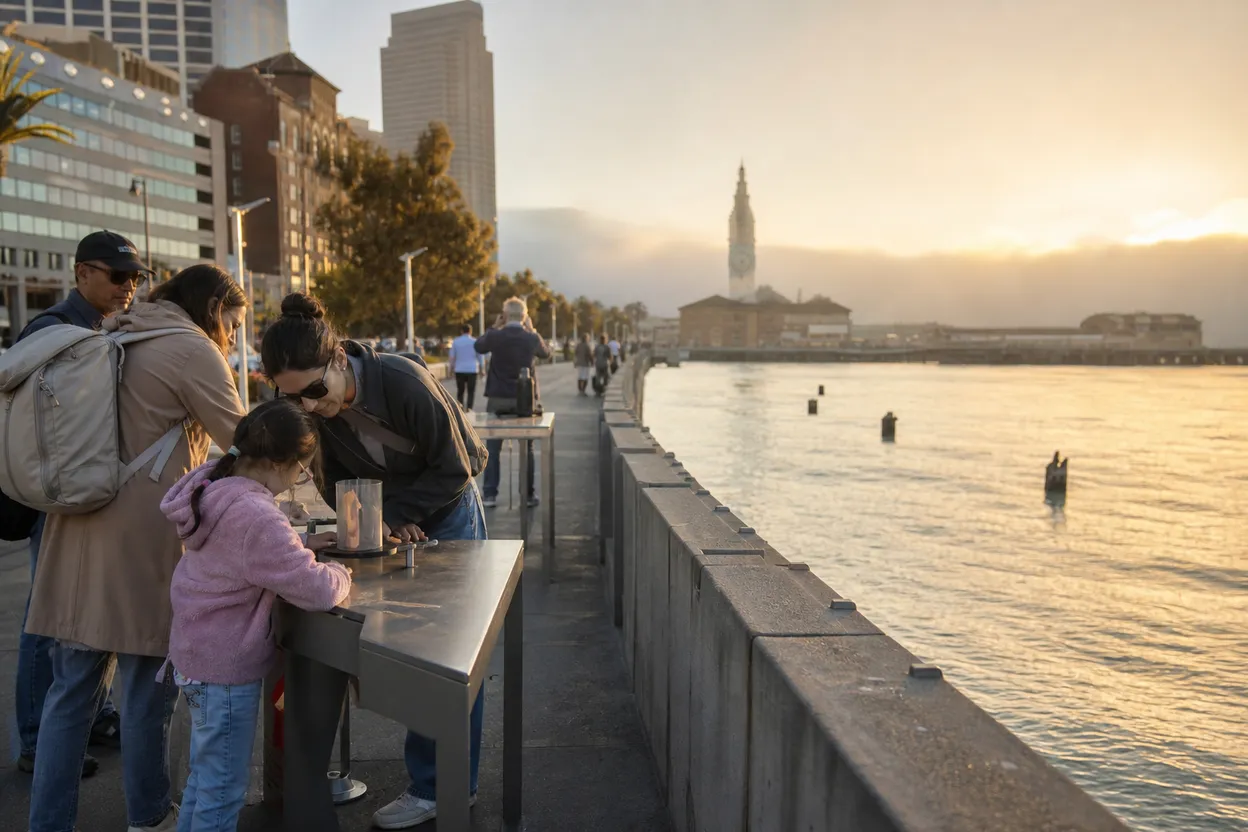
BART’s Embarcadero Station is the cleanest regional starting point because it sits at 298 Market Street, close to the Ferry Building and the waterfront. The official station page also flags a schedule change beginning Monday, August 10, 2026, so use the BART Trip Planner with your actual date before leaving. From the station, the Exploratorium’s own directions estimate a 10 to 15 minute walk to Pier 15.
Muni is even closer if the F Market streetcar is convenient, since the Exploratorium says it stops in front of the museum. Nearby Muni rail and bus options include J, K, L, M, N, T and several downtown buses, but waterfront service can feel slow when events or traffic stack up. For a low-pressure afternoon, arrive early, walk above ground, and keep the Ferry Building as the reset point.
Make the Ferry Building Your Food and Bathroom Buffer
The Ferry Building works as a practical hinge between transit and the museum route. SF Travel lists it at 1 Ferry Building on the Embarcadero, with free admission to the marketplace and merchant hours that vary. That gives groups an easy snack, restroom, and meet-up buffer before walking north to Pier 15. It is especially useful for families, dates, or friends arriving from different BART or ferry directions.
Do not overbuild the stop if your real goal is the eclipse program or sunset walk. The marketplace can be crowded around lunch and farmers market hours, and individual merchants set their own schedules. Use it for a short reset: water, a simple bite, and a weather check outside. If fog is already sitting low over the bay, shift expectations toward indoor science and waterfront atmosphere rather than sky watching.
Let NOAA Fog Logic Shape the Sunset Route
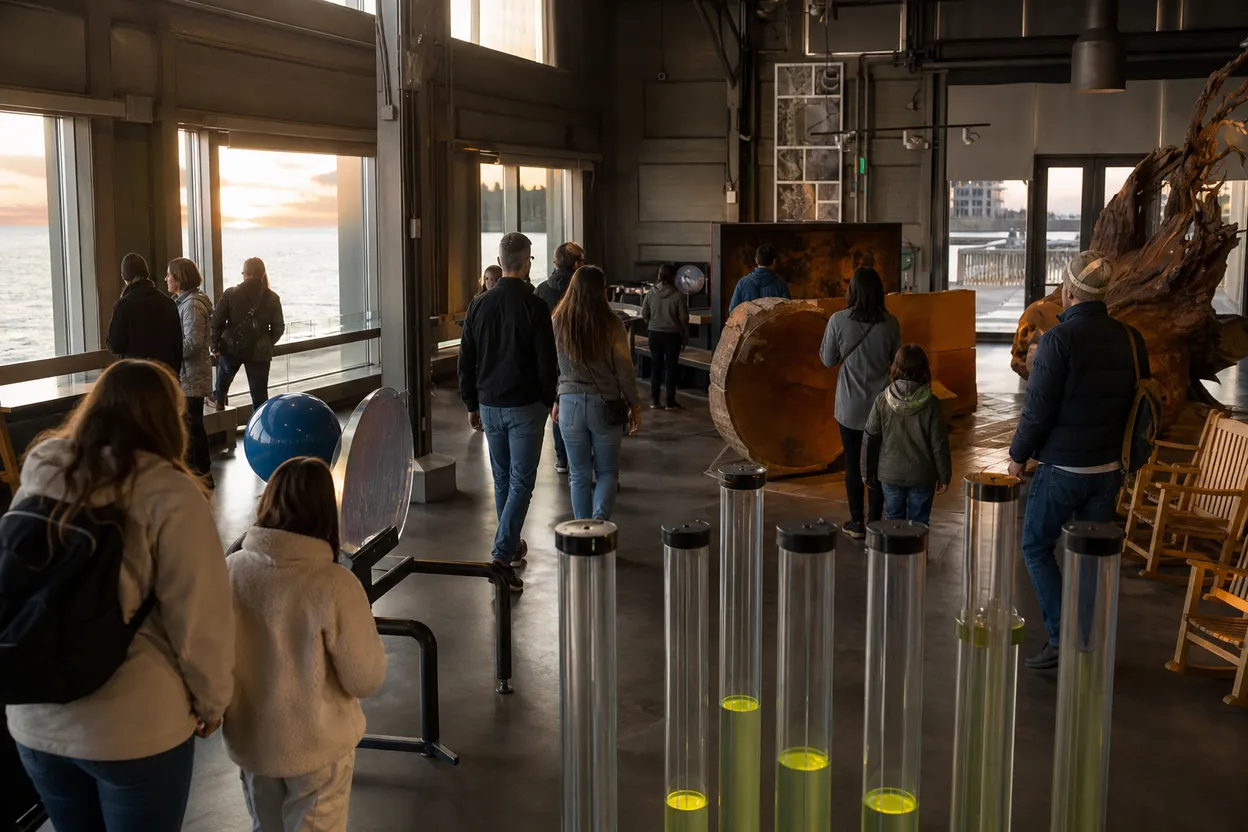
San Francisco’s summer sky can flip the plan quickly. NOAA’s marine layer explainer describes how cool air under a temperature inversion can produce low clouds or fog near the surface, with San Francisco examples shifting from upper-50s fog to much warmer clear air only a few miles away. For this route, that means a clear inland forecast does not guarantee an open Embarcadero sunset.
Check the National Weather Service San Francisco Bay Area page the same day, then decide whether to continue along the waterfront after Pier 15. A clear or partly clear evening favors a slow walk south toward the Ferry Building and Embarcadero Plaza. A thick fog deck favors museum time, coffee, and a shorter shoreline loop. The failure mode is not bad weather; it is pretending SF fog will listen to your itinerary.
Choose Pier 15 Accessibility Over Steep Scenic Detours
This plan is intentionally low difficulty: flat waterfront walking, transit access, public gathering points, and indoor backup. The Exploratorium publishes an accessibility page and offers a museum map plus a sensory map, which is useful for visitors who need quieter spaces or more predictable pacing. If anyone in the group uses mobility aids, prioritize Pier 15, the Ferry Building, and the Embarcadero promenade instead of climbing to hilltop viewpoints.
The tradeoff is that the waterfront is not the most dramatic astronomy viewpoint in the Bay Area. You are choosing ease, restrooms, transit, and science context over darkness or elevation. That is the right choice for a weekday late-afternoon outing, younger kids, mixed-energy friend groups, or visitors without cars. If someone wants a true sky-watching expedition, plan it separately with verified weather, parking, and safe-viewing equipment.
Verify Exploratorium, Weather, and BART Again That Morning
The final action is verification, not guesswork. On the morning you go, open the Exploratorium eclipse page for livestream or watch party updates, the visit page for current hours and ticket rules, the National Weather Service San Francisco Bay Area page for fog, heat, wind, or advisories, and BART for the Embarcadero schedule. If any one of those changes, adjust the plan before people start traveling.
A good San Francisco version stays relaxed: livestream if the sky fails, walk if the bay clears, eat if timing slips, and skip direct solar viewing unless safety is confirmed. Keep the route public, do not enter restricted piers or rooftops, and avoid turning a science outing into a chase. The best result is a curious afternoon that still works when the city gives you fog.
Tags: #AskKarpo #BeforeYouGo #SanFrancisco #SF #Exploratorium #Embarcadero #SolarEclipses #EclipseSafety #FreeThingsToDo #WaterfrontWalk #FerryBuilding #BART #FogAware #BackToSchool
Sources consulted: Source 1: exploratorium.edu · Source 2: exploratorium.edu · Source 3: eclipse2017.nasa.gov · Source 4: weather.gov · Source 5: bart.gov · Source 6: sftravel.com
All trademarks are the property of their respective owners.
Ask Karpo first
Tell Karpo your date, group size, budget, and starting point. We’ll check current access, timing, transit, and the cleanest San Francisco plan for SF science-learning and sunset route around Exploratorium public spaces, Embarcadero waterfront, and fog-aware viewing backups before you head out.