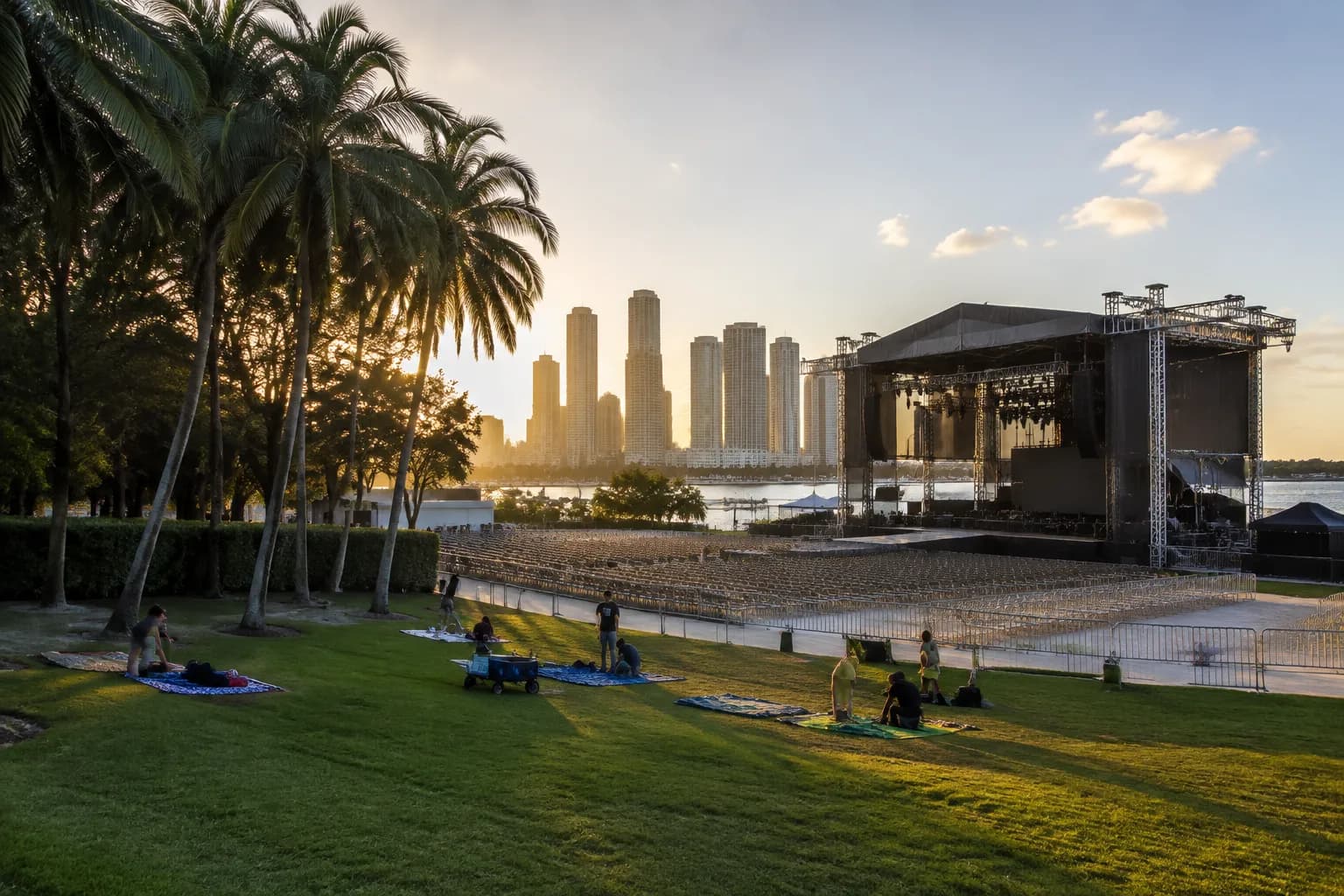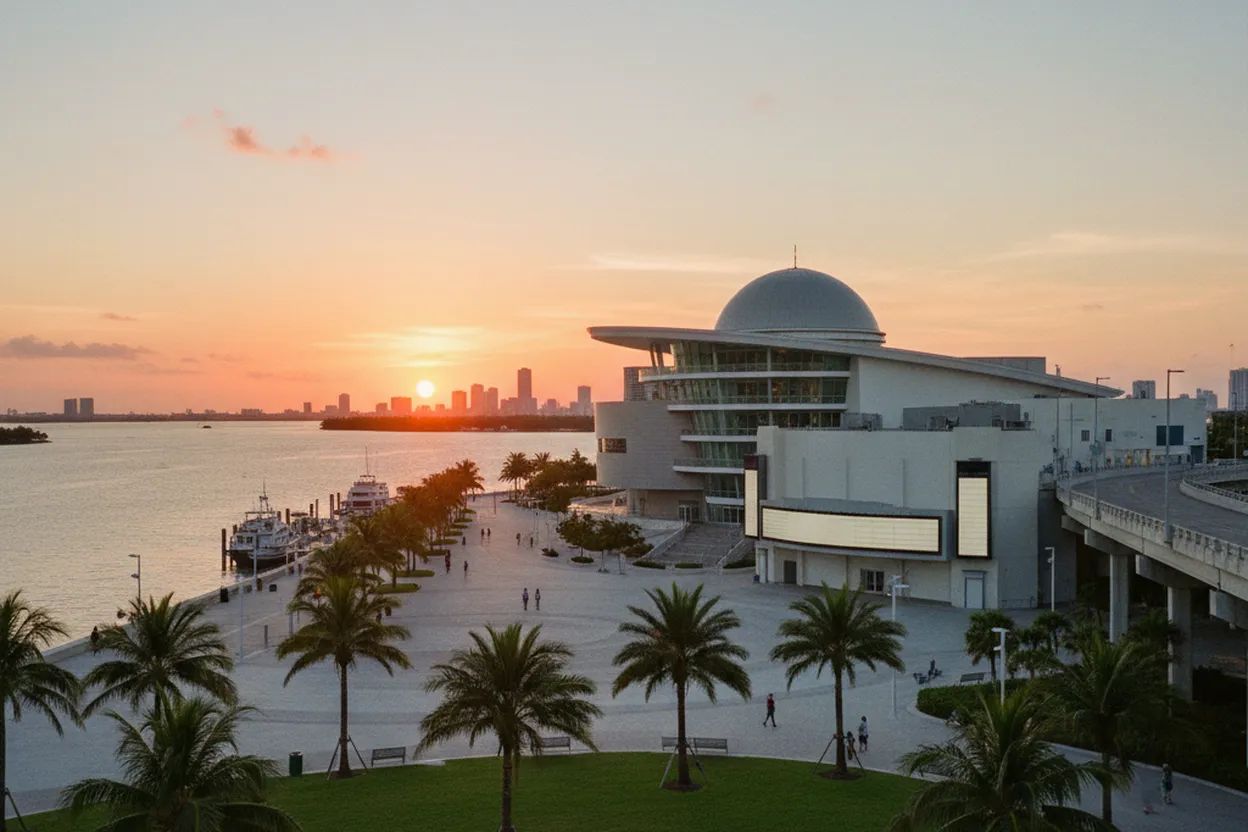
Miami is not on NASA’s listed U.S. partial-eclipse city table for Wednesday, August 12, 2026, and it is far outside the totality path crossing Greenland, Iceland, Spain, and nearby areas. That makes the smart local move less about chasing a view and more about using the surge in solar eclipses interest as a safe, free science walk through Downtown Miami. Start outside Frost Science, use Maurice A. Ferré Park for shade breaks and context, then continue toward Bayfront Park’s open waterfront. The route works for a solo late afternoon, a cautious family plan, or friends who want a low-pressure reason to learn before checking NASA’s livestream.
Want the exact Downtown Miami walking order, shade stops, and source links in one message? Text Karpo before heading out so the plan matches the eclipse, heat, and transit reality.

Frost Science at 1101 Biscayne Boulevard
Frost Science is the right anchor because its official visitor page places the museum at 1101 Biscayne Boulevard, inside Maurice A. Ferré Park, next to PAMM. The museum itself is paid admission, so keep this draft’s free plan outdoors unless you independently decide to buy a ticket. Use the building as a landmark, not a promise of a free eclipse program, because no current public Frost eclipse event should be assumed without checking its calendar or calling the ticket center.
A late-afternoon arrival gives you a practical first decision: stay outside for the waterfront walk, or switch indoors only if heat, rain, or a confirmed program justifies the cost. Frost lists daily 10:00 a.m. to 6:00 p.m. hours, which matters because a 5 p.m. museum entry is a different experience from a free park route. For accessibility questions, Frost publishes an accessibility contact, so verify accommodations directly rather than guessing from the sidewalk.
Maurice A. Ferré Park Shade Break
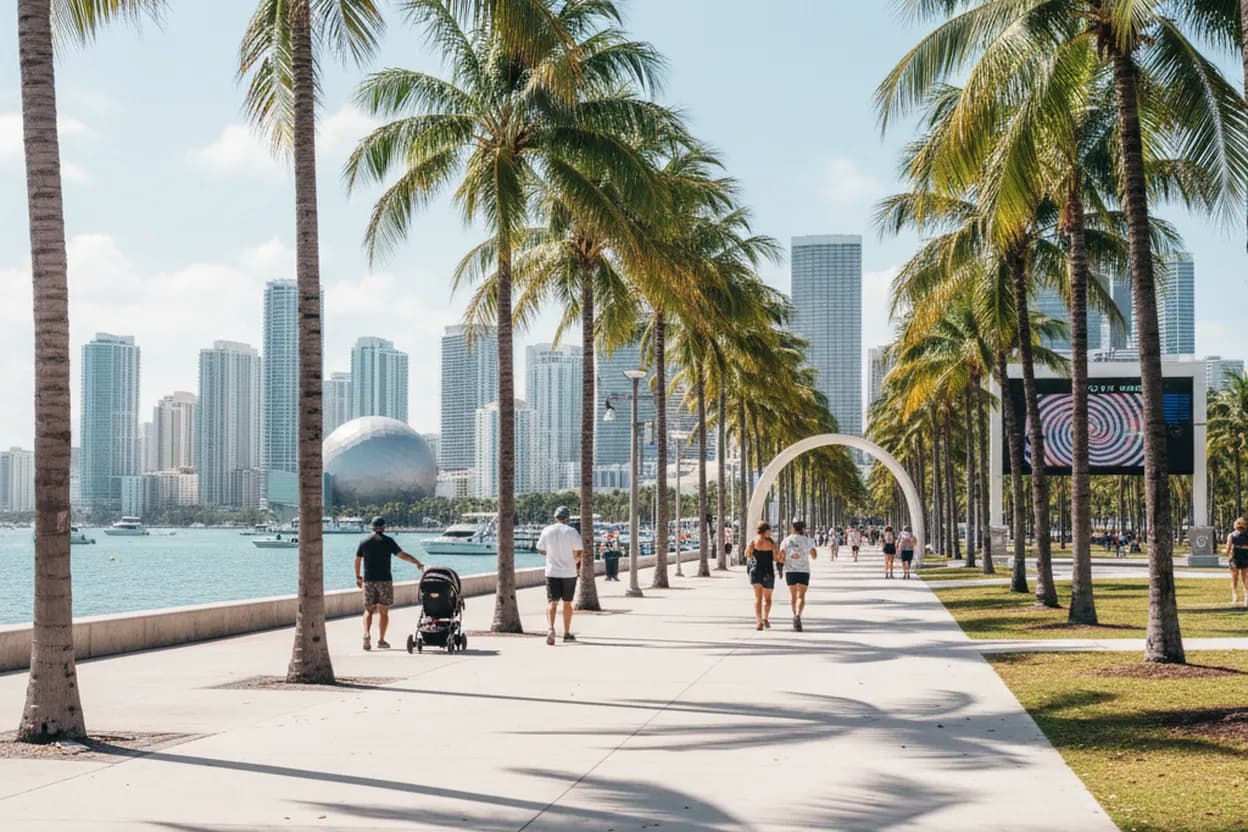
Maurice A. Ferré Park is the low-friction middle section of the walk. Bayfront Park Management Trust lists it at 1075 Biscayne Boulevard and open daily from 7:00 a.m. to 10:00 p.m. Treat it as a place to pause, compare the NASA eclipse map on your phone, and talk through what Miami can and cannot expect. The path is not about staring up; it is about turning a hot clear afternoon into a safe public-learning loop.
The tradeoff is exposure. The park’s open areas make orientation easy, but Miami heat can drain a casual plan quickly, especially with kids or visitors walking from transit. Bring water, choose shaded edges when available, and keep the route short enough that turning back feels normal. If clouds, storms, or discomfort interrupt the walk, the backup is simple: stop chasing the sky, use NASA’s livestream, and keep the outing as a waterfront science conversation.
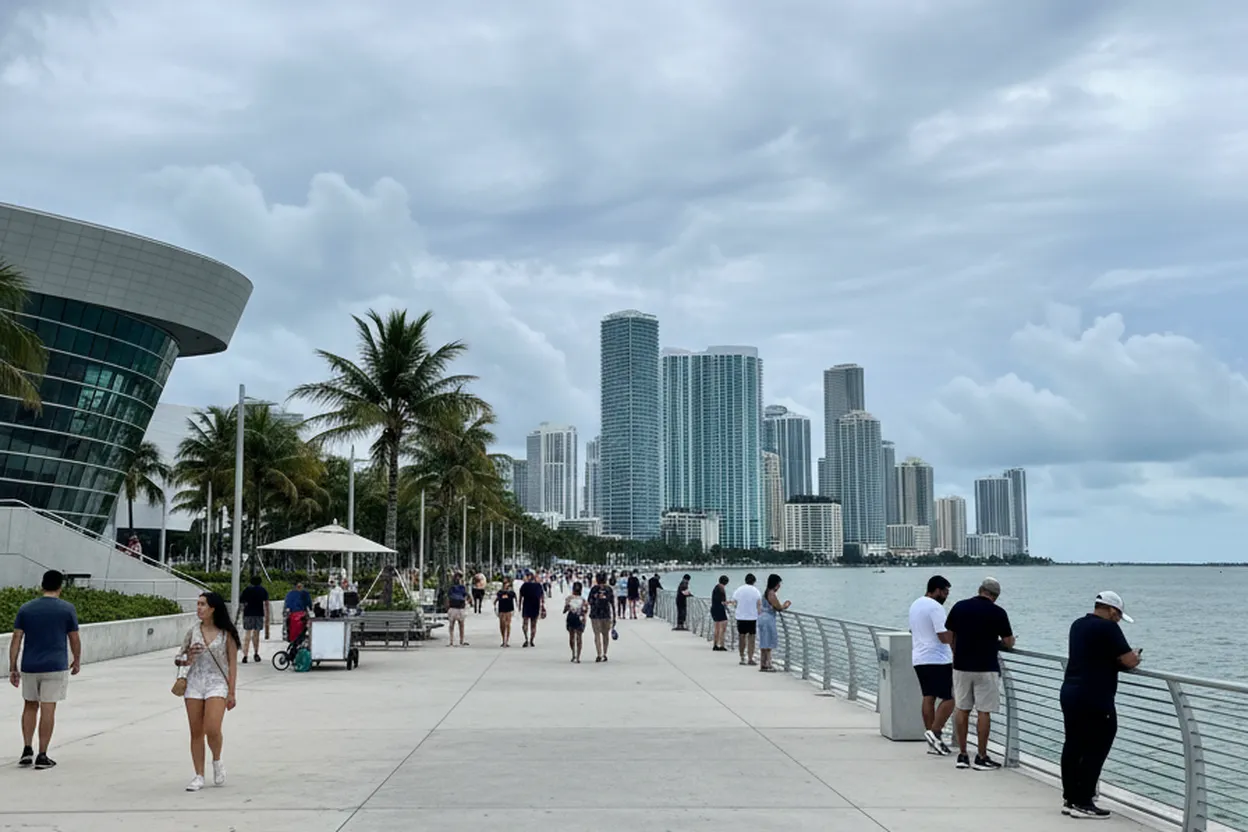
Bayfront Park Waterfront Viewpoints
Bayfront Park adds a second public waterfront setting without requiring tickets. The Trust lists Bayfront Park at 301 Biscayne Boulevard, open daily from 7:00 a.m. to 11:00 p.m., with Biscayne Bay and skyline views. That makes it useful for a post-Frost stroll, especially if friends are joining after work. It is not a substitute for verified eclipse visibility, and an open lawn does not make direct solar viewing safe.
Crowds and events are the main failure mode. Bayfront Park hosts programming, and access around lawns, amphitheater areas, or walkways can change on event days. Check the Trust’s events page before committing to a meeting point, then choose a visible public landmark inside the park rather than a vague “by the water” plan. Families should keep the route close to restrooms and exits; solo walkers should favor well-used paths and daylight pacing.
Museum Park Metromover Station
Miami-Dade’s Metromover Tracker identifies Museum Park station at 1191 Biscayne Boulevard, with places of interest including Pérez Art Museum Miami and Frost Science. Frost also points visitors to the Museum Park station on the Omni Loop, steps from the museum entrance. For a free-leaning plan, this is the cleanest transit choice: ride Metromover to the science-walk anchor, then walk south toward Bayfront Park if weather and energy cooperate.
Do not build the afternoon around exact train arrivals until you check the tracker close to departure. Service alerts, station crowding, and downtown events can change the feel of an otherwise easy route. If Museum Park is inconvenient, Government Center plus Metromover transfer may work for some riders, while drivers should expect downtown parking to be the costlier, slower variable. The best version of this outing avoids turning a free walk into a parking hunt.
NASA Live on Your Phone
NASA says it will stream the August 12, 2026 total solar eclipse live starting at 1:15 p.m. EDT. That timing is useful for Miami because the educational peak can happen on your phone even if the local sky offers little or nothing worth seeing. Queue the livestream before you leave, download the page if your signal is unreliable, and use the route as a place-based viewing party for official context rather than local spectacle.
This also protects the plan from weather. A clear hot afternoon can still mean glare, fatigue, or poor viewing geometry; a cloudy one can erase the sky entirely. The phone stream gives solo visitors, families, and friend groups a shared reference point without improvising unsafe methods. Keep volume modest in public spaces, use captions if available, and make the main activity comparing the official map, the Miami skyline, and what totality means elsewhere.
ISO 12312-2 Glasses or Pinhole Projection
NASA and the American Astronomical Society are aligned on the central safety rule: ordinary sunglasses are not eclipse glasses, and direct solar viewing requires special-purpose solar filters that comply with ISO 12312-2. Outside totality, and during any partial eclipse, there is no safe naked-eye moment. Miami is not in totality for this event, so the conservative rule is easy: do not look at the Sun without proper certified protection.
If you do not have verified glasses, make the walk indirect-only. AAS describes pinhole projection, crossed-finger shadows, leafy-tree shadows, and objects with small holes as safe ways to see projected solar shapes, while warning not to look through the holes at the Sun. Inspect any old viewers for scratches, tears, punctures, or loose filters. Parents should supervise children continuously, because the dangerous mistake is brief, impulsive looking.
Check NASA, Frost Science, Bayfront Trust, and Miami-Dade Transit
Make the final verification action part of the outing. On Tuesday, August 11, 2026, confirm NASA’s eclipse page and live link, Frost Science’s visitor page or calendar, Bayfront Park Management Trust’s park hours and events, and Miami-Dade’s Metromover tracker. If any source conflicts with a social post, use the official page first. Do not rely on screenshots, reposted schedules, or vague claims about Miami viewing percentages.
The best audience fit is curious and cautious: solo walkers who want structure, families who need safe rules, and friends who want a free Downtown plan with an easy exit. Keep the whole route flexible: Museum Park station to Frost, pause in Maurice A. Ferré Park, continue to Bayfront Park only if heat and access cooperate. If one fact cannot be confirmed, skip that stop or activity and keep the learning portion on official sources.
Tags: #Miami #SolarEclipses #FrostScience #BayfrontPark #MuseumPark #DowntownMiami #FreeThingsToDo #ScienceWalk #SkyGuide #Metromover #FamilyFriendly #AskKarpo #BeforeYouGo #EclipseSafety
Sources consulted: Source 1: science.nasa.gov · Source 2: frostscience.org · Source 3: bayfrontparkmiami.com · Source 4: miamidade.gov · Source 5: eclipse.aas.org
All trademarks are the property of their respective owners.
Ask Karpo first
Tell Karpo your date, group size, budget, and starting point. We’ll check current access, timing, transit, and the cleanest Miami plan for Frost Science, Bayfront Park, and public waterfront viewpoints before you head out.