For a US Open day session, the safest planning move is to treat sunscreen as a schedule item, not something you remember only when your seat gets hot. Apply it before you leave for the grounds, pack a venue-compliant backup if current rules allow it, and build reapplication around natural breaks: after security, before settling into a long match, after heavy sweating, and whenever you towel off or change layers. As of July 23, 2026, the official 2026 US Open calendar runs August 23 through September 13, with singles main-draw play beginning August 30, but daily schedules, gate times, venue rules, weather, transit conditions, and services can change. Before you travel, recheck the US Open event schedule, A-Z guide, transportation directions, prohibited-items page, and the National Weather Service New York office forecast.
Text Karpo to set a sunscreen and shade-break rhythm for your longest US Open day.

Anchor Sunscreen to the Parts of the Day You Can Control
The difficult part of a day session is not simply that it happens in daylight. It is that the day can stretch: getting to the site, clearing entry, walking between courts, waiting in exposed areas, sitting through a long match, and then deciding whether to stay, eat, shop, or move again. Match length and court access are not things a fan can control. Sunscreen timing is.
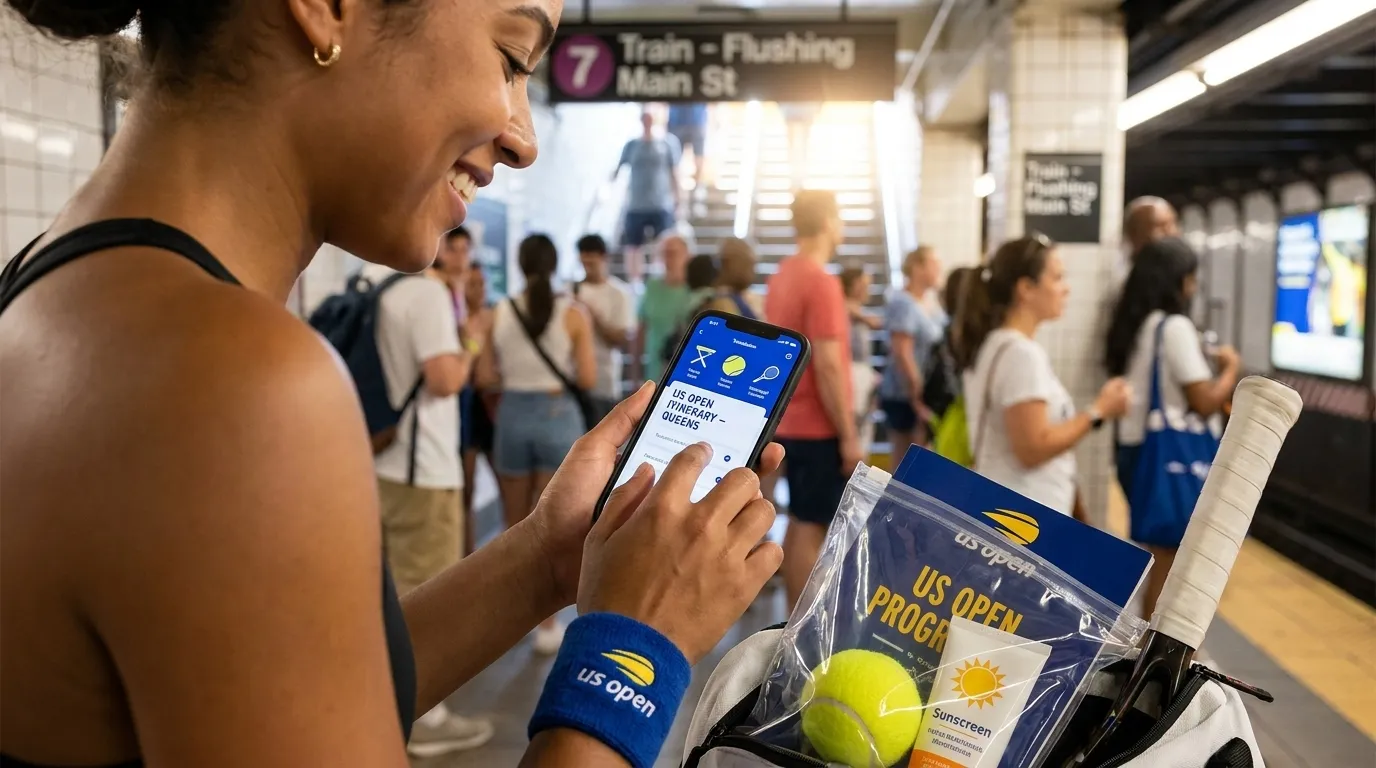
Start with a full application before you leave your hotel, home, or transit starting point. That gives you a buffer if the trip to Queens takes longer than expected or if entry is busy. If you prefer to apply after arriving, still consider putting on an initial layer before travel, then topping up once you are inside and settled. The goal is not perfection; it is reducing the chance that your first real sunscreen moment comes after an hour of unplanned sun.
Use the product label as your authority for how much to apply, how soon before sun exposure to apply it, and how often to reapply. Many labels give specific reapplication guidance, especially around sweating, swimming, or toweling. A tennis day session is sweat-prone even when you are only watching, because walking, stairs, queues, and heat reflected from hard surfaces can add up.
Check the Rules Before You Pack the Bottle
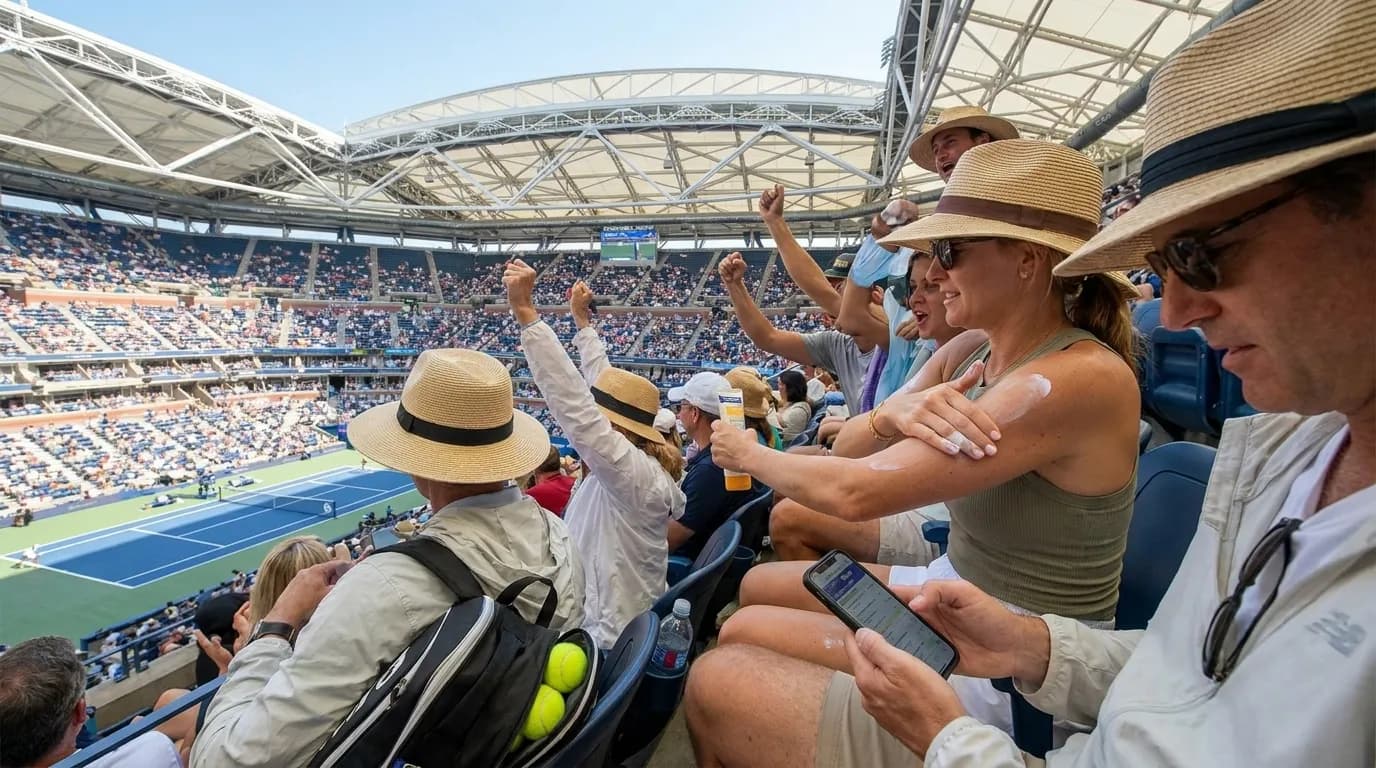
Do not assume that last year’s packing routine will work this year. The US Open publishes visitor information through its A-Z guide and prohibited-items page, and those are the pages to check close to your visit. Look specifically for current guidance on bags, containers, aerosols, liquids, umbrellas, cooling items, and anything else you plan to bring for sun management. The practical question is not whether sunscreen is a good idea; it is whether the exact format you plan to carry fits current venue rules.
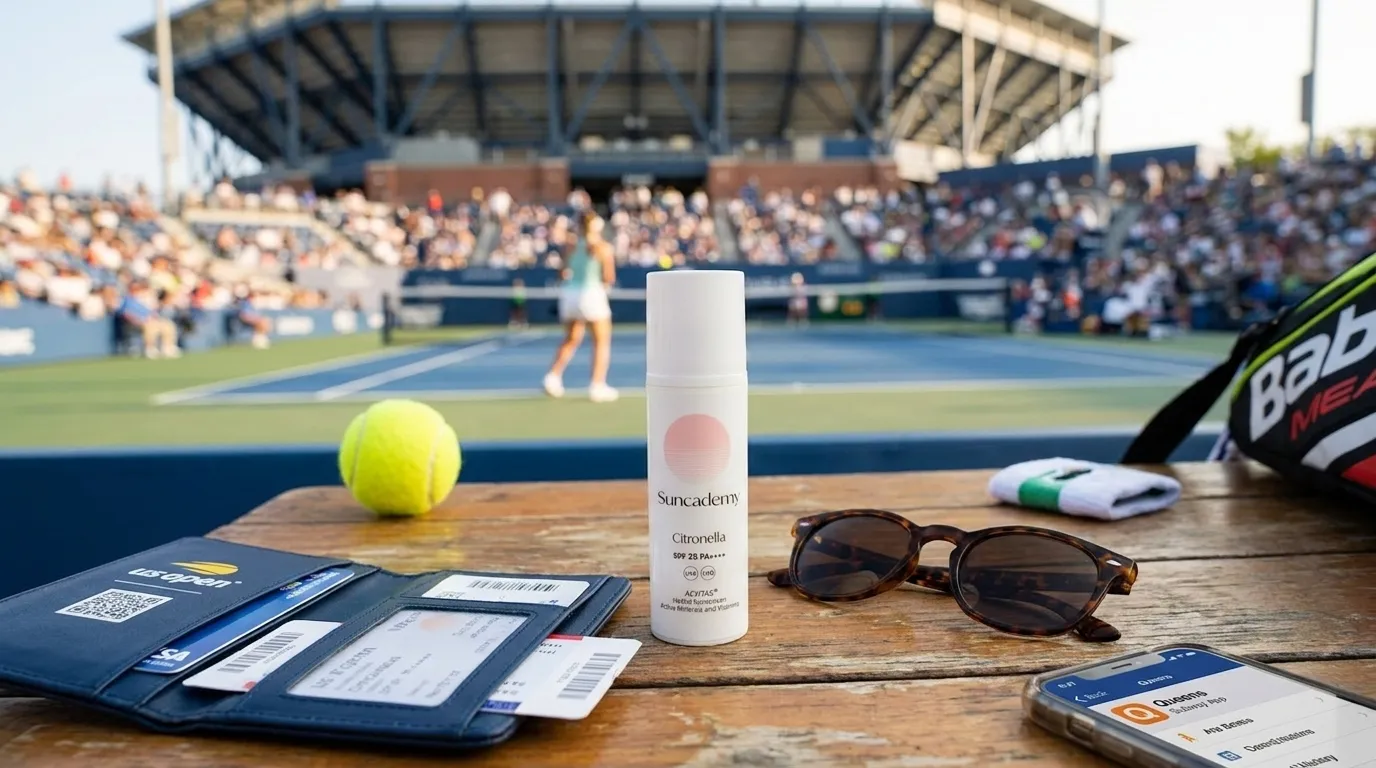
If you are deciding between products, choose the option that is easiest to apply neatly in a crowd and least likely to cause a security or spill problem. A small lotion, stick, or other compact format may be simpler than a bulky container, but the official prohibited-items page should be your final check. Also consider how you will carry it once inside. Sunscreen buried at the bottom of a tightly packed bag is sunscreen you may not use when the set runs long.
Use Changeovers and Set Breaks Without Blocking Anyone’s View
The best reapplication moments are the ones that do not compete with points, stair traffic, or the view of the court. For seated matches, think in terms of changeovers, set breaks, and longer pauses when people around you are already shifting. Apply carefully and avoid sprays or sweeping motions that could bother nearby spectators. Even with a non-spray product, be considerate: elbows, caps, sunglasses, and bags all take space in a tight row.
If you need a more thorough reapplication, step away rather than trying to do everything in your seat. That is especially true for shoulders, legs, ears, and the back of the neck, which are easy to miss and awkward to reach. A quick reset in a concourse or other appropriate area can be more effective than a rushed attempt while balancing food, phone, hat, and ticket.
Sweat changes the timing. A fan who walks briskly from transit, climbs stairs, sits in direct sun, and repeatedly wipes their face should not treat sunscreen as a once-a-day task. Follow the label, but make your own observation part of the system: if you have been sweating heavily, toweling off, or removing layers, reassess rather than waiting for the clock alone.
Make Shade Breaks Part of the Match Strategy
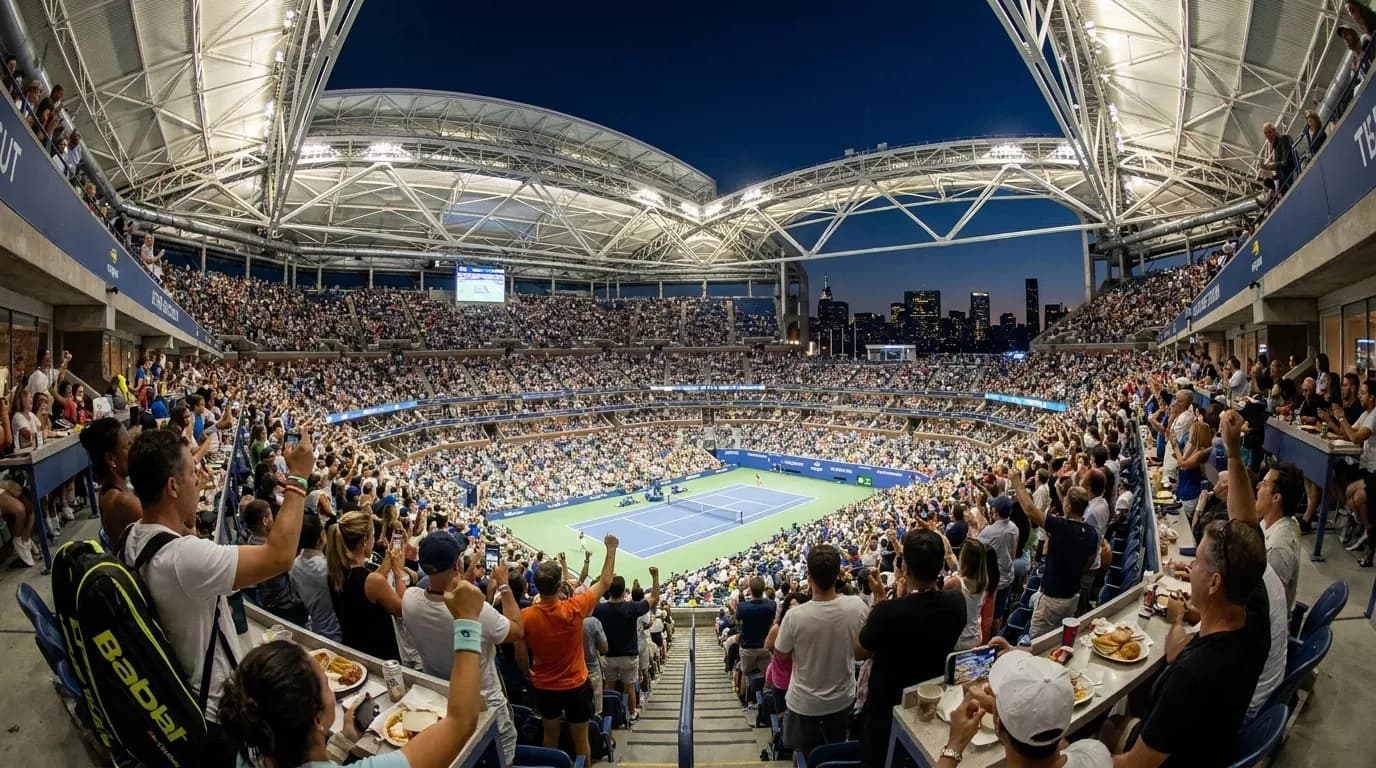
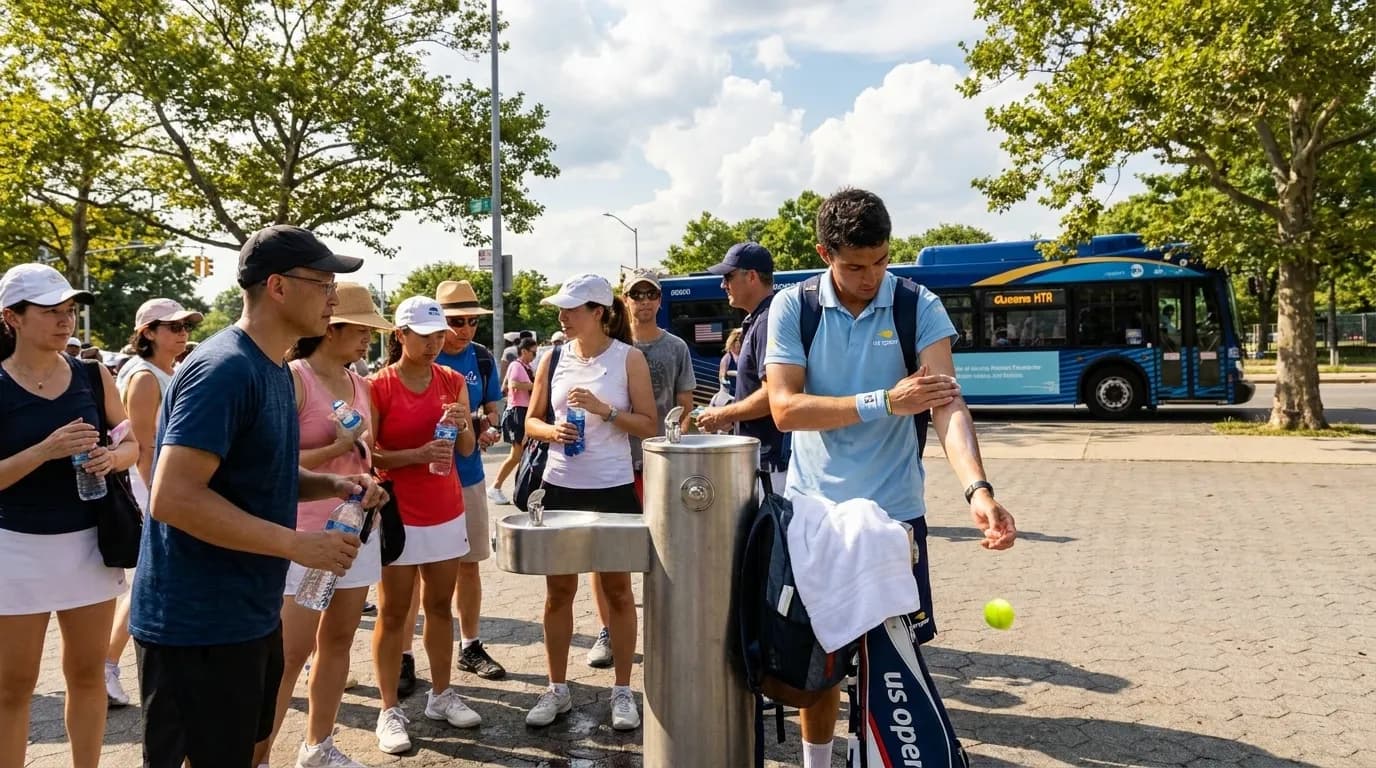
Shade at a tennis venue is not a single fixed amenity. It can depend on the court, seat location, time of day, crowd movement, and where you are walking between matches. Instead of planning around a promise of shade, plan around shade opportunities. When you first arrive, notice where covered or less exposed areas appear to be available to ticketed guests under current operations. Then use those areas deliberately between matches or during meal and hydration breaks.
This matters because sunscreen is only one part of sun management. A hat, sunglasses, breathable clothing, and time out of direct sun can reduce the burden on reapplication. None of these guarantees comfort, and none replaces following sunscreen directions, but together they make the day less fragile. If someone in your group is prone to heat discomfort, build shorter viewing blocks and more frequent pauses into the day rather than waiting for them to feel overwhelmed.
For reserved seats, check your ticket details and current venue information, but avoid making assumptions about sun exposure based only on a seating chart. For general movement around the grounds, keep your route flexible. A match you planned to sample for ten minutes may become a long stay, while a court you hoped to visit may be crowded. Sun planning should bend with the day.
Read the Forecast Like a Fan, Not a Meteorologist
The National Weather Service New York office is a useful primary stop for local forecast and alert monitoring before a Queens day session. The point is not to predict a specific storm or assume a disruption. It is to understand the range of conditions you may need to handle: heat, humidity, sun, rain chances, or changing wind. Recheck close to travel, because summer weather guidance can evolve.
A warm but cloudy forecast can still call for sunscreen, and a pleasant morning can still become sticky after hours of walking and sitting. If alerts are posted, read them directly rather than relying on a screenshot or a casual summary. Then make practical adjustments: leave more transit time, bring permitted sun or rain gear, decide where your group will regroup if plans shift, and avoid packing anything that current venue rules do not allow.
Flexible planning is especially helpful for visitors with tight itineraries. If you are pairing the US Open with flights, trains, hotels, or dinner plans, keep backup options realistic. That is practical preparation, not a promise of legal rights, refunds, or schedule outcomes. For official tournament timing, use the US Open schedule. For local weather, use the National Weather Service. For your personal threshold, listen to your body and your group.
Build a Reapplication Rhythm for a Long Grounds Day
A useful rhythm is to connect sunscreen to transitions. Apply before departure. Reassess after arrival and entry. Reapply before committing to a long exposed match if the label timing or your sweat level calls for it. Check again after lunch, after a long walk, after sitting in strong sun, or after toweling your face and neck. This approach works better than setting one rigid alarm and ignoring what the day is doing.
Groups should also assign responsibility gently. One person may be excellent at tracking match courts but terrible at remembering sunscreen. Another may notice when everyone has been standing in sun for too long. A simple “shade and sunscreen check after this set” can keep the day comfortable without turning it into a lecture. For children, older adults, or anyone with skin sensitivities or medical concerns, follow professional guidance specific to that person.
Do not forget the small exposed areas. Ears, scalp parts, hands, knees, ankles, and the back of the neck are easy to miss during a rushed application. Clothing can shift as you sit, stand, and carry bags. If you change hats or remove a light layer, that may create newly exposed skin. The most practical sunscreen plan is attentive rather than dramatic.
Practical Notes
- Before travel, recheck the official US Open event schedule for the date you plan to attend, especially because the 2026 calendar runs August 23 through September 13 and singles main-draw play begins August 30.
- Review the US Open A-Z guide and prohibited-items page close to your visit so your sunscreen format, bag, bottle, umbrella, clothing layers, and cooling items fit current venue rules.
- Apply sunscreen before leaving, then use the product label and your actual sweat level to decide when to reapply during the day.
- Choose reapplication moments that are courteous to nearby fans: changeovers, set breaks, concourse pauses, or other natural transitions.
- Plan shade breaks instead of hoping shade appears exactly when you need it, and keep your court-hopping expectations flexible.
- Monitor the National Weather Service New York office forecast and alerts for local conditions, without assuming any specific weather event will affect the tournament.
- Set a simple group rule: after a long walk, a long set, lunch, or heavy sweating, pause for water, shade, and sunscreen before chasing the next match.
Tags: #USOpen2026 #Tennis #NewYork #Queens #FlushingMeadows #KarpoFinds #Karpo #USOpenSunCare #DaySessionReady #TennisHeatTips
Sources consulted: usopen.org — Official reference · usopen.org — Official reference · usopen.org — Official reference · usopen.org — Official reference · weather.gov — Official reference
All trademarks are the property of their respective owners.
Ask Karpo first
Ask Karpo to pair your session length with reminders for hydration, reapplication, and cooler pauses.