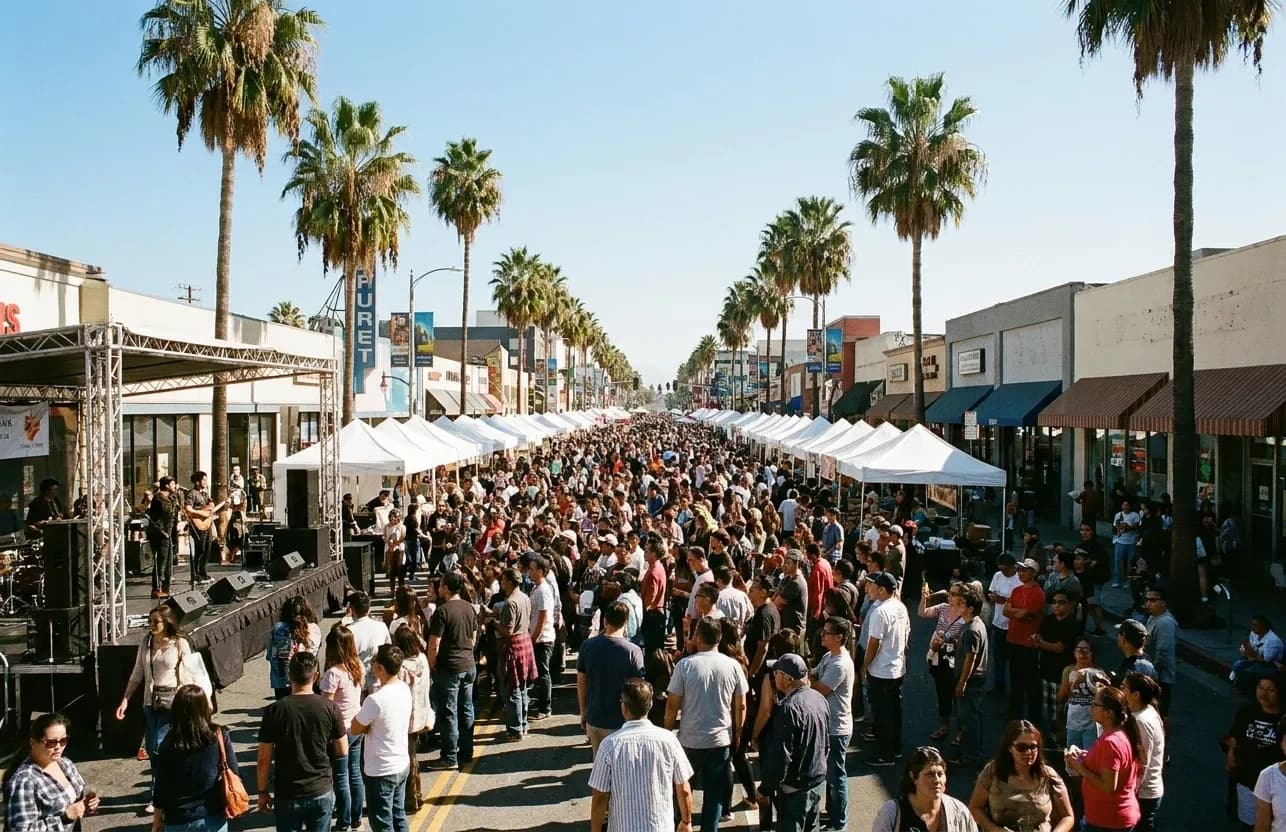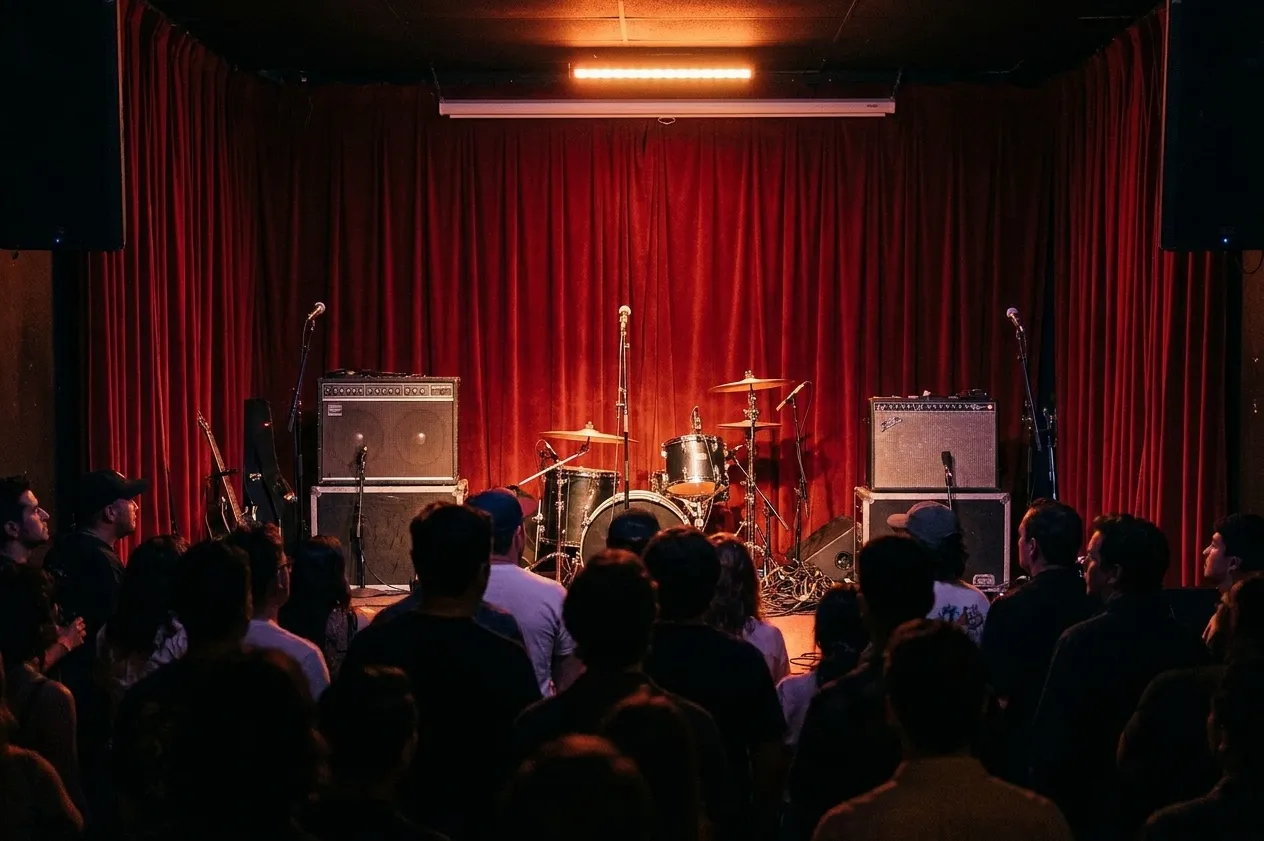
Koreatown is not on most people's list of Los Angeles music neighbourhoods, which says more about the list than the neighbourhood. It contains some of the most extraordinary historic theatres in the city, a set of small bars and basements that book genuinely good bands, and a density of late-night infrastructure that makes it one of the better places in Los Angeles to see something small and then stay out.
The good nights in this neighbourhood are announced late and sell out quietly. Tell Karpo what you like listening to and it will find who is playing a small room near you this week.
The historic theatres, which are the neighbourhood's secret
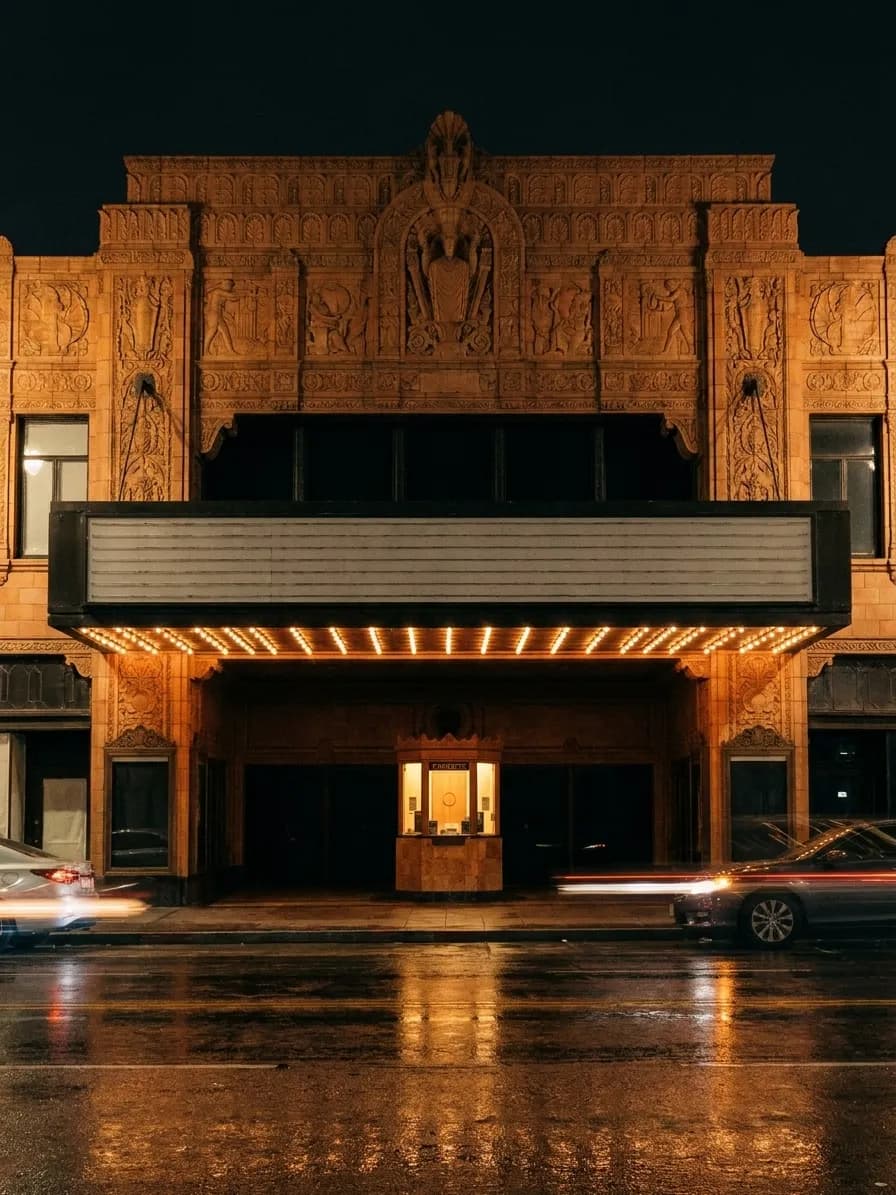
The stretch of Wilshire and the boulevards around it was built out in the 1920s as one of the city's grand commercial corridors, and several of the theatres and ballrooms from that period are still standing and still in use. They were built for orchestras and vaudeville, which means the acoustics and sightlines were designed for live sound rather than retrofitted for it.
Seeing a band in one of these rooms is a different experience from seeing them in a purpose-built modern venue, and it is frequently cheaper. The buildings themselves are worth arriving early for — plaster detail, painted ceilings, lobbies on a scale nobody builds now — and several are protected landmarks that are otherwise closed to the public.
The small rooms: bars, basements and the second floor
Below the theatre tier, Koreatown's live music happens in places that do not look like venues. Bars with a stage in the back, karaoke complexes that book bands on certain nights, rooms on the second floor of a mini-mall, and event spaces that run irregular programming. This is the part of the neighbourhood's scene that requires local knowledge, because almost none of it is on the mainstream listings.
What that produces is a circuit with unusually low barriers: covers that cost less than a cocktail, no advance ticketing at many of them, and bills of three or four acts. It is also where a lot of the city's Korean American and Latino music scenes overlap with the wider indie circuit, which makes for lineups you would not see anywhere else.
How to find out what is on
The honest answer is that you follow accounts rather than search listings. Promoters and venues in this part of town announce on social feeds a week or two out, sometimes days. The city's alternative press and public radio listings catch the theatre-scale shows and miss most of the small ones. Following four or five promoters who book in the neighbourhood is the only reliable method.
The second route is simply to pick a venue and trust its booking. In a scene this small, the rooms have distinct personalities, and turning up to a good one for whatever is on that night has a high hit rate — considerably higher than choosing by artist name in a city where every touring act plays somewhere.
Practicalities specific to this neighbourhood
Parking is the main obstacle. Koreatown is one of the densest parts of Los Angeles and street parking near a show is close to hopeless on a weekend; most of the commercial buildings have a lot underneath with an attendant, and paying for one is the correct decision rather than a defeat. Better still, the neighbourhood sits on two rail lines, which for an evening involving drinks is the sensible option.
Check whether a room is all-ages or over-21, which varies by night in several of these venues. Check the actual set time rather than the door time, because in this part of town headliners often go on well after eleven. And take cash for the smaller rooms, where the door is sometimes not a card operation.
What to do with the rest of the night
This is where Koreatown beats every other small-venue neighbourhood in the city. The show ends at midnight and the neighbourhood is at its peak — barbecue, stews, fried chicken, noodle counters and bars all running for hours yet. In most of Los Angeles the end of a gig is the end of the night; here it is the middle of it.
The move is to park once, see the show, and then walk. Almost everything worth doing afterwards is within a few blocks, and the neighbourhood's late hours mean there is no rush at all about deciding what that is.
What the neighbourhood sounds like beyond the clubs
Koreatown's music life extends past booked shows. Noraebang — private karaoke rooms — are a genuine institution here rather than a novelty, open until very late, priced by the room and the hour, and the natural continuation of an evening after a gig. Several of the larger complexes run until three or four in the morning.
There are also the bars with live DJs, the occasional traditional Korean music performance at the neighbourhood's cultural centres, and the church and community choirs that perform publicly through the year. None of it appears on a music listing, and all of it is part of why this neighbourhood is more interesting after dark than its reputation suggests.
Tags: #LosAngeles #Koreatown #LiveMusic #SmallVenues #Concerts #LAMusic #ThingsToDoLA #LANightOut #HistoricTheatres #Gigs #KtownLA #LateNightLA #IndieMusic #LAEvents
Sources consulted: laist.com · la.eater.com · laconservancy.org
Please drink responsibly. Must be of legal drinking age.
All trademarks are the property of their respective owners.
Ask Karpo first
Small rooms in this neighbourhood announce late, change lineups and sometimes move the show entirely. Ask Karpo who is playing near you this week and what the door actually costs before you head out.