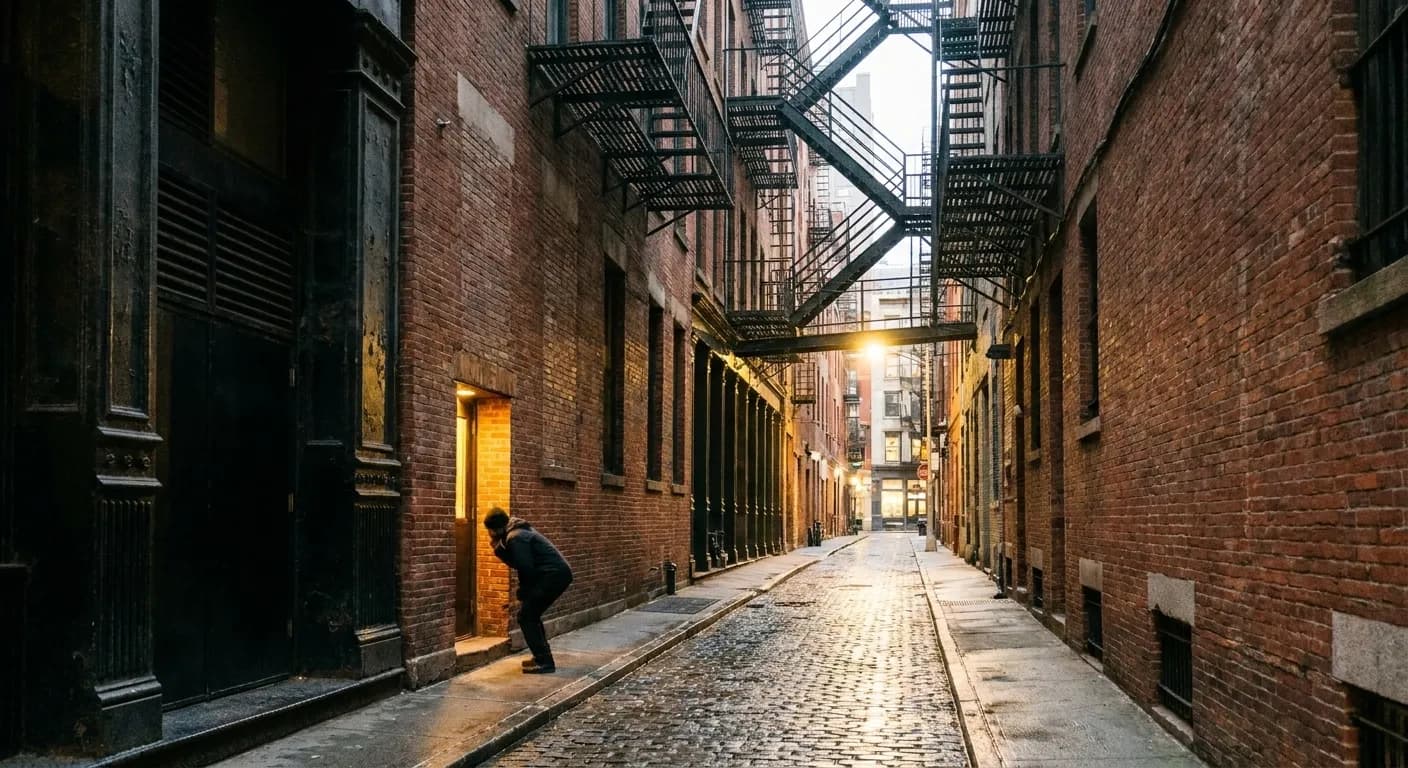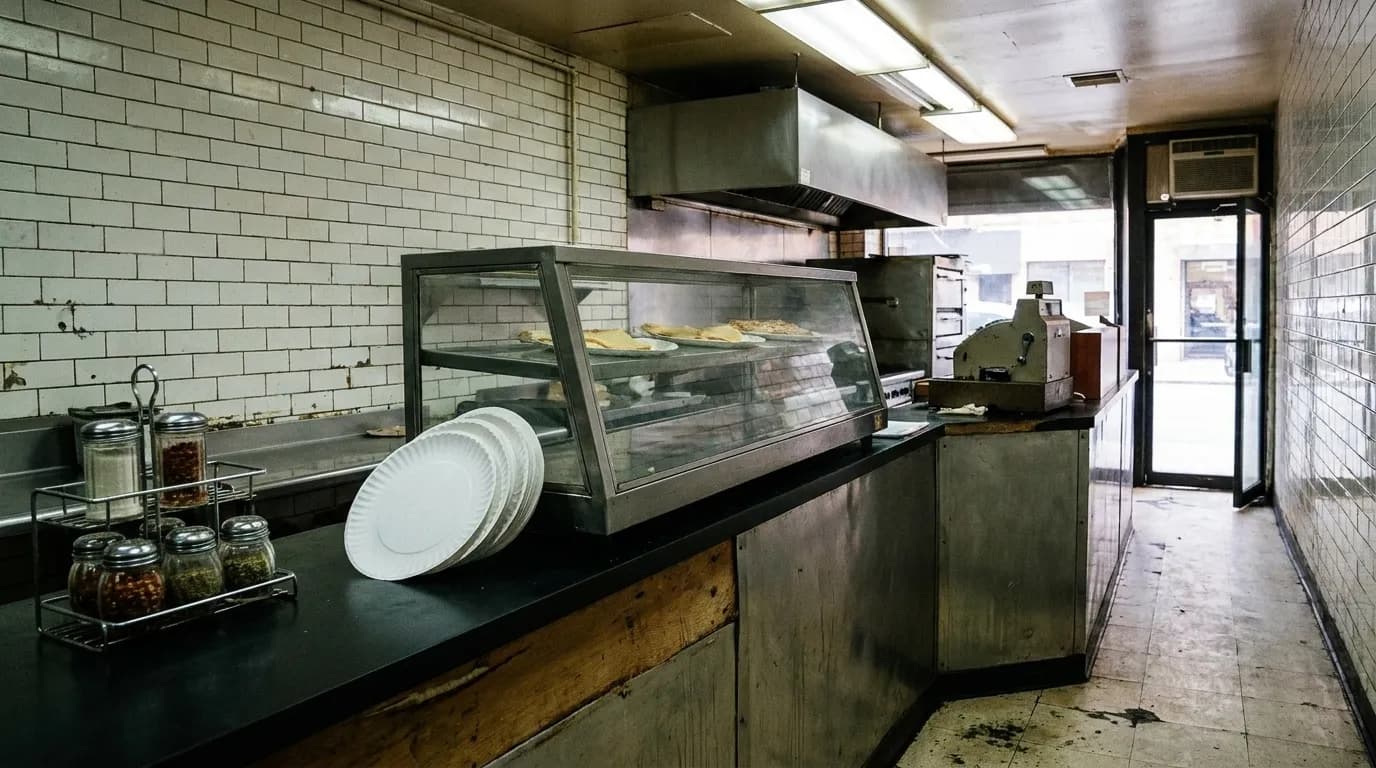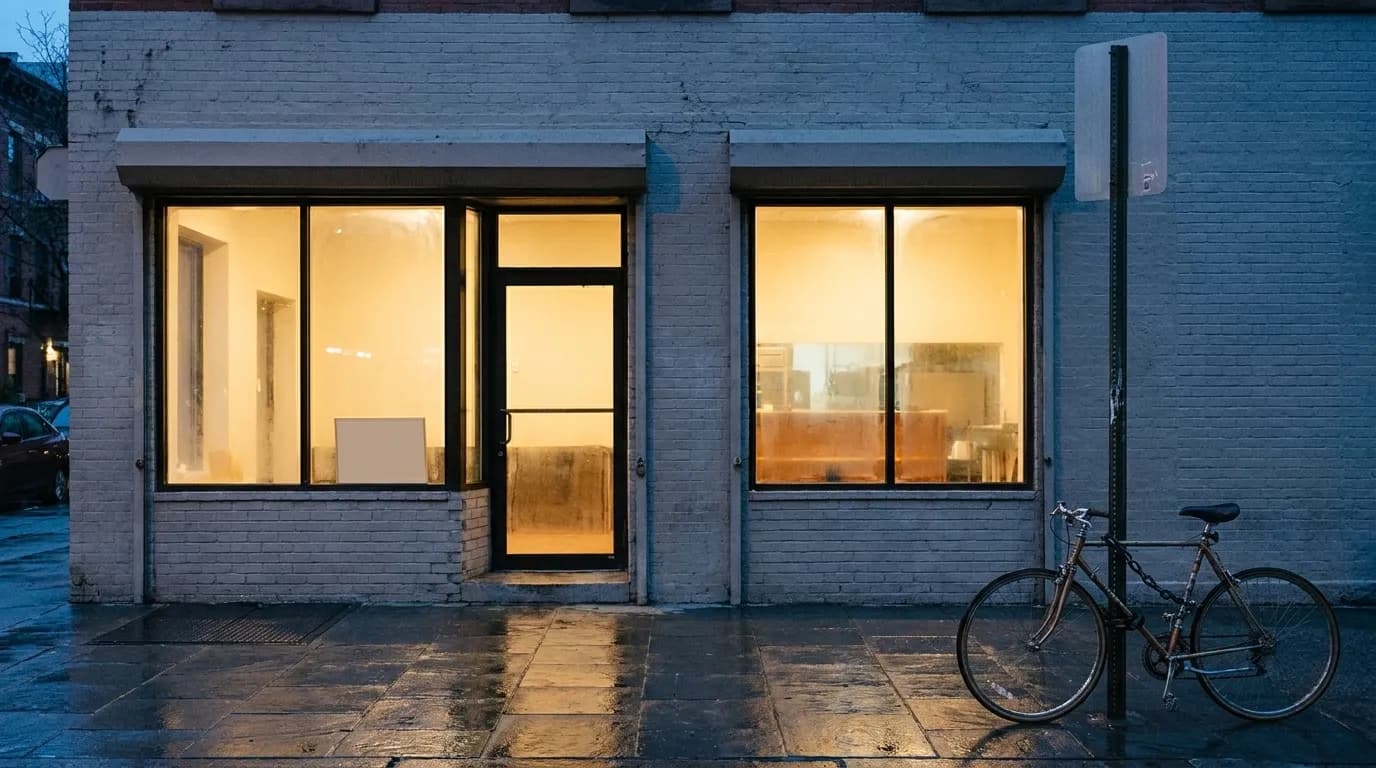
There is a particular kind of Williamsburg restaurant that never quite breaks through. It is good — sometimes better than the places with the queue — but it opened without a publicist, it is on a block nobody walks down for fun, and its dining room seats twenty-eight people who mostly live within a mile. These rooms are the best value in the neighbourhood and the easiest to get into, and finding them is less about secret knowledge than about knowing which streets to look at and what a quietly serious restaurant looks like from the outside.
The good unbooked table tonight is a moving target. Tell Karpo in iMessage roughly where you are in Brooklyn and what you feel like eating, and it will find you a room with space.
Look East of the BQE
The single most useful geographic fact about eating here is that the expressway works as a filter. West of it, towards Bedford and the waterfront, rents are high enough that a restaurant has to be busy every night to survive, which pushes owners towards crowd-pleasing menus and reservation systems. East of it, in the stretch that runs towards Bushwick, the same money buys a bigger room with a longer lease, and owners can afford to cook something specific. The result is that the ambitious, personal, occasionally strange restaurants have drifted eastwards while the attention has stayed west. Grand Street past the underpass, the blocks around Morgan and Montrose, and the stretch of Metropolitan heading inland all reward a slow walk.
What a Serious Small Room Looks Like
Some outside signals are reliable. A short menu posted in the window — twelve dishes or fewer, changed often enough that it is printed on plain paper — means a kitchen cooking to what it found rather than to a spec. Handwriting anywhere is a good sign. A room where the tables are close together but not crammed suggests the owner cares more about service than covers. Look at what the staff are drinking after close and whether the wine list has producers you have to look up. And notice the neighbours: a restaurant flanked by a laundromat and an auto shop is paying commercial rent set years ago, which is exactly why it can charge you twenty-six dollars for a plate that would be forty nearer the water.
The Cuisines That Stay Under the Radar
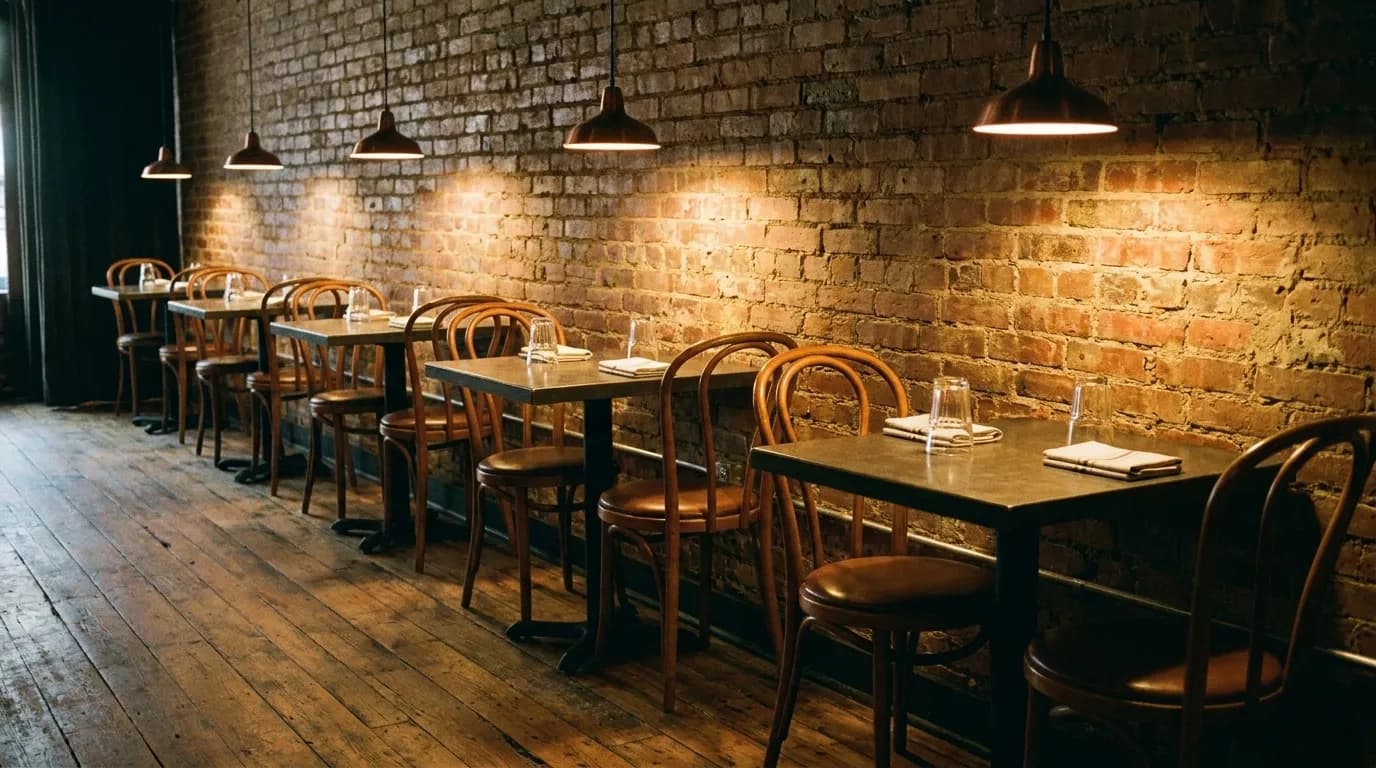
Attention in this neighbourhood follows a narrow band of formats — the wine bar with small plates, the pasta room, the tasting counter. Everything outside that band gets systematically undercovered, which is where the value sits. South Williamsburg has generations-old kosher bakeries and Dominican counters that predate every trend that has passed through. The Polish thread running up into Greenpoint means dumplings and hunter's stew at prices that have not moved in a decade. There are Mexican kitchens attached to grocery stores doing better tacos than most sit-down rooms, and a scattering of West African and Caribbean places on the eastern edge. None of these are hidden from the people who eat at them daily. They are only hidden from the coverage.
Going at the Right Time
Sleeper restaurants have a rhythm worth exploiting. They are quiet Monday through Wednesday and often at their best then, because the kitchen has time and the owner is usually working. Many do not take reservations at all, which means a walk-in at six or after nine will nearly always get a table. Weekend brunch is when the neighbourhood's attention shifts to the waterfront, leaving the eastern blocks unusually calm. And if a place has a bar with four stools, eat there — the food comes faster, the person pouring will tell you what is good tonight, and you will get the honest version of the menu rather than the safe one.
Why These Rooms Stay Quiet
It is worth understanding the mechanics, because they tell you where to look next. A restaurant becomes famous through a fairly short chain of events: an opening notice, a review, a photogenic dish that circulates, a reservation platform that then makes scarcity visible. Break any link and the chain does not run. Owners who do not do press break the first. Kitchens whose food is delicious and plain — a stew, a whole braised shoulder, a bowl of noodles in a beige broth — break the third, because the dish will not photograph. Restaurants that take walk-ins only break the fourth, since there is no booking page filling up in public to signal demand. Most sleeper restaurants are not underrated by accident; they have simply opted out of the machinery, usually on purpose, and usually because the owner would rather cook than market. That is also why they tend to stay good for years after the hyped rooms have turned over.
How to Build Your Own List
Stop searching by rating and start searching by review count. A restaurant with a strong score and forty reviews is a neighbourhood room; the same score with four thousand is a destination and will be full. Check the health inspection grade, which is public and posted, then ignore everything else the internet has to say and walk past at seven on a weeknight. If half the tables are taken by people who did not dress up, you have found one. Go twice — once to order what you want and once to order what they suggest — and you will know within two visits whether it belongs on the short list you actually use. The list that results will be shorter than any roundup and considerably more useful, because every entry on it is somewhere you can get into tonight without planning your week around it.
Tags: #Williamsburg #Brooklyn #RestaurantsNearMe #BrooklynEats #HiddenGems #EastWilliamsburg #Greenpoint #Bushwick #NYCFood #WalkIn #NeighborhoodRestaurant #BedfordAve #SouthWilliamsburg
Sources consulted: nycgo.com · brooklyneagle.com · nyc.gov · ny.eater.com
Please drink responsibly. Must be of legal drinking age.
All trademarks are the property of their respective owners.
Ask Karpo first
Small rooms change their hours, their menus and their waits without telling anyone. Ask Karpo in iMessage where you are in Williamsburg and how long you are willing to wait, and it will point you at the right door.