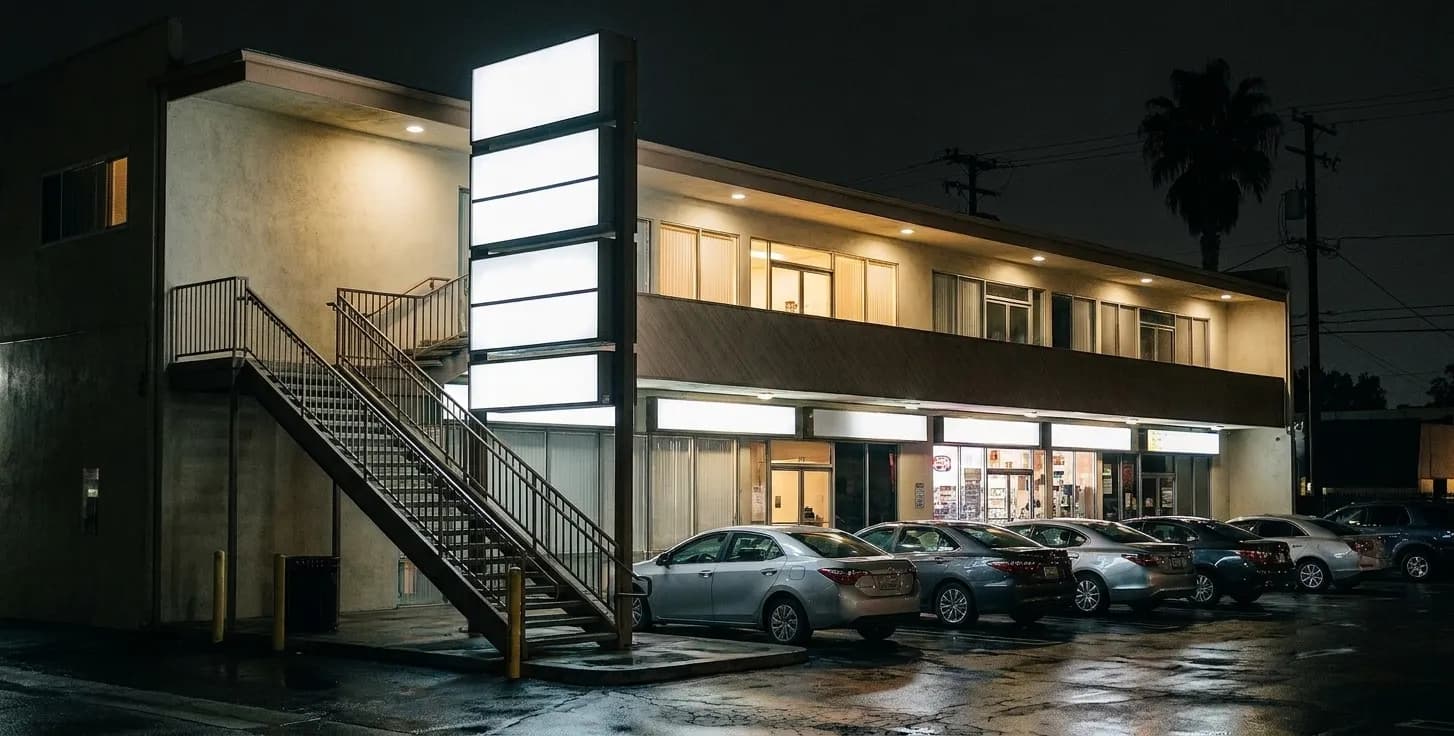
Koreatown has more restaurants per square mile than anywhere else in Los Angeles, and the searchable version of it is roughly a dozen rooms. That is not a failure of the restaurants; it is a structural feature of the neighbourhood. A large share of the good kitchens here occupy second and third floors of plazas, basements under car parks, and units inside markets — none of which photograph well, most of which advertise in Korean if at all, and almost all of which are full of regulars every night.
Half the good rooms in this neighbourhood are on a second floor with no street presence, which is precisely why a map never finds them. Tell Karpo which corner you are near, and it will tell you what is worth climbing the stairs for.
Look up, literally
The single most useful habit in this neighbourhood is reading the vertical sign stacks beside stairwells. A plaza on Sixth, Western, Vermont or Olympic will typically have four to eight businesses stacked above the ground floor, and the ratio of good restaurants up there to good restaurants at street level is not close. Ground floor goes to the businesses that need walk-in traffic; upstairs goes to the ones that have regulars.
The practical method is unglamorous: park once, walk the stairwells of two or three plazas, and look at what is busy at the time you are there. Busy at nine on a Tuesday in Koreatown means something specific — it means people who live nearby chose it over forty alternatives within walking distance.
The specialists
The reliable sleeper category is the single-dish kitchen. Ox bone soup simmered for a day and a half. Knife-cut noodles. Braised short ribs. Whole steamed fish. Blood sausage soup. Cold buckwheat noodles. Each of these has rooms in Koreatown that have done nothing else for twenty or thirty years, and they are typically half the price of the general-menu barbecue houses and better at the one thing.
A useful signal: menus with fewer than fifteen items and photographs of only two or three dishes. Another: rooms that close in the afternoon between lunch and dinner, which almost always indicates a kitchen that cooks in batches rather than to order all day.
Inside the markets
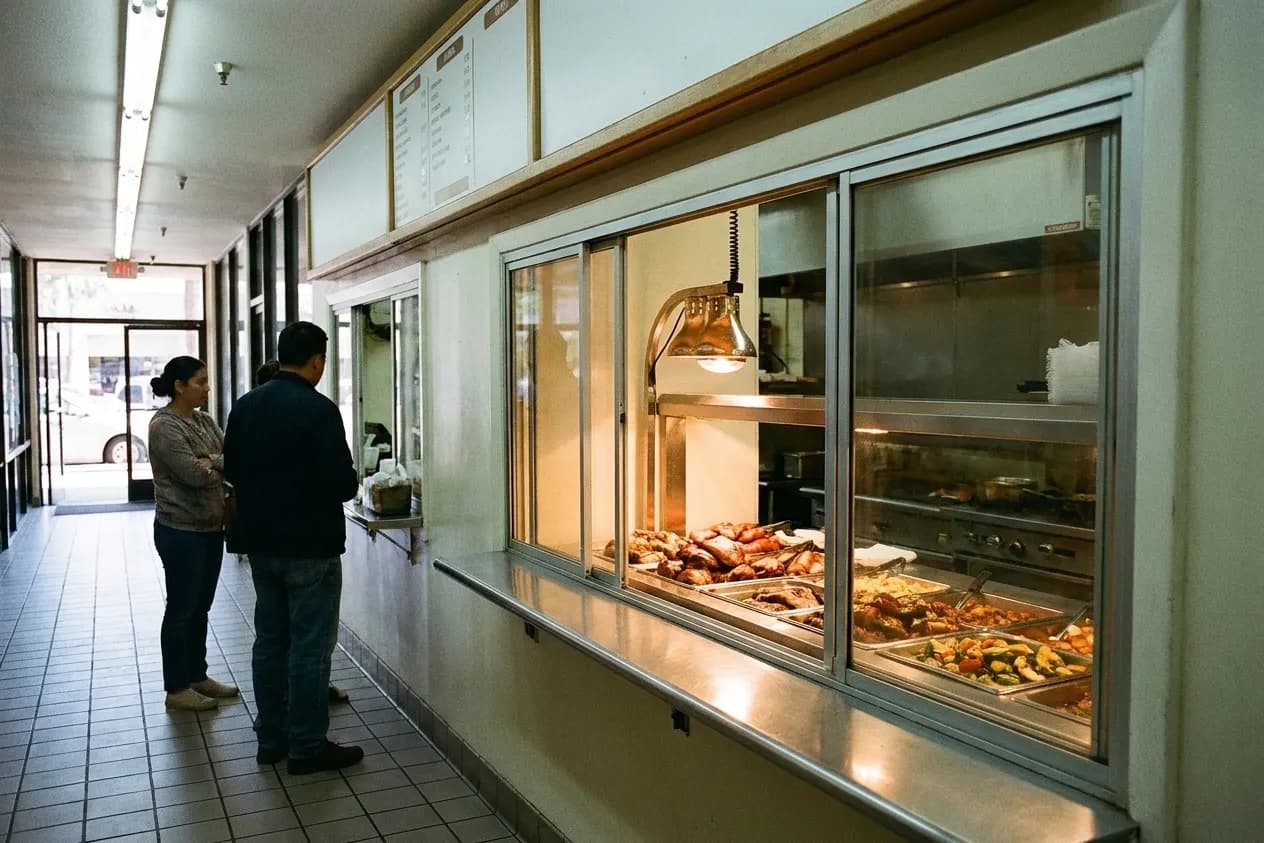
Koreatown's supermarkets contain restaurants, and they are consistently underrated. Food courts inside the big Korean markets serve full plates for under ten dollars, the banchan counters sell prepared side dishes by weight, and the hot counters do roast and fried items that would carry a restaurant on their own. Lunch inside a market here is one of the best cheap meals in Los Angeles.
The same is true of the Latino markets in the same neighbourhood, which have taquerias and prepared-food counters inside them. Koreatown's Oaxacan and Salvadoran cooking is one of the genuine sleepers of the whole city and it very rarely appears on a Koreatown list at all.
The hours that reveal the good rooms
Timing is a filter. Lunch specials in Koreatown are dramatically cheaper than the same food at dinner and are aimed at the office population, which means the rooms serving them are cooking for people who will come back on Thursday. Late night — after eleven — reveals a different set again, the kitchens that feed hospitality workers after their shifts.
Sunday is the neighbourhood's quiet day and a good one for exploring, since the rooms that open on a Sunday are usually the family-run ones rather than the entertainment-district ones. It is also the day to find the church-adjacent food: Korean and Salvadoran alike, sold from folding tables, and excellent.
Going in without the language
Plenty of these rooms have menus only in Korean, and it is far less of a barrier than people fear. Photograph the menu and translate it on your phone; point at what the next table is eating; or simply say what you want — soup, noodles, not spicy, for two — and let the room handle it. In a neighbourhood this used to outsiders, that is a completely normal transaction.
Bring cash for the smaller places, expect a card minimum in a few, and do not be alarmed by the buzzer on the table — pressing it is how you order, and it is more polite than waving. The only real etiquette that matters is not ordering more banchan than you will eat, because everything returned to the kitchen is thrown away.
The rooms that are worth a wait
Very few things in this neighbourhood justify queueing, because there is almost always an equally good alternative fifty metres away. The exceptions are the kitchens that make something in a limited daily quantity — hand-cut noodles, a soup that has been going since morning, a fish that came in that day — where the queue is a consequence of the constraint rather than of marketing.
The test is what people are waiting for. A line of people holding phones outside a photogenic frontage is one thing; a line of families waiting at seven on a Wednesday for a soup is another. The second is a signal about the food; the first is a signal about the internet.
Tags: #LosAngeles #Koreatown #KTown #HiddenGems #KoreanFood #LAEats #LAFoodie #WhereToEatLA #CheapEatsLA #SleeperSpots #LADining #FoodCourt #UnderratedLA #RestaurantsNearMe
Sources consulted: discoverlosangeles.com · publichealth.lacounty.gov · metro.net
All trademarks are the property of their respective owners.
Ask Karpo first
Upstairs rooms, market counters and split-service hours are exactly what listings get wrong in this neighbourhood. Ask Karpo what is open near you right now, which plazas are worth walking into, and whether a place takes cards — it answers in iMessage while you are standing in the car park.