 Kovan Hainanese Curry Rice Lunch Picker: Heartland Plates
Restaurants

Tiong Bahru Wonton Mee Lunch Picker: Courtyard Bowls Fast
Claim a table across Tiong Bahru market decks and Art Deco corner coffee shops without booking. Compare charcoal pork dry noodles with dumpling soup bowls.
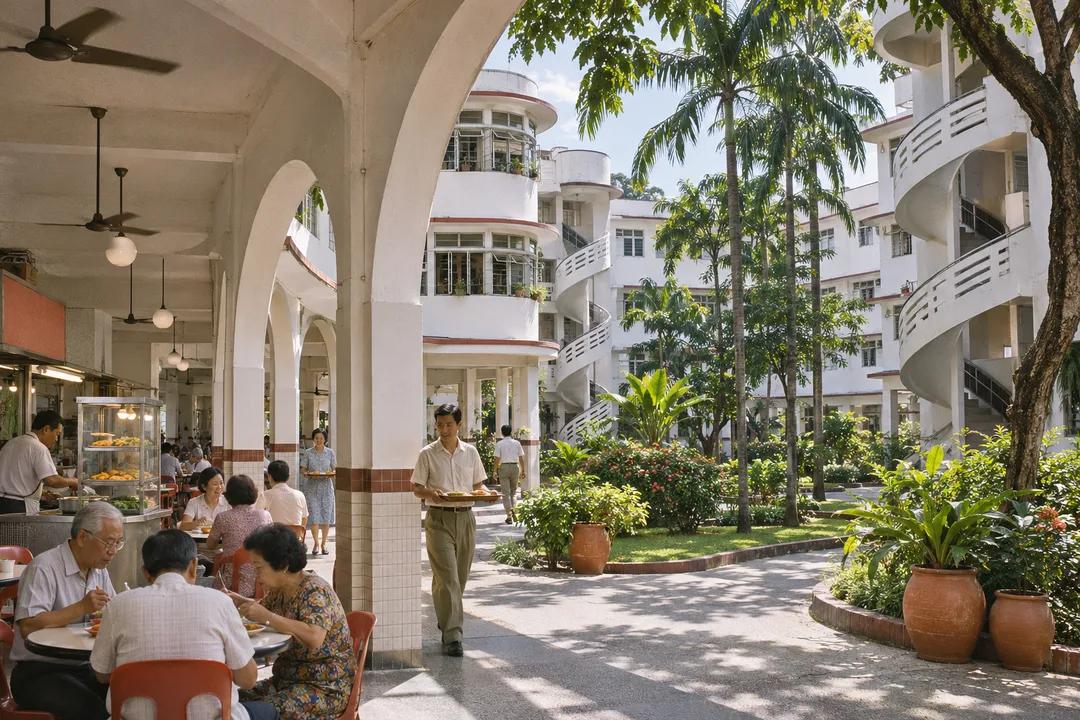
Curved white balconies and central courtyard breezes shape every Tiong Bahru wonton mee lunch picker choice, dividing midday diners between the sweeping upper hawker floor above the wet-market stalls and the tiled corner coffee shops tucked beneath low-rise walk-up flats. When two neighborhood friends finish browsing independent paperbacks along Yong Siak Street and walk over with canvas book totes slung over their shoulders, they gauge the sun angle and queue length before committing to a counter. In this heritage housing estate, the lunch dilemma rarely comes down to finding a seat; instead, it centers on whether your table craves smoky caramel-skinned char siew paired with crackling roast pork belly on dry noodles, or a gentler bowl of bouncy shrimp dumplings swimming in peppery bone broth.
Weighing Upper Courtyard Tables Against Corner Kopitiam Arcades
Picking where to sit in Tiong Bahru starts with matching your baggage and heat tolerance to the estate architecture. Taking the escalator or stairs up to the second-level food center rewards you with a wide ring of tables wrapping around an open garden well, where sunlight filters past potted palms and high roof vents pull cooking heat skyward. Morning market shoppers with wheeled baskets, young parents pushing compact strollers, and off-duty hospital staff from nearby wards gravitate toward the outer perimeter tables where the cross-draft feels strongest. Local etiquette around the courtyard ring calls for sharing four-top tables willingly with solo aunties and keeping backpacks tucked between your ankles rather than resting on spare chairs.
If the midday sun glares across the central skylight or the famous roast-meat noodle line stretches past neighboring drink booths, step back down to street level and head for one of the curved Art Deco corner kopitiams along Seng Poh Road or Eng Hoon Street. Those ground-floor coffee shops set mosaic-tiled tables beneath deep five-foot-way overhangs and whirring wall fans, offering calmer acoustics and easy step-free access. Sitting along the outer arcade lets you watch neighborhood dogs tied to cast-iron lamp posts while enjoying faster counter service from family-run noodle carts.
Timing your lunch window around the morning wet-market teardown gives you a clear seating advantage. Arriving right as florists and fishmongers downstairs hose down their concrete aisles means the breakfast crowd has already cleared out, leaving shaded courtyard tables open before creative studio teams arrive from the surrounding side streets.
Charcoal Belly Cuts, Sio Bak Pairings, and Springy Egg Strands
A smart Tiong Bahru wonton mee lunch picker looks closely at the hanging roast hooks behind the glass counter before calling out an order. Several long-running estate stalls specialize in dual-roast platters that pair honey-glazed char siew with cubes of crispy-skinned sio bak pork belly. When those two cuts land atop fine duck-egg noodles, the contrast between sweet charred meat, shattering salted crackling, and chewy alkaline strands turns a quick weekday bowl into a study in textures.
Pay attention to the sauce base pooled beneath the noodles as the cook lifts the bamboo basket from the rolling boil. Some Tiong Bahru kitchens skip heavy dark soy altogether, dressing their noodles in a translucent blend of fragrant shallot oil, sesame oil, light fish sauce, and house-made sambal belacan that clings to every strand without masking the egg flavor. If you prefer a milder kick that highlights the sweet roast drippings, ask for ketchup and a half-spoon of chili oil mixed together, or request raw sliced bird's-eye chilies in light soy sauce on a separate dish.
For diners who lean toward dumpling craft over roast meats, look for stalls advertising plump sui kow water dumplings alongside standard bite-sized wontons. Those larger oblong parcels pack whole crunchy shrimp tails, minced pork, black fungus strips, and toasted sesame oil inside thin yellow skins that hold up beautifully in a clear bowl of pork-and-anchovy soup.
Condiment Saucer Strategy, Kopi Pairings, and Habits to Skip
Getting the sharpest plate off a Tiong Bahru noodle line requires a quick two-step routine at the self-service condiment tray. Use porcelain soup spoons to scoop bright green pickled chilies into one saucer and crispy golden lard cubes—when offered in a covered jar on the counter—into another, keeping them dry until you sit down. Stirring the noodles thoroughly within thirty seconds of receiving your tray prevents the fine strands from clumping together as the warm lard and roast-meat juices settle.
Pair your savory noodle plate with a traditional beverage from the adjacent toast-and-tea stall to round out the estate experience. A tall glass of iced yuan yang—blending robust local coffee with fragrant black tea and condensed milk—or a warm cup of teh c kosong cuts through the richness of crackling pork skin and sambal grease. If you are sharing among three friends, order two dry noodle plates in different spice levels plus one standalone bowl of ten boiled wontons and leafy Hong Kong kailan drizzled with oyster sauce.
Skip sitting directly beside the centralized tray-return washing stations on the upper deck during the noon rush, where clattering crockery and damp floor mats distract from a relaxed meal. You should also skip ordering extra-large noodle upgrades if you plan to sample chwee kueh steamed rice cakes or flaky bakery pastries afterward, because standard portions already pack a dense nest of egg noodles. If a stall's charcoal char siew hook looks bare after midday, pivot to a crispy chicken-cutlet wonton noodle plate or walk two minutes to a neighboring kopitiam stall rather than accepting reheated end cuts.
Wandering Spiral Staircases, Murals, and Bird Corner After Lunch
Once your bowls are empty, Tiong Bahru's low-slung street grid invites an easy, flat walk through one of Singapore's most photogenic residential pockets. Step out from the market arches to trace the heritage wall murals painted along Seng Poh Lane and Eu Chin Street, which depict old-school provision shops and fortune-telling stalls from the estate's early decades. Follow the curved streamline-moderne facades past porthole windows and external concrete spiral staircases along Moh Guan Terrace and Guan Chuan Street, where bougainvillea spills over whitewashed brick walls.
Continue past the conserved ornamental birdcage arches at Seng Poh Garden and cut through the breezy shade of Kim Pong Park toward Tiong Bahru Park if your group wants a quiet bench under mature rain trees. When you want to check which nearby bakeries, specialty coffee bars, or alternative noodle stalls fit your afternoon route, open the Karpo APP to filter neighborhood spots by walking time and ambiance before heading back toward the MRT station.
Ask Karpo for more information.
Keep reading
- Kovan Hainanese Curry Rice Lunch Picker: Heartland Plates
 Tampines Mee Rebus Breakfast Picker: Round Market Bowls
 Jurong West Mee Rebus Breakfast Picker: Boon Lay Bowls