 Chinatown New in Town Weekend Planner: Errands and Temples
Weekend Plans
Katong Weekend Craft Fair Finder: Beadwork and Kebaya
Katong's best weekend craft is Peranakan: beaded slippers, kebaya embroidery and tile motifs along Joo Chiat, plus mall bazaars and pop-ups to fill a Sunday.
Search for a weekend craft fair finder in Katong and the results will point you to shopping mall bazaars and one-off markets. Those are useful, but they miss what makes the neighbourhood special. Katong and Joo Chiat are the heartland of Peranakan culture in Singapore, and the craft here is woven into the streets: beaded slippers stitched by hand, kebaya blouses with lace embroidery, and painted tiles set into the front of terrace houses. A good Sunday here mixes those heritage makers with whatever pop-up market is running nearby.
What Peranakan Craft Actually Looks Like
Peranakan culture grew from generations of Chinese and Malay families intermarrying along the Straits, and its craft reflects that blend. The signature piece is the kasut manek, a slipper whose upper is covered in tiny glass beads sewn into flowers, birds and butterflies. A single pair can take weeks, which is why the finished slippers sit behind glass in the specialist shops while the beads themselves are sold loose for hobbyists.
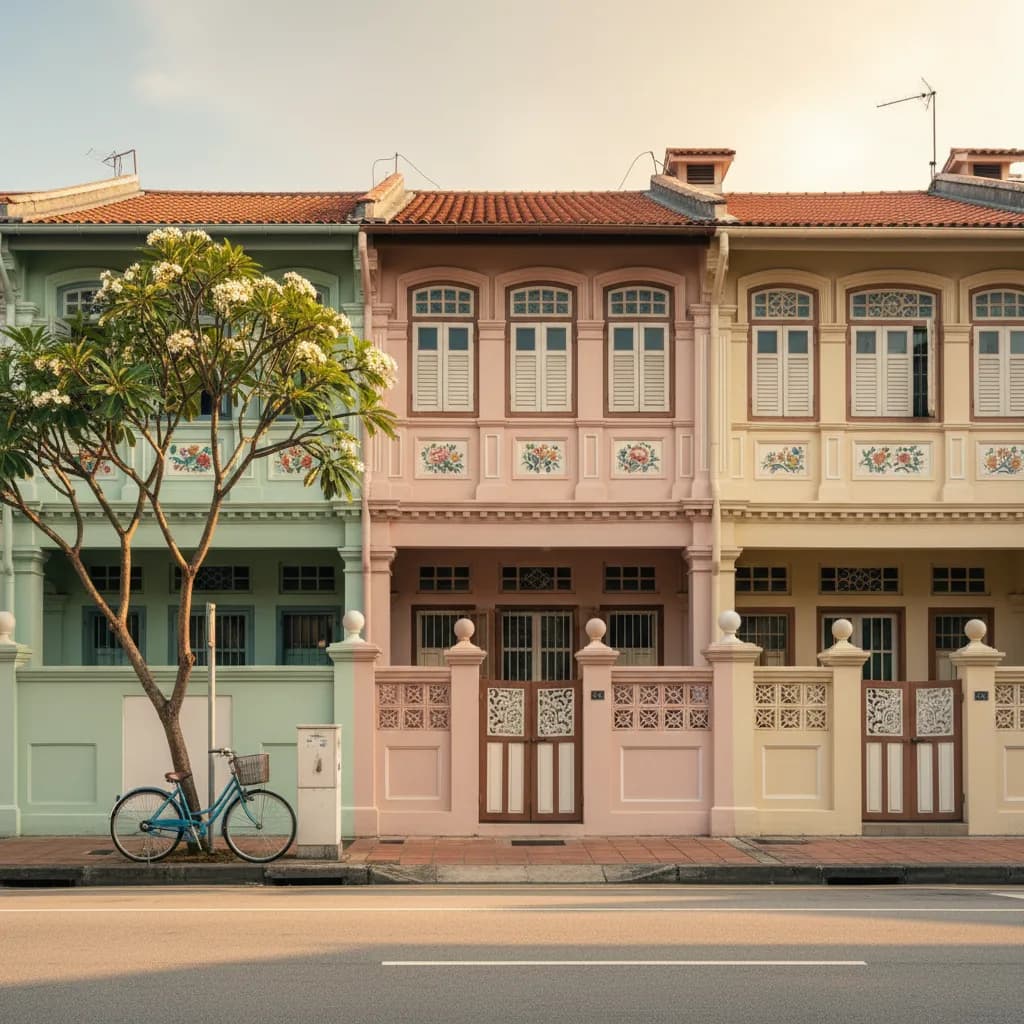
The second craft is the sarong kebaya, a fitted blouse with delicate machine and hand embroidery along the hem and cuffs. You will see tailors and boutiques in the area that still cut and embroider them to measure. The third is decorative: the glazed ceramic tiles that decorate the facades of terrace houses, often with peonies and geometric borders, now reproduced as coasters, trays and framed panels.
Knowing these three pieces before you go makes the walk much richer. Instead of browsing random souvenirs, you are looking for skill you can see up close.
Joo Chiat Road and the Terrace House Streets
Start on Joo Chiat Road and drift into the side streets. Koon Seng Road holds the most photographed row of terrace houses, painted in soft pastels with tiles between every window. Arrive in the morning when the light is gentle and the street is calm, take your photographs from across the road, and keep your voice down, because these are private homes rather than a museum.
From there, work your way back toward East Coast Road, where the heritage shops cluster. Several stores in this stretch sell beadwork, kebaya and Peranakan porcelain, and a few have workrooms where you can sometimes see an artisan at work. Ask politely if photographs are allowed, and if a maker is mid-stitch, wait until they look up before starting a conversation.
The Intan, a private Peranakan home museum in the area, is worth looking into if you want a guided introduction to the culture. Visits are usually arranged ahead, so it suits a planned weekend rather than a spontaneous one.
Where the Weekend Pop-Ups Fit In
Katong does not have one fixed weekly craft fair, but it does get a steady flow of weekend bazaars. The malls along East Coast Road and Marine Parade often host maker markets in their atriums, with local brands selling candles, ceramics, illustrated prints and handmade accessories. Community clubs and heritage groups also run festive markets around Hari Raya, Chinese New Year and the year-end holidays.
These are easy to miss because they change every few weeks. Ask Karpo which craft markets or pop-ups are listed around Katong and Marine Parade for the coming weekend, then slot them into your walk. A mall bazaar is a good midday stop when the sun is at its strongest, because you can browse in air conditioning between two outdoor stretches.
Treat the pop-ups and the heritage shops as two halves of the same day. One gives you contemporary Singapore makers, the other gives you the craft that shaped the neighbourhood.

Eat Your Way Between Stops
Food is part of the craft story here. Peranakan cooking is famously labour-intensive, and the nyonya kueh shops along East Coast Road sell layered, pandan-scented cakes that are as detailed as any beadwork. Pick up a small box mid-morning and you have fuel for the rest of the walk.
Katong laksa is the lunch to plan around. The local style cuts the noodles short so you can eat the whole bowl with a spoon, and several long-running stalls compete for the title. Go slightly before or after the main lunch rush and you will avoid the longest queues.
For a slower afternoon, the coffee shops and bakeries tucked into renovated shophouses make good places to sit with your purchases and write down what you learned from each maker.
A Sunday Route That Works
Begin on Koon Seng Road for photographs, walk down Joo Chiat Road for coffee and kueh, then reach East Coast Road for the heritage shops in mid-morning. Break for laksa, then head to whichever mall or community market is hosting a pop-up that weekend. Finish late afternoon with a stroll to East Coast Park for sea air and a quiet end to the day.
If you are visiting on a Saturday instead, the shops are just as lively, and the pop-ups tend to draw bigger crowds. Sunday is calmer and better for long talks with the beadwork and kebaya sellers.
Families can shorten the loop by skipping the mall stop and spending the afternoon at the park, where the cycling and picnic areas give children space after a morning of careful browsing.
Buying With Care
Hand-beaded slippers and fine kebaya are serious purchases, so take your time. Ask whether a piece was made by hand or by machine, and how long it took, and you will quickly learn to spot the difference in bead density and stitch finish. Many sellers will also offer smaller items, like beaded brooches or embroidered pouches, if you want the craft without the full commitment.
If you are a hobbyist, the loose bead packets and printed patterns make a lovely souvenir. Some studios in the area run weekend beading or batik workshops, which turn the day into something you take part in rather than only watch.
Practical Notes
The Thomson-East Coast Line stations at Marine Parade and Katong Park put you close to the main streets, and buses along East Coast Road link the whole area. Wear comfortable shoes, carry water, and bring a hat for the open stretches between shops.
Keep your list in the Karpo APP as you go so you remember which shop sold which piece, ask for a nearby lunch when your feet need a rest, and get ideas for the next craft weekend in Kampong Glam or Tiong Bahru.
Ask Karpo for more information.
Keep reading
- Chinatown New in Town Weekend Planner: Errands and Temples
 Kampong Glam New in Town Weekend Planner: Mosque to Murtabak
 Holland Village New in Town Weekend Planner: Meet People