 Kovan Hainanese Curry Rice Lunch Picker: Heartland Plates
Restaurants
Joo Chiat Vegetarian Dinner Picker: Nonya Food, No Belacan
Eat a Joo Chiat vegetarian dinner the Peranakan way: which nonya dishes can skip shrimp paste, how to ask kindly, which kueh to try and a terrace walk after.
This Joo Chiat vegetarian dinner picker is for the night you are invited to a Peranakan meal in Singapore's east and you are the only guest who does not eat meat or fish. Peranakan cooking, also called nonya food, is one of the great cuisines of the region, and Joo Chiat is its old heartland, a district of painted terrace houses, family kitchens and kueh shops. Much of it is built on shrimp paste and pork, but a careful host and a curious guest can still share a wonderful table.
Who the Peranakans Are
The Peranakans are descendants of Chinese traders who settled in the Malay world and married local women. Over generations, their families blended Chinese and Malay ways of living. The women of the house, the nonyas, created a cuisine that mixes Chinese techniques with Malay spices: tamarind, galangal, lemongrass, candlenut and chilli, pounded by hand into a paste called rempah.
In Joo Chiat and nearby Katong, many Peranakan families built ornate terrace houses with tiled fronts and carved doors. Some of those kitchens still cook for neighbours and visitors, and the recipes are often guarded and passed down from grandmother to granddaughter.
The Belacan Question
Belacan is a dark, fermented paste made from tiny shrimp, and it is the backbone of many nonya dishes. It is toasted and pounded into the rempah, stirred into sambal and mixed into vegetable dishes to give them depth. Even a dish that looks like plain greens may have it. Dried shrimp, called hae bee, is another common hidden ingredient, as is pork lard.
So the most useful thing a vegetarian can do is ask early. If you are invited to a home, tell the host a few days before, and offer to bring something. If you are eating at a nonya restaurant, ask the server which dishes can be cooked without belacan, dried shrimp or meat stock. Good kitchens take the question seriously.
Dishes That Can Be Made Meat-Free
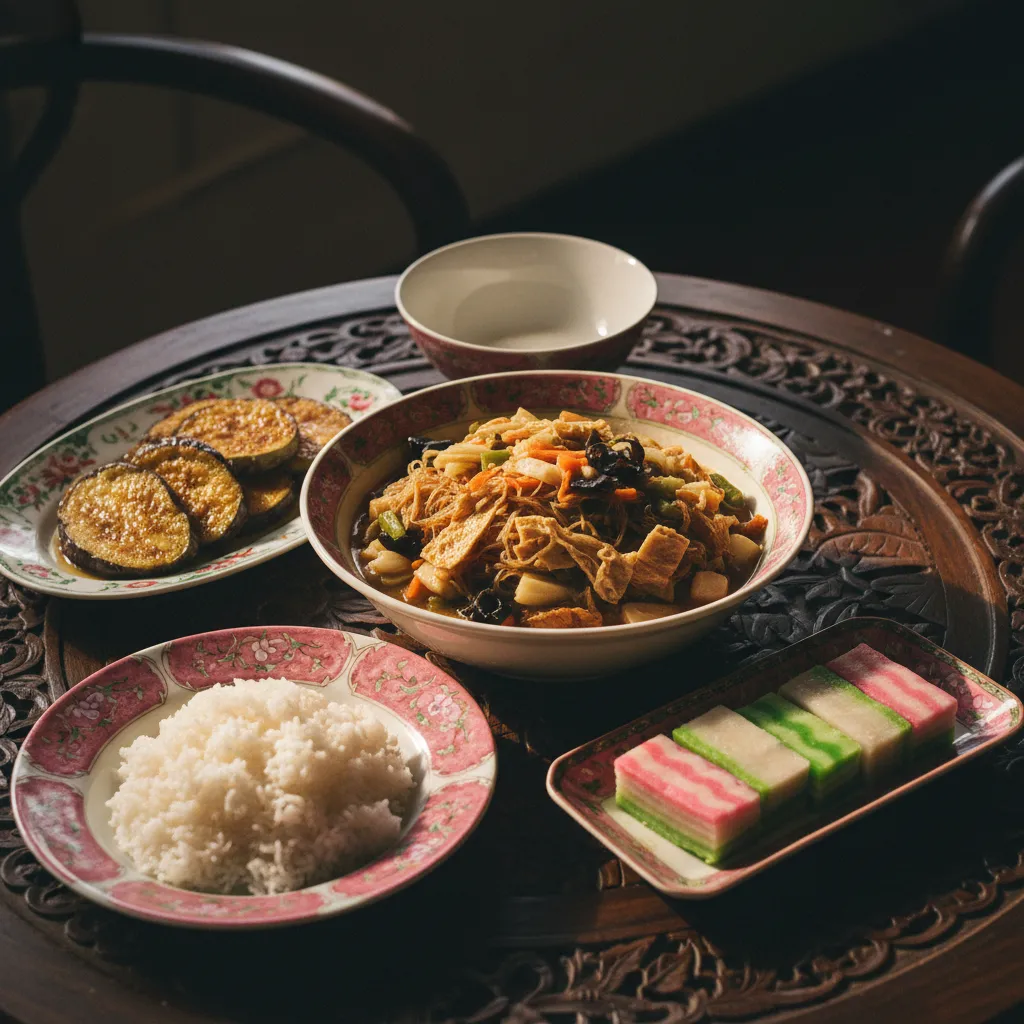
Chap chye is the most natural choice. It is a braise of cabbage, glass noodles, black fungus, lily buds and dried beancurd skin, slowly cooked in a fermented bean sauce. Many families add pork belly or prawn stock, but the vegetable version is just as traditional in homes that observed vegetarian days.
Terung goreng, fried eggplant, can be served with a chilli sauce made without belacan. A vegetable curry of long beans, potato and tofu works too if the rempah is made fresh without shrimp. Ask whether the kitchen can make a small batch of sambal for you. Some cooks will, and they often enjoy the challenge.
Dishes to Leave for Others
Some nonya classics cannot really be made vegetarian, and it is kinder not to ask. Ayam buah keluak, chicken with black nuts, is a dish of great pride, and the nut paste is often mixed with minced pork. Babi pongteh is a pork stew, and itek tim is a duck soup. Laksa, the famous coconut noodle soup of this district, is made with a prawn and shrimp paste broth.
Let the meat eaters enjoy these, and focus your plate on the vegetables, rice and kueh. Nobody at a Peranakan table will mind, and the host will be glad that you understand what the dishes mean to the family.
How to Ask Without Fuss
Peranakan hospitality is warm and generous, and a host may want to feed you everything. The kindest approach is to be clear and grateful. Say that you do not eat meat, fish, shrimp or eggs, if eggs matter to you, and then thank them for whatever they can make. A simple plate of chap chye cooked just for you is a real gift.
At a restaurant, ask the same question once, clearly, and then trust the answer. Pointing at each dish and asking again can feel rude in a small family kitchen. If you are not sure, choose the simplest dishes and ask for chilli on the side.
Save Room for Kueh
Nonya kueh are small steamed or baked cakes made from rice flour, tapioca, coconut milk, palm sugar and pandan leaves, and most of them are vegetarian. Kueh lapis is a layered cake in bright pink and white. Ondeh ondeh are pandan balls rolled in grated coconut, with a burst of liquid palm sugar inside. Kueh salat has a blue rice base, coloured with butterfly pea flowers, topped with pandan custard.
Some kueh contain egg, and a few savoury ones include dried shrimp, so ask if you are strict. Joo Chiat's kueh shops are a joy to visit, and a box of mixed kueh is a lovely gift to bring to a host.
An Honest Judgment
If you are a strict vegan who needs certainty about every ingredient, a Peranakan restaurant may leave you anxious. Pans and stocks are shared, and some recipes are so old that cooks do not think of the belacan as a separate ingredient. In that case, eat a full dinner first at a Chinese vegetarian or Indian vegetarian place nearby, and come to the Peranakan table for kueh and company.
For everyone else, a little patience goes a long way. The best meals here come from asking, listening and letting the cook show you what is possible.
A Walk Through the Terraces
After dinner, walk the side streets off Joo Chiat Road. Koon Seng Road has some of the most photographed terrace houses in Singapore, with pastel walls, ceramic tiles painted with flowers and birds, and carved swing doors. The houses are private homes, so admire them from the street and keep your voice down.
Continue towards East Coast Road, where Katong's older shops and churches stand among newer cafes. The Eurasian and Peranakan history of the area shows in the buildings, and on a cool evening the walk is as pleasant as the meal.

Who This Plan Suits
This plan suits vegetarians invited to a Peranakan home, travellers curious about nonya food and mixed groups where one person avoids meat or seafood. It also suits anyone who loves old houses, family recipes and a sweet ending to a meal.
It suits a guest who is happy with a few well-made dishes rather than a whole menu to choose from. If you want a long vegetarian menu, look elsewhere in the east first, and treat Joo Chiat as the place for kueh and history.
Practical Notes
Eunos and Marine Parade MRT stations are both a walk from Joo Chiat, and buses run along Joo Chiat Road and East Coast Road. Evenings are calm in the residential streets, while the main road stays busy with diners. Bring a small bag for kueh boxes.
Karpo APP can point you to vegetarian-friendly places in the area if you want a backup before or after the Peranakan meal. Learn the words tak mahu belacan, no shrimp paste, and the host will know exactly what you mean.
Ask Karpo for more information.
Keep reading
- Kovan Hainanese Curry Rice Lunch Picker: Heartland Plates
 Tampines Mee Rebus Breakfast Picker: Round Market Bowls
 Jurong West Mee Rebus Breakfast Picker: Boon Lay Bowls