 Kovan Hainanese Curry Rice Lunch Picker: Heartland Plates
Restaurants

Chinatown Vegetarian Dinner Picker: Mock Meat for Skeptics
Plan a Chinatown vegetarian dinner with a meat-eating friend: how Buddhist mock meat is made, which dishes convert skeptics and where to stroll after the meal.
This Chinatown vegetarian dinner picker is for the evening you finally bring a meat-loving friend to a Buddhist vegetarian table in Singapore. Your friend may expect a plate of boiled vegetables and a polite smile. What arrives instead is sweet and sticky char siew, crisp roast duck skin and a fish fillet with real flakes, all made without any animal at all. Chinatown has been cooking this way for generations, and it is the best place in the city to change a skeptic's mind.
Why Mock Meat Lives Here
Chinese Buddhist kitchens have served meat-free meals for centuries. Monks and devout lay followers avoid killing living things, and many families eat vegetarian on festival days or the first and fifteenth of the lunar month. Cooks in these kitchens learned to make familiar dishes from wheat gluten, soybeans, mushrooms and konjac, so that guests at a temple banquet would still feel they had eaten a feast.
In Singapore, that tradition settled around the temples of Chinatown. Vegetarian stalls and family restaurants grew up near the places of worship, feeding worshippers after prayers and office workers at lunch. Many still keep the old recipes, and some cooks learned them from parents who learned from temple kitchens.
What It Is Made Of
Your friend will ask, so be ready. Mock char siew and mock chicken are usually made from wheat gluten, which is kneaded, rinsed and steamed until it becomes chewy and stringy like meat. Mock duck is often layers of beancurd skin, pressed and fried so the edges turn crisp. Mock fish may be soy skin wrapped around mashed yam or tofu, with a sheet of seaweed to give the taste of the sea.
Mushrooms do a lot of quiet work too. Shiitake and king oyster mushrooms add a deep, savoury flavour, and monkey head mushroom can be torn into pieces that look and chew like chicken. Konjac, a firm jelly from a root, is shaped into prawns and squid. Knowing these names makes the meal more fun to talk about.
Order to Convert a Skeptic
Start with the dish your friend knows best. If they love char siew rice, order the mock version first, because the sweet, sticky glaze is the same and the gluten has a satisfying bite. Follow it with sweet and sour pork made from fried gluten or mushroom, which is almost impossible to tell apart from the original when the sauce is good.
Next, order a dish that does not pretend to be meat at all. Braised beancurd skin rolls, claypot tofu with mushrooms or a plate of stir-fried greens show that vegetarian cooking stands on its own. Save the mock fish for last. It is the boldest dish on the table, and by then your friend will be curious enough to try it.
A Rule That Surprises People
Many Chinese Buddhist vegetarian kitchens cook without onion, garlic, leeks, chives or shallots. These are the five pungent plants, and they are avoided because they are believed to stir up the senses. Your friend may notice that the food tastes different: cleaner, sweeter and less sharp. Ginger, white pepper, sesame oil and fermented beancurd fill the gap.
If you are vegan, ask about egg and dairy. Some vegetarian kitchens use egg in noodles or batters, and a few cakes or desserts may contain milk. Most stalls are happy to tell you. The phrase chai, or vegetarian in Hokkien and Cantonese, is understood everywhere in Chinatown.
An Honest Word on Mock Meat
Not every mock meat is good. Some stalls use frozen factory pieces that taste of salt and little else, and they can make a skeptic feel proven right. Look for a place where the dishes are clearly cooked to order and the menu has plenty of mushroom, tofu and vegetable dishes too. A kitchen that only sells imitation meat is often less careful than one that loves vegetables.
If you have celiac disease or avoid gluten, mock meat is a real problem, because most of it is made from wheat. Ask for tofu, mushroom and vegetable dishes instead, and check the soy sauce, which also often contains wheat.
Where to Sit
Chinatown gives you two very different evenings. A hawker centre has a vegetarian stall or two among dozens of others, so a mixed group can each choose their own plate and still sit together. This is the easiest way to bring a reluctant friend, since they can always order something they know from the next stall and simply taste yours.
A family vegetarian restaurant suits a slower dinner with shared dishes in the middle of the table. Round tables with a lazy Susan make it easy to pass plates, and the cooks often suggest a set of dishes for small groups. This is the better choice if you want your friend to taste the whole range.
Temples Before or After
Chinatown's temples sit close together, and visiting one turns the meal into part of a story. The large Buddhist temple near the heart of the district glows red and gold at night, and its halls are calm even when the streets outside are busy. A short walk away, a Hindu temple with a tall carved gateway shows how many faiths share this neighbourhood.
Dress modestly, take your shoes off where you see others doing so and keep your voice low. If you visit before dinner, the quiet of the temple sets a good mood for a Buddhist meal. If you visit after, you can talk about what you ate as you walk.
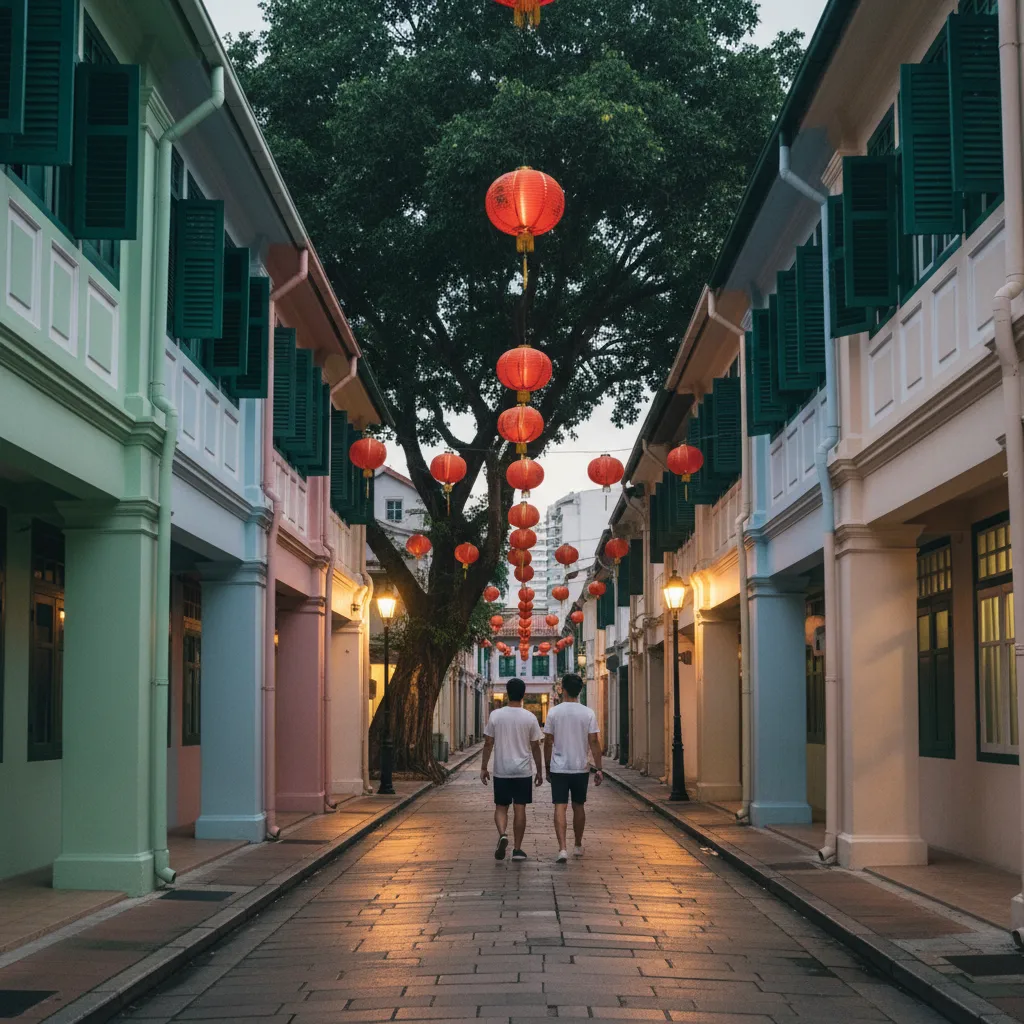
A Lane Walk After Dinner
After the meal, leave the busy street market behind and walk the quieter lanes. Restored shophouses with painted shutters and carved details line the streets on the slope up towards Ann Siang Hill and Club Street, where bars and small restaurants fill the old buildings. A short climb takes you to a small hilltop park with old trees and a view over the rooftops.
If you still have room, stop for a dessert. Cold grass jelly, warm almond soup or a bowl of tau suan, split mung beans in a sweet, thick broth, are often vegetarian and make a light end to the evening.
Who This Plan Suits
This plan suits vegetarians with meat-eating friends, partners or parents, travellers curious about Chinese Buddhist food and anyone who likes the idea of a meal with a little magic in it. It also suits groups who want to share plates and argue happily about which dish fooled them most.
It does not suit someone who dislikes the idea of mock meat on principle. Some vegetarians find it strange to eat food that copies animals. If that is you, skip the imitation dishes and order tofu, mushrooms and greens instead. Chinatown kitchens cook those just as well.
Practical Notes
Chinatown MRT station puts you in the middle of the district, and Outram Park and Maxwell stations are also close. Weekends and festival evenings are crowded, especially around the Lunar New Year, so come early on those nights. Bring a little cash for hawker stalls.
Karpo APP can show you vegetarian-friendly places nearby if you want to compare a few before you sit down. Then let your friend choose the first dish, keep the best one for last and enjoy watching them ask for seconds.
Ask Karpo for more information.
Keep reading
- Kovan Hainanese Curry Rice Lunch Picker: Heartland Plates
 Tampines Mee Rebus Breakfast Picker: Round Market Bowls
 Jurong West Mee Rebus Breakfast Picker: Boon Lay Bowls