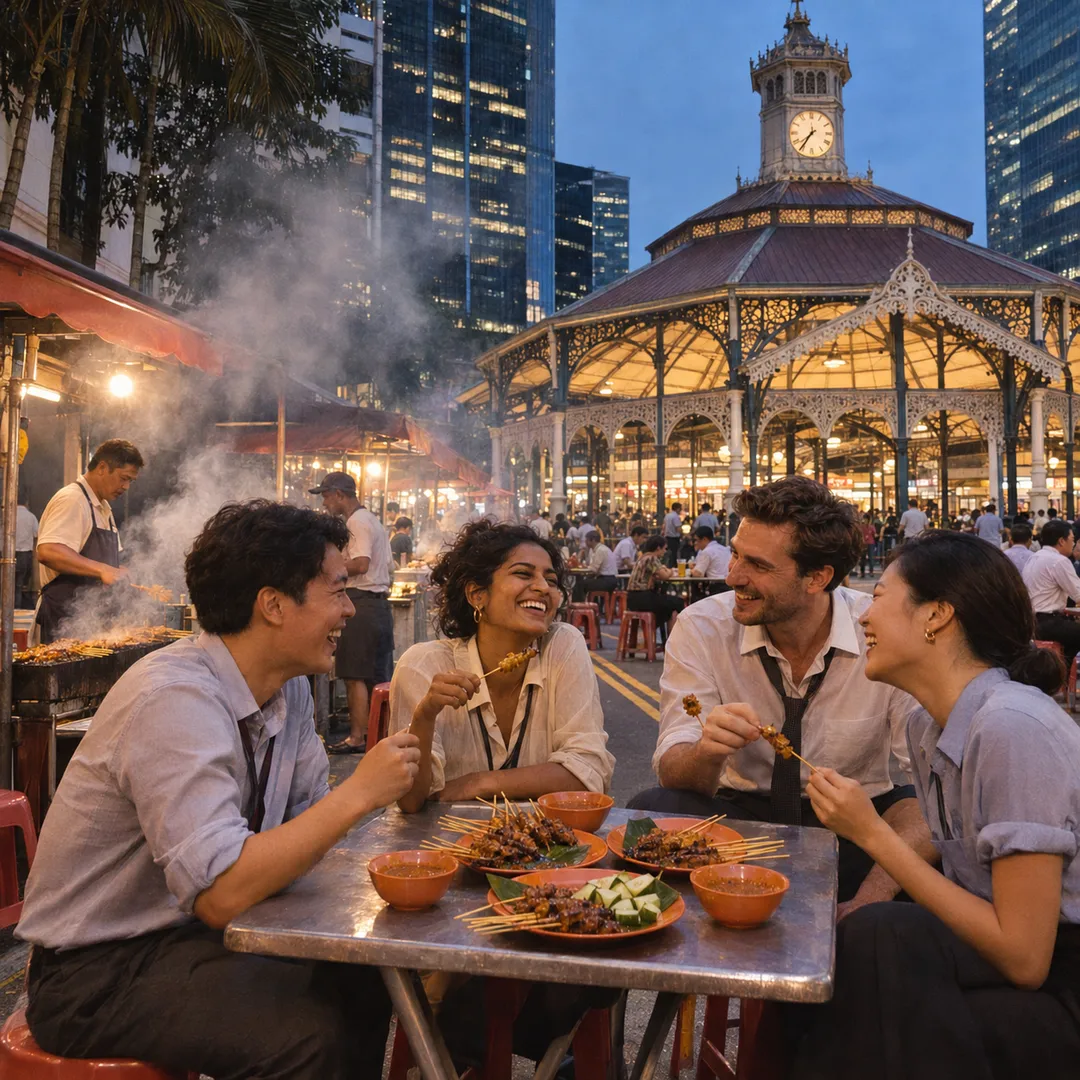
 Marina Bay Food Market Grazing Route After a Conference Day
Neighborhood Guides

Singapore Transit Station Pitstop Finder: 4 Pram Needs
Describe a Singapore station pause with a pram using four needs: space, food, walking effort and a simple return, without assuming any route is step free.
Four needs belong in a Singapore transit station pitstop finder brief when you have a pram: room to manage it, something useful to eat, tolerable walking effort and a simple way to continue. Put those needs into the same request. A stop that suits the child but leaves the adult balancing bags and a drink may not solve the task. This article offers a planning method, without assigning step-free status, baby facilities or guaranteed pram space to any station or business.

Start with the adult carrying everything
Describe the travelling group in practical terms. One adult with a pram and two bags has a different range of choices from two adults sharing the load. You do not need to disclose a child's name, age or personal routine to make the request useful. State what affects the stop: how many hands are available, whether someone needs to sit and whether food must be carried. These details show why the nearest place is not automatically the easiest choice.
Imagine the sequence rather than only the destination. You arrive, find the appropriate entrance, work out where the pram can go, order and handle the purchase. Each stage may occupy your hands or attention. If the sequence seems awkward before any venue is selected, change the brief first. Perhaps a drink is optional, or a meal can wait until a place where you already planned to settle. Removing one object can help more than adding another recommendation to the list.
Agree with another adult about who handles which part of the stop, if someone is travelling with you. One person can manage the order while the other stays with the child, rather than both moving between tasks. This is a suggested division of attention, not an instruction about a particular venue's service system. If you are alone, a simpler plan may be appropriate. The comparison should respect the situation you actually have, rather than an ideal version with extra help.
Put the four needs into one brief
A proposed request in the Karpo APP could read: “I am planning a short Singapore station pause with a pram. Help me think through somewhere to eat without adding much walking or complicated handling.” Add the station, your destination and the needs that matter most. You are supplying context for a conversation. There is no assumption that the product tracks the pram, sees nearby obstacles or offers a dedicated accessibility filter. A suggestion still needs to be assessed against the actual route.
Order the needs by importance. If sitting is essential, say so before mentioning a preferred snack. If the adult can keep walking but the meal must be easy to carry, put portability first. Some preferences are negotiable, while others determine whether the stop is possible. A ranked brief helps keep those differences visible. It also makes a fallback easier: you can remove the lowest-priority feature while preserving the reason you wanted to pause in the first place.
Ask for a small number of options with an explanation of the tradeoffs. Avoid treating a description such as family friendly as a complete answer. It may say little about the entrance, circulation space or handling a pram inside. A place could be welcoming to children while still being impractical for your particular stop. Where a relevant detail is absent, keep it absent in the plan. Do not silently replace an unanswered question with a claim that the route will be straightforward.
Keep route questions separate from food questions
Food suitability and physical access need different evidence. A menu may answer what you can order, while saying nothing about the approach from your station. A transport map may show a station connection without describing the entrance to the business you are considering. Keep each question with the information that can answer it. This prevents an attractive food recommendation from carrying an accidental promise about lifts, steps, surface conditions or which side of a road you will need to reach.
Before moving toward a candidate, understand the route from your own position well enough to decide whether you want to attempt it. The planning rule here is personal: prefer an approach you can explain over one that requires several uncertain transitions. This is not a statement that any particular Singapore route lacks those transitions. If reliable route information is unavailable, choosing a pause already on your intended path can reduce the amount you need to resolve during this short break.
Avoid adding a sightseeing loop to make the stop feel more complete. With a pram, the return or onward leg remains part of the same outing, and a pleasant detour still adds handling and attention. You can note an interesting street for a future visit without walking through it now. For this task, the benefit is a more manageable journey. The best moment to preserve that benefit is before committing to the extra movement, while reducing the plan is still easy.
Make eating and packing one sequence
Think about the order you can handle comfortably. A meal that requires a flat surface and several containers serves a different purpose from one compact purchase. Neither is automatically better. If sitting down is the central need, a proper pause may justify the extra unpacking. If you want to continue quickly, a simpler item may fit the brief. Use the actual provider's menu and instructions rather than assuming that a dish can be packaged in a particular way.
Include packing time in your own schedule. Finishing food is not always the moment the group is ready to move. You may need to organise bags, put belongings away and settle everyone before continuing. As a purely illustrative allocation, a family might reserve the last ten minutes of a forty-minute break for getting ready and returning. Those figures describe a chosen buffer, not measured travel or child-care timings. Your own circumstances can call for a different allocation entirely.
Choose the fallback while the group is settled. If the intended stop does not fit, you could shorten the purchase, continue to the original destination or postpone food until the next planned pause. Avoid collecting several speculative alternatives that require more walking. The fallback should remove one difficulty, not exchange it for another. You do not need a dramatic change of plan to make the journey better. Often the useful adjustment is simply dropping a nonessential part of the stop.
Practical Notes for a less awkward pause
Keep a brief note with the station, the travelling group, the four ranked needs and the point at which you intend to continue. If you are using a recommendation, distinguish supplied facts from your own preferences. No toilet, changing room, lift, storage space or pram policy is asserted here. Karpo's public introduction describes asking for food and outing ideas. The method turns those ideas into a decision you control, with the needs of the whole group visible at the same time.
At the chosen venue, follow its arrangements for seating, ordering and where belongings can go. Keep movement routes clear and avoid assuming an empty corner is available for storage. If the room does not work for your group, the prepared fallback remains a valid result. Finish the stop by restoring the simple carrying arrangement you started with, then continue. A successful pram pause is one that leaves the next part of the journey easier to manage, rather than adding another bag of unfinished tasks.
Ask Karpo for more information.
Keep reading
- Marina Bay Food Market Grazing Route After a Conference Day
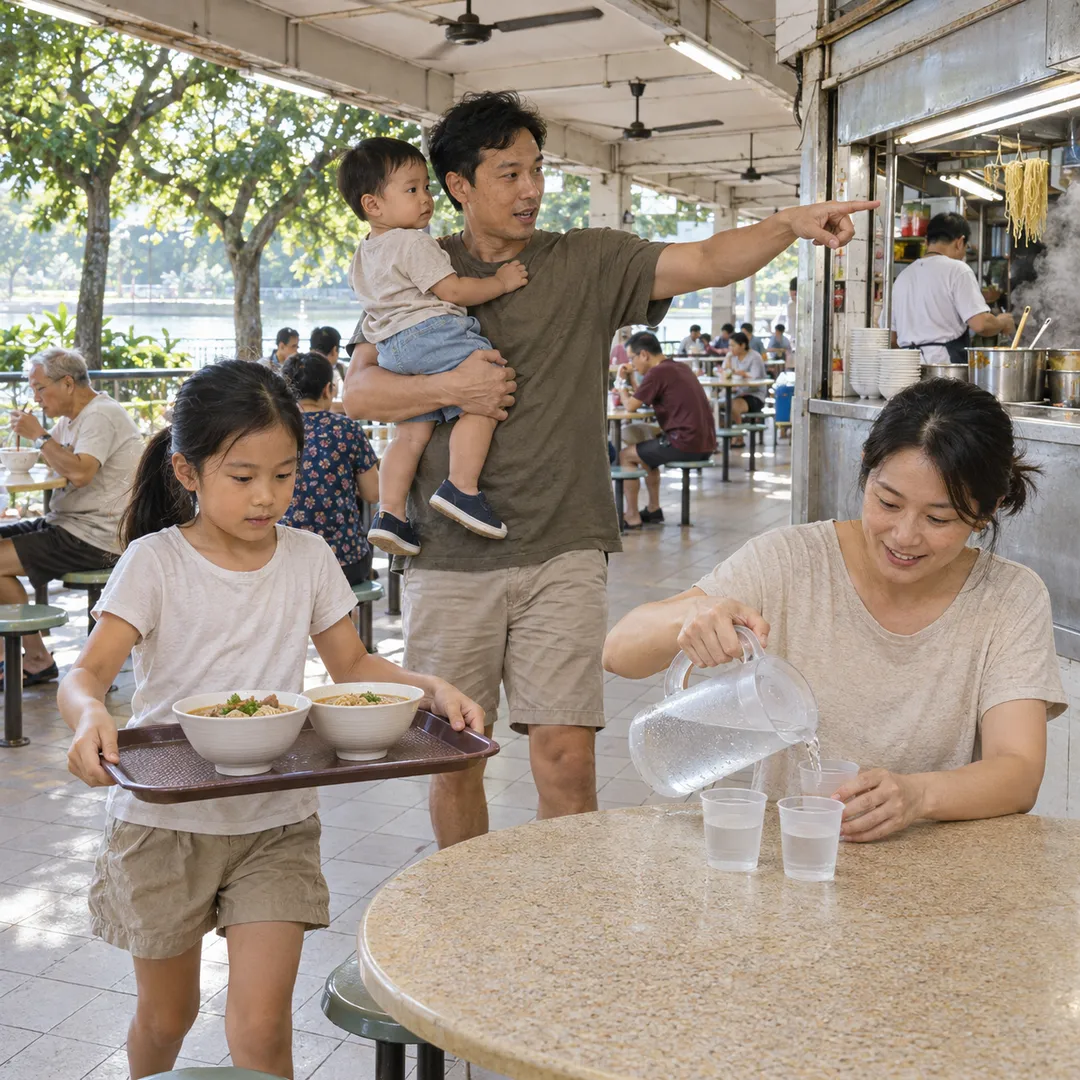 River Valley Food Market Grazing Route With Young Kids
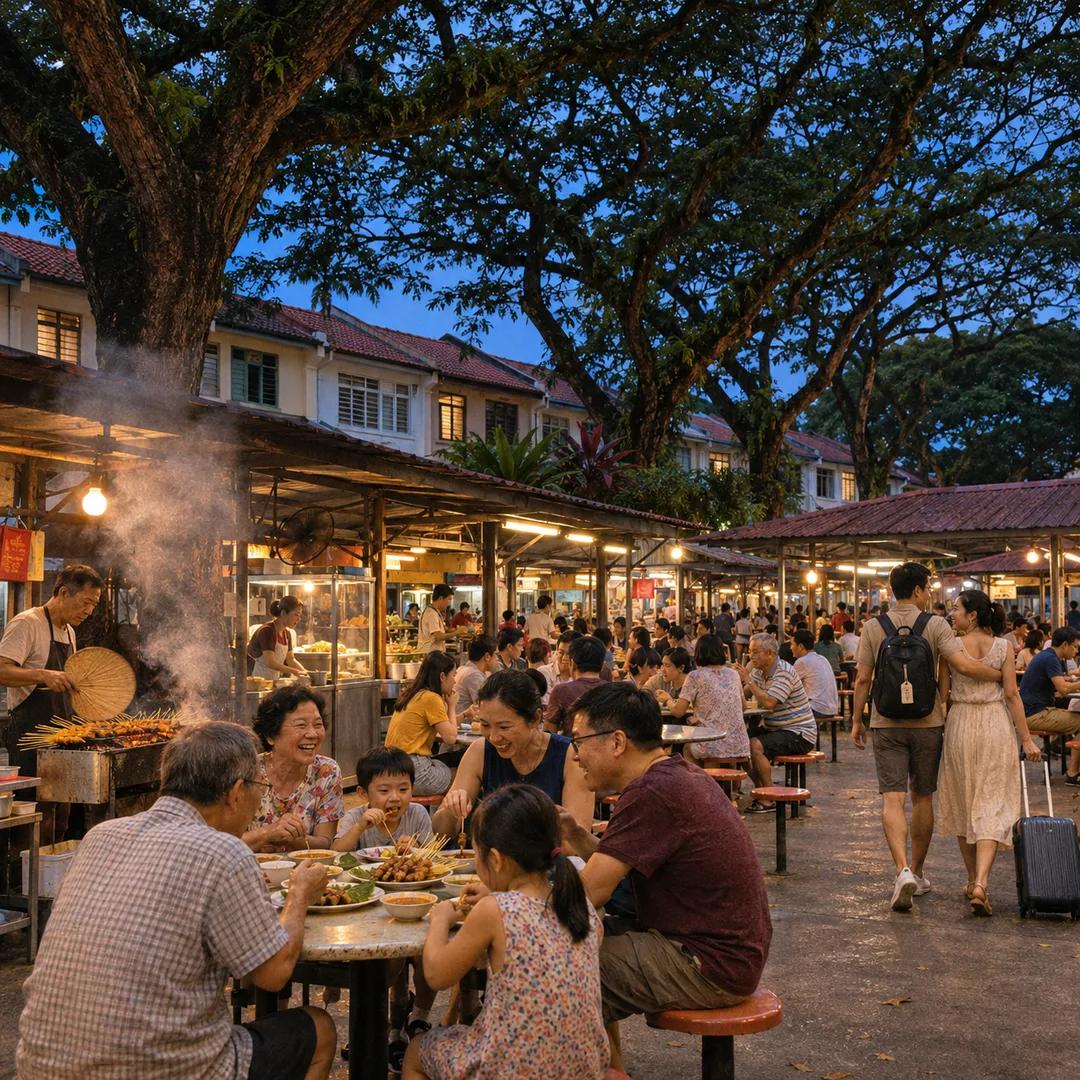 Serangoon Food Market Grazing Route for a Homecoming Weekend