 Marina Bay Food Market Grazing Route After a Conference Day
Neighborhood Guides
Singapore Transit Station Pitstop Finder: 3 Lunch Rules
Plan a Singapore station lunch around your spending limit, ordering effort and return route, so a short food break stays useful before the next commitment.
Three lunch rules make a Singapore station pause easier to manage: cap the total spend, simplify the order and protect the onward journey. Use those rules to form a transit station pitstop finder request before choosing a dish. The aim is a meal that fits your day, rather than a long restaurant search squeezed between trains. Any sample budget or time allocation below is a personal planning example, not a quoted menu price or a measured service time.
Decide whether lunch needs a table
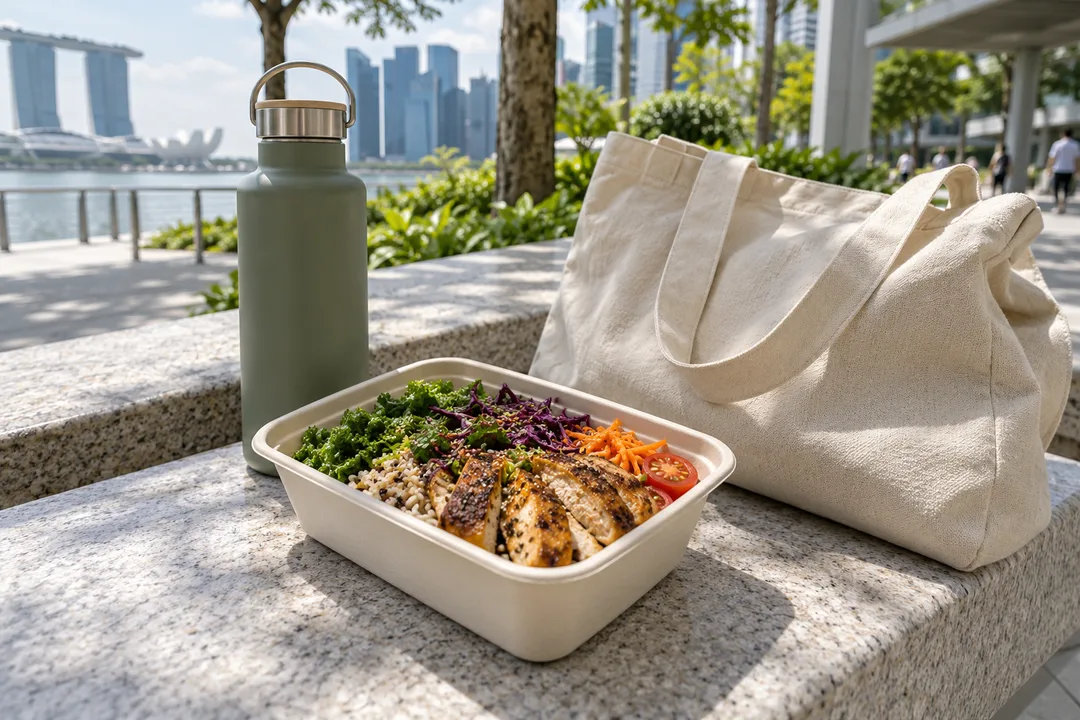
A proper seated meal, a portable lunch and a small snack solve different problems. If you need to stop carrying things and eat comfortably, a takeaway recommendation may not answer the brief. If you have a short gap and somewhere suitable to eat later, a portable option could reduce the decisions you make now. Describe the kind of lunch you need in ordinary language. That gives a recommendation something more useful to work with than the word nearby.
Be honest about what you already have. Someone with water, cutlery and a later lunch opportunity has more flexibility than someone who needs a complete meal immediately. You do not need to explain your entire day in the prompt. One sentence about hunger, one about how you will eat and one about your deadline can be enough. These are facts about your situation, not assumptions about a station's amenities, a food court's facilities or a cafe's seating arrangements.
Put the whole purchase inside the limit
State your spending ceiling as a total, including anything you consider essential. For illustration, a person might choose S$15 for food and a drink together. That figure is an invented spending limit, not a claim that a particular Singapore business sells a meal at that price. If the recommendation lacks a supported price, do not treat it as a budget match. A clear ceiling helps you reject an option without having to justify the decision again.
Decide what can be removed from the order before looking at appealing extras. You might want the main meal and water, with dessert left for another day. Another person may prefer a small meal and a particular drink. Neither choice is a universal rule about value. The point is to identify the part of lunch that makes the stop worthwhile, so an extra item does not quietly turn a modest purchase into something that no longer fits your own brief.
Make a useful request in Karpo
Open the Karpo APP and describe your starting station, preferred meal style and personal constraints as a proposed lunch search. An example brief is: “For a Singapore station lunch, help me narrow meal ideas to something portable, with one simple order and an easy onward route.” Supply the station you actually mean. This is a conversational request, not instructions for a dedicated station-filter screen. The public product introduction supports asking for food ideas, rather than a guarantee about individual station facilities.
Keep the response small enough to evaluate. Ask for a short comparison that explains why each candidate fits the meal style, and which details remain unspecified. You should be able to distinguish a clear fit from a promising possibility. Do not infer a particular branch, payment method or available dish merely from a brand name. If there is no supported Singapore result for your request, keep the brief as a planning aid instead of filling it with invented venue details.
Include the effort of ordering
Ordering effort can matter as much as the walk. A menu requiring several choices may be enjoyable on an unhurried day and tiring during a short break. Tell the conversation whether you want one familiar item, whether you are comfortable ordering at a counter and whether you need to carry the food onward. Those preferences do not establish how a business actually operates. They help you recognise when a suggestion would require more decisions than you want to make.
A queue is also more than a count of people. You may see separate stages for ordering, payment and collection, and you still need time to eat or pack the purchase. Avoid assigning a service time from appearance alone. Set your own point for leaving before you order, while abandoning the stop is still straightforward. Once a purchase is underway, rushing the staff does not recover the time you chose to spend reaching the place.
Work backwards from the next commitment
Use the next fixed commitment as the anchor. Your planning window begins when you are ready to leave your present position and ends when you need to be ready for what follows. Walking back is only part of that return. You may also want time to pack away food, find the right direction and stop moving before the next task. Those needs vary by person, which is why a distance alone cannot tell you whether lunch will fit.
Here is a sample allocation, purely for arithmetic: from a forty-minute break, reserve ten minutes for returning and getting ready, ten for outward movement and ordering, and twenty for eating. The numbers are not researched travel or restaurant timings. If the actual situation consumes the ordering portion early, change the meal rather than borrowing automatically from the return portion. The example is useful because it makes a tradeoff explicit, not because forty minutes is the correct break for everyone.
Choose a fallback before hunger chooses it
A fallback should remove work. It could be a simpler order, food carried to a place you already planned to visit, or postponing the purchase until after the journey. Avoid adding another speculative restaurant when the first option has already used your available time. A longer list can feel reassuring without improving the decision. For this short lunch task, knowing what you will drop is more valuable than having several additional places to investigate under pressure.
Do not let a drink stop quietly become a second meal stop on the opposite side of your route. If the main meal meets the need, finish there. If a particular drink is the whole reason for the pause, say so at the beginning and make food optional. You can save another idea for later without acting on it today. That leaves the search useful even when the eventual choice is smaller than the meal you first imagined.
Practical Notes for a tidy lunch brief
Keep your final brief to the station, the way you want to eat, a total spending ceiling and a personal leave-by point. List food restrictions directly if they affect the order. Ingredient questions belong with the food provider, and an omitted ingredient is not evidence of an allergen-free preparation area. This article makes no claims about a named menu, kitchen, phone number or address. Its job is to help you ask a clearer question and judge the answers conservatively.
Before committing, you should be able to say why the option fits and what would make you abandon it. A seated lunch might depend on finding a suitable place to sit, while a portable lunch might depend on having a sensible place to eat later. Bring the useful choice back into the conversation only if another comparison would improve it. The meal is the outcome. Producing an elaborate lunch itinerary is unnecessary when one manageable purchase already answers the need.
Ask Karpo for more information.
Keep reading
- Marina Bay Food Market Grazing Route After a Conference Day
 River Valley Food Market Grazing Route With Young Kids
 Serangoon Food Market Grazing Route for a Homecoming Weekend