 Sentosa Christmas Light Up Walk Planner for Young Families
Free Things to Do
Tiong Bahru Sunday Morning Stroll Planner: Free Deco Loop
A Tiong Bahru Sunday stroll costs nothing: start at the wet market for breakfast, loop the Art Deco blocks and back lanes, and finish before the midday heat.
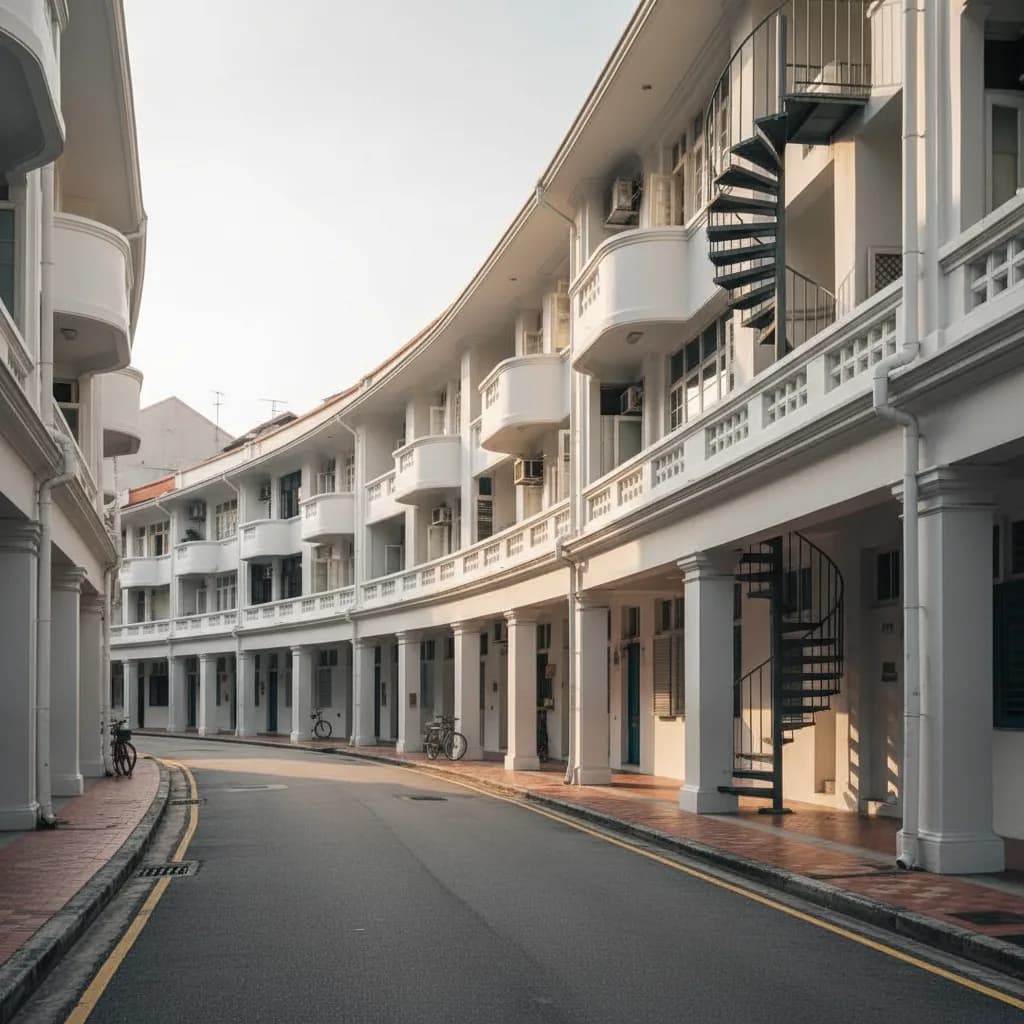
Tiong Bahru is the Singapore estate that rewards walking slowly on a Sunday, and the whole loop is free. The low white flats curve around street corners like ocean liners, spiral staircases twist up their back walls, and the wet market at the centre fills with neighbours buying fish, flowers and breakfast. Use this sunday morning stroll planner to shape a loop of about two unhurried hours: market first, then the residential blocks, the back lanes, a quiet green pocket and a coffee to finish.
Why Tiong Bahru Suits a Slow Sunday
Most of Singapore is built for speed, with wide roads, covered links and malls that keep you moving. Tiong Bahru is the opposite. It is one of the oldest public housing estates on the island, and its scale is human: three or four storeys, rounded balconies, five-foot ways you can cross in a few steps. Nothing is far. On a Sunday the office crowd from the city is absent, so the estate belongs to retirees with shopping trolleys, families pushing prams and the occasional photographer waiting for the light to hit a curved wall.
The other reason is shade. The blocks were laid out with deep overhangs and courtyards, so you can stay out of direct sun for long stretches. That matters in a climate where the morning warms quickly. If you start early, the air between the flats still feels cool, the market floor is freshly hosed, and the streets have that hush you only get when a neighbourhood is waking up rather than performing for visitors.
Start at the Market With Breakfast
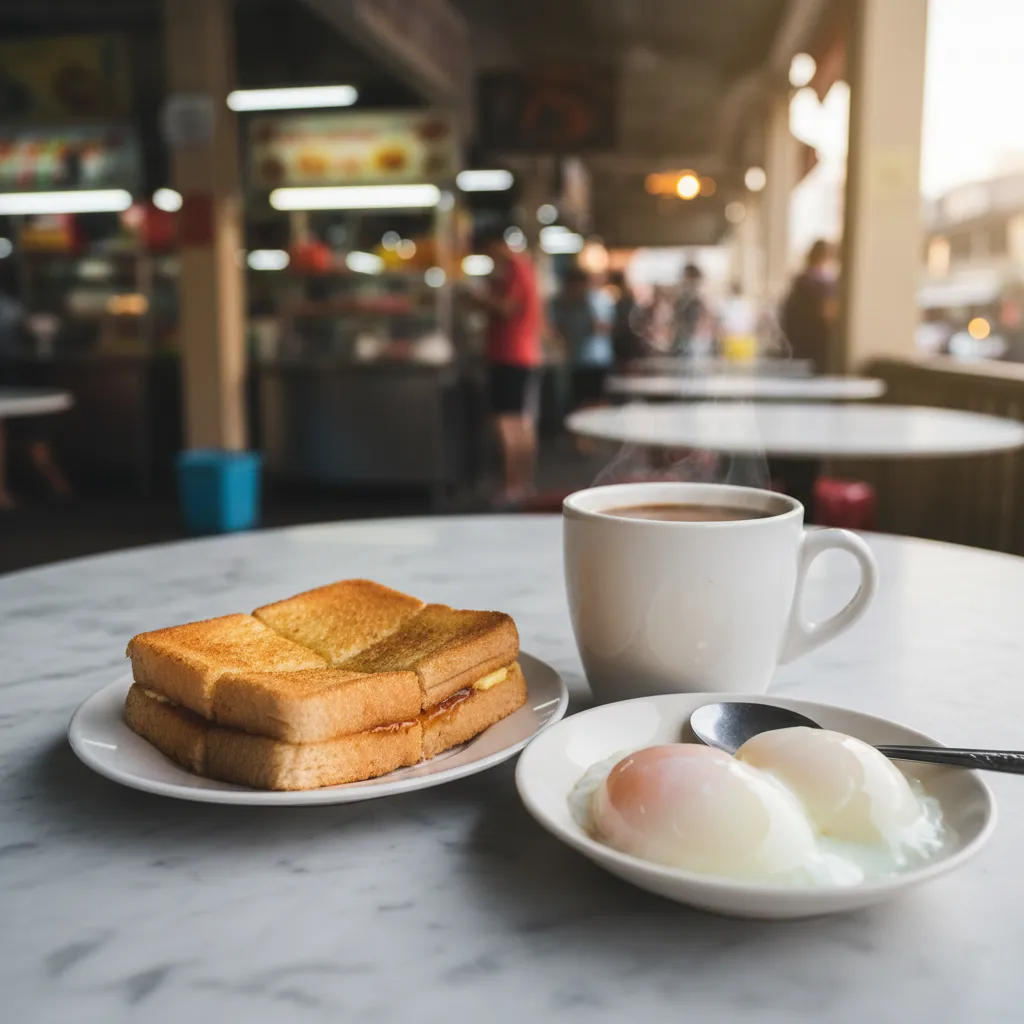
Begin at the market building, because it sets the rhythm for everything that follows. Downstairs is the wet market, where aunties compare prawns and stallholders call out to regulars by name. Upstairs is the hawker centre, the estate's real living room. Find a seat, then order the way locals do: kaya toast with soft-boiled eggs, a plate of chwee kueh topped with salty preserved radish, or a bowl of something hot if you came hungry. Kopi arrives sweet unless you ask otherwise.
A small tip that saves frustration: on a busy Sunday, tables are claimed with a packet of tissues. If you see one resting on a seat, that spot is taken, even if nobody is sitting there. Do the same if you are with a friend, with one person holding the table while the other queues. And be honest with yourself about timing. A popular stall with a long line can eat half an hour, so if the queue snakes past three other stalls, pick the shorter one beside it and come back another week.
Loop the Art Deco Blocks
After breakfast, leave the market and walk the residential streets in a wide rectangle. Look up rather than ahead. The corners of many blocks are rounded, the balconies are stacked like layers of a cake, and the stairwells at the back spiral in black metal that photographers love. Window grilles, ventilation bricks and the occasional decorative motif show how much care went into what was, at the time, ordinary housing for working families.
Keep your voice low and your lens polite. These are homes, not a film set. People hang laundry from bamboo poles, water potted plants on the landings and sit on the steps with newspapers. A nod or a quiet good morning goes a long way. Skip the urge to climb the spiral staircases for a better angle, since they lead to private back doors. The best views are from the lane behind, where you can see several staircases in a row without stepping onto anyone's doorstep.
Wander the Back Lanes and Bird Corner Stories
The back lanes are where Tiong Bahru feels most lived in. Air-conditioner units hum, cats sleep on car bonnets, and murals painted onto blank walls tell small stories about the estate's past: a fortune teller, a pet shop, a songbird hung in a cage outside a coffee shop. Older residents remember when bird owners gathered here on weekend mornings so their birds could sing to each other. Ask a long-time neighbour about it and you may get a much better story than any plaque.
This is also the stretch where the estate's newer life shows up. Independent bakeries, a small bookshop and plant-filled cafés sit at the ground floor of old blocks, so the walk mixes heritage and Sunday browsing. You do not need to buy anything. Window shopping is part of the ritual, and the bookshop in particular is a good place to cool down for ten minutes while you flip through local titles and poetry you would not find at a chain store.
Add a Green Pocket or Keep It Short
If you still have energy, the walk extends easily. A short stroll leads to a sloping hill park at the edge of the estate, with old trees, a playground and benches that catch a breeze. Families with small children often end up there because there is space to run. Another option is the riverside path toward Robertson Quay, which turns the morning into a longer walk along the water, with joggers, dog walkers and rowers drifting past.
Be realistic about the heat. If the sun is already strong when you finish the market, cut the green add-on and stay in the shaded streets. A Sunday stroll should leave you happy, not drained. For visitors who are not used to the humidity, carry water, wear a hat and plan a sit-down every forty minutes or so. The good news is that Tiong Bahru has plenty of steps, benches and café chairs, so you are never far from a rest.
How to Plan Your Loop With Karpo APP
Planning works best when you decide the shape before you leave home. Pick an anchor, such as breakfast at the market or coffee at a café. Pick a middle, usually the Art Deco blocks and back lanes. Then pick an ending: the bookshop, the hill park or the river path. Then open the Karpo APP and ask for ideas around Tiong Bahru on a Sunday morning: a quiet breakfast spot, a café that suits a group, or a nearby walk that stays in the shade. Karpo suggests options you can compare, and you choose the order that fits your pace.
Karpo is a helper for ideas, not a live tracker, so treat its suggestions as a starting list and use your eyes on the ground. If a café is packed, walk on to the next one. If a stall has sold out of what you wanted, order its neighbour's speciality. The point of a planner is to remove the decision fatigue that ruins lazy mornings, so you spend more time looking at curved balconies and less time scrolling through options on a street corner.
Practical Notes for Tiong Bahru on Sunday
The estate is compact and walkable, with an MRT station a short walk from the edge of the blocks and buses running along the main road. Wear shoes that handle wet market floors, because the ground near the fish stalls is often damp. Bring a little cash for hawker stalls, although many now accept digital payment. Dress comfortably and modestly, since you are walking through a residential neighbourhood. Shops and cafés keep their own schedules, so contact any place directly if you are building the morning around it.
One honest verdict: do not try to tick off every café in a single morning. Tiong Bahru loses its charm when you rush from one queue to the next. Choose one breakfast, one coffee and one browse, then let the rest of the walk be about the buildings and the people. Come back on another Sunday for the places you skipped. The estate is not going anywhere, and it looks different every time, depending on the light, the weather and who is out on the steps.
Ask Karpo for more information.
Keep reading
- Sentosa Christmas Light Up Walk Planner for Young Families
 Tanjong Pagar Christmas Light Up Walk Planner for Teams
 Bugis Christmas Light Up Walk Planner for Interfaith Friends