 Chinatown New in Town Weekend Planner: Errands and Temples
Weekend Plans
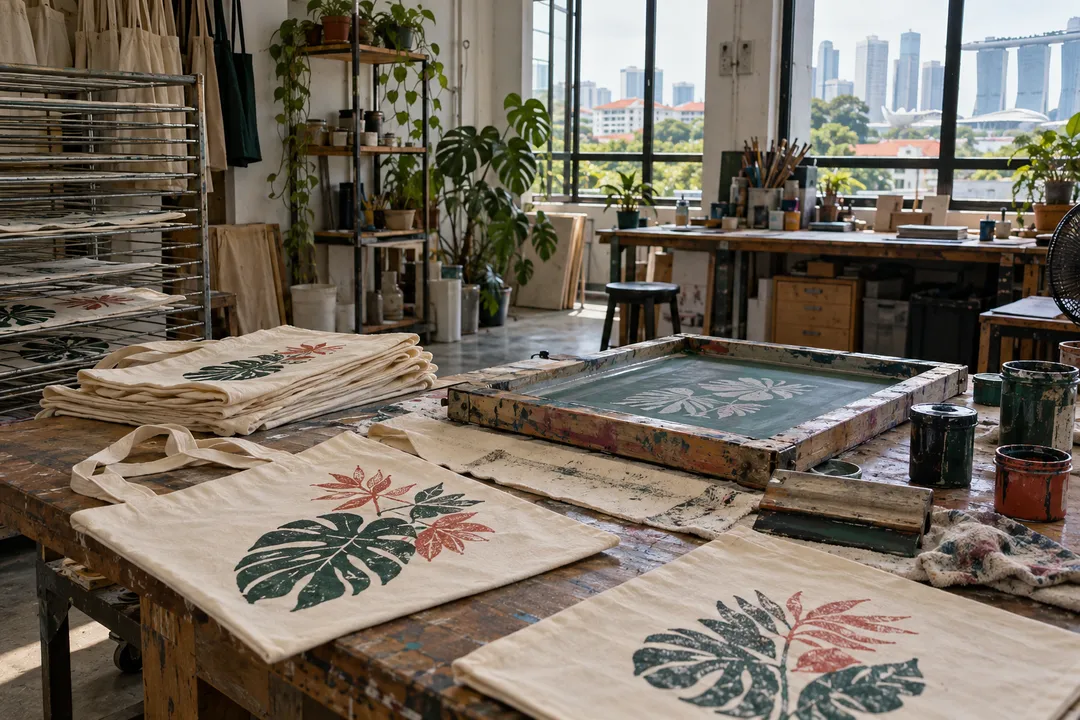
Singapore Silk Screen Workshop: Crisp Tote Prints Guide
STPI Creative Workshop & Gallery at 41 Robertson Quay, Singapore 238236 gives tote-bag planner planning a concrete local starting point, with clear choices.
STPI Creative Workshop & Gallery at 41 Robertson Quay, Singapore 238236 is a better starting point for a tote plan than a generic craft search because fabric changes the problem. One cotton bag flexes, has seams, and absorbs ink differently from paper. Begin with the print area that must remain clear, then decide whether the graphic should sit at the centre, above the seam, or on one side — The fabric checklist records this address beside the drying instruction. STPI lists its print room and gallery at 41 Robertson Quay, Singapore 238236 — The fabric checklist records this address beside the drying instruction. Treat the final tote as a surface with limits, not as a blank rectangle — The fabric checklist records this address beside the drying instruction.
Print The Bag For Its Real Life
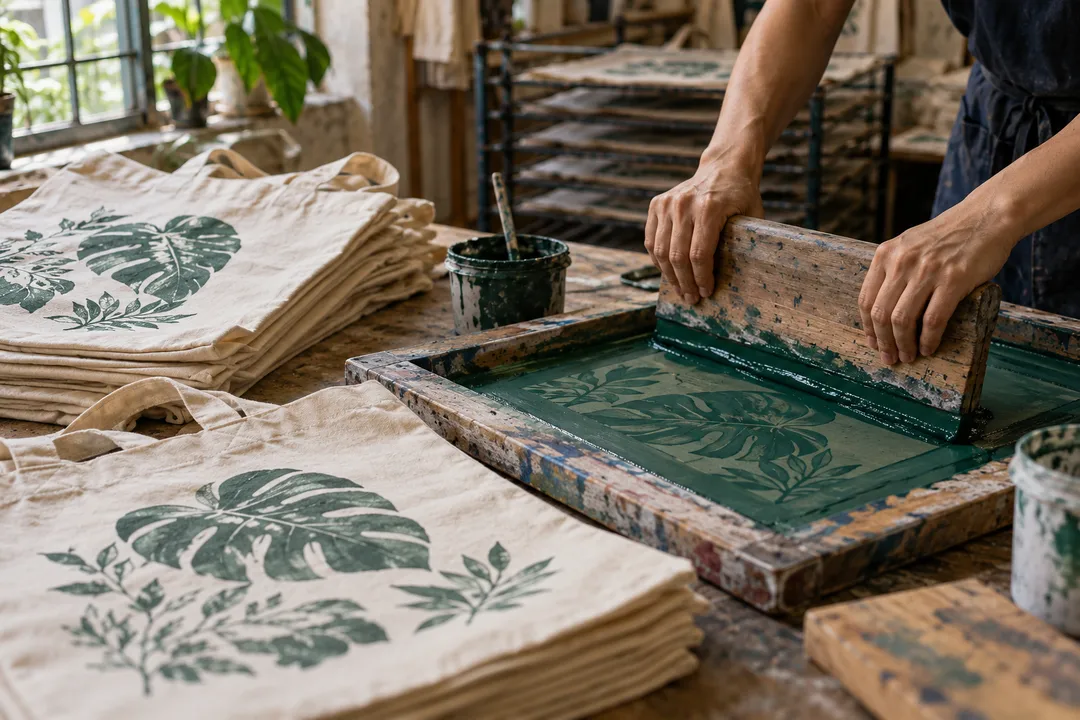
A tote is a moving surface, not a blank rectangle. Decide where the image sits when the bag hangs from a shoulder and where the handles, seams, and fold lines will interrupt it. Keep the main shape strong enough to read when the fabric relaxes. At STPI, bring the actual bag or a close material reference so the first test answers a physical question. A design that looks perfect on a monitor may become crowded once it is carried, folded, or filled. Let the object set the boundaries before the ink does.
Flattening the fabric is a design step. A crease can block contact between screen and surface, while a seam can push the frame away from the bag. Mark those areas on the artwork and choose whether the image should avoid them or use them. If the print crosses a handle, make the interruption purposeful. If the bag has a pocket, decide whether it is part of the composition or simply a boundary. These choices make the tote feel made for its construction instead of copied from a paper poster without adjustment.
Flatten The Fabric Problem
Use a scrap or hidden area to test the broadest shape first. Fine texture is a poor opening question because the weave may soften it before you understand the larger problem. Inspect the bag at the distance it will actually be seen. Look for a clean silhouette, an even field, and a position that still feels balanced when the fabric is held in one hand. If the image needs help, enlarge the important mark before adding another colour. A stronger shape usually improves a tote more than extra decoration.
Drying and handling deserve the same attention as the pull. In Singapore’s humidity, leave the printed area undisturbed and keep it away from straps, zippers, and rough table edges. Label the bag so the rack remains legible to everyone. Do not fold it into a personal carrier because the workshop has technically ended. The first successful tote should reach a stable surface before it is asked to hold anything. That patience protects the print and reveals how the material behaves after the excitement of the first impression.
Protect The First Good Pull
Choose the run by use rather than by ambition. A few durable bags for a small event may require more care than a large quantity made to fill a spreadsheet. Write how many perfect pieces you need, how many tests you can sacrifice, and what you will do with a charming but imperfect result. One sample can become a reference object. This approach keeps the workshop about learning and making, not about forcing every sheet into the same definition of success.
The venue is at 41 Robertson Quay, Singapore 238236. Keep the approach comfortable and the return direct. A riverside pause before the workshop can help you inspect the layout, but after printing, the bag should not travel through a crowded meal or a long list of errands. Use a flat support, protect the surface from rain, and leave room for the fabric to settle. The safest tote route is the one that treats the print as active work until it is fully stable.
Work With Humidity And Handling
Use the official STPI reference in the source row and record the bag’s fabric, print side, handle position, and artwork version beside it. Keep a simpler file ready in case the surface absorbs more than expected. Do not reuse a paper assumption for cotton or canvas. The worksheet should tell the instructor what the object needs and tell you which detail can be reduced first. That makes a later tote session easier to compare with the first without pretending the materials behaved identically.
If the first pull is soft, adjust contact and support before adding ink. If the bag moves, change how it is held before changing the illustration. If the colour feels heavy, enlarge negative space or reduce the field. Write the correction that made the next test better. These notes are more valuable than a generic promise to “be careful” because they refer to the actual fabric. A tote becomes repeatable when the method learns from the material rather than asking the material to imitate paper.
A Robertson Quay Tote Route
Karpo APP can hold the flat layout, the source page, 41 Robertson Quay, the fabric note, and the drying instruction. Add a photo of the first good sample and a sentence about how the bag will be used. That record shows where the design sits while carried and how the print looks after it has rested. Keep the next quantity decision beside the sample. The best reference for a tote is not a mock-up; it is a real bag that has survived handling.
STPI Creative Workshop & Gallery gives the tote project a proper production setting. At 41 Robertson Quay, Singapore 238236, design around seams, test the broad form, respect the drying interval, and plan the journey home before the pull. A crisp bag comes from treating fabric as part of the image. Once the first sample is safe and legible, the next edition can grow with evidence instead of hope. Let the first bag become the standard for the next batch. Its folds, seams, and dried colour reveal the real material story, giving the following session a reference that is both visual and practical.
Practical Notes For Fabric
Ask Karpo for more information.
Keep reading
- Chinatown New in Town Weekend Planner: Errands and Temples
 Kampong Glam New in Town Weekend Planner: Mosque to Murtabak
 Holland Village New in Town Weekend Planner: Meet People