 Chinatown New in Town Weekend Planner: Errands and Temples
Weekend Plans

Singapore Silk Screen Workshop: Small Edition Math Guide
STPI Creative Workshop & Gallery at 41 Robertson Quay, Singapore 238236 gives print-run calculator planning a concrete local starting point, with clear.
STPI Creative Workshop & Gallery at 41 Robertson Quay, Singapore 238236 is a useful place to ground a print-run calculator because the object, not the search phrase, determines the work. Start with the number of keepers, the final size, the surface, and the colours — The small-edition worksheet gives this address its own quantity row. STPI lists its print room and gallery at 41 Robertson Quay, Singapore 238236 — The small-edition worksheet gives this address its own quantity row. Then add test sheets, likely rejects, settling space, and a deadline. This result should tell you whether the edition fits the session, not merely multiply a number.
Count Copies Against The Humidity
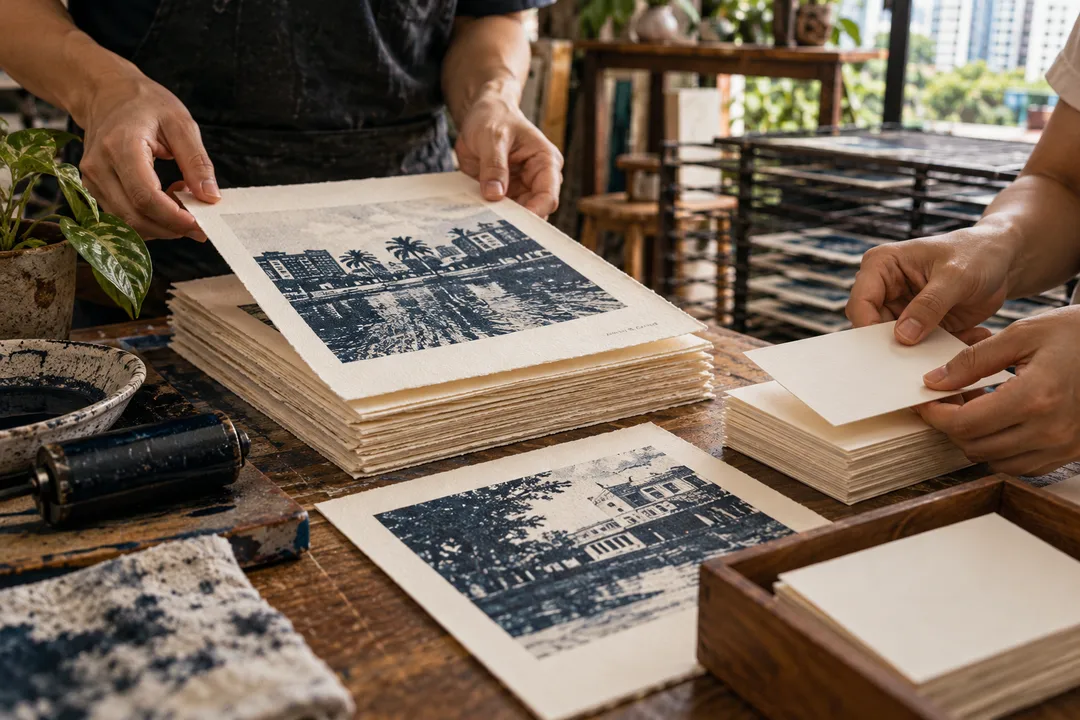
A Singapore print-run plan needs to account for the work between pulls. At STPI Creative Workshop & Gallery, start with the quantity you need and then write a separate allowance for tests, registration, and sheets that will not become part of the final set. Warm, humid air can change how quickly a surface feels ready to handle, so the drying interval belongs in the calculation rather than in a vague hope that the rack will solve it. A good number is one that still works when the visible printing is not the whole afternoon.
Define the edition by its use. Five strong prints for a small wall may be a better target than fifteen rushed copies. Decide which sheets must be clean, which can become reference samples, and when the remaining quantity stops adding value. This helps at STPI because the studio experience is about learning through making, not merely chasing a large count. If the first test exposes a weak edge, reduce the ambition before repeating the problem. A smaller run with a clear lesson can support the next project more effectively.
Use Tests To Protect The Run
Prepare the artwork so the instructor can see the production question immediately. Bring the final size, separated layers if needed, and one fallback with fewer fragile details. Keep the source file and a flattened reference together. A print-run calculator should record the screen count, the intended surface, the test allowance, and the expected drying space. It should not turn a general workshop description into a promise that every design can be produced at the same speed. The object still controls the work.
STPI’s gallery-and-workshop setting rewards attention to the sequence. Observe where paper waits, how people move around the shared station, and which tools need to be returned before the next person can continue. A tidy changeover protects the group’s time and keeps a damp sheet from becoming an obstacle. The queue is part of capacity. If another learner needs the rack, label your work and clear the active surface as soon as your stage is complete. The best calculator includes this human rhythm.
Give Wet Work A Safe Interval
Use 41 Robertson Quay, Singapore 238236 as the fixed point for the route. Walk the final stretch with the artwork already organised and keep the post-session journey direct. Robertson Quay is pleasant for a pre-workshop pause, but a wet print should not be treated like a souvenir that can travel through a long meal or a crowded bag. Carry a flat support, protect the surface, and let the print reach a stable place before adding another stop. The river walk is better before the pull or after the work is safe.
The official STPI source belongs in the worksheet’s venue row. Record the exact workshop format, the artwork version, the quantity ladder, and the question you want the test sheet to answer. Leave a blank for any material detail the source does not state. That blank is useful because it shows what remains to ask at the studio. It is better than creating a precise-looking total from a general course description. A transparent estimate gives you a decision; false precision gives you an avoidable surprise.
Plan The Robertson Quay Return
The run should have an exit condition. Stop when the required clean copies are secured, when the proof has answered the main design question, or when handling the remaining sheets would put the work at risk. Note which condition occurred. If the session ends with a smaller set than planned, write down why and whether the design itself needs changing. That record makes the next booking more efficient. You can increase the number with evidence instead of assuming that more time automatically creates more successful prints.
Karpo APP can hold the STPI address, the source page, the quantity ladder, the separated artwork, and the route home. Add a small production note for the drying interval and a fallback design. Keep the selected format distinct from the personal estimate. This lets you compare a later project without accidentally carrying over the wrong assumptions about surface or colour. The app record should be a working worksheet, not a polished promise that hides the parts of the process you have not tested.
Practical Notes For STPI
For a Singapore silk screen workshop, the number is defensible when another person can follow its logic. Show the desired copies, test copies, registration allowance, drying time, cleanup, and carrying plan. Keep the venue fact at 41 Robertson Quay, Singapore 238236 and the official source beside it. Then let the first pull revise the estimate. A calculator that listens to the material will always be more useful than one that merely repeats the quantity you typed before the session.
STPI Creative Workshop & Gallery gives the print-run question a real setting, but the calculation remains yours. Count the object, protect the tests, respect the rack, and carry the finished sheets away from heat, rain, and crowded errands. The best result may be a smaller edition with a reliable method. Once the worksheet records what happened, the next run can grow from experience rather than from a hopeful number. A Singapore edition plan earns trust when it shows where the number came from and where the number may change. Let the first sheet revise the estimate, then save that revision with the venue record.
Make The Number Defensible
Ask Karpo for more information.
Keep reading
- Chinatown New in Town Weekend Planner: Errands and Temples
 Kampong Glam New in Town Weekend Planner: Mosque to Murtabak
 Holland Village New in Town Weekend Planner: Meet People