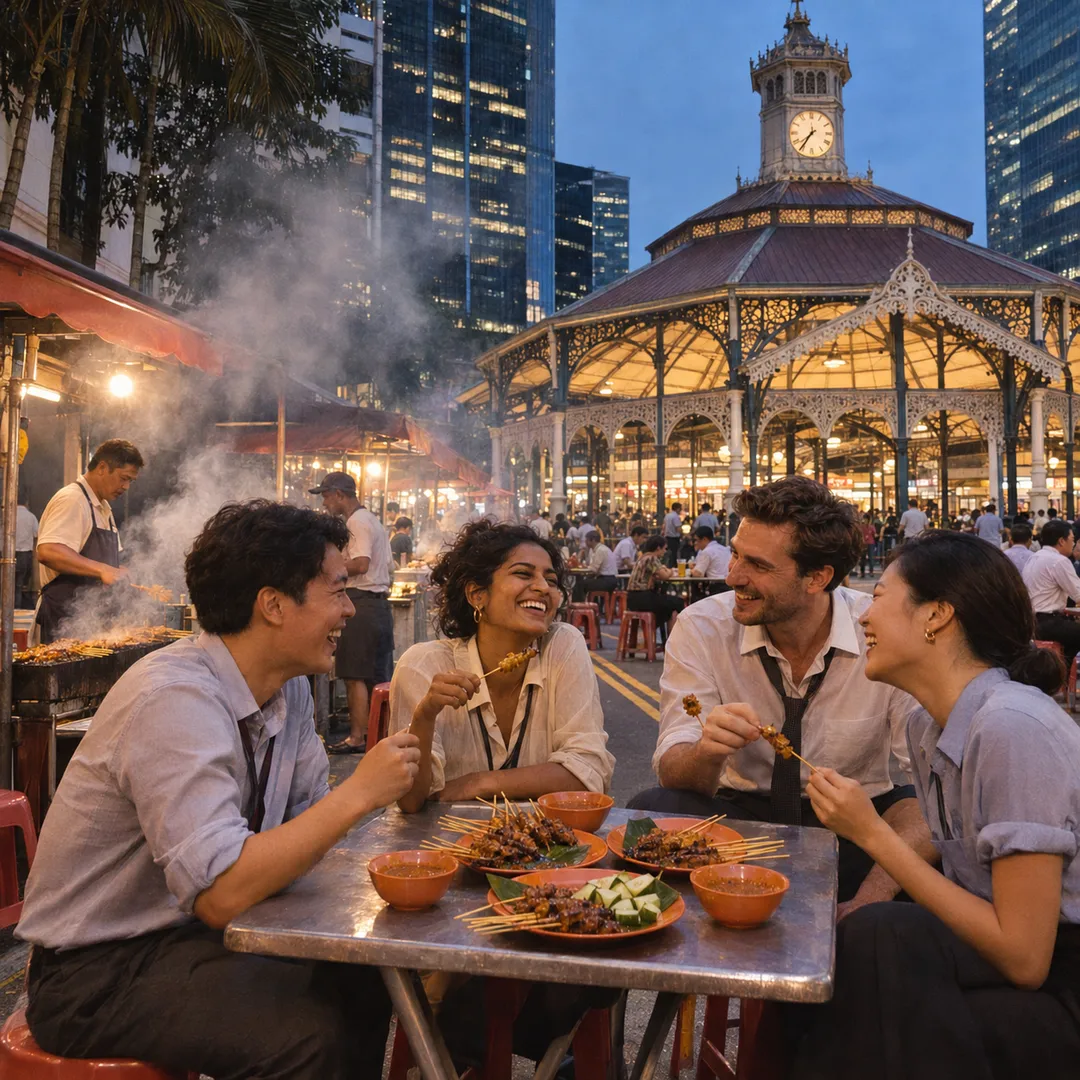
 Marina Bay Food Market Grazing Route After a Conference Day
Neighborhood Guides
Tiong Bahru Scenic Walk Planner: Deco Flats at Dawn
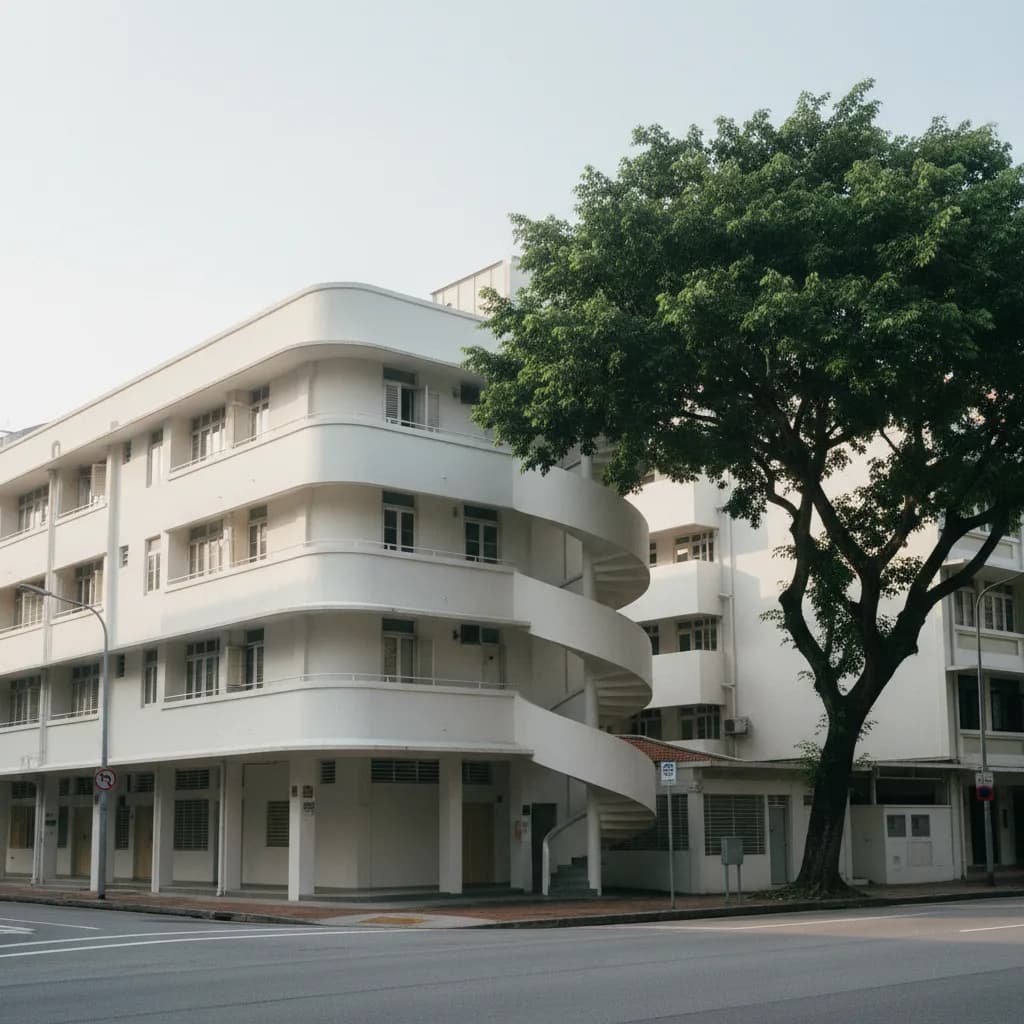
Tiong Bahru is best walked early, looping the curved pre-war flats, the spiral back stairs and Yong Siak Street before the estate wakes up and the heat sets in.
Tiong Bahru rewards the walker who arrives before the neighbourhood has finished its first coffee. The estate is small enough to cross in ten minutes, yet the curved walk-up flats, the hidden back lanes and the spiral staircases make it feel larger the slower you go. This planner treats it as a loop rather than a checklist: where to start, which lanes to thread, how to pace the light, and where to sit down when the sun climbs above the rooftops.
Why This Estate Feels Like a Ship at Anchor
Most housing in Singapore rises straight up. Tiong Bahru spreads sideways instead, in low blocks of three and four storeys with rounded corners, horizontal ledges and portholes that make the whole grid look like a fleet of moored liners. The style is called Streamline Moderne, and it came from an era when the colony's planners wanted modern, airy homes for clerks and shopkeepers. Walking here is less about one landmark and more about noticing how every corner bends.
That bending matters for your route. Because the blocks curve, the views change every few steps, and a street that looked plain from one end turns sculptural from the other. The trick is to walk each lane in both directions at least once. Residents still hang laundry from bamboo poles and water potted plants on the ledges, so the estate reads as a lived-in neighbourhood rather than a museum set. Keep voices low and cameras discreet near open windows.
Starting at the Market and Choosing a Direction
The neighbourhood market and hawker centre sits near the middle of the grid and makes the natural starting point. Downstairs is a wet market where aunties pick through greens and fish, and upstairs is a cooked-food floor where breakfast regulars settle in with kopi and a plate of chwee kueh or lor mee. Eat first if you can, because a full stomach makes the slow pace of this walk feel deliberate rather than impatient.
From the market you can head in two directions. Going towards the older pre-war blocks puts you among the most photographed curves early, while the light is still soft and the paint looks creamy rather than glaring. Heading the other way, towards the later post-war blocks, gives you a quieter warm-up and saves the showpieces for the end. Neither is wrong. Pick based on whether you care more about photographs or about building anticipation.
The Back Lanes and Spiral Staircases
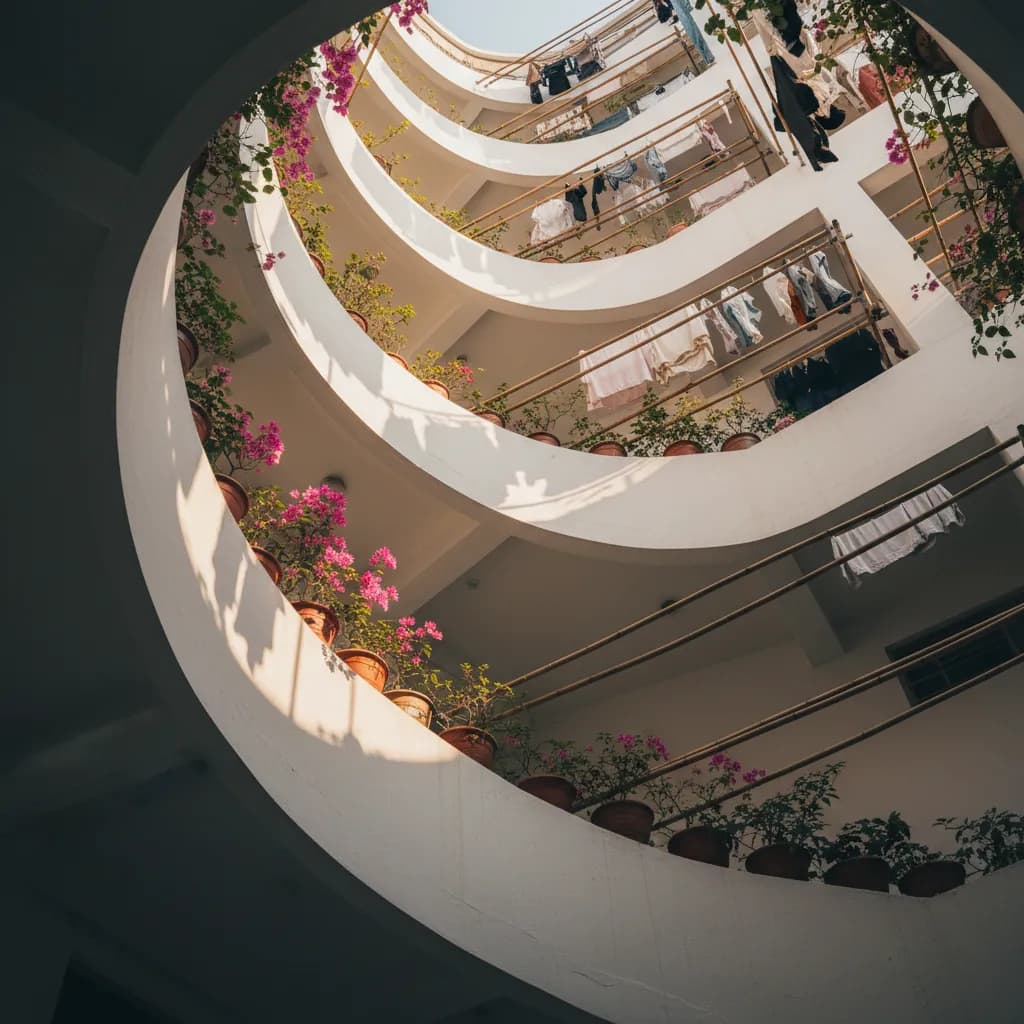
The real secret of Tiong Bahru is behind the blocks rather than in front of them. Narrow service lanes run between the rear walls, and here the buildings drop their polished street faces. You see rounded spiral staircases in white concrete, rusting grilles, air-conditioner units, potted chillies and the occasional cat asleep on a step. These lanes are public walkways, but they double as residents' back doors, so treat them like a courtyard you have been allowed to cross.
The spiral stairs photograph best from a low angle looking up, when the curve frames a slice of sky. Mid-morning shade falls cleanly across them, and late afternoon throws long stripes of shadow that make the steps look carved. Do not climb them. They lead to private homes. Instead, count how many different staircase shapes you can spot, because the details vary from block to block and the game slows you down in the best way.
Bird Corners, Murals and the Quieter Edges
Tiong Bahru still has an old songbird tradition, and one corner of the estate once hosted bird-singing gatherings where owners hung their cages from hooks and let the birds compete. The scene is quieter now, but the memory lives in a wall mural nearby and in the occasional cage you will still see on a balcony. Pause here and listen. On a still morning the estate is full of birdsong, and it changes the mood of the walk entirely.
Other murals are scattered through the neighbourhood, painted to recall the trades and pastimes of earlier residents: fortune tellers, letter writers, a home kitchen, children playing in a lane. They are easy to miss because they sit on side walls rather than main facades. Treat them as waypoints rather than destinations. If you find one, look up at the block above it, since the contrast between the painted past and the lived-in present is the whole point.
Yong Siak Street for a Bookish Finish
End the loop on Yong Siak Street, the short, tree-shaded stretch where the estate's independent shops cluster. It has become shorthand for slow Singapore: a bookshop with hand-written recommendation cards, small cafés with marble tables, and a pace that invites browsing rather than buying. Because the street is brief, it works as a cool-down. You have already done the walking, and now you can sit, read the spines and let the heat pass.
If you have a companion who is less enthusiastic about architecture, promise them this street as the reward. It turns the morning into a story with a payoff: curves and staircases first, then a book and a cold drink in the shade. Weekend mornings bring more browsers, and weekday mornings feel almost private. Either way, leave enough time that you are not checking the clock while you browse, because hurrying here defeats the purpose of the whole route.
Pacing the Loop Against Heat and Rain
Singapore's climate shapes every walk, and this one is no exception. Plan for roughly ninety minutes if you stop often, and start as early as your body allows. By late morning the low blocks offer only partial shade, and the paving radiates heat. The covered five-foot ways along many blocks help, so weave between them rather than walking down the middle of the road. Carry water, a hat and a small towel.
Rain is less of a problem than it sounds. The heavy afternoon showers usually pass within the hour, and the estate looks wonderful straight after, with wet paint glowing and the streets briefly empty. If clouds build, retreat to the market's upper floor or a café on Yong Siak Street and wait it out. The back lanes drain slowly, so step around puddles near the stairwells and save the photographs for when the sun breaks through again.
Linking Tiong Bahru to a Longer Day
Tiong Bahru sits within easy walking distance of other green and heritage corners, so you can stretch the morning if your legs allow. A path leads up towards a small hill park nearby with views back over the rooftops, and from there you can continue along park connectors towards the Southern Ridges if you want a proper hike. Alternatively, walk east into Outram and Chinatown for a complete change of texture.
If you prefer to keep the day gentle, pair this loop with a late lunch elsewhere and a second short stroll in another heritage district. The contrast works well: Tiong Bahru's calm, uniform curves set against the busier shophouse rows of Telok Ayer or Kampong Glam. Planning two short walks rather than one long one also keeps you out of the midday sun, which is the single most useful rule for walking anywhere on the island.
How the Karpo APP Helps You Plan It
The Karpo APP works well as a walking companion here. Tell it you want a slow heritage loop in Tiong Bahru with a coffee stop and a bookshop at the end, and it suggests nearby places that match the mood, along with other neighbourhoods that pair well for a second walk. You can ask follow-up questions in plain language, such as where to sit somewhere shady after the loop, and refine the plan as you go.
Practical Notes for the Tiong Bahru Loop
Wear shoes with grip, since the back lanes can be slick after rain. Keep photography respectful near homes and avoid pointing cameras into windows. The estate is flat, so it suits most walkers, though the rear lanes have occasional kerbs and drains. Weekday mornings are the calmest. Bring a reusable bottle, because you will drink more than you expect. If you go with children, the bird corner and murals make good games. And if anything about a shop matters to your plan, ask the people inside before you set your heart on it.
Ask Karpo for more information.
Keep reading
- Marina Bay Food Market Grazing Route After a Conference Day
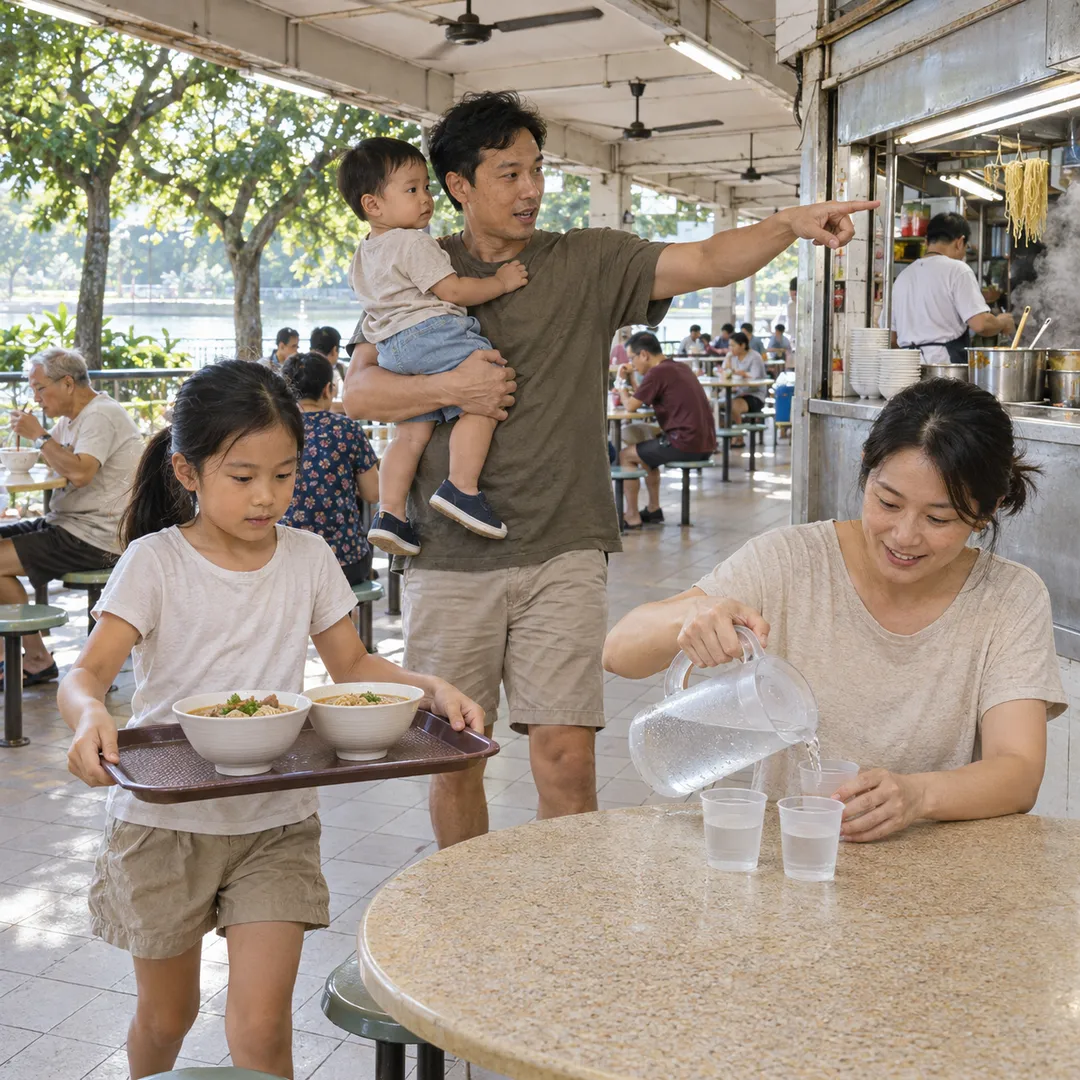 River Valley Food Market Grazing Route With Young Kids
 Serangoon Food Market Grazing Route for a Homecoming Weekend